
The Perspective | February 11, 2020
Collaboration insights-I: Business and Academia
Editorial Team
Collaborations and partnerships between stakeholders are critical to solve the world’s most pressing challenges across people, planet and profit. This blog series ‘Collaboration insights’ reflects on our partnerships with various stakeholders, starting with business and academia.
By Gauri Sharma and Divya Jyoti
Gauri Sharma is an Organizational Development (OD) Manager at Shahi and a part-time master’s candidate at the Cambridge Institute of Sustainable Leadership in the UK. Divya Jyoti is an adviser at Centre for Responsible Business and has advised Shahi on its social responsibility and human rights policies. She is currently pursuing her doctoral studies at Aston Business School in the UK. Together the co-authors explore and reflect on their experiences bridging practice and research in the apparel industry to balance the demands of people, the planet, and profit.
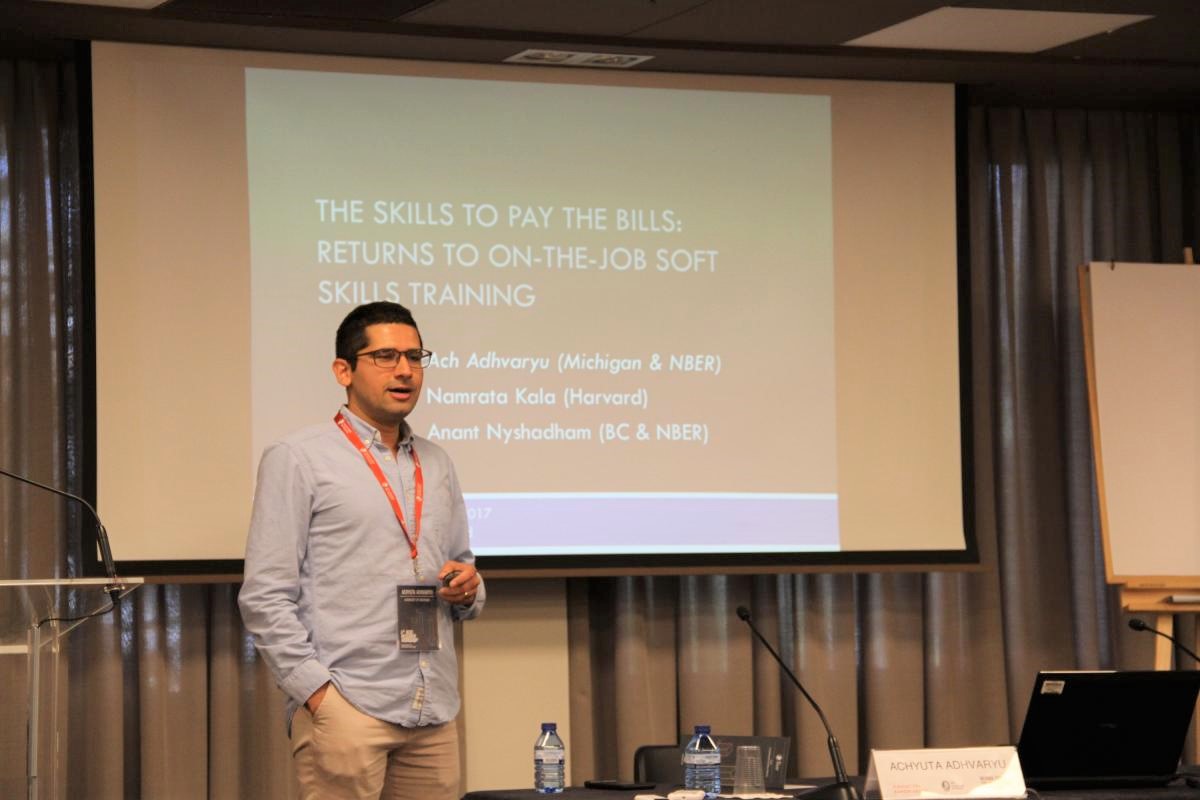
“In the last eighteen months, pursuing my executive master’s degree at the Cambridge Institute for Sustainability Leadership, I have been amazed by how much research has already been done on the topics I deeply care about. I have read paper after paper describing several scientifically validated and tested solutions to problems that businesses, including those in the fashion industry, are grappling with. However, I often wonder, Divya, which business manager is reading all these research papers?” “I cannot agree more with you Gauri! In these last few years, through my master’s and now the PhD, I have observed that business and academia generally operate in their own silos.” Cutting edge academic research is celebrated and published in ‘high ranking’ journals. Although these papers often offer innovative approaches to deal with a range of organizational issues, is the business community adopting and implementing these proposed solutions? Is academic research being communicated in a way that draws the attention of businesses and industry practitioners? The answer, sadly, is not encouraging. Rarely are practitioners aware of the ‘high ranking’ academic journals. Even when they do chance upon them, jargonism makes academic journal articles hard to read. These issues of presentation and communication emanate from and point towards more fundamental differences between the goals and processes of academic research and business projects. Academic research is expected to make a ‘theoretical contribution,’ which may not necessarily fulfill a business need. Studies conducted for academic purposes also need to satisfy multiple criteria to demonstrate scientific rigor, for instance, reliability and validity. Consequently, academic research can be resource-intensive and time-consuming, failing to align with business demands bound by short timelines. Dr. Achyuta Adhvaryu, Assistant Professor of Economics and Public Policy at the University of Michigan’s Stephen M. Ross School of Business, observes, “There is an inherent friction between business demands for quick results and the academic need to maintain rigor. I’m not sure academics and business professionals are still on the same page.” As members of both the international academic and practitioner community, we ourselves have often found it challenging to straddle both these worlds and deal with demands of both rigor and timelines. Our attempts at defining research questions to satisfy both the business and academic audiences have revealed to us the differences in approach, language, priorities and objectives between the two communities. Yet, despite all the differences and the challenges, our work has also allowed us to recognize and appreciate the immense potential inherent in the collaboration between business and academia.
One necessary piece that we’ve tried to hone over the years is picking research questions that have direct implications for firm and public-sector policy-making.” He insists on closer working between business and academia, “There are cues we can take from other industries. In medicine, for instance, there is a whole area of research designated as ‘bench to bedside’ — which means taking insights from the lab bench and getting them to real patients. We need a similar focus on the transfer of insights in economics and other social sciences.”Prof Van de Ven in his seminal book on Engaged Scholarship1 also calls for the gap between theory and practice to be bridged. He emphasizes that “Scholarship means something more than research, and engagement is the means for scholarship to flourish…What is needed is a mode of inquiry that converts information obtained by scholars into actions that address problems of what to do in a given professional domain.” Converting research insights into an actionable agenda, however, is not always easy. Shahi’s OD team works closely with researchers, including those at GBL, to understand research findings and insights, and co-creates change management strategies based on the learning, thus acting as an intermediary between academic researchers and the business.

This partnership is unique because there are many firsts…Shahi is probably the first contract apparel manufacturing company in the world to create a Chair in an academic institute, this is the first Chair dedicated to research on Industry 4.0. It also may be the first of its kind Chair in any fashion/apparel institute in the world. Under this collaboration, industry and academia will work together to explore the unexplored vistas in apparel manufacturing. It is a platform where out-of-the-box thinking is being encouraged. While the research outputs will benefit NIFT through publications and patents, it will also enrich the global knowledge pool and result in possible commercial spin offs which will benefit industry in the long run.”The Chair will provide fellowship to doctoral research scholars working in the area of apparel industry 4.0, facilitate high-quality cross-disciplinary research through industry surveys and benchmarking studies, create intellectual property and spread new knowledge. Prof Jana believes that this will also build a positive brand value for Shahi and enable it to attract young talent. The establishment of this NIFT Chair is a collaborative process. Both organizations have regular discussions to understand industry needs, generate innovative ideas for explorations and validate findings on the factory floor. In addition to working with well-established researchers, Shahi also seeks collaboration with interns, who often identify new issues and approaches. While Shahi benefits by getting a fresh perspective on several business challenges, students gain business experience and access to data at a large, labor-intensive manufacturing firm. One such partnership exists between Shahi and the Center for the Advanced Study of India (CASI) at the University of Pennsylvania. Every year, 3-4 students intern at Shahi for 10 weeks in the summer and work on a range of projects – from women’s advancement in the workplace to language classes for migrant workers. Having a formal agreement with the University creates accountability for both the students as well as the company to deliver on the mutual expectations and get the most out of the experience. Chitra Ramdas, General Manager, OD, mentors CASI interns every year on their projects: “We take the internship program very seriously and have a few team members supporting and guiding the students throughout. It’s an eye-opening experience every year – some of our best project ideas come out of the CASI internship. ‘Buddy system’ is a mentorship program for migrant workers designed to help them settle into the city and reduce their experience of loneliness. This idea was initially proposed by a CASI intern. We have since implemented the program and found that it’s highly effective.” While the experience at Shahi points to research collaborations and student engagement as mutually beneficial ways of collaborating with academia, these are by no means the only ways. The apparel industry has increasingly recognized the value of such collaborations. Sri Lanka’s leading apparel manufacturer, Brandix Lanka Ltd. has been running Brandix College of Clothing Technology since 1996, while, Arvind Ltd., has played an instrumental role in setting up and advising prestigious institutions such as Ahmedabad University and Indian Institute of Management, Ahmedabad. More recently we’ve seen international brands and retailers partner with academic institutions in innovative ways. In 2018, Kering and London College of Fashion launched the world’s world’s first online course in Luxury Sustainable Fashion. In January 2020, PVH announced a five-year partnership with Fordham University’s Gabelli School of Business in the US to establish a new educational hub for corporate responsibility and sustainability. Both academia and business have distinct strengths which, when combined, can go a long way in building partnerships leading to high impact research publications, increased access to funds, improved university rankings for the academic partners, and diagnosis of business challenges, access to cutting-edge research and first-mover advantage for businesses. Such collaborations and partnerships are increasingly critical in the wake of the impending climate crisis and the global commitment to achieve the Sustainable Development Goals (SDGs) by 2030. Business and academia are two critical levers of change for addressing the most challenging issues faced by the world today. By working together their differences can become strengths and lead to unparalleled innovation, resulting in not only a mutual win-win but also a win for the planet and wider society.
1 Van de Ven, A. (2007) Engaged Scholarship: A guide for Organizational and Social Research. Oxford: Oxford University Press
*Editorial Note: This post was originally published on February 11, 2020, and was updated on September 30, 2020.Featured Posts

Featured | October 9, 2026
Lessons on Collaboration: Climate Week NYC 2026

Featured | September 8, 2026
Threads of Transition: Shahi Co-Hosts Climate Workshop

Featured | July 27, 2026
Shahi Exports: Legacy Partner at Bharat Tex 2026
Get in touch!
Thank you! Your submission has been received!
Oops! Something went wrong while submitting the form.
Social Share




BACK TO TOP