
Events | October 9, 2026
Lessons on Collaboration: Climate Week NYC 2026
Sanjana Pimoli

Every Climate Week brings thousands of people into New York to discuss what comes next for climate action. In 2026, the official program put implementation at the center of that conversation. Energy and electrification, industry and supply chains, finance, and policy were among the major themes.
Going into Climate Week, I prioritized conversations on decarbonizing thermal energy, greener chemistry, and the environmental regulations shaping textiles. As part of Shahi’s ESG and Innovation team, I also looked for one thing across these discussions: whether suppliers were part of the conversation.
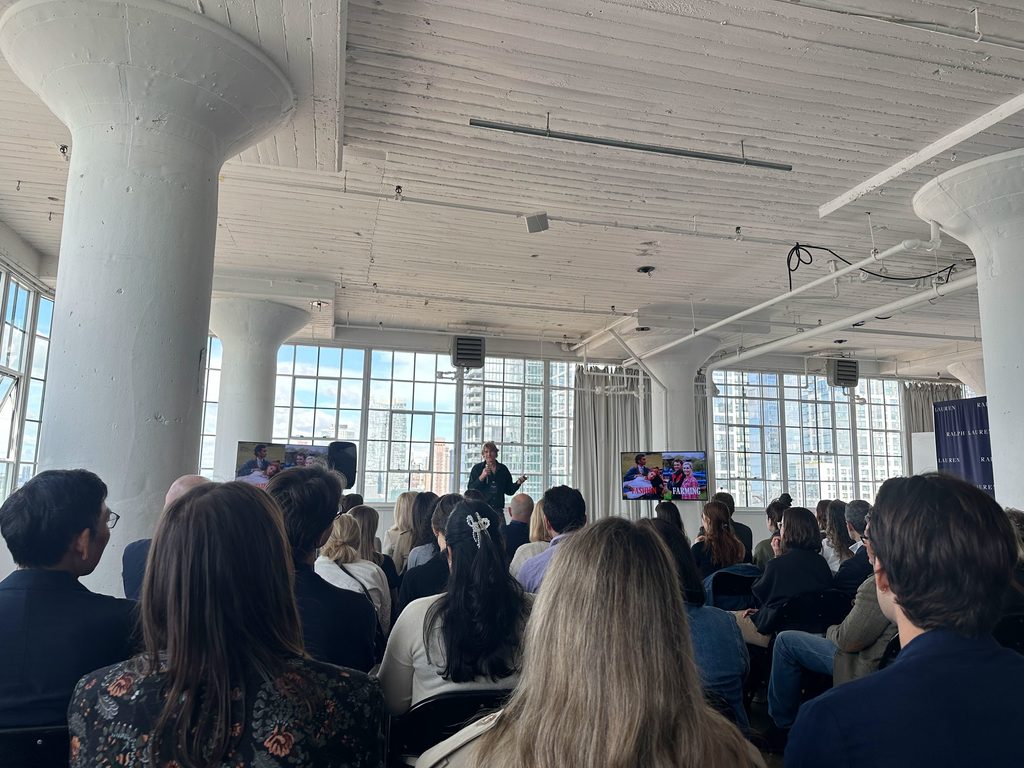
Supplier representation is actively growing. But in many of the rooms I attended, suppliers were still less represented than brands, investors, technology providers, and civil society. Participation can be challenging given travel costs, visa constraints, and competing commitments. Yet suppliers are central to translating industry ambitions into action.
Given the role suppliers play in delivering this transition, how can the industry effectively collaborate to make progress when participation across the value chain is uneven?
The challenge, however, is bigger than the absence of suppliers or the absence of collaboration. Collaboration often starts after key decisions have already been made.
Collaboration needs to start earlier
The word “collaboration” is now common in climate conversations. But it can mean very different things.
It can mean asking a supplier for feedback on a standard or testing a technology. Or it can simply mean sharing a target or a data request. These forms of engagement are not necessarily collaborations.
Moving the needle and delivering action requires people responsible for delivering the change to be involved before the decision is made. For example, when developing roadmaps to phase out coal or transition to lower-impact materials, suppliers and factory teams need to be part of the conversation from the outset because they understand the operational constraints, infrastructure requirements, and costs that determine whether a solution can work at scale. This goes beyond collaboration to co-creating goals and roadmaps that are both ambitious and implementable.
Co-creation calls for treating each stakeholder as an equal participant in the design, conceptualization, and execution process. Suppliers should have a role in framing the challenge, setting the target and building the solution.
Earlier Climate Week discussions centered on mitigation and decarbonization. Last year, adaptation and resilience moved closer to day-to-day business decisions. Extreme heat, worker health and resilience of factory operations became harder to separate from climate strategy.
Shift from Top-Down Directives to Co-Creation
This year, implementation felt more explicit. The focus was increasingly on what it takes to move from commitments to action. Climate Week itself described the challenge as what enables implementation. It pointed to infrastructure constraints, supply chain pressures, and misaligned incentives.
For the fashion industry, one of the biggest implementation challenges sits between organizations. It is a mix of a few challenges:
- Different stakeholders often work in silos. Brands set targets, suppliers assess what can be delivered, technology providers develop solutions, and other stakeholders address policy, finance or implementation. These roles are necessary, but they can also create gaps between how a problem is defined, how a target is set and how a solution is ultimately implemented.
- The flow of decisions is often one directional. Targets, standards and requests move from one part of the value chain to the next, while information about operational constraints, costs and risks moves back later, if at all. By the time these constraints surface, significant decisions may already have been made.
- This is where handoffs become a problem. Actors often pass untested assumptions down the value chain. Costs can sit with a different stakeholder from the one setting the ambition. Risks can be transferred rather than shared. Solutions can then be assessed only after the problem and target have already been defined.
Collaboration has to change. It needs to move upstream, before the handoff, and involve the relevant stakeholders in defining the problem, setting the target, and building the solution.
Collaborate when the problem is framed
Today, the organization setting a standard or target often defines the problem before it brings suppliers in to implement it. This can miss critical information.
A supplier may know, for example, that switching from a coal fired boiler to an electric boiler or heat pump requires more electrical capacity than the facility currently has, or that a heat pump cannot deliver the temperatures needed for a particular manufacturing process without changes to the production system.These are not reasons to avoid the transition. They are inputs that should shape the problem from the beginning.
Problem framing should start with an understanding of all the factors that sit between ambition and reality. This requires assessing the technical, operational, financial, and human factors that determine real-world success.
We saw this in practice with heat stress. In September, the American Apparel and Footwear Association (AAFA) launched its Heat Stress Toolkit at Cascale’s Annual Meeting in Athens. Brands, manufacturers and worker advocacy groups developed the toolkit together, with manufacturers leading the work. Through the Fashion Producer’s Collective, Shahi co-authored the manufacturer guidelines, in a first-of-its-kind partnership shaped by the insights of manufacturers dealing with the practical challenges and constraints of heat stress every day. This collaboration created practical tools informed by factory-floor realities, brand perspectives, and stakeholder input. The toolkit builds on AAFA’s April guide, which calls for buyers and suppliers to share responsibility for the impacts of extreme heat.
Build targets from the factory floor up
Organizations at the bottom of the value chain often set targets and cascade them through suppliers. This can provide direction, but it does not always provide clarity. When brands pursue the same outcome through different requirements, methodologies or timelines, suppliers can face multiple approaches to solving the same problem.
Suppliers may then receive multiple requests for similar information, different reporting definitions or overlapping deadlines. The result can be more reporting without better decisions.
A stronger model requires alignment on outcomes, definitions, and expectations while allowing the pathway to reflect site-level realities. It starts with site level data and scenarios, then reconciles those findings with brand level ambition. The pathway to the target should reflect technical feasibility, commercial reality, and required capital..
The data model should follow the same principle. Wherever possible, brands and suppliers should work from shared definitions and shared datasets. They should not have to reconstruct the same information for every new request. Brands and suppliers should also align on interim milestones together. A supplier should know not only the end target, but what needs to happen in the next one, three or five years to reach it.
Share the risk of building the solution
The greatest test of collaboration comes when the industry moves from established practice to first of a kind solutions.
Each partner should have a clearly defined role, but the approach must also reflect the solution’s stage of development and the capabilities each partner brings. An early stage innovator may need a manufacturing partner to understand process requirements, access testing facilities, or adapt its technology to real operating conditions. A more established solution may be ready for direct testing within an existing production line.
The manufacturer provides access to the facility, operating data and practical constraints. The brand provides a demand signal and, where appropriate, greater visibility on future business. Other financing partners may help bridge the gap between a technically proven concept and a commercially investable project.
Partners must agree on these roles and expectations before launching a pilot. Partners must align on the pilot’s clear objectives, who bears the cost and risk, what specific support each stage requires, and how to scale following success. For a first of a kind project, this means developing an approach suited to the specific technology and its readiness, rather than applying a standard pilot model to every solution.
The industry should therefore agree upfront on what success means. A pilot should test more than whether the technology works. It should also test whether the model for deploying it can work at scale including performance, safety, reliability, total cost, operational integration, roles across the value chain, financing, and pathway to commercial adoption. The pilot should create the evidence needed to adjust that model before stakeholders commit larger investments.
Aligning Incentives and Reallocating Financial Risk
This matters most when adopting capital-intensive, transformative technologies that lack proof at scale. The manufacturer may need to commit significant capital, operational capacity, and time to a pilot while also taking on the disruption of integrating a new technology. If the immediate business case is weak and the pathway from pilot to scale remains uncertain, the incentive to take that first step can be limited.
Supplier involvement therefore needs to extend beyond implementation to financing and program design. Support mechanisms need to reflect the actual barriers a supplier faces, rather than simply making a pilot possible. The objective should be to create the conditions for a technically proven solution to become commercially viable and scalable.
This also means thinking carefully about how risk is allocated. Shared risk does not mean every actor contributes equally. Meaning: Each stakeholder assumes the risks within its direct control, backed by targeted support and incentives that make the broader investment viable.
What does this mean for the fashion industry?
For brands, collaboration should begin before a target or standard is finalized. Bring suppliers into the problem definition. Understand the operational implications. Align commercial signals with climate expectations.
For suppliers, collaboration means bringing operational reality into the conversation early. Share site data, constraints, and investment requirements. Simultaneously, analyze what your facility can achieve, pinpoint your greatest opportunities, and define exact requirements for moving forward.
The goal should not be to explain why a target is difficult. It should be to show what conditions would make it achievable. This requires time and capability, which can be particularly difficult for smaller suppliers. Collaboration should be paired with support that helps build this capacity where needed.
For technology providers, the starting point should be the process rather than the technology. Solutions need to work under real operating conditions and account for integration, service, safety and total cost.
For industry platforms and financial partners, the role is not simply to make early investment less risky. It is to help share risk in ways that reflect the context of the project, the maturity of the technology, and the capacity of the supplier. Different suppliers and technologies will require different forms of support. The objective should be to create the conditions for successful pilots to move towards commercial scale rather than support pilots in isolation.
A more useful definition of collaboration
Perhaps the most useful test is a simple one.
Who defines the problem? Who sets the target? Who carries the risk? Who benefits when it works?
If the answers sit with four different parts of the value chain, then collaboration needs to connect those decisions rather than simply bring everyone together for a conversation.
Climate action in fashion will require all of us to move faster. But speed will not come from asking each part of the value chain to move independently. It will come from building the transition together, earlier and with clearer accountability.
Featured Posts

Featured | October 9, 2026
Lessons on Collaboration: Climate Week NYC 2026

Featured | September 8, 2026
Threads of Transition: Shahi Co-Hosts Climate Workshop

Featured | July 27, 2026
Shahi Exports: Legacy Partner at Bharat Tex 2026
Get in touch!
Social Share




BACK TO TOP