
Media & Research | July 27, 2026
Shahi Exports: Legacy Partner at Bharat Tex 2026
Editorial Team
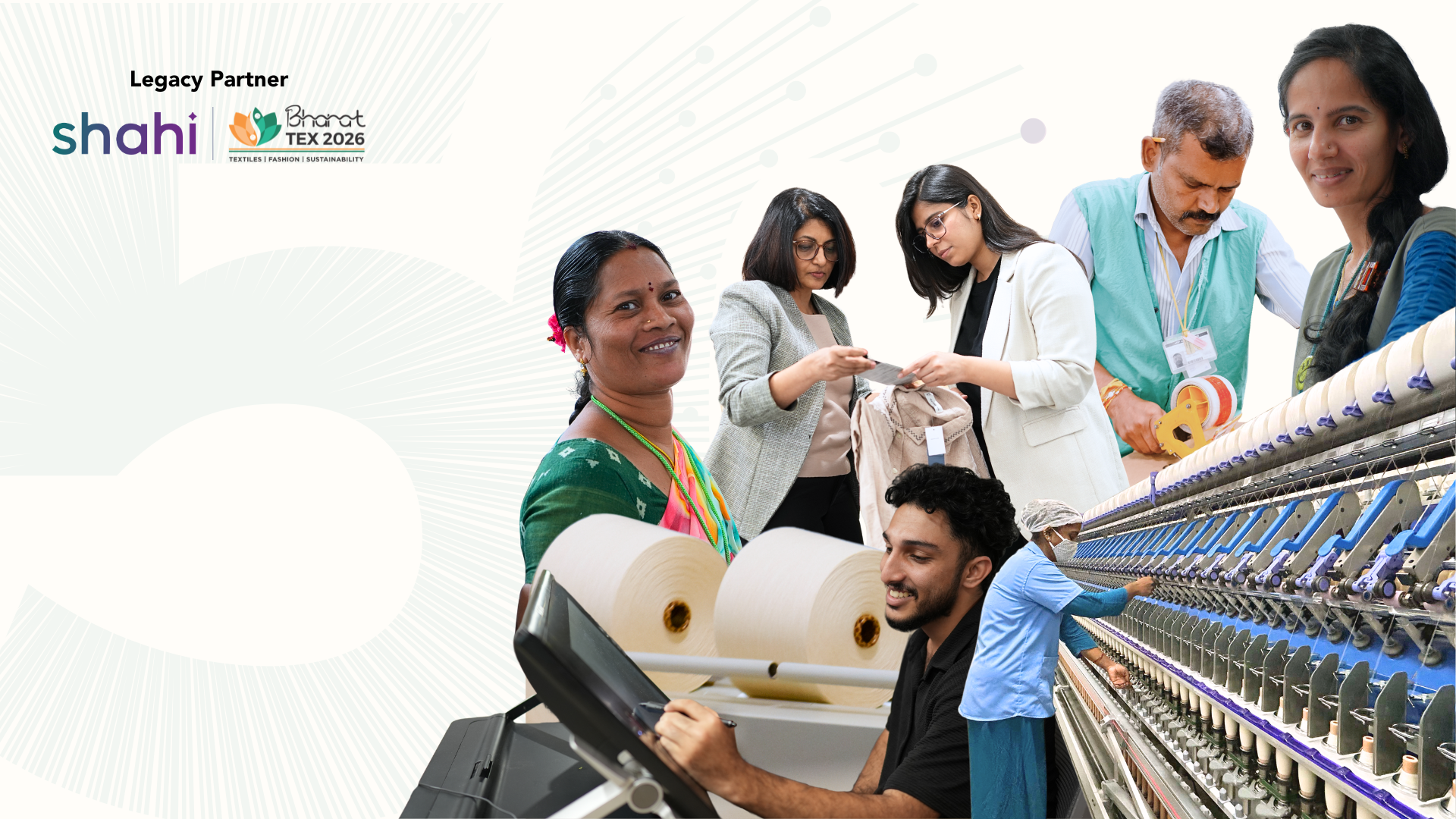
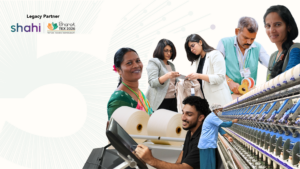
Shahi participated in Bharat Tex for the third consecutive year, serving as a Legacy Partner. Our core message remained clear: building a resilient textile industry requires long-term vision, continuous innovation, and strong partnerships. True competitiveness comes from embedding sustainability and efficiency into daily manufacturing operations.
The four-day event was inaugurated by the Union Minister of Textiles, Shri Giriraj Singh. We had the privilege of welcoming him on the opening day for a walkthrough of our exhibit. The event brought together over 6,000 international buyers, 1,600 exhibitors, 1.3 lakh trade visitors, and industry stakeholders from 130 countries at Bharat Mandapam.
The Shahi Exhibit: Celebrating 52 Years of Manufacturing Excellence
We welcomed global buyers, policymakers, government officials, and peers to engage with our manufacturing capabilities, material innovations, and sustainability initiatives.
The exhibit featured a curated journey wall that traced our evolution over the decades. It highlighted Shahi’s growth from humble origins to a vertically integrated network of over 50 manufacturing facilities. It showcased our diverse product portfolio, high-quality garment construction across various knits, wovens, and next-generation low-impact materials.
Leadership Engagements
Shahi’s leadership team participated in key panel discussions and roundtables across conference tracks. They shared practical perspectives on global trade, manufacturing efficiency, policy prioritization, and sustainable sourcing.
Navigating Global Trade Uncertainty
‘India – A Trusted Partner in an Uncertain World: How Can Indian Companies Navigate a Rapidly Changing Global Trade Scenario‘
Building Globally Competitive Manufacturing Ecosystems
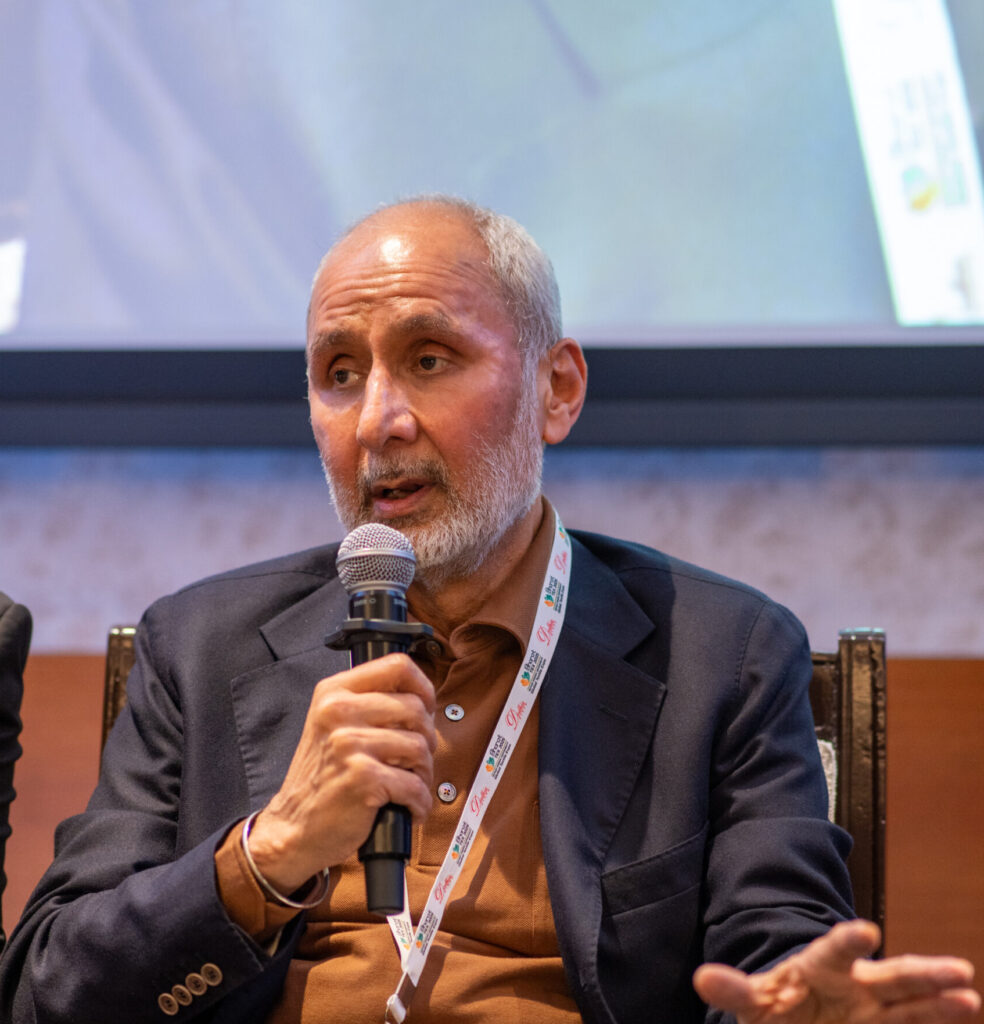
Harish Ahuja, Managing Director and Chairperson, emphasized that long-term capacity expansion must be guided by consumer demand rather than short-term tariff shifts. He highlighted India’s strong domestic fabric base, which enables over 90% domestic value addition, compared with 30%–40% in competing nations such as Vietnam and Bangladesh. He urged policy interventions to help manufacturers achieve sustainable double-digit margins and attract domestic investment.
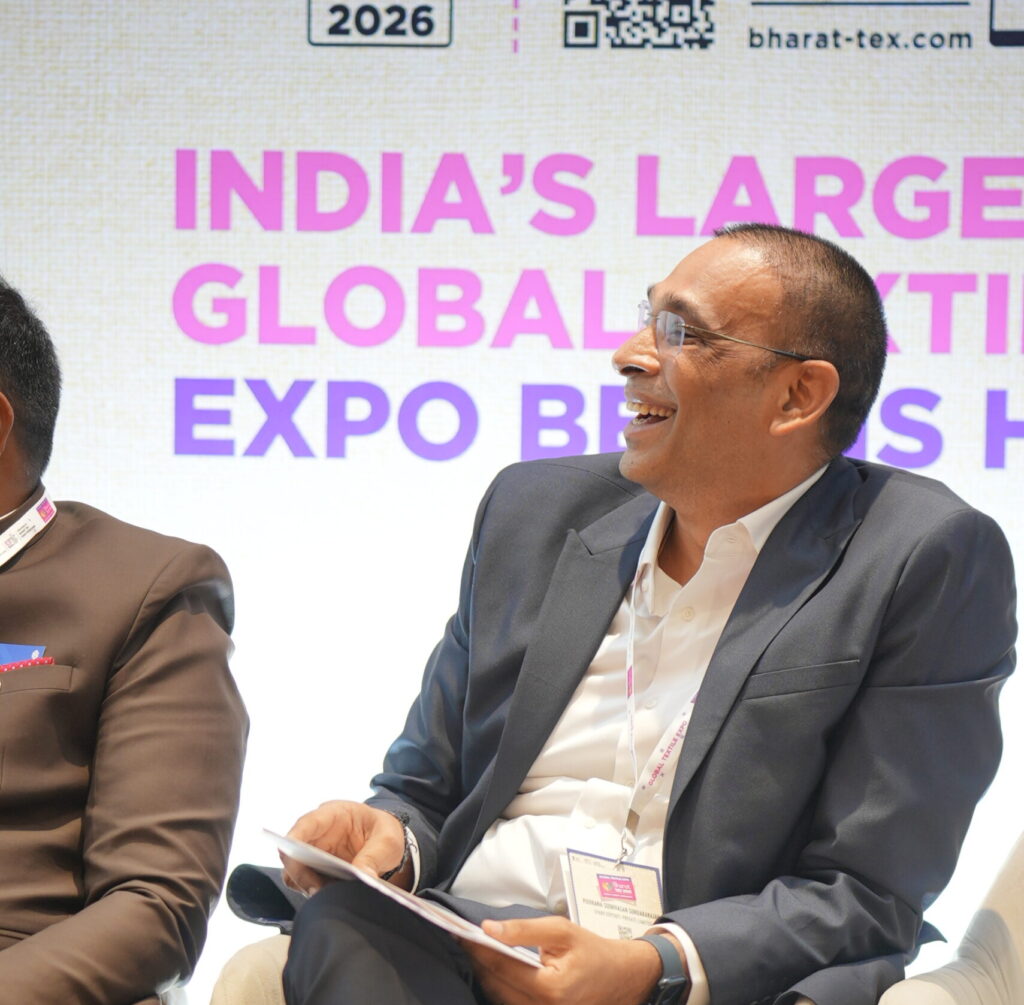
Building Global Competitiveness in India’s Textile & Apparel Sector
At the panel discussion, Poorana Seenivasan, CEO of the Ladies Specialty Division, outlined key operational fundamentals. He noted that global competitiveness relies on building a supportive industrial ecosystem rather than individual corporate effort alone. Moving beyond low-cost labor, he urged manufacturers to focus on per-person productivity, process engineering, and technology adoption.
Decarbonization and Sustainable Sourcing
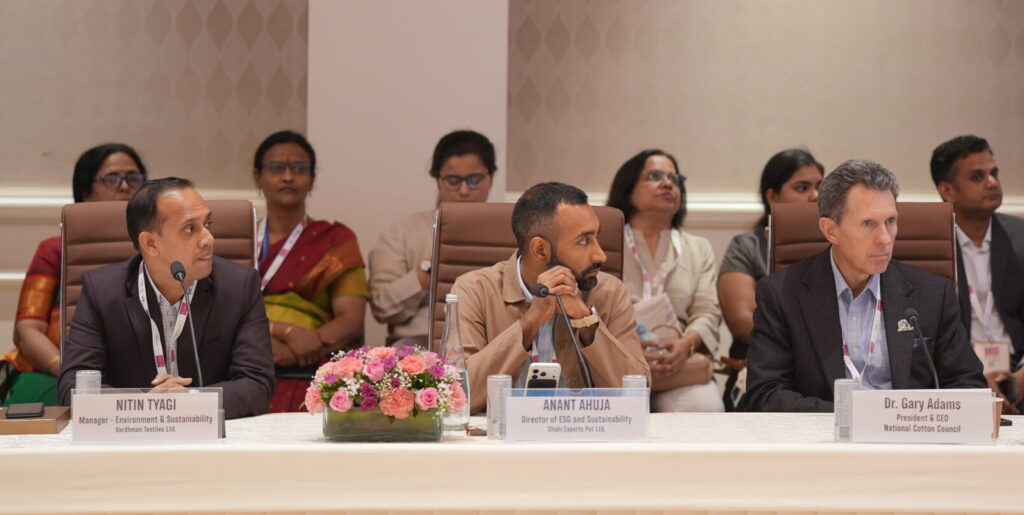
‘Dialogue for Sustainable Sourcing Solutions’
Speaking at the panel with Better Cotton Initiative, Anant Ahuja, Director of ESG & Sustainability, shared how sustainability must be integrated directly into core business decisions. He highlighted that the most scalable initiatives are those that improve both environmental and operational performance. This includes Shahi’s move to biomass energy, raising our carbon-neutral energy share, and the adoption of water-saving processing, such as Fibre52. He also stressed the need to simplify reporting frameworks and support upstream suppliers through long-term buyer collaboration.
Policy Reform and State Industrial Infrastructure
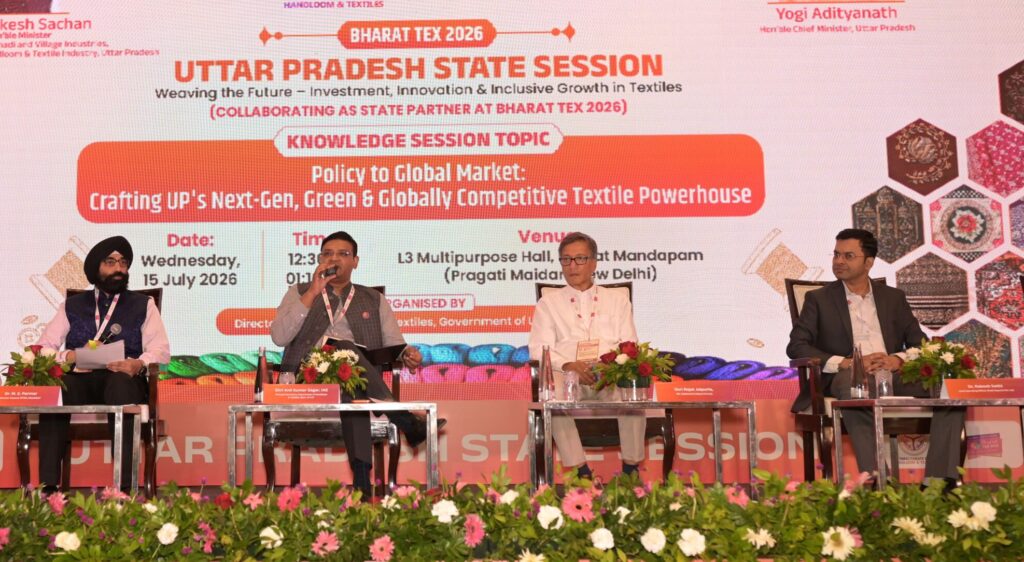
‘Crafting Uttar Pradesh’s Next-Generation, Green, and Global Textile Empire.’
Dr. Rakesh Sethi, Chief Operating Officer, spoke at the Uttar Pradesh State panel. He advocated for giving the apparel sector equal policy priority with agriculture due to its capacity to generate mass employment. He also called for active private-sector participation in shaping industrial policy and building green manufacturing clusters.
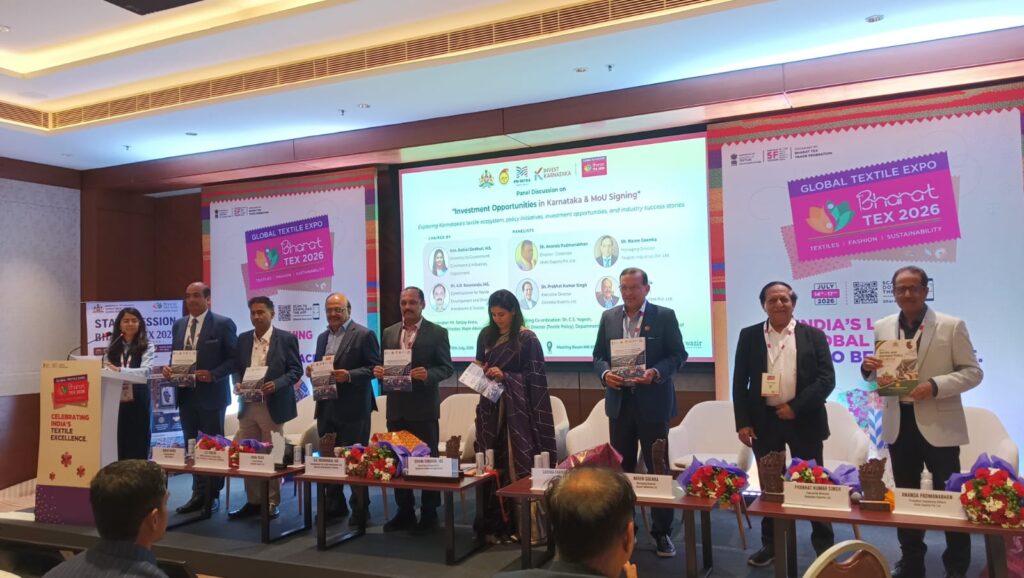
Regional Growth & Investment Frameworks
Joseph M T, Assistant Vice President of Administration, addressed the Karnataka State Session. He highlighted Karnataka’s growing industrial potential, detailing how strategic state partnerships, infrastructure support, and localized cluster development can attract long-term apparel investments.
Spotlight on Next-Gen Innovation & Heat Stress
The Shahi ESG & Innovation team attended the PDS x Fashion For Good (FFG) Innovation Space Spotlight and Pitch Forum at Bharat Tex. The session brought together global innovators, brand partners, and supply chain leaders to explore emerging technologies. Our team engaged with early-stage solutions across circular materials, low-impact processing, and supply chain traceability, reinforcing our commitment to testing and scaling next-generation sustainable practices.
A side session hosted by Good Business Lab and Sattva brought together key stakeholders—including buyers, manufacturers, research organizations, and non-profits—to address the pressing urgency of heat stress in India. The consensus was clear: heat adaptation must evolve beyond a mere worker-welfare or compliance issue to become a core business resilience strategy. Participants highlighted the need for context-specific, data-driven preventive measures rather than one-size-fits-all fixes. Achieving this requires cross-sector collaboration to share learnings and scale practical solutions.
The Road Ahead
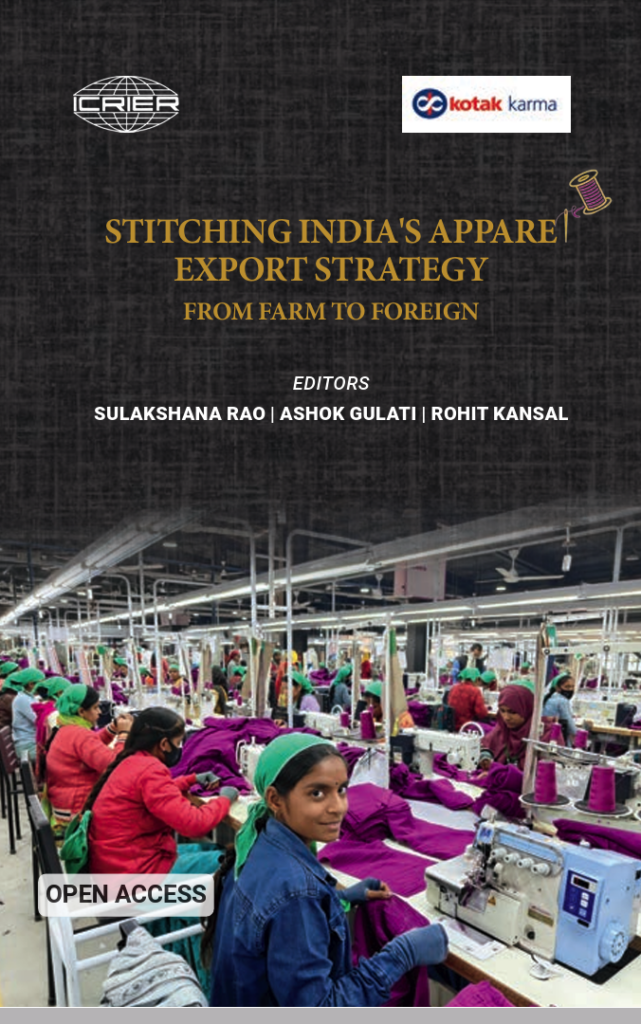
The event served as a platform to engage with international buyers, supply chain partners, and research institutions to discuss joint accountability across global value chains. A highlight was the ICRIER research initiative and book launch on global competitiveness, which included Shahi as a Case Study. The event also hosted dialogues with global bodies on co-investing in supply chain decarbonization, which reaffirms the core message shared across our panel sessions: building a resilient textile industry requires moving beyond transactional vendor relationships.
As Bharat Tex 2026 concluded, we look forward to advancing the future of Indian apparel manufacturing by delivering high-quality products to the global market.
Featured Posts

Featured | October 9, 2026
Lessons on Collaboration: Climate Week NYC 2026
Featured | September 8, 2026
Threads of Transition: Shahi Co-Hosts Climate Workshop
Featured | July 27, 2026
Shahi Exports: Legacy Partner at Bharat Tex 2026
Get in touch!
Social Share




BACK TO TOP