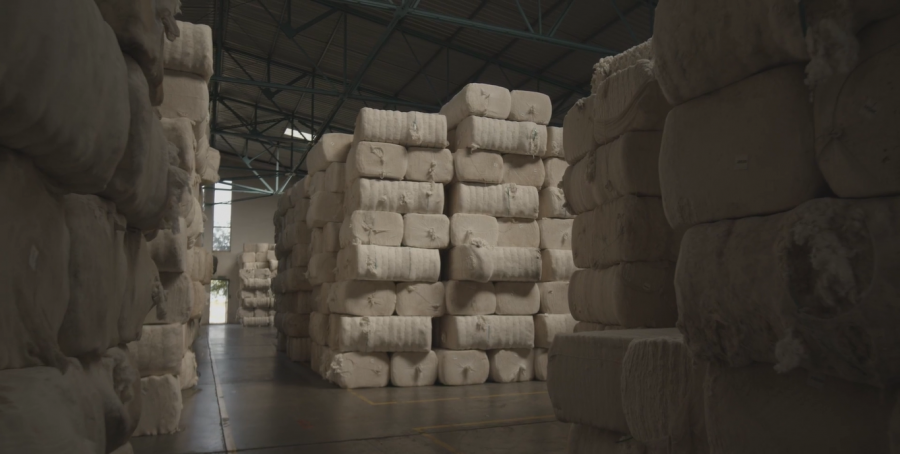
The global average water footprint for 1kg of cotton is 10,000 liters. We believe that it is our responsibility to commit to a method of production that recycles water to reduce our water footprint and develop sustainable processes.
We have employed solutions like rainwater harvesting and invested water treatment technologies to curb our net use. We now have the ability to treat 95% of the water in our facilities. As more and more of our brand partners set ambitious sustainability targets, Shahi Pvt Ltd is keen to collaborate with them to create environmentally viable products.
An example of such a collaboration between Shahi and GANT was captured in this BBC mini-documentary highlighting the effectiveness of sustainable solutions from fiber to the finished product every step of the way.
In 2013, India became the first country in the world to legally mandate Corporate Social Responsibility (CSR) with the introduction of Section 135 of the Indian Companies Act, 2013. CSR was introduced to make businesses pay more attention to ways they can positively impact society and the environment. The law requires companies with a certain turnover and profitability to spend 2% of their average net profit for the past three years on CSR. The CSR budget can be invested in specified areas such as promoting education, eradicating hunger, promoting gender equality, and environmental sustainability. Due to its mandatory nature, the CSR regime in India has the potential to greatly support more capital infusion into the social and environmental sector, thus supporting the country in achieving national and global development goals. However some have criticized this mandate, claiming that CSR must be voluntary or else it is effectively a corporate tax. Nonetheless, eight years since it was first introduced, the CSR mandate remains in place and has been further fine tuned and optimized to ensure companies invest in positive impact.
Focusing on COVID-19 relief in 2021
One of the ways the CSR mandate has been updated is to encourage companies to support their communities through the COVID-19 pandemic. India is currently recovering from a devastating second wave of COVID-19, as the spread continues to have a damaging impact on the health and livelihoods of millions of people across the country. At Shahi, we are leveraging our CSR funds to support our communities by providing ration kits to migrant workers infected with COVID-19 through our Migration Support Center (MSC), donating medical equipment to local hospitals, and other community relief activities based on needs assessments.
Shahi’s approach to CSR
Shahi was established in 1974 by a visionary female entrepreneur Mrs. Sarla Ahuja who started her journey as a sewing machine operator in a local apparel factory in New Delhi. For over 45 years now, we have been serving the communities in which we operate with a special focus on the employment and empowerment of women from low-income backgrounds. Working within the Government guidelines on CSR, our initiatives are guided by the following core commitments:
To contribute to social, economic, and environmental development initiatives in the communities in which we operate and the society at large
To ensure all CSR initiatives undertaken by us have a long-term sustainable and positive impact on marginalized populations
Our initiatives are based on needs assessment and consultation with communities and local governments. We implement our initiatives directly through our internal teams and also partner with expert organizations, specialized non-government organizations, and local implementation agencies.
Our CSR policy has been recently revised as per the provisions of the January 2021 amendment in the Companies Act. This amendment lays greater emphasis on compliance with the law and deeper involvement of businesses in CSR initiatives. Our policy includes the scope and applicability of our CSR initiatives, governance structure, guiding principles of selection, implementation, and monitoring, and expenditure, along with a detailed Annual Action Plan for all the projects undertaken by the company.
Based on the need assessment, we have identified the following focus areas to implement our CSR initiatives:
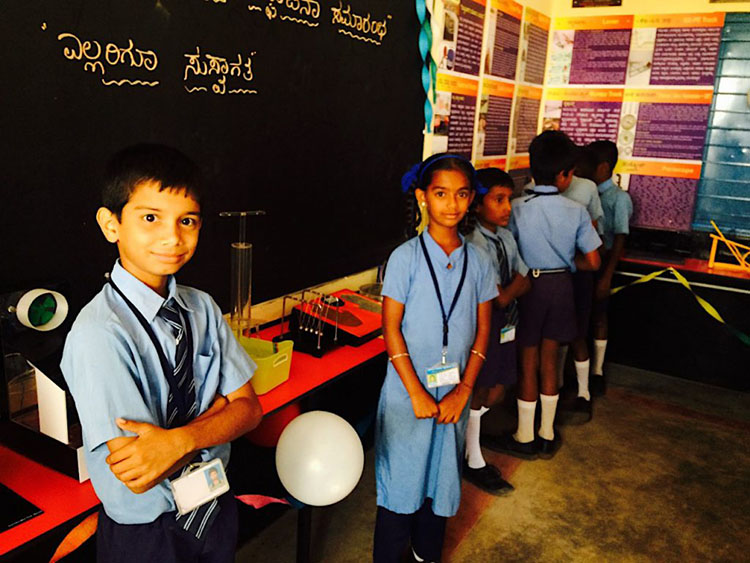
Education – Good school infrastructure improves the quality of education and the experiences of school learning. We support education in Government schools by focused interventions on infrastructure development, provision for drinking water and sanitation, and repair and renovation of school buildings. Also support undergraduate scholarship programs for students from low-income backgrounds.
“We are thankful to Shahi Exports for providing desks, benches, and sports equipment to our school. Our students are happy with comfortable sitting arrangements, and they are really enjoying their Physical Education classes with new equipment. Many new learning opportunities will also come up with a beautifully created Science Lab under Shahi’s CSR initiatives for our students from Grade 3 to 10.” Mr. Shivappa, Head Master, Government Primary School, Hootagali, Mysore, Karnataka
Community infrastructure – We support community infrastructure development such as public toilets, and bus shelters, etc. As road safety is crucial to saving lives and preventing injuries, our initiatives also focus on tilling roads, construction of skywalks, provision of traffic safety equipment such as barricades, and construction of bus shelters, etc.
Drinking Water – Water is a fundamental human need, yet many people lack access to safe drinking water leading to several water-related ailments. Understanding this need, we provide RO water filtration plants, water coolers, and storage tanks at public places, migrant worker hostels, police stations, and government dispensaries.
The welfare of migrant workers – Migrant workers in urban areas face several challenges. We have partnered with Odisha Rural Development and Marketing Society to implement a Migration Support Center project in Bengaluru, Karnataka. H&M and Good Business Lab have extended their support as design partners on this project which aims to support migrant workers with psychological, social, and informational services to help them settle in new urban environments.
Environmental protection – We strive to grow our business whilst reducing the environmental impacts of our operations. Under this focus area, we prioritize efforts such as tree plantation and spreading environmental awareness.
Health – Women from low-income backgrounds often lack access to basic health information and services that affect their overall wellbeing. In partnership with not-for-profit organizations such as Good Business Lab, Family Planning Association of India, Samwada, and Basic Needs India, our community health interventions focus on providing women’s health information and services, including sexual and reproductive health, and psychological wellbeing services.
Supporting Research and Development Projects – Through collaboration with academic institutions such as the National Institute of Fashion Technology and not-for-profit organizations such as Good Business Lab, we support research on technology development under Industry 4.0 and the wellbeing of low-income workers in labor-intensive industries.
The way forward
As a responsible and progressive organization, we will continue to strategically develop our CSR initiatives to benefit the community and the environment. We are open to collaboration with like-minded organizations to scale up our initiatives and add new projects to scale impact.
“ As a leading apparel exporter, our core principles of sustainable business will continue to drive us. Along with exporting apparel, we also intend to export our learnings and ideas from our work in CSR.” Anant Ahuja, Head – Organizational Development, and CSR Committee Member, Shahi Exports
The fashion industry, like many others, is energy-intensive. To find solutions to the climate change challenges it becomes imperative for all stakeholders in the value chain to play their part in driving decarbonization. As India’s largest apparel manufacturer and exporter, Shahi hopes to support the long-term sustainability of the fashion industry with a vision to power its operations with 100% renewable electricity. This blog post summarizes the insights from interviews with our management on our approach towards energy conservation and clean energy transition.
Manufactured is a podcast started in 2020 with the intention of providing an insider perspective on sustainability in the fashion supply chain. Hosted by Kim van der Weerd and Jessie Li, two industry professionals who have worked directly in and with factories, this podcast spotlights those working in the supply chain, from factory owners and textile manufacturers to designers and sustainability officers. Through this approach, Manufactured is able to amplify key perspectives from the ground on complex issues such as buyer-supplier relationships, worker-management relations, subcontracting, and more. The long-form format of podcasting further enables this project to achieve its mission.
We believe in the greater need for transparency and open dialogue, so when Kim and Jessie reached out to Shahi to participate in an episode we were grateful for this opportunity. Transparency is often seen as consumer demand, however even as a supplier, there are benefits to being transparent including gaining valuable feedback that can help us learn and improve as well as having the opportunity to present our perspective on important events.
Two members of Shahi’s Organizational Development team, Anant Ahuja and Gauri Sharma joined Kim and Jessie for the latest double-episode of Manufactured which is now in its third season.
Part 1 (Episode 27) covers the following topics:
The journey of Shahi over the last 45 years
Why suppliers need to take a leadership role in the sustainability agenda
Barriers to genuine partnership and collaboration between buyers and suppliers: Power dynamics, lack of trust, and perceived lack of incentives for suppliers to invest in sustainability
Why Shahi set up Good Business Lab and the need for an evidence-based approach to worker wellbeing programs
Part 2 (Episode 28) covers the following topics:
The advantages of becoming a vertically integrated supplier
Sourcing cotton in India and the challenges faced by cotton farmers
Our new research project with the Hong Kong Research Institute of Textiles and Apparel (HKRITA), through which we are reclaiming textile waste to grow cotton more efficiently as a way to support cotton farmers
—
Sign up for the Manufactured Podcast newsletter view more.
We are honored to have Shahi’s Head of Organizational Development, Anant Ahuja, featured in an interview in The State of Fashion 2021 report along with a group of top executives of leading global fashion companies. This group includes Helena Helmersson, Chief Executive of H&M Group, our customer for nearly two decades, and an industry leader that continues to demonstrate their commitment to the sustainability of the supply chain, especially through the pandemic. Other companies interviewed for the report include Kering, Louis Vuitton, Selfridges Group, and Alibaba.
We love to connect with our industry peers and all other important stakeholders to share our experiences and exchange ideas. In this ongoing post, discover all the conferences and events we have spoken at in 2020.
We love sharing our work and learnings with industry and other important stakeholders. This post is an ongoing compilation of conferences and events we’ve spoken at in 2019. (more…)