Tag: Decarbonization

  • Lessons on Collaboration: Climate Week NYC 2026

    Lessons on Collaboration: Climate Week NYC 2026

    Every Climate Week brings thousands of people into New York to discuss what comes next for climate action. In 2026, the official program put implementation at the center of that conversation. Energy and electrification, industry and supply chains, finance, and policy were among the major themes.

    Going into Climate Week, I prioritized conversations on decarbonizing thermal energy, greener chemistry, and the environmental regulations shaping textiles. As part of Shahi’s ESG and Innovation team, I also looked for one thing across these discussions: whether suppliers were part of the conversation.
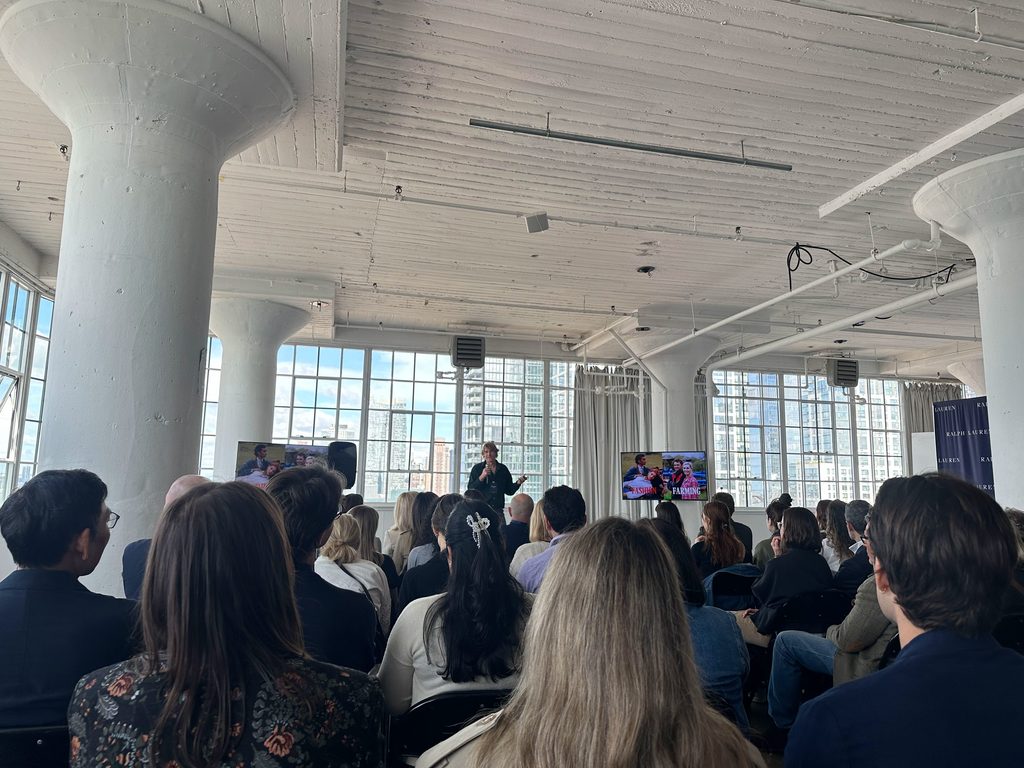
    Supplier representation is actively growing. But in many of the rooms I attended, suppliers were still less represented than brands, investors, technology providers, and civil society. Participation can be challenging given travel costs, visa constraints, and competing commitments. Yet suppliers are central to translating industry ambitions into action. 

    Given the role suppliers play in delivering this transition, how can the industry effectively collaborate to make progress when participation across the value chain is uneven?

    The challenge, however, is bigger than the absence of suppliers or the absence of collaboration. Collaboration often starts after key decisions have already been made.

    Collaboration needs to start earlier

    The word “collaboration” is now common in climate conversations. But it can mean very different things.

    It can mean asking a supplier for feedback on a standard or testing a technology. Or it can simply mean sharing a target or a data request. These forms of engagement are not necessarily collaborations.

    Moving the needle and delivering action requires people responsible for delivering the change to be involved before the decision is made. For example, when developing roadmaps to phase out coal or transition to lower-impact materials, suppliers and factory teams need to be part of the conversation from the outset because they understand the operational constraints, infrastructure requirements, and costs that determine whether a solution can work at scale. This goes beyond collaboration to co-creating goals and roadmaps that are both ambitious and implementable.

    Co-creation calls for treating each stakeholder as an equal participant in the design, conceptualization, and execution process. Suppliers should have a role in framing the challenge, setting the target and building the solution. 

    Earlier Climate Week discussions centered on mitigation and decarbonization. Last year, adaptation and resilience moved closer to day-to-day business decisions. Extreme heat, worker health and resilience of factory operations became harder to separate from climate strategy.

    Shift from Top-Down Directives to Co-Creation

    This year, implementation felt more explicit. The focus was increasingly on what it takes to move from commitments to action. Climate Week itself described the challenge as what enables implementation. It pointed to infrastructure constraints, supply chain pressures, and misaligned incentives.

    For the fashion industry, one of the biggest implementation challenges sits between organizations. It is a mix of a few challenges: 

    • Different stakeholders often work in silos. Brands set targets, suppliers assess what can be delivered, technology providers develop solutions, and other stakeholders address policy, finance or implementation. These roles are necessary, but they can also create gaps between how a problem is defined, how a target is set and how a solution is ultimately implemented.
    • The flow of decisions is often one directional. Targets, standards and requests move from one part of the value chain to the next, while information about operational constraints, costs and risks moves back later, if at all. By the time these constraints surface, significant decisions may already have been made.
    • This is where handoffs become a problem. Actors often pass untested assumptions down the value chain. Costs can sit with a different stakeholder from the one setting the ambition. Risks can be transferred rather than shared. Solutions can then be assessed only after the problem and target have already been defined.

    Collaboration has to change. It needs to move upstream, before the handoff, and involve the relevant stakeholders in defining the problem, setting the target, and building the solution.

    Collaborate when the problem is framed

    Today, the organization setting a standard or target often defines the problem before it brings suppliers in to implement it. This can miss critical information.

    A supplier may know, for example, that switching from a coal fired boiler to an electric boiler or heat pump requires more electrical capacity than the facility currently has, or that a heat pump cannot deliver the temperatures needed for a particular manufacturing process without changes to the production system.These are not reasons to avoid the transition. They are inputs that should shape the problem from the beginning.

    Problem framing should start with an understanding of all the factors that sit between ambition and reality. This requires assessing the technical, operational, financial, and human factors that determine real-world success.

    We saw this in practice with heat stress. In September, the American Apparel and Footwear Association (AAFA) launched its Heat Stress Toolkit at Cascale’s Annual Meeting in Athens. Brands, manufacturers and worker advocacy groups developed the toolkit together, with manufacturers leading the work. Through the Fashion Producer’s Collective, Shahi co-authored the manufacturer guidelines, in a first-of-its-kind partnership shaped by the insights of manufacturers dealing with the practical challenges and constraints of heat stress every day. This collaboration created practical tools informed by factory-floor realities, brand perspectives, and stakeholder input. The toolkit builds on AAFA’s April guide, which calls for buyers and suppliers to share responsibility for the impacts of extreme heat.

    Build targets from the factory floor up

    Organizations at the bottom of the value chain often set targets and cascade them through suppliers. This can provide direction, but it does not always provide clarity. When brands pursue the same outcome through different requirements, methodologies or timelines, suppliers can face multiple approaches to solving the same problem.

    Suppliers may then receive multiple requests for similar information, different reporting definitions or overlapping deadlines. The result can be more reporting without better decisions.

    A stronger model requires alignment on outcomes, definitions, and expectations while allowing the pathway to reflect site-level realities. It starts with site level data and scenarios, then reconciles those findings with brand level ambition. The pathway to the target should reflect technical feasibility, commercial reality, and required capital..

    The data model should follow the same principle. Wherever possible, brands and suppliers should work from shared definitions and shared datasets. They should not have to reconstruct the same information for every new request. Brands and suppliers should also align on interim milestones together. A supplier should know not only the end target, but what needs to happen in the next one, three or five years to reach it.

    Share the risk of building the solution

    The greatest test of collaboration comes when the industry moves from established practice to first of a kind solutions.

    Each partner should have a clearly defined role, but the approach must also reflect the solution’s stage of development and the capabilities each partner brings. An early stage innovator may need a manufacturing partner to understand process requirements, access testing facilities, or adapt its technology to real operating conditions. A more established solution may be ready for direct testing within an existing production line. 

    The manufacturer provides access to the facility, operating data and practical constraints. The brand provides a demand signal and, where appropriate, greater visibility on future business. Other financing partners may help bridge the gap between a technically proven concept and a commercially investable project.

    Partners must agree on these roles and expectations before launching a pilot. Partners must align on the pilot’s clear objectives, who bears the cost and risk, what specific support each stage requires, and how to scale following success. For a first of a kind project, this means developing an approach suited to the specific technology and its readiness, rather than applying a standard pilot model to every solution. 

    The industry should therefore agree upfront on what success means. A pilot should test more than whether the technology works. It should also test whether the model for deploying it can work at scale including performance, safety, reliability, total cost, operational integration, roles across the value chain, financing, and pathway to commercial adoption. The pilot should create the evidence needed to adjust that model before stakeholders commit larger investments.

    Aligning Incentives and Reallocating Financial Risk

    This matters most when adopting capital-intensive, transformative technologies that lack proof at scale. The manufacturer may need to commit significant capital, operational capacity, and time to a pilot while also taking on the disruption of integrating a new technology. If the immediate business case is weak and the pathway from pilot to scale remains uncertain, the incentive to take that first step can be limited. 

    Supplier involvement therefore needs to extend beyond implementation to financing and program design. Support mechanisms need to reflect the actual barriers a supplier faces, rather than simply making a pilot possible. The objective should be to create the conditions for a technically proven solution to become commercially viable and scalable.

    This also means thinking carefully about how risk is allocated. Shared risk does not mean every actor contributes equally. Meaning: Each stakeholder assumes the risks within its direct control, backed by targeted support and incentives that make the broader investment viable.

    What does this mean for the fashion industry?

    For brands, collaboration should begin before a target or standard is finalized. Bring suppliers into the problem definition. Understand the operational implications. Align commercial signals with climate expectations.

    For suppliers, collaboration means bringing operational reality into the conversation early. Share site data, constraints, and investment requirements. Simultaneously, analyze what your facility can achieve, pinpoint your greatest opportunities, and define exact requirements for moving forward.

    The goal should not be to explain why a target is difficult. It should be to show what conditions would make it achievable. This requires time and capability, which can be particularly difficult for smaller suppliers. Collaboration should be paired with support that helps build this capacity where needed.

    For technology providers, the starting point should be the process rather than the technology. Solutions need to work under real operating conditions and account for integration, service, safety and total cost.

    For industry platforms and financial partners, the role is not simply to make early investment less risky. It is to help share risk in ways that reflect the context of the project, the maturity of the technology, and the capacity of the supplier. Different suppliers and technologies will require different forms of support. The objective should be to create the conditions for successful pilots to move towards commercial scale rather than support pilots in isolation. 

    A more useful definition of collaboration

    Perhaps the most useful test is a simple one.

    Who defines the problem? Who sets the target? Who carries the risk? Who benefits when it works?

    If the answers sit with four different parts of the value chain, then collaboration needs to connect those decisions rather than simply bring everyone together for a conversation.

    Climate action in fashion will require all of us to move faster. But speed will not come from asking each part of the value chain to move independently. It will come from building the transition together, earlier and with clearer accountability.

  • Shahi Exports: Legacy Partner at Bharat Tex 2026

    Shahi Exports: Legacy Partner at Bharat Tex 2026

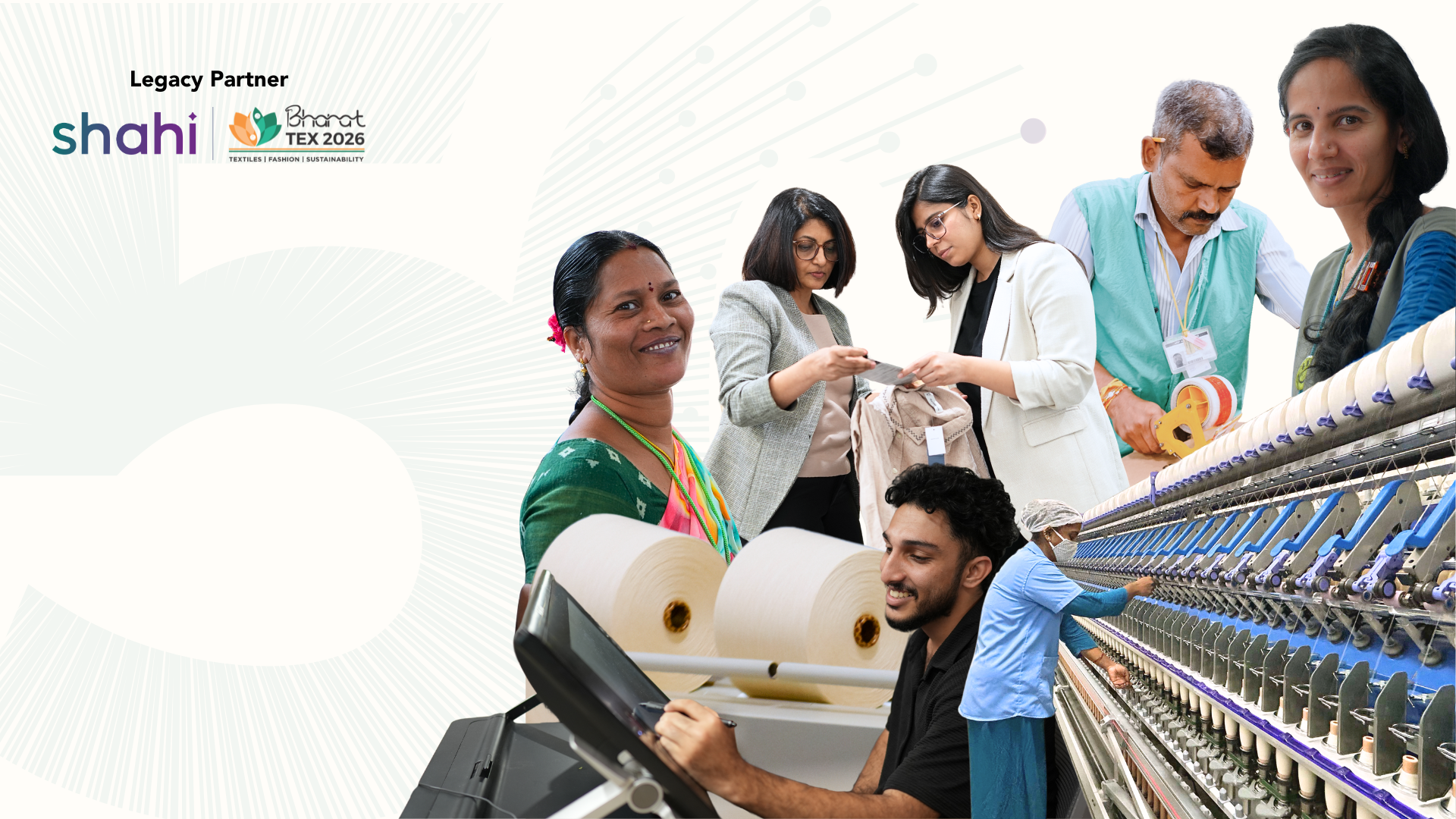
    Shahi participated in Bharat Tex for the third consecutive year, serving as a Legacy Partner. Our core message remained clear: building a resilient textile industry requires long-term vision, continuous innovation, and strong partnerships. True competitiveness comes from embedding sustainability and efficiency into daily manufacturing operations. 

    The four-day event was inaugurated by the Union Minister of Textiles, Shri Giriraj Singh. We had the privilege of welcoming him on the opening day for a walkthrough of our exhibit. The event brought together over 6,000 international buyers, 1,600 exhibitors, 1.3 lakh trade visitors, and industry stakeholders from 130 countries at Bharat Mandapam.

    The Shahi Exhibit: Celebrating 52 Years of Manufacturing Excellence

    We welcomed global buyers, policymakers, government officials, and peers to engage with our manufacturing capabilities, material innovations, and sustainability initiatives.

    The exhibit featured a curated journey wall that traced our evolution over the decades. It highlighted Shahi’s growth from humble origins to a vertically integrated network of over 50 manufacturing facilities. It showcased our diverse product portfolio, high-quality garment construction across various knits, wovens, and next-generation low-impact materials.

    Leadership Engagements

    Shahi’s leadership team participated in key panel discussions and roundtables across conference tracks. They shared practical perspectives on global trade, manufacturing efficiency, policy prioritization, and sustainable sourcing.

    Navigating Global Trade Uncertainty

    ‘India – A Trusted Partner in an Uncertain World: How Can Indian Companies Navigate a Rapidly Changing Global Trade Scenario‘

    Building Globally Competitive Manufacturing Ecosystems

    Harish Ahuja, Managing Director and Chairperson, emphasized that long-term capacity expansion must be guided by consumer demand rather than short-term tariff shifts. He highlighted India’s strong domestic fabric base, which enables over 90% domestic value addition, compared with 30%–40% in competing nations such as Vietnam and Bangladesh. He urged policy interventions to help manufacturers achieve sustainable double-digit margins and attract domestic investment.

    Building Global Competitiveness in India’s Textile & Apparel Sector

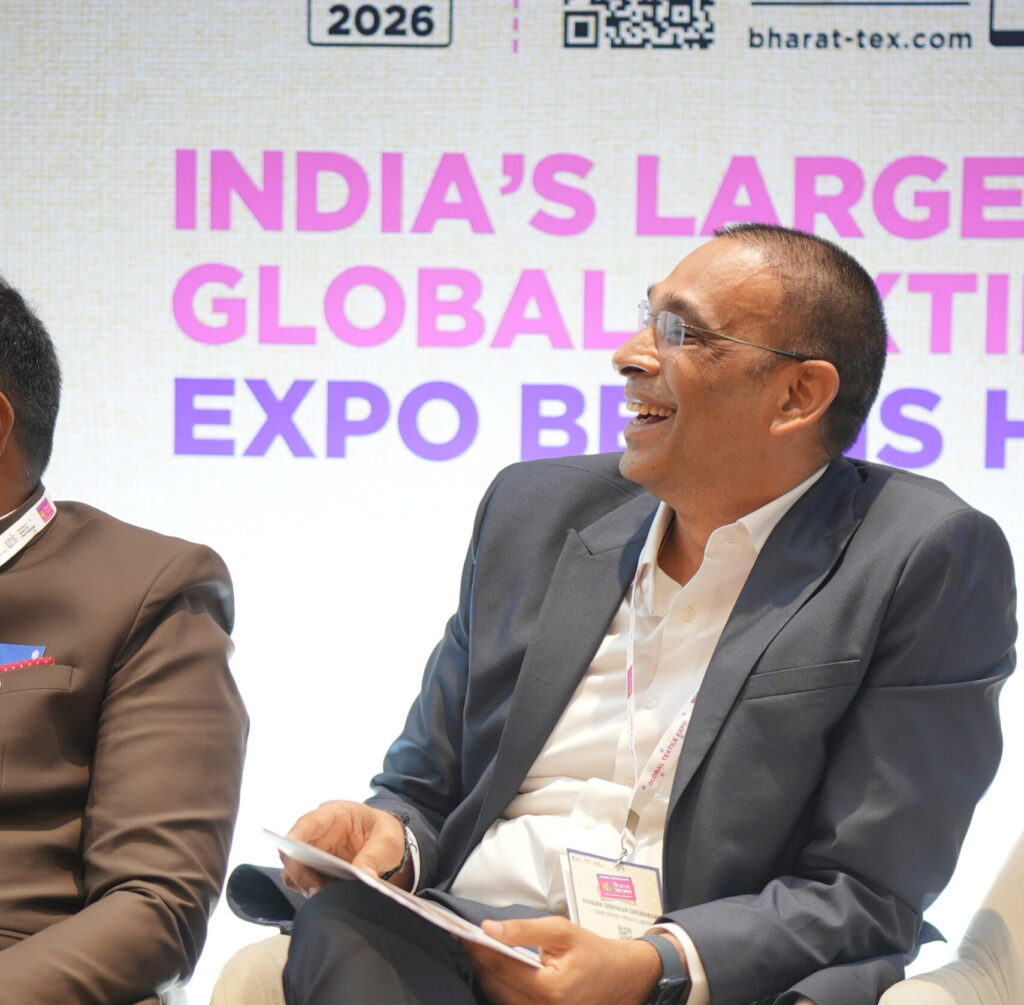
    At the panel discussion, Poorana Seenivasan, CEO of the Ladies Specialty Division, outlined key operational fundamentals. He noted that global competitiveness relies on building a supportive industrial ecosystem rather than individual corporate effort alone. Moving beyond low-cost labor, he urged manufacturers to focus on per-person productivity, process engineering, and technology adoption.

    Decarbonization and Sustainable Sourcing

    ‘Dialogue for Sustainable Sourcing Solutions’

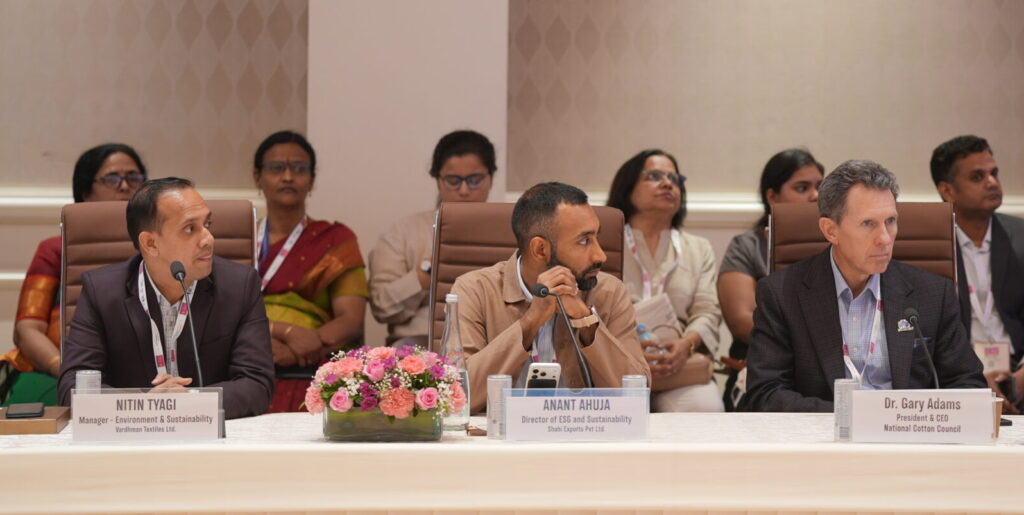
    Speaking at the panel with Better Cotton Initiative, Anant Ahuja, Director of ESG & Sustainability, shared how sustainability must be integrated directly into core business decisions. He highlighted that the most scalable initiatives are those that improve both environmental and operational performance. This includes Shahi’s move to biomass energy, raising our carbon-neutral energy share, and the adoption of water-saving processing, such as Fibre52. He also stressed the need to simplify reporting frameworks and support upstream suppliers through long-term buyer collaboration.

    Policy Reform and State Industrial Infrastructure

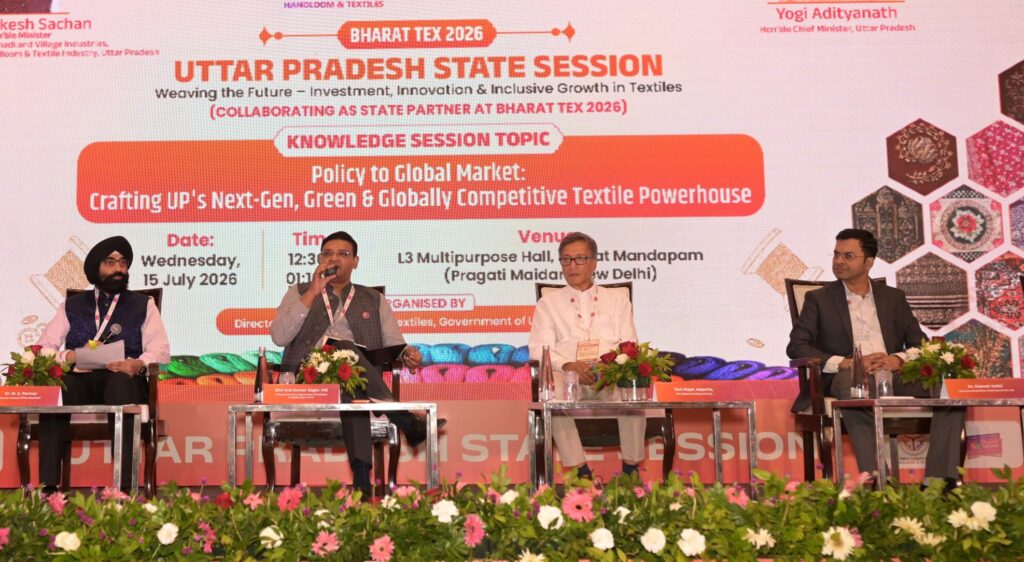
    ‘Crafting Uttar Pradesh’s Next-Generation, Green, and Global Textile Empire.’

    Dr. Rakesh Sethi, Chief Operating Officer, spoke at the Uttar Pradesh State panel. He advocated for giving the apparel sector equal policy priority with agriculture due to its capacity to generate mass employment. He also called for active private-sector participation in shaping industrial policy and building green manufacturing clusters.

    Regional Growth & Investment Frameworks

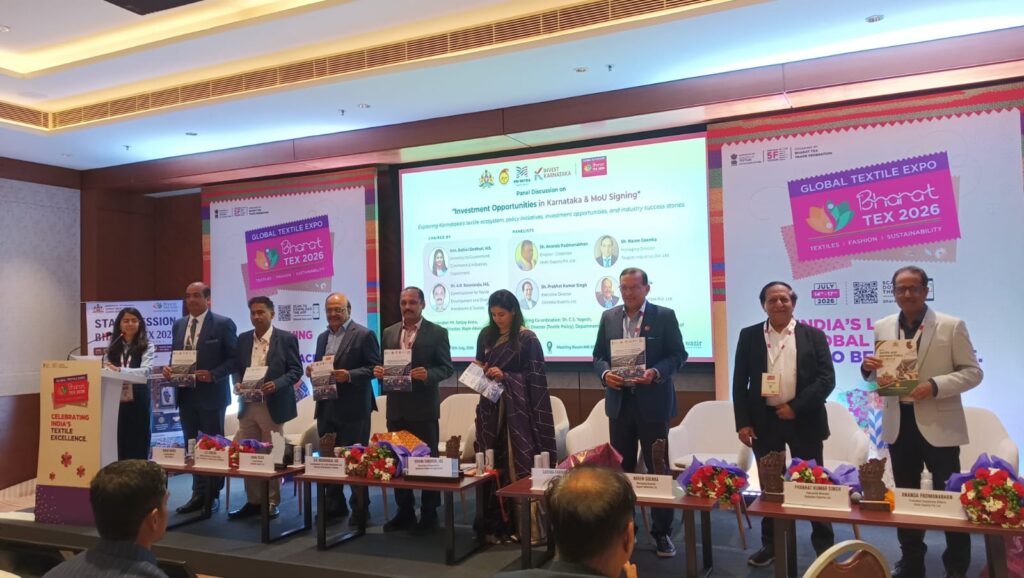
    Joseph M T, Assistant Vice President of Administration, addressed the Karnataka State Session. He highlighted Karnataka’s growing industrial potential, detailing how strategic state partnerships, infrastructure support, and localized cluster development can attract long-term apparel investments.

    Spotlight on Next-Gen Innovation & Heat Stress

    The Shahi ESG & Innovation team attended the PDS x Fashion For Good (FFG) Innovation Space Spotlight and Pitch Forum at Bharat Tex. The session brought together global innovators, brand partners, and supply chain leaders to explore emerging technologies. Our team engaged with early-stage solutions across circular materials, low-impact processing, and supply chain traceability, reinforcing our commitment to testing and scaling next-generation sustainable practices.

    A side session hosted by Good Business Lab and Sattva brought together key stakeholders—including buyers, manufacturers, research organizations, and non-profits—to address the pressing urgency of heat stress in India. The consensus was clear: heat adaptation must evolve beyond a mere worker-welfare or compliance issue to become a core business resilience strategy. Participants highlighted the need for context-specific, data-driven preventive measures rather than one-size-fits-all fixes. Achieving this requires cross-sector collaboration to share learnings and scale practical solutions.

    The Road Ahead

    The event served as a platform to engage with international buyers, supply chain partners, and research institutions to discuss joint accountability across global value chains. A highlight was the ICRIER research initiative and book launch on global competitiveness, which included Shahi as a Case Study. The event also hosted dialogues with global bodies on co-investing in supply chain decarbonization, which reaffirms the core message shared across our panel sessions: building a resilient textile industry requires moving beyond transactional vendor relationships. 

    As Bharat Tex 2026 concluded, we look forward to advancing the future of Indian apparel manufacturing by delivering high-quality products to the global market. 

  • The Decarb Diet: Insights into the Complexities of Supply Chain Decarbonization

    The Decarb Diet: Insights into the Complexities of Supply Chain Decarbonization

    Albert Einstein famously said, ‘We cannot solve our problems with the same thinking we used when we created them.’ This insight couldn’t be more relevant in global efforts to decarbonize. For the fashion industry— responsible for up to 10% of global carbon emissions; a major problem to solve is halving its emissions in the next five years. With up to 80% of those emissions coming from supply chains, manufacturers like Shahi bear the heaviest responsibility. Accelerating progress on these fronts will require new ways of thinking and working.

    How do manufacturing companies lead this transition while navigating financial risks and technological challenges? 

    This article explores the steps we are taking toward renewable energy and how collaboration between brands and stakeholders is key to unlocking sustainable solutions.

    Breaking down energy consumption in manufacturing

    Our operations rely on two types of energy: electrical and thermal. Electrical energy powers daily activities, while thermal energy, mainly from boilers, generates steam and hot water for processes like dyeing and finishing fabrics. 

    At Shahi, 81% of our energy comes from thermal energy due to our large textile operations, with the rest coming from electricity. While renewable electricity has been the industry’s primary focus, phasing out fossil-fuel-based thermal energy in textile production is where the biggest impact of decarbonization lies.

    Toward 100% renewable electricity at Shahi

    Over the past decade, we’ve invested heavily in renewable electricity, reaching 65% renewable energy for our operations. Supported by favorable government policies, in 2018, we strategically invested in two solar plants with a combined 84 MW capacity and 8.75 MW of wind power in Karnataka. These plants generate 130 million kWh annually, cutting over 610,000 metric tons of CO2 emissions since 2018. This year, we’re expanding with a 40 MW solar project in Karnataka and smaller ones in Uttar Pradesh and Tamil Nadu, bringing our renewable capacity to 151 MW. 

    Driven by our commitment to sustainability, we are working toward 100% renewable electricity by 2027.

    Phasing out coal in our operations

    By 2022, we successfully transitioned all our garment factories from coal to biomass. The greater challenge lies in our textile mills, which require hundreds of tons of coal daily to operate. The UN The Fashion Industry Charter for Climate Action mandates that brands should not onboard any new factories and mills that use coal. This significantly accelerates the timeline for phasing out coal set by the Paris Agreement, which permits non-OECD countries until 2040. However, the Charter also states that brands should establish engagement and incentive programs to support their suppliers’ transition from coal. Thus making collaboration and a willingness to share risks essential.

    We are addressing this by rapidly increasing biomass use, a carbon-neutral alternative. One of our mills has been 100% coal-free since December 2023, and two will be 50% coal-free by January 2025.

    Challenges of decarbonizing thermal energy

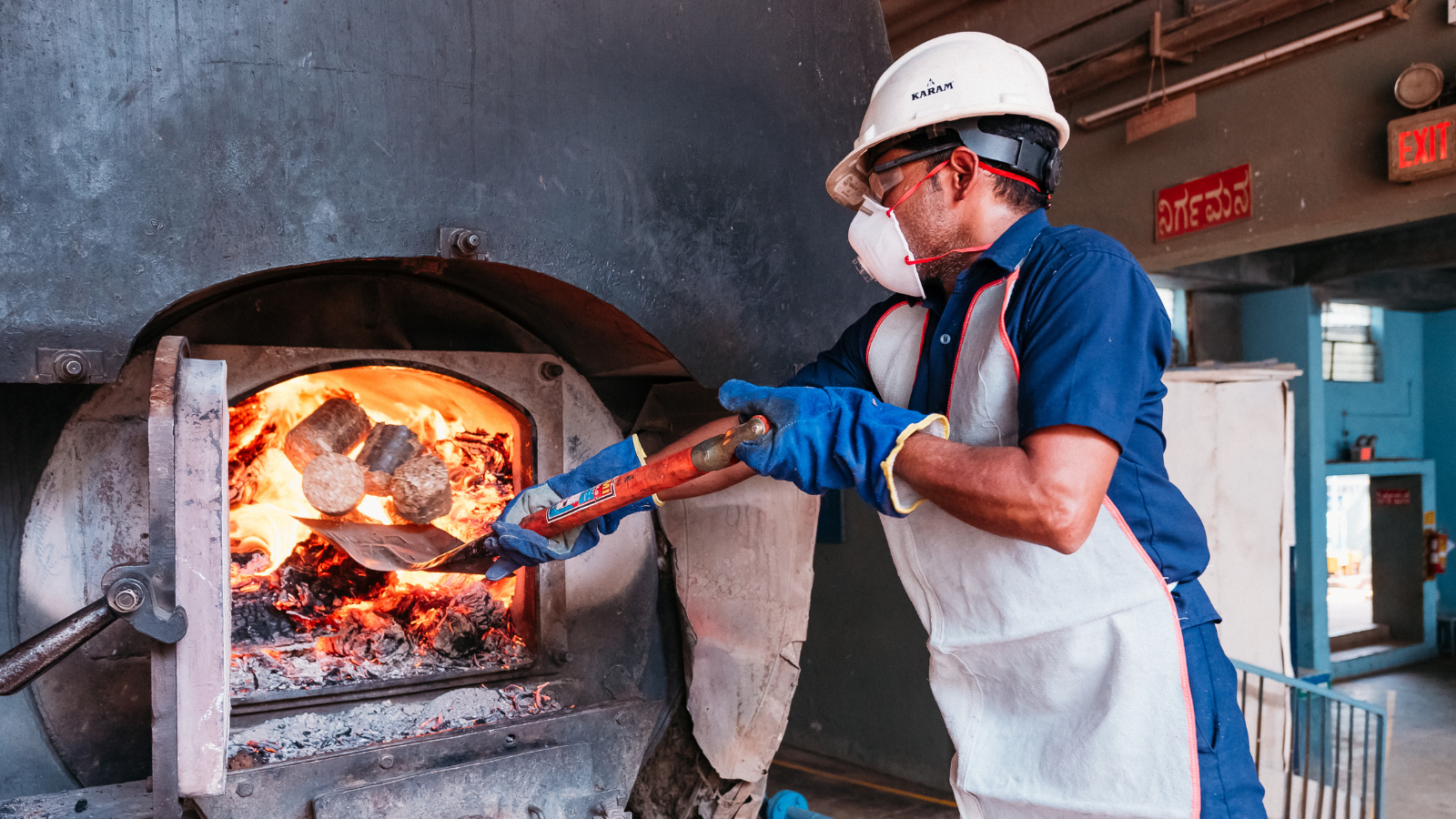
    Replacing coal with biomass as a fuel source requires substantial upfront investments from suppliers. For each of our 50 factories and 3 textile mills, we’ve invested substantially in biomass-enabled systems, including Atmospheric Fluidized Combustion (AFBC) boilers, Thermopac systems with electrostatic precipitators to capture fine particles, expanded biomass storage facilities, and automated ash handling plants to reduce health risks.

    Sourcing and handling biomass also present challenges. Building a reliable supplier network is crucial to mitigate seasonal fuel fluctuations and ensure a steady supply chain. In India, like most of the world, biomass is still an informal industry compared to coal, which is well-established. To address the challenge of the biomass supply chains, we’re collaborating with biomass aggregators and experts to assess local agricultural waste availability. Our goal is to vertically integrate our biomass supply.

    This, however, would be a temporary solution that will need replacing with more sustainable options, requiring additional investments in the future. We are excited by upcoming technologies such as green hydrogen, electric boilers, and heat pumps.

    A study in India shows that electric boilers and heat pumps are capital-intensive and are likely to increase the cost of operations, driven by the price of electricity, which is higher than the current fuel prices per unit of energy. While the return on investment for these technologies is yet to be determined, and given that textiles is a low-margin industry, manufacturers need government and brand incentives to help switch to newer, cleaner technologies. Further, to drive emissions down further, it’s important that the national grid procures increasing amounts of clean electricity and shifts away from fossil fuels overall.

    Collaboration as a catalyst for change

    While the major impact of climate change lies in the supply chain, the entire value chain, including brands and other important stakeholders, must share responsibility for climate action. Collaboration with brands and stakeholders is key to reducing the risks of transitioning away from fossil fuels and creating innovative solutions that can be scaled and adopted.

    First, it is crucial to accelerate R&D to find alternatives to biomass. Decarbonization isn’t just a fashion industry issue; it’s a global challenge that requires cross-industry collaboration. For example, we can learn from the tech industry, which is adopting renewables as its energy demand increases significantly with the rise of AI. 

    Second, sharing the financial burden requires not only brand support but also financial institutions. Manufacturers can benefit from funding for higher-risk, long-term investments, such as infrastructure changes needed for climate adaptation that go beyond debt. 

    Finally, reimagining suppliers as value-adding co-creators rather than just implementers ensures sustainability strategies align more closely with real-world operations. 

    By aligning goals, pooling resources, and fostering transparent partnerships, we can develop scalable, unified solutions to decarbonize the industry.