Author: Editorial Team
-

Speaking at the UN Forum on Business and Human Rights
It was an honor to share our experiences on incorporating gender equality principles in business operations at the panel on ‘Gender Guidance for the UN Guiding Principles on Business and Human Rights: From Paper to Practice’ at the UN Forum on Business and Human Rights, the world’s largest global gathering on business and human rights, held annually. (more…)
-
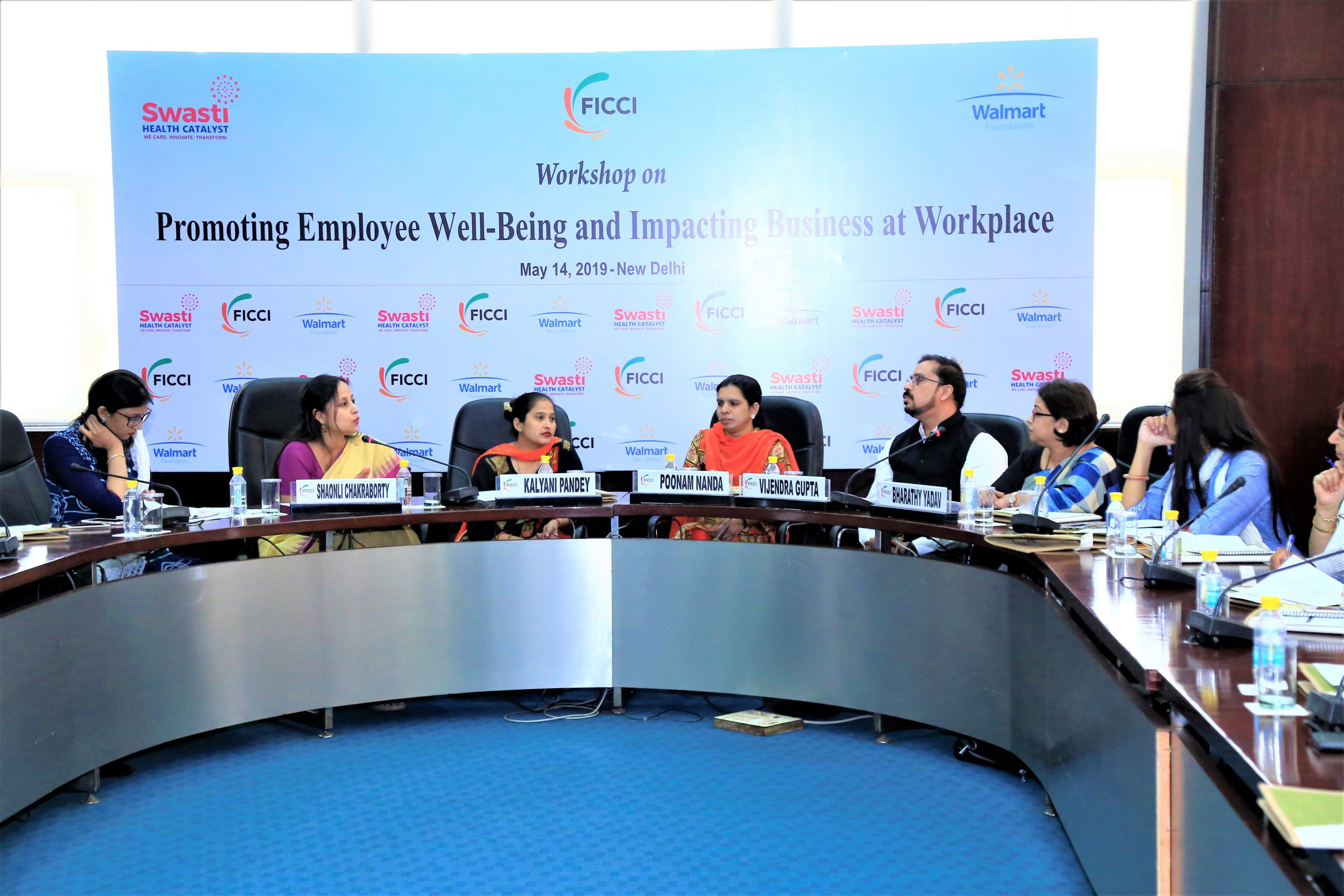
Insights from speaking engagements: 2019
We love sharing our work and learnings with industry and other important stakeholders. This post is an ongoing compilation of conferences and events we’ve spoken at in 2019. (more…)
-

Closing the skill gap: How Shahi’s skilling efforts enable more women to enter the workforce
India’s Female Labor Force Participation has fallen from 36.7% in 2005 to 26% in 2018. The apparel industry, as a majority female employer, holds the power to break some of the barriers women face to enter the formal workforce. Read our blog post to understand how Shahi’s skilling efforts are enabling more women to join the formal workforce.
By Gauri Sharma and Sakshi Katyal
-

Committing to women’s reproductive health at Women Deliver 2019
Women Deliver is the world’s largest conference on gender equality and the health, rights, and well-being of girls and women. It’s in some ways an unlikely event for an apparel business to attend, let alone be invited to speak. However, in a country where the number of women in the workforce is dropping rapidly (from 34% to 24% in the last decade), our industry is a crucial source of economic empowerment for low-skilled women as well as an advocate for advancing women’s participation in work outside the home.
The triennial conference was held in Vancouver this June, with an attendance of over 8,000 delegates. Shahi’s head of Organizational Development, Anant Ahuja, was invited to speak on several panels to discuss the role of the private sector in supporting women’s empowerment and to announce some of our specific commitments. These include our commitment to extend P.A.C.E. training to 58,000* employees at Shahi as well as new commitment to provide reproductive health services as part of the Private Sector Action for Women’s Health & Empowerment led by the UN Foundation and others.
Shahi has always understood that women’s ability to care for their reproductive health and plan their family’s future is directly related to their personal and professional development – as well as their ability to contribute fully to the business and to society. In 2019*, we committed to partner with the Family Planning Association of India (FPAI) to reach 9,000 workers in six of our factories, along with more than 10,000 community members, totaling 19,000 people, with women’s health information and services, including sexual and reproductive health that includes family planning, STI testing and treatment, and maternal and child health by 2020. Due to the challenges posed by COVID-19, we have extended the timeline of implementation of this commitment to July 2021. Learnings from this pilot initiative will lead to a wide-scale rollout of such services across more of Shahi’s factories.
Good Business Lab will undertake rigorous research to understand the outcomes of the pilot and are testing a range of implementation methodologies to increase effectiveness ahead of an expanded roll out across the business in the coming years. Watch this space for more updates on the launch and the research outcomes.
*Editorial Note: This post was originally published on June 26, 2019, and was updated on September 30, 2020.
-
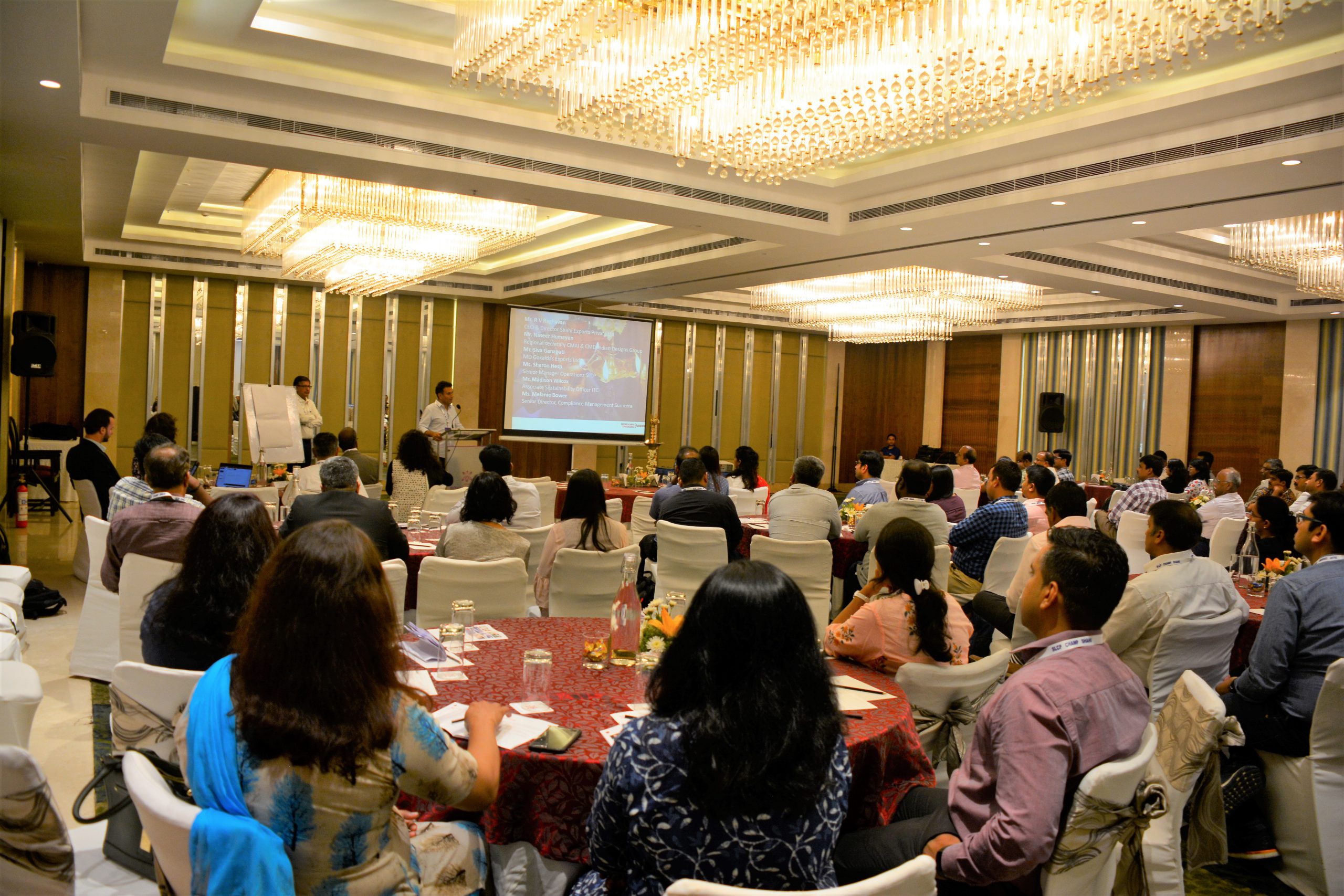
Launching Social & Labor Convergence Program (SLCP) in India
As India’s largest apparel manufacturer with over 60 factories, we are proud to be a signatory to and welcome to India – Social Labor & Convergence Program (SLCP) – a first-of-its-kind, disruptive and widely accepted framework to measure social and labour standards.
SLCP embodies the benefits of collaboration across brands, manufacturers, non-profits, certification bodies and others. By creating a Converged Assessment Framework (CAF), SLCP will reduce the need for multiple, often duplicate audits, and enable us to continue investing in the well-being of our 100,000+ strong workforce. These are the type of disruptive ideas that can truly transform the supply chain.
On May 30, 2019, Shahi hosted the India launch of SLCP – bringing together all stakeholders for a day-long event to discuss SLCP’s operations, brands’ adoption plans and manufacturers’ experience running pilots. Through group discussions, participants explored possible barriers and opportunities to implementing SLCP in their supply chain and facilities.
A full coverage of the event can be accessed view more.
-
A year on from Unit 8: What we’ve learned
Just over a year ago, a serious incident took place at one of our 65 factories, Unit 8, where unionized workers were attacked by non-unionized workers resulting in a violent exchange. It was widely covered in the media at the time and created truly regrettable reputational damage for our buyers. The incident and the behaviors that led to it are absolutely condemned by Shahi and go against our robust policies on freedom of association and anti-harassment. We take our responsibilities to our employees very seriously and have been leaders within the apparel sector in building a positive and supportive work culture. However, this incident is evidence that, despite many positive policies and initiatives, we have more work to do to protect the rights of all 100,000 of our workforce.
Shahi is committed to worker well-being and respecting our employees’ right to freedom of association. We acknowledge that the factory management’s initial response, based on internal reports, was not appropriate to the gravity of the situation and our senior management has since taken serious steps to remedy the situation for the affected workers and undertake wide-scale preventative actions. In the year since the incident happened, Shahi has reflected, investigated and made bold decisions and changes across the organization to prevent such incidents happening in future.
Below we answer some of the common questions that our stakeholders and the public have asked us in the last 12 months.
What happened at unit 8?
Our understanding of what happened is based on a wide range of accounts from factory workers and managers.
On April 2, 2018, Karnataka Garment Workers Union (KOOGU) put forth a charter of demands and requested to meet the Unit 8 management. These demands included better water facilities, improved transportation and higher wages.
On April 4, 2018, a worker who was a part of the union was late to work. On being questioned about his lateness, an argument ensued between the worker and his line manager which drew a crowd of workers. This escalated into a brief but violent outburst between the union and non-union workers, which culminated in a group of non-union workers pushing, shoving and forcibly removing the union workers from the factory premises. Following this incident, the factory management team at Unit 8 regrettably and inappropriately suspended the 12 unionized workers. However, following an investigation by Shahi’s leadership, this suspension was reversed and the union workers were reintegrated into the factory with 10 still in employment at Shahi.
How was the situation remedied?
Two investigations were conducted by Shahi’s leadership between April 19 and May 27, 2018. Through the investigations, it emerged that Unit 8’s factory managers failed to ensure a safe working environment and their attitude towards the union was also not aligned with Shahi’s values. Their condoning of violence, unfair dismissal of workers and prevention of freedom of association is a serious offence and has no place at Shahi. This is why the employment of the three workers identified to be individually responsible for the violence, along with the five members of factory management who were aware of their actions, was terminated. Since termination in India is highly regulated, the domestic enquiry is still ongoing and is expected to be completed by the end of June 2019. The suspension of the unionized workers was also reversed, and full efforts were made to compensate them and support them to rejoin the factory with no reservations. One year later, 10 of the 12 continue to work in the factory. Following the investigation, Shahi worked collaboratively with KOOGU, to resolve the initial issue, agree on steps to support worker voice in the factory and to sign an agreement with them on future good practice.
How did you reach a resolution with the union?
On June 25, 2018, Shahi and KOOGU signed a Memorandum of Understanding (MoU) after a series of dialogues. Worker Committee elections in Unit 8 were conducted by a third-party legal firm, ensuring a fair and effective process. KOOGU have expressed their satisfaction with the effort and all factory management in the unit have now undergone training on improving industrial relations.
The actions taken following the MoU have shown an honest commitment from both Shahi and the union to continue to improve relations with each other as well as conditions for workers. The feedback Shahi has received from various stakeholders, including unions and activists, is that our efforts have been effective and the MoU has become a historic move for a garment manufacturer in India. At this stage, around 12 months after signing the MoU, all the documented concerns have been corrected. Below is an update on all the actions taken. Along with remediating the MoU points, Shahi is rolling out a company-wide training program on industrial relations focusing on the importance of maintaining healthy relations at all levels in the factory and respecting every worker’s right to associate freely. As the industrial relations training rolls out, we are measuring feedback on its effectiveness as well as worker satisfaction.
On March 14, 2019, at the UN South Asia Forum on Business and Human Rights, Shahi’s head of Organizational Development, Anant Ahuja, shared the stage with KOOGU’s Honorary President, Sebastian Devaraj. The panel discussion openly discussed the challenges faced at Unit 8 in 2018 and the remediation steps taken since, in line with the UN’s Guiding Principles and in partnership with KOOGU.
A representative from KOOGU shared the following statement on the progress that has been made: “After discussions on the action points it was agreed that the commitment of Shahi Management to take steps to create an environment conducive for Freedom of Association and collective bargaining have been addressed satisfactorily.”
What preventative actions is Shahi taking for the future?
1. Industrial Relations (IR) training
Across all our units in South India, we have conducted IR training for factory management, which we plan to extend to other factories in 2019. We will also conduct refresher trainings and collect feedback from participants and our brand partners to make improvements. Shahi’s commitment to freedom of association has been communicated to workers across all factories and the policy is displayed on Notice Boards as well as in illustrated employee handbooks.2. Elections and strengthening of committees
Elections and strengthening of worker committees has been conducted in 45 factories. We follow a five-step process to strengthen worker committees:
– Elections
– Documenting process
– Training on roles/responsibilities
– Measuring effectiveness
– General awareness within the factory3. Worker Voice: SMS-based grievance redressal
An anonymous digital communication system is being piloted across two Shahi factories through Workplace Options. With the success we have seen of this tool in capturing feedback and issues from employees, Shahi will operationalize a two-way communication and grievance redressal tool across 20 factories in 2019.4. Worker surveys
We have redesigned our employee satisfaction survey, which will be implemented in partnership with an external agency across all factories. The goal will be to proactively capture the feedback of workers to identify issues preemptively.In addition to these four key steps, we are continuously developing our HR systems to effectively determine and address the concerns of all employees from workers to supervisors and above. In order to reach our large and diverse workforce of 100,000 people, we aim to develop and innovate solutions that can rapidly and effectively identify issues.
What is Shahi’s policy on Freedom of Association?
We have a clear policy that allows all employees to freely associate with any union they chose to at any time. This policy has been reiterated through announcements and continues to be displayed on notice boards in all factories as well as in illustrated worker handbooks. As above, training on IR has been conducted for a majority of our workers across 40 factories and we will continue to scale this up across all units. Senior management has also reiterated its commitment to freedom of association and collective bargaining and to creating a safe working environment for all.
-
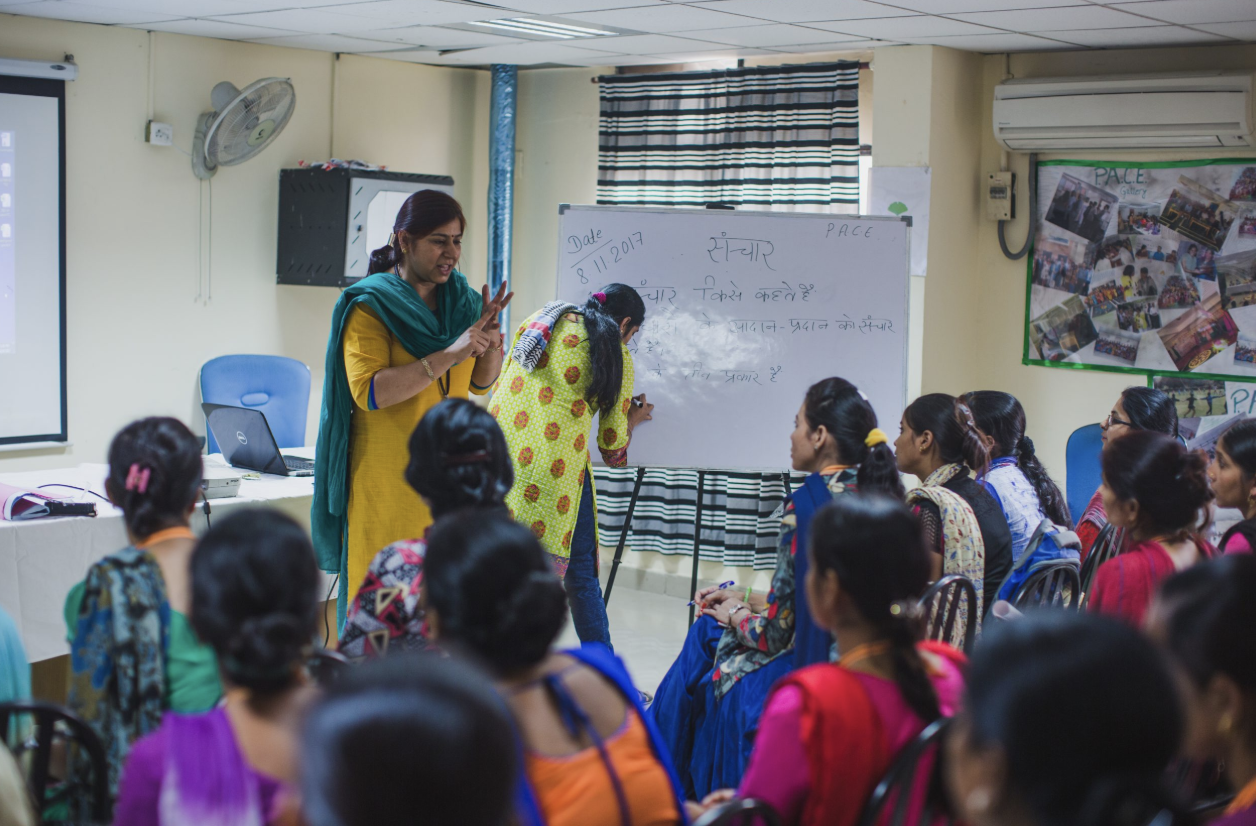
Empowering women who power the global fashion industry
Our industry is reliant on female labor. At Shahi we employ more than 70,000 talented and capable women across our factories and corporate HQ, making us one of the biggest private employers of women in India. As we prepare to attend Women Deliver 2019, the world’s largest conference on gender equality next month, we’ve been reflecting on what we’re doing to support women so we can set some objectives for the future.
Over the last 40 years we’ve developed numerous programmes to support female workers. As we have built closer and closer relationships with our buyers, we’ve also co-created and implemented new and advanced programming with them – on issues from empowerment to health and leadership. We are increasingly also looking at processes and systems that can deliver greater gender equality at every level of the business. Below are a few of the initiatives we are currently working on.
Economic empowerment through skill building and employment
Since 2013, Shahi has been establishing training centers across the country to provide access to free training on sewing skills, after which they are guaranteed employment at Shahi factories. Through this, we hope to generate employment for rural populations, with a focus on increasing female labour force participation.
Supporting employees to identify, prevent and speak up about sexual harassment
As a part of our ongoing Prevention of Sexual Harassment (POSH) strategy, we are conducting regular awareness sessions across our factories what sexual harassment is and how it can be prevented and addressed through grievance redressal mechanisms at Shahi. Employees are also explained their rights as per the Prevention of Sexual Harassment at the Workplace Act. In 2019, we will be launching a new POSH program in two factories in partnership with H&M and C&A.
Piloting a new SMS-based, worker-management communication tool
Supported by a fantastic team at The Children’s Place and Good Business Lab (a not-for-profit innovation lab incubated by Shahi), we are currently piloting an SMS-based grievance redressal tool developed by Workplace Options across two factories. It’s an anonymous system that we hope will enable greater reporting of issues, especially those involving gender discrimination and harassment. The pilot concludes this summer and the findings will inform a company-wide strategy for improving worker-management communication by leveraging technology.
Awareness and sensitization around gender-based discrimination and harassment
In partnership with C&A Foundation we launched a powerful program called ‘Streelink’ in two Shahi factories in Haryana, reaching 8,000 workers. The program aims to raise awareness of gender-based discrimination and violence through engaging games and street theatre.

Mela (Fair) conducted for men and women on gender equality Hemoglobin testing and iron tablets for anemic women
India has the largest number of anemic women in the world, with more than half (51%) of all women of reproductive age being anemic. Shahi partnered with Employee State Insurance (ESI) and Namma Wellness to launch “Ironwoman”, a project to test hemoglobin levels and provide iron tablets to anemic women. We’ve also partnered with Good Business Lab to build the business case for the industry to invest in women’s health. We have already screened over 30,000 women.
HERproject by BSR
In partnership with different brand partners, we are running HERproject by BSR in four factories.This program has three workplace-based interventions in health, financial inclusion and gender equality, created especially for women in supply chains. Since its inception in 2007, HERproject has been implemented in more than 700 workplaces across 14 countries and has increased the well-being, confidence, and economic potential of more than 800,000 women.
Personal Advancement and Career Enhancement (P.A.C.E.)
The P.A.C.E. programme needs no introduction on this blog! It’s GAP Inc.’s proprietary, holistic life-skills training program for garment workers – which we helped to co-create in 2007 and which has become one of our flagship initiatives. To date, over 38,000 of our female workers have undertaken the 70-hour training programme, measurably increasing their self-esteem and self-efficacy both inside the factory and at home. This year we’re formulating a strategy to take P.A.C.E. beyond our factories to adolescent girls and self-help groups (SHGs).

P.A.C.E. training in F1 factory at Shahi Sexual and Reproductive Health (SRH)
In partnership with the Family Planning Association of India (FPAI), we are supporting the goals of the UN Foundation’s Universal Access programme by piloting a new programme to provide knowledge, support and SRH services to 9,000 workers across six factories in Karnataka. In-factory awareness sessions will be supported by a community satellite clinic close to workers’ homes, which will provide professional services through FPAI reaching over 12,000 people. The programme will be evaluated by the Good Business Lab with the aim to scale a best-practice intervention across all factory units.
Like many other businesses in the world, Shahi has a long journey to reach gender equality but we are implementing multiple strategies to drive continuous improvement towards that goal. For instance, although the garment industry (including Shahi) employs a large number of women, it usually has few women in managerial and leadership positions. This is something we’re committed to change. If you would like to talk about partnering to find new ways to support our female garment workers please get in touch with us at od@shahi.co.in.
-

Will 2019 be the year suppliers are represented on the global stage?
Creating sustainable solutions for the apparel industry needs the entire supply chain to work together. So why are suppliers always so absent from the global conference stage? Read this blog post to understand our opinion.
At one of Europe’s biggest sustainable fashion conferences last year, some of the most important and inspiring voices of fashion were sharing ideas and commitments on the industry’s biggest sustainability issues. Brands, academics, designers, and young people were all represented. It was diverse and thoughtful but, as speaker, after speaker spoke about supply chains and the challenges of bringing suppliers on the sustainability journey, one critical voice was barely heard: that of suppliers themselves.
Cut to another major annual conference in New York last autumn. Again the main stage was diverse and exciting. Forums delved deeper into topics like supply chain transparency and sustainable supplier financing. But no supplier voice was present. A prominent sustainability head of a US fashion brand asked the audience to raise a hand if they had problems keeping their suppliers in line on sustainability targets – there was no thought that some of them might actually be suppliers.
Sustainability, ethical practices, and transparency will only advance at scale if we are all speaking and acting as one aligned industry. So I was left wondering why suppliers are being cut out of the international conference narrative – not only on the stage but even as attendees.
Perhaps it’s an assumption that suppliers need to be led by buyers to achieve better sustainability and social performance. To a large extent, that has been true. But this view fails to recognize some incredible work that is being undertaken by the companies that are actually closest to the big issues of the fashion supply chain.
Look at Twinery, MAS Holdings’ collaborative innovation campus in Colombo developing new technologies to tackle 15 sustainability issues by 2025. Manufacturers like Pratibha Syntex and Cotton Blossom worked behind the scenes to bring to life the world’s first Cradle-to-Cradle (C2C) certified GOLD T-shirts, in partnership with C&A. And consider some our own initiatives at Shahi, from incubating an academic research lab that’s building an unequivocal business case for investing in worker wellbeing, to committing to 100% renewable electricity in the coming years, and training 58,0000 women by 2024 in P.A.C.E.- a Gap Inc. proprietary life skills program being implemented at Shahi since 2007.
The wealth of garment manufacturing knowledge that exists in the global East and South is immense – and it is matched by the ambition and commitment of some of its top manufacturers to tackle the industry’s most pressing issues. However, just as brands will never reach their targets without the cooperation of suppliers, those suppliers will never reach their impact goals without the support and recognition of the brands they serve.
So in 2019, I hope that we all start to see a new kind of diversity on the stage at global sustainability conferences: that of suppliers from emerging markets who are working to transform the industry from the bottom up. Then perhaps we can open a genuine and exciting dialogue that will lead to innovative, co-created solutions and commitments.
*Editorial Note: This post was originally published on March 6, 2020, and was updated on September 30, 2020.
-

Iron Woman: Fighting anemia among our female employees
India has the largest number of anemic women in the world, with more than half (51%) of all women of reproductive age being anemic. This has been attributed to multiple factors ranging from poor nutrition and repeated childbearing, to high incidence of infections. Apart from affecting mobility, mental health, and causing pain and discomfort, anemia can also result in significant productivity losses. Read this update to understand our commitment to women’ s health.
Considering the scale of the problem, the Directorate of Factories and Boilers’ in Karnataka recently launched a state-wide drive to test female workers in factories and assess the prevalence of anemia through Employee State Insurance (ESI). Taking a proactive and collaborative approach, Shahi launched the “IronWoman” a project that tests women for their blood hemoglobin levels and provides iron tablets to those found anemic. In the first phase, Shahi partnered with ESI to conduct hemoglobin testing for around 20,000 women in 25 factories. We found that 29% of women were anemic and provided all affected women with free iron supplementation and treatment for three months through ESI.

Hemoglobin testing in factories Realizing the depth and extent of this problem, in December 2018 we launched the second phase of this project in our rural factories and have since tested an additional 13,500 women. We found that the incidence rate in rural factories is 22%, almost 8% lower than urban factories. These are interesting insights for Shahi and we are still looking into why there is a difference between urban and rural factories and how Shahi can support women to improve their hemoglobin levels. This is why we have partnered with Namma Wellness, a healthcare organization that provides specialized medical support services to corporates, to retest these women after three months and check for improvements in hemoglobin levels.
As a majority female company, we believe that women’s health and well-being is a critical issue for us to address, and fighting anemia, which is considered to be the biggest cause of disability in India, takes top priority. We’re also committed to learning and sharing our experience from this program. Good Business Lab, a not-for-profit social innovation lab incubated by Shahi, is conducting a randomized controlled trial (RCT) on this project to understand how regularly the women took tablets, if they changed their dietary habits to eat more iron rich foods, and whether the improvement in health was reflected in their productivity, attendance, energy levels and general satisfaction towards work. Through this rigorous research, we aim to build the business case for the industry and the wider private sector for investing in women’s health, particularly the widespread problem of anemia among India’s women.