At Shahi, we believe in sharing our experiences and learning with all the stakeholders in the fashion industry and beyond. This is an ongoing post to share insights from our speaking engagements in 2022. Read insights from previous years’ engagements: 2021, 2020.
New Delhi, 29 November 2022: Shahi Exports is thrilled to be recognized as the winner of two International Green Apple Environment Awards for 2022. Shahi has won a silver award in ‘Water Efficiency’ for denim production and a bronze award in the ‘Carbon Reduction’ category for mitigating carbon dioxide emissions.
The International Green Apple Awards are conferred by the UK-based Green Organization in a campaign to find the world’s greenest companies since 1994. The awards saw close to 500 nominations this year. Shahi’s environmental work will now feature along with the likes of Infosys, TESCO, and BMW.
The fashion industry accounts for 10% of global GHG emissions and 20% of global industrial-water pollution. With global forces rallying to fight climate change, India has committed to mitigating 1 billion MT in carbon emissions by 2030. As India’s largest apparel and textile exporter, Shahi has developed a strong commitment to environmental sustainability in its operations to meet the national goal, industry demand, and the necessity for constructive climate action.
Silver Award in Water Efficiency
Shahi won the Silver International Green Apple Environment Award for Water efficiency in our Denim Operations.
Shahi’s denim production factories are equipped with best-in-class technology to meet high water efficiency standards. Conventional production methods require about 75-85 liters of water to produce a pair of jeans. The denim operations at Shahi recycle 100% of its water to bring it back into the process and reduce freshwater dependence. Overall, a pair of jeans produced by Shahi effectively utilize less than 5 liters of water.
MA Prasad, COO of the Denim Division at Shahi Exports, said:
“Denim washing and production is a highly resource-intensive process. Through continuous efforts, we have achieved zero liquid discharge from our facility, and through various green initiatives, we have created one of the most sustainable denim operations. We are humbled and encouraged by this recognition. “
Bronze Award in Carbon Reduction
Shahi won the Bronze International Green Apple Environment Award for Carbon Reduction through our measures for mitigating emissions.
Since 2019, Shahi has reduced 448,000 MT of carbon emissions company-wide by moving away from conventional energy sources to environment-friendly renewable sources. Today, Shahi uses 70% of renewable electricity with an established setup of 84 MW solar power plants and 8.75 MW Wind Power Plants. Shahi is currently on the path of becoming 100% renewable electricity driven by 2026.
Shridatta Veera, Assistant Vice President, Central Maintenance and Environmental Sustainability at Shahi Exports, said:
“Driven by our company’s sustainability vision and policy, we have realized the need to act against climate change. Moving towards green energy helps reduce carbon footprint, hence we installed 84 MW solar power plants all at once to meet our requirements. Receiving an award for this milestone is heartening. It motivates us to further on our mitigation journey.”
The awards were presented by Jayne Drant, Chief Commercial Officer of Nurture Landscapes, at a ceremony at the Houses of Parliament, London, on November 21, 2022. The judges of the award shared their thoughts on Shahi’s win,
“The textile industry is often in the spotlight for its social and environmental impact. Shahi Exports welcomes this attention as they support and contribute to India’s reduction targets of almost half a million tonnes of CO2 saved in 2 years and much more to come. As India’s largest clothing manufacturer, Shahi wants to be among the greenest. They have added sustainability to most aspects of the production system. The push to reduce water use is a prime example, using less than half the water typically consumed in the denim manufacturing process.”
The Green Apple marks a milestone in Shahi’s continued journey towards sustainability excellence. Shahi Exports is proud to have the opportunity to uphold the title of a Green World Ambassador.
New Delhi, 30 September, 2022: Shahi Exports, India’s largest apparel manufacturer, announced that Anant Ahuja has joined the Board of Directors of the Better Buying Institute (BBI). BBI was set up in 2015 with a mission to enable buyers and suppliers to work together with responsible purchasing practices to achieve shared goals of profitability and social and environmental sustainability. As the first South Asian supplier to join the BBI Board, Anant’s appointment is a significant step towards the industry-wide transformation of buyer purchasing practices. This will further strengthen buyer-supplier relationships contributing to the overall well-being of supply chain workers and improving environmental practices.
As the Head of Organizational Development at Shahi, Anant is primarily responsible for positive change across the business through innovation and strategy, aligning the company’s growth with the development of people, communities, and the environment. Anant is also the CEO and co-founder of the Good Business Lab, a not-for-profit labor innovation start-up that conducts research to find common ground between worker well-being and business interests. He was also a part of NITI Aayog’s ‘Champions of Change’ initiative.
Shahi Exports operates over 50 factories and three processing mills across nine states in India, employing over 113,000 people. Women workers constitute nearly 70% of Shahi’s workforce.
Anant Ahuja, Head of Organizational Development at Shahi Exports, said:
Anant Ahuja, Head of Organizational Development at Shahi Exports
“Better Buyinghas led the way in measuring and raising awareness of the state of purchasing practices by driving transparency, and this is an exciting time to be joining the Board.”
“There is growing awareness and acceptance in the industry that purchasing practices have a massive impact on workers’ wellbeing, environmental sustainability, and innovation. Buyers are significantly more open to working with suppliers to understand the pain points and develop win-win partnerships, and suppliers are increasingly aware of the knowledge and influence they hold in driving a sustainable future for the fashion industry. But there’s still a long way to go in rebalancing the power dynamics between buyers and suppliers. The time for the industry to come together and act on purchasing practices is now.”
Ahuja joins fellow Board members Nina Smith, founding Chief Executive of GoodWeave International; Dr. Peter Cheng, Co-founder and Chairman of Hanbo Group; Tom Rausch, Global Lead, Agrostart – BASF, and Michael Gilson, CEO, and Founder of Cormac Advisors.
Dr. Marsha Dickson, President, and Co-Founder of the Better Buying Institute said:
“Anant has a deep understanding of the challenges suppliers face in their business relationships with brands and retailers. He also has a track record of implementing new approaches to address workplace and business opportunities. With this valuable background, Anant will be helping us explore how Better Buying’s work can add even more value to both buyers and suppliers as they collaborate around new practices and ways of working together.”
Puneesh Lamba, Chief Technology Officer of Shahi, received the recognition for IoT Icon in the CIO Power List 2022. The CIO Power List, presented by CORE Media, recognizes India’s most influential Chief Information Officers (CIOs), IT Leaders, and Digital Leaders. They have demonstrated extraordinary vision and outstanding work in the last year in enterprise technology. They have leveraged technology to improve processes, customer touchpoints, and experiences.
An exclusive ceremony was held on 20th-21st May 2022 in Mumbai, honoring over 130 CIOs across two main categories: Business Icons and Technology Icons.
Business Icon recognitions are conferred upon select CIOs/IT Leaders from 23 categories and across 13 different industry verticals, while Technology Icons upon leaders across 20 different technology categories.
“Congratulations to all the CIO Power List 2022 winners. In the new digital economy, these CIOs and Digital Leaders are at the forefront, driving transformation that enables organizations in staying ahead with innovation for growth and success in the global marketplace. The CIO Power List recognitions are bestowed upon visionary leaders. It is our privilege to honor them as they rise above disruption and establish IT as the biggest driving influence on enterprise transformation and new business models”, said Anoop Mathur, Founder, and President, CORE Media.
Making the Power List
The CIO Power List 2022 awardees are finalized based on an algorithm considering a wide range of data collected on CIOs and Digital Leaders across multiple channels. This includes data collected from their online reputation, business publications, and features, combined with data on awards, honors, and recognitions won; achievements, a random sampling of social media engagements, and a national survey of peer CIO review. Additionally, there are inputs from the CIOs themselves on their key moments in the past year.
From the CTO
“This award is the testimony to the fact that Shahi has taken huge strides in digitizing its operations. Solving business problems by leveraging technology has become a practice in Shahi; hence we are a more productive, efficient, and progressive company. Our “Digital First” approach has helped immensely in delivering value to our customers and employees.” – Puneesh Lamba
Puneesh is responsible for building Shahi’s IT & Digital strategy and execution. He carries 28 years of experience as a Senior IT & Digital Leader across industries in India, the USA, and Europe. He has worked for multinational companies like General Electric/Genpact and TATA Consultancy Services and Indian Conglomerates like Escorts Ltd., Punj Lloyd, CK Birla Group, and Ballarpur Industries.
As one of India’s pioneers in embracing disruptive technologies like Artificial Intelligence, Robotic Process Automation, the Internet of Things, and Predictive Analytics, Puneesh is a proponent of digital means to enable business strategy growth. He has won many prestigious awards like CIO100, CIO200, CIO500, Power List, and CIO 1000. He is also a jury member at NASSCOM, Frost & Sullivan, and 9Dot9 media.
In 2019, Shahi became one of the first signatories of the Social & Labor Convergence Program (SLCP). The program now has 259 signatories, including brands, auditing firms, manufacturers, consultancies, standard holders, industry associations, and even national governments. Watch this video to see how Shahi reduced around 4,000+ hours due to reduced audits.
SLCP is a non-profit multi-stakeholder initiative that aims to eliminate audit fatigue in global supply chains. It does not set benchmarks for compliance. Instead, it provides a framework that ensures the effective collection of about 3,000 data points. So instead of conducting an audit for each brand, facilities can do a single audit, which is then verified by a single agency. This increases transparency in supply chains, reduces the need for social audits, and ultimately allows users to redeploy resources to improve working conditions.
Brands can access these data sets from a host platform and rate facilities according to their own standards. The uploaded data can be accessed from the host platform by the brands and rated according to their own standards.
“We envision a future where all our factories will only be doing a single SLCP audit and verification every year. Suppliers can only realize reduced audit fatigue when more and more brands adopt SLCP. Brands have the potential to drive convergence. With SLCP brands can help empower suppliers to invest more time and resources in sustainability and worker wellbeing.”
— Anant Ahuja, Head, Organizational Development
Srinivasa Rao Venkatesh, Chief Compliance Officer, and Gauri Sharma, Senior Manager, Organizational Development, serve as members of SLCP’s Converged Assessment Framework and the Communications and Stakeholder Engagement technical advisory committees. Their involvement helps SLCP align better with industry requirements, especially for manufacturers.
So far, 80% of our factories at Shahi have adopted SLCP, and we are working towards aligning a 100% by 2025.
At Shahi, we believe in sharing our experiences and learning with all the stakeholders in the fashion industry and beyond. This is an ongoing post to share insights from our speaking engagements in 2021. Read insights from previous years’ engagements: 2020, 2019.
December 14, 2021 | SLCP Signatory Webinar
Manjunatha Sriramaiah, Assistant General Manager of Compliance at Shahi spoke at the Social Labour Convergence Program Signatory Webinar 2021 held in December. He highlighted how Shahi became an early signatory to SLCP owing to the program’s numerous benefits, including value-added service for our customers, capacity building for our employees, and the tool’s credibility. Currently, 76% of our facilities have completed the SLCP self-assessment, saving us 4,416 hours due to reduced audits.
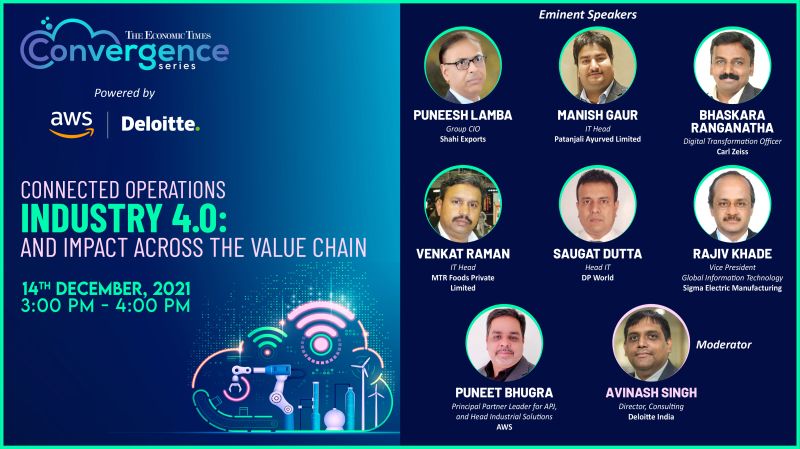
December 14, 2021 | #ETConvergenceSeries Industry 4.0: Connected Operations for smart manufacturing
Our Chief Technology Officer, Puneesh Lamba was featured on a panel at the coveted ET Convergence Series. He spoke about automated and smart manufacturing in the apparel industry and the potential it holds to develop more robust businesses. This panel was organized by The Economic Times and powered by Amazon Web Services (AWS), and Deloitte. Other esteemed guests on the panel represented MTR Foods, DP World, Patanjali Ayurved Limited, Carl Zeiss and Sigma Electric Manufacturing.
December 9, 2021 | Business for Social Responsibility
How to Enable a Just, Fair, and Inclusive Transition to Circular Fashion by BSR
Business for Social Responsibility (BSR) organized this panel discussion to launch the report ‘Keeping Workers in the Loop.’ The conversation revolved around the opportunities around circular fashion while emphasizing its impact on the job market for garment workers, especially women. Gauri Sharma, Senior Manager, Organizational Development, spoke about the context of circular economy and how the responsibility of a manufacturer is not just limited to recycling but also includes women in circular jobs. Incorporating their traditional techniques of repair, upcycle, and the like into the circular models makes for a more collaborative model. We must endeavor to ensure good quality jobs that align with frameworks such as SLCP.
Gauri Sharma, Senior Manager, Organizational Development, was invited to co-host a series on the fourth season of the Manufactured podcast hosted by Kim Van der Weerd. These episodes were in conversation with Matthew Wallace, CEO of DXM. Inc
DXM is a technology-driven on-demand manufacturing company co-owned by Shahi Exports, Brandix, MAS Holdings, Busana Apparel Group, and Carhartt. Gauri and Matthew speak about how building a soft relationship between various stakeholders in the industry is equally important as technological innovation in ensuring circular business models.
The Sankalp Global Summit was a three-day event that saw over 2521 delegates from 104 countries. Rajneesh Rai, General Manager, Environmental Sustainability, spoke on the panel ‘Getting to Net Zero – the Role of the Private Sector’ on Shahi’s tremendous progress and leading the way in being part of the solution by setting bold commitments to reducing the greenhouse gas emissions.
He highlighted some of the key achievements at Shahi, such as the Cradle to Cradle Certification for the ‘Arth Collection,’ declaring Science-Based Targets at some of our factories, among others. He also pointed out how favorable government policies and commercially viable technologies will help stakeholders transform into a sustainable ecosystem.
October 13, 2021 | Sedex South Asia 2021
SEDEX is a membership organization that provides online platforms to manage and improve the working conditions in the global supply chains. Srinivasa Rao Venkatesh, Chief Compliance Officer at Shahi spoke at the ‘Managing Supply Chain Risks in the Textile Industry,’ highlighting some of the risks faced by the industry, such as health and safety, licensing, and working hours.
These further expand to post-lockdown challenges, including job losses, and issues affecting migrant workers. He concluded by enumerating potential solutions we deployed at Shahi to enhance capacity building, monitoring, workforce empowerment, and providing a fair and respectful workplace.
September 9, 2021 | PI Apparel
PI Apparel is a membership community for apparel and footwear manufacturers that engage with the industry’s challenges and technologies. PI Apparel organized a sustainability spotlight in September where our Head of Organizational Development, Anant Ahuja, moderated the session on ‘What are the Practical Steps We Need to Take in Terms of Infrastructure, People & Technology to Underpin a More Sustainable Operation’? The session focused on the culture of sustainability among different organizations and how brands and suppliers can leverage technology to drive sustainability. The key to an impactful journey towards sustainability is collaboration at the core of business models.
September 1-2, 2021 | Thrive 2021, KGA Managers’ Conference
This year, KGA Manager’s Conference engaged with the theme ‘Lead with Empathy, Win with Agility’ to discuss the challenges and risks triggered by the pandemic. Anant Ahuja, the Head of Organizational Development at Shahi, participated in the ‘Sustainability: Imperatives & Roadblocks’ session.
He spoke about how at Shahi, collaboration with brands and research institutions supplement sustainable practices. Examples include the ZDHC Roadmap to zero programs, NIFT Chair 4.0, Cradle to Cradle Certified® Gold products, and a trial with HKRITA. He also shared a few suggestions on how KMART Group as a brand can help suppliers on their journey towards becoming sustainable. Here, sharing knowledge with suppliers, developing a capacity plan, and small interventions such as sourcing closer to the market and consolidation of shipments are a few steps that can considerably impact suppliers.
August 2, 2021 | Tamarind Chutney
A Webinar on ‘Technology and Innovation in Circular Fashion’
The webinar was co-organized by Tamarind Chutney and Chintan (Environmental Research and Action Group) with the support of Fredrik Ebert Stiftung (FES) Foundation. The panelists discussed the growing global recognition for moving from a wasteful linear supply chain to a closed-loop, a circular one.
Gauri Sharma, Senior Manager of the Organizational Development team, spoke about the need for innovations and technology to solve critical challenges and enable this transition. She described how Shahi is working on projects such as Cradle to Cradle products, HKRITA- SAP, microbial dyeing, and recycling, among others. She also spoke about suppliers’ challenges, including the price-sensitive nature of the industry, transactional and short-term relationships with brands, and lack of transparency.
July 15, 2021 | Walmart Global Sourcing Sustainability (Regenerative Retailer) Summit
The summit explored how the suppliers can work together with brands actively to pursue sustainability goals aimed at sourcing responsibly, eliminating waste and emissions, selling sustainable products, and protecting nature.
In the virtual session, he shared Shahi’s vision of ‘doing more with fewer resources’ along with the company’s progress in improving its impact in four distinct areas: energy, chemicals, water, and materials.
June 1-4, 2021 | United Nations Responsible Business and Human Rights Forum
The UN Human Rights Office for Southeast Asia organized five virtual sessions at the 2021 UN Responsible Business and Human Rights Forum. Anant Ahuja, Head of the Organizational Development at Shahi, spoke at ‘The Next Decade of Migration, Fashion and Human Rights’ panel, centered around the role, vulnerabilities, and experiences of migrant workers and the impact of future business trends on them, especially the female labor in the fashion supply chain.
He discussed a few practical examples of how Shahi is contributing to the wellbeing of migrant workers including implementing our skill development program since 2013, establishing the Migrant Support Centre in 2021, and our goal to provide access to vaccines to our entire workforce.
April 27-29, 2021 | Sustainable Apparel and Textiles Conference
The two-day event organized by the Innovation Forum addressed how apparel brands can adapt practices to deliver on growing stakeholder expectations and drive circularity while reducing the climate impact on the fashion supply chain. Anant Ahuja, Head of Organisational Development at Shahi spoke about the challenges, particularly the power imbalance faced in the textile industry, and how adhering to practices such as on-time payments and making long-term commitments with suppliers will help improve the buyer-supplier relationship.
April 13, 2021 | Transformer’s Foundation x Manufactured Live Event
The live panel discussion organized by Tranformer’s Foundation and Manufactured Podcast focused on consolidation and vertical integration in the fashion supply chain in a post-pandemic world, and how vertical integration supports sustainability within the suppliers. Anant Ahuja, Head of the Organizational Development at Shahi, reflected on Shahi’s journey and the values of sustainability and worker wellbeing that have been passed over generations. In the session, we discussed the several benefits of being vertically integrated including improved traceability, speed, cost, and time-saving mechanisms. Shahi hopes to bring together manufacturing expertise to further improve the vertical integration across the industry.
Watch a recording of the full panel discussion:
February 24- 26, 2021 | ReWire: Sustainability 2021
This 3-day virtual event was organized by MOTIF and The Mills Fabrica with selected disruptors in the sustainability industry. The event spotlighted emerging ecosystem standards, new materials, and a pathway towards circularity to fuel innovation across the fashion supply chain.
On the panel, “The infrastructure of sustainability” on February 24, 2021, we talked about our approach towards energy conservation and clean energy transition. In 2019-20, 77% of the electrical energy consumption across Shahi was carbon neutral. On February 25, 2021, we presented our new research project with The Hong Kong Research Institute of Textiles and Apparel. We are reclaiming textile waste to grow cotton more efficiently as a way to support cotton farmers. Register for free to access the session recordings view more.
February 23, 2021 | Manufactured Podcast, Season 3
Manufactured is a podcast started in 2020 to provide an insider perspective on sustainability in the fashion supply chain. Two members of Shahi’s Organizational Development team, Anant Ahuja and Gauri Sharma were invited to speak for the latest double-episode which is now in its third season.
We believe in the power of being transparent, sharing our experiences, and gaining valuable feedback to improve further through platforms like Manufactured. Part 1 of the podcast covers Shahi’s journey over the last 45 years, and our perspective on collaboration between buyers and suppliers to drive sustainability. Part 2 of the podcast covers how Shahi has benefitted from becoming a vertically integrated supplier, and insights on our collaboration to drive circularity in the fashion supply chain.
February 19, 2021 | Hong Kong University of Science and Technology (HKUST), MBA Session on Supply Chain Sustainability
The session organized by HKUST as a part of their MBA Program focused on sustainability considerations in the global supply chains. We were invited as a guest speaker to offer the MBA students a perspective on how Shahi, India’s largest apparel manufacturer, and exporter, embrace sustainability through focused social and environmental initiatives. The interactive session included questions from the students on the challenges of implementing a multitude of worker wellbeing programs, disseminating best practices across the industry, and managing a large workforce during the COVID-19 crisis.
Please write back to us at od@shahi.co.in for more information.
Efforts at Shahi have taken a shift in the last year, and going digital has become the mantra. The focus is primarily on three objectives: improvement in growth, productivity, and experience. While growth and productivity are the focus of every organization globally, experience drives Shahi Exports. It means providing an excellent experience to our customers, employees, and other stakeholders. However, we cannot build this experience without a conscious effort to do it thoughtfully and sustainably.
As part of the strategy to develop this all-around quality experience, we have been engaging novel digital solutions. Using emerging technologies can help an organization unlock new opportunities, including ways to reduce our impacts on the environment.
A few of my favorite initiatives that we have been able to do this year is effectively converting physical activities to virtual ones in a short span of time due to reduced customer and employee travel in the wake of the COVID-19 pandemic. These have helped us save time and money and have reduced our carbon footprint due to significantly reduced fossil fuel usage. These initiatives range from virtual tours of our factories by customers using augmented reality-based solutions to leveraging blockchain-based fiber to retail traceability to ensure ethical sourcing practices.
Where the world is at
Globally, leaders aim to enhance organizational performance through digital technologies. These have become the core of every organization’s strategy these days. Boards have realized that leveraging the right technology to solve the correct problems can give them an edge over the competition. Labor-intensive companies have a big opportunity to transform themselves into tech-driven companies.
The wave of leveraging emerging technology, before the pandemic, gave the world some outstanding new companies in media, shared resource usage, gaming, education, and technology itself. These companies disrupted the existing business models making some even larger companies go out of business. The pandemic changed the context of all such disruptions. People who were shy to use digital technologies or even online meetings had to do it mandatorily now. Many of them cannot imagine going back to old ways.
We divided our digital initiatives into ‘foundational,’ ‘desirable,’ and ‘disruptive’ categories. While foundational and desirable types have precedents in the industry that we can emulate, it is the disruptive initiatives that we take the lead in to solve problems in a novel and more efficient manner.
Utilizing the RRP Mantra
Automation and intelligent solutions optimize manufacturing processes.
Anything that moves from table to table moves at a snail’s pace compared to anything that moves from system to system. To make automated decisions in augmented or virtual reality provides an experience as good as seeing the real thing and collaborating around it. Internet of things technology is also used extensively to calculate and improve productivity at shop floors and move the technology right to the network’s edge.
RRP is our mantra in process automation. First, we automated Repetitive, Rule-based, and Predictable processes and aimed to convert others into RRP processes by eliminating exceptions and process deviations. A simple example is the process of approvals. The first step will be a request, followed by a review, further discussion if needed, and then final approval. Digitalizing the process cuts down extensively on resources and time used to follow through each step.
Another example is the transfer and delivery of material. Tracking the movement of a package through a document that is manually checked at the gate of a facility exposes it to human error and forgery. We can mitigate this by adding a simple QR code to the document, making it unique, reducing human error, and ensuring that data about the movement of the package is stored on a network. This has been a practical exercise that has given us fantastic results in achieving much better productivity overall.
Exploring Ideas
Being disruptive requires a lot of experimentation and working with traditional partners. We have now started working extensively with disruptive start-ups and academia, as well as mining the massive pile of ideas that our employees generate as part of our innovation program. Our recent engagement with NASSCOM for their Manufacturing Innovation Challenge has helped us reach out to young innovators. We are now working on solutions and hope for great results.
Augmented mixed virtual reality to design a clothes in 3D fashion design software program creating virtual, true-to life garment visualization with cutting-edge simulation technologies for the fashion
Some of the experiments revolve around:
RFID-based productivity improvement.
Automatic guided vehicles,
Computer vision-based productivity improvement,
Automated measurement solutions,
Converting 2D images into 3D models with real-time collaboration,
AI-based identification of fabric composition,
Fabric inspection recording automation,
Natural Language Generation based training videos translation in vernacular languages,
RFID-based productivity improvement.
There are many more, and we are not afraid to experiment and fail, but we have seen that our success rate has outgrown our failure rate very fast and has enabled us to become a more innovative company.
Shahi has further improved its turnaround time through our interventions as an agile business. It has even helped our customers increase the accuracy of forecasts. Faster deliveries enable them to forecast their demand closer to the season. Accuracy, therefore, is significantly improved and reduces slow-moving or dead inventory. More robust forecasts act as an essential enabler of sustainable supply chains.
Track & Trace
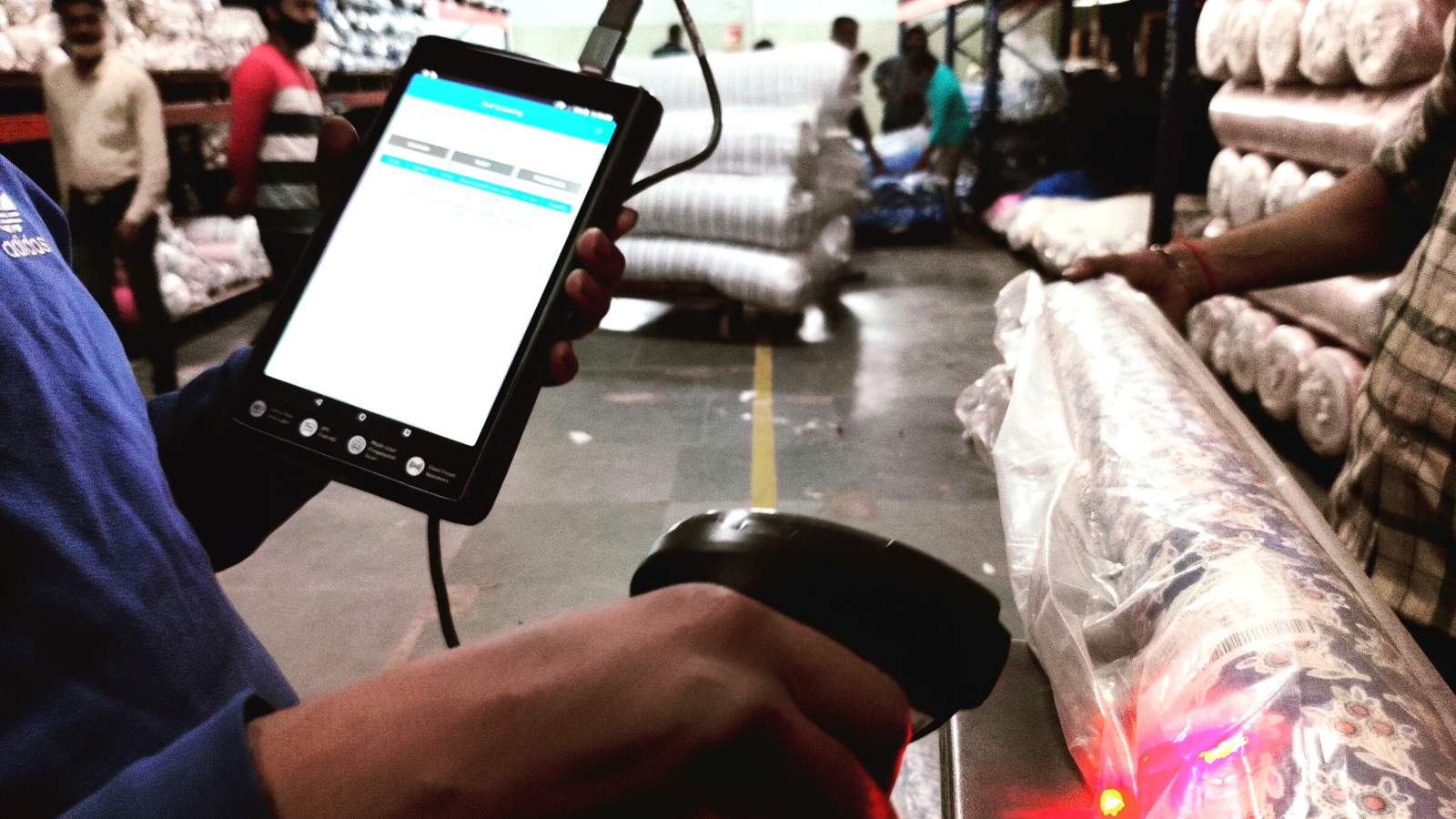
Each fabric roll is given a barcode which tracks its movement from cutting through garmenting and packaging.
An initiative that has helped us immensely is our acclaimed ‘Track & Trace’ mega project. Track & Trace is one of our projects which has helped us immensely in reducing paper usage. Each fabric roll is assigned a barcode, and this code is used to scan it for all purposes -entry, storage, cutting, and shipping. This is leading to improved transparency in the supply chain. Additionally, it resulted in greater agility, lower cost, and higher visibility of fabric/garment movement. It also reduced manual data entry at multiple points, which is another focus area we had in our mind. This initiative’s end-to-end nature ensures that our efficiency at each stage (warehouse, cutting, sewing, packing, and shipping) is measurable and provides us with rich data for taking steps to improve it further. Before this initiative, the manual receiving from the mills and fabrics utilized our resources- time and effort inefficiently.
Track & Trace has improved the transparency along Shahi’s supply chain. Each fabric roll is assigned a barcode, and this code is used to scan it for all purposes -entry, storage, cutting, and shipping. Currently, we are working on the last phase of Track & Trace that will complete the entire chain by improving transparency at the packaging and delivery stages of the shipment to our customers.
Securing our digital assets
With more and more devices, web applications, and mobile apps connecting to the network, it becomes imperative to ensure no hindrance in business continuity. We must neutralize external threat actors before they can steal crucial data or damage the network infrastructure. Shahi Exports took considerable strides in ensuring that our data center, network, and applications on the cloud are best in class and our information security solutions and practices are of the highest possible standard.
Data is the new oil, and leveraging its value will give precious actionable insights and potentially impact business models. The future at Shahi will employ data science and analytics in our sustainability strategy, making for some fascinating possibilities for the industry. The ideas we are currently working on show a promising future of scaling up across all our operations. It all starts with encouraging ideas and taking small steps to get to a big solution.
Puneesh Lamba is the Chief Technology Officer at Shahi Exports Pvt. Ltd. He is responsible for building Shahi’s IT & Digital strategy and its execution.
Puneesh carries an experience of 28 years as a Senior IT & Digital Leader across industries in India, the USA, and Europe. He has worked for companies General Electric/Genpact and TATA Consultancy Services as well as Indian Conglomerates like Escorts Ltd., Punj Lloyd, CK Birla Group, and Ballarpur Industries.
As one of India’s pioneers to embrace disruptive technologies like Artificial Intelligence, Robotic Process Automation, Internet of Things, and Predictive Analytics, Puneesh is a proponent of digital means to enable business strategy for growth. He has won many prestigious awards like CIO100, CIO200, CIO500, Power List, and CIO 1000. He is a jury member at NASSCOM, Frost & Sullivan, and, 9Dot9 media.
The Shahi Industry 4.0 Chair for apparel manufacturing was established at NIFT to build a robust relationship between the industry and academia. It aims to facilitate research in emerging technologies that disrupt the apparel manufacturing sector. The potential area of study must fall under Industry 4.0. Each of these projects will result in a detailed document including the final design and technical specifications and a model or prototype or software.
What is Industry 4.0?
Global production and supply networks are undergoing fundamental shifts through increased automation of traditional manufacturing and industrial practices, using modern innovative technology, large-scale machine-to-machine communication (M2M), and the internet of things (IoT). This integration increases automation, improves communication and self-monitoring, and uses intelligent machines that can analyze and diagnose issues without human intervention.
The phrase ‘Fourth Industrial Revolution’ was first introduced by a team of scientists developing a high-tech strategy for the German government. Klaus Schwab, executive chairman of the World Economic Forum (WEF), introduced the phrase to a broader audience in a 2015 article published by Foreign Affairs*.
Who is eligible?
Students in the final or penultimate year of B.E./B.Tech/M.E./M.Tech from any recognized institute.
Candidates should have a good grasp of industrial vision systems, electronics, microcontrollers, electronic actuators, encoders, power transmission systems, motors, and basic pneumatics.
The scholarship will be for a period of 4-6 months, starting January 2022. Selected candidates will receive the scholarship as a monthly stipend of ₹15,000-20,000.
Deadline
The interim deadline for all applications is 5th January 2022, and applications close by 10th January 2022.
What do you need to apply?
10+2 Board Examination Marksheets
CPI/CGPA until the most recent semester
Academic and professional credentials (share the URL of a maximum of two platforms like ResearchGate, Google Scholar, Linkedin, or a resume.)
Tell us about your experience or courses you have taken that are relevant to Industry 4.0 technology.
You will be asked to ideate over a challenge statement. Give us an overview of how you would solve it.
Tell us about any courses or topics you have studied that help address the challenge.
In 2013, India became the first country in the world to legally mandate Corporate Social Responsibility (CSR) with the introduction of Section 135 of the Indian Companies Act, 2013. CSR was introduced to make businesses pay more attention to ways they can positively impact society and the environment. The law requires companies with a certain turnover and profitability to spend 2% of their average net profit for the past three years on CSR. The CSR budget can be invested in specified areas such as promoting education, eradicating hunger, promoting gender equality, and environmental sustainability. Due to its mandatory nature, the CSR regime in India has the potential to greatly support more capital infusion into the social and environmental sector, thus supporting the country in achieving national and global development goals. However some have criticized this mandate, claiming that CSR must be voluntary or else it is effectively a corporate tax. Nonetheless, eight years since it was first introduced, the CSR mandate remains in place and has been further fine tuned and optimized to ensure companies invest in positive impact.
Focusing on COVID-19 relief in 2021
One of the ways the CSR mandate has been updated is to encourage companies to support their communities through the COVID-19 pandemic. India is currently recovering from a devastating second wave of COVID-19, as the spread continues to have a damaging impact on the health and livelihoods of millions of people across the country. At Shahi, we are leveraging our CSR funds to support our communities by providing ration kits to migrant workers infected with COVID-19 through our Migration Support Center (MSC), donating medical equipment to local hospitals, and other community relief activities based on needs assessments.
Shahi’s approach to CSR
Shahi was established in 1974 by a visionary female entrepreneur Mrs. Sarla Ahuja who started her journey as a sewing machine operator in a local apparel factory in New Delhi. For over 45 years now, we have been serving the communities in which we operate with a special focus on the employment and empowerment of women from low-income backgrounds. Working within the Government guidelines on CSR, our initiatives are guided by the following core commitments:
To contribute to social, economic, and environmental development initiatives in the communities in which we operate and the society at large
To ensure all CSR initiatives undertaken by us have a long-term sustainable and positive impact on marginalized populations
Our initiatives are based on needs assessment and consultation with communities and local governments. We implement our initiatives directly through our internal teams and also partner with expert organizations, specialized non-government organizations, and local implementation agencies.
Our CSR policy has been recently revised as per the provisions of the January 2021 amendment in the Companies Act. This amendment lays greater emphasis on compliance with the law and deeper involvement of businesses in CSR initiatives. Our policy includes the scope and applicability of our CSR initiatives, governance structure, guiding principles of selection, implementation, and monitoring, and expenditure, along with a detailed Annual Action Plan for all the projects undertaken by the company.
Based on the need assessment, we have identified the following focus areas to implement our CSR initiatives:
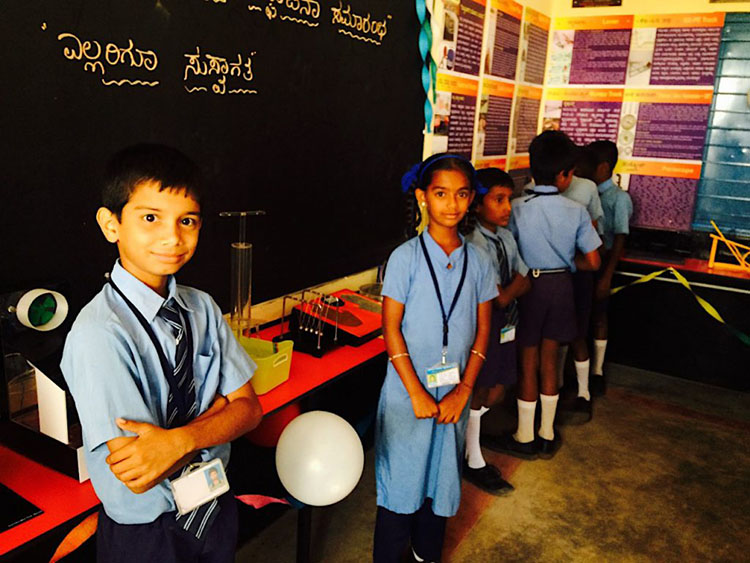
Education – Good school infrastructure improves the quality of education and the experiences of school learning. We support education in Government schools by focused interventions on infrastructure development, provision for drinking water and sanitation, and repair and renovation of school buildings. Also support undergraduate scholarship programs for students from low-income backgrounds.
“We are thankful to Shahi Exports for providing desks, benches, and sports equipment to our school. Our students are happy with comfortable sitting arrangements, and they are really enjoying their Physical Education classes with new equipment. Many new learning opportunities will also come up with a beautifully created Science Lab under Shahi’s CSR initiatives for our students from Grade 3 to 10.” Mr. Shivappa, Head Master, Government Primary School, Hootagali, Mysore, Karnataka
Community infrastructure – We support community infrastructure development such as public toilets, and bus shelters, etc. As road safety is crucial to saving lives and preventing injuries, our initiatives also focus on tilling roads, construction of skywalks, provision of traffic safety equipment such as barricades, and construction of bus shelters, etc.
Drinking Water – Water is a fundamental human need, yet many people lack access to safe drinking water leading to several water-related ailments. Understanding this need, we provide RO water filtration plants, water coolers, and storage tanks at public places, migrant worker hostels, police stations, and government dispensaries.
The welfare of migrant workers – Migrant workers in urban areas face several challenges. We have partnered with Odisha Rural Development and Marketing Society to implement a Migration Support Center project in Bengaluru, Karnataka. H&M and Good Business Lab have extended their support as design partners on this project which aims to support migrant workers with psychological, social, and informational services to help them settle in new urban environments.
Environmental protection – We strive to grow our business whilst reducing the environmental impacts of our operations. Under this focus area, we prioritize efforts such as tree plantation and spreading environmental awareness.
Health – Women from low-income backgrounds often lack access to basic health information and services that affect their overall wellbeing. In partnership with not-for-profit organizations such as Good Business Lab, Family Planning Association of India, Samwada, and Basic Needs India, our community health interventions focus on providing women’s health information and services, including sexual and reproductive health, and psychological wellbeing services.
Supporting Research and Development Projects – Through collaboration with academic institutions such as the National Institute of Fashion Technology and not-for-profit organizations such as Good Business Lab, we support research on technology development under Industry 4.0 and the wellbeing of low-income workers in labor-intensive industries.
The way forward
As a responsible and progressive organization, we will continue to strategically develop our CSR initiatives to benefit the community and the environment. We are open to collaboration with like-minded organizations to scale up our initiatives and add new projects to scale impact.
“ As a leading apparel exporter, our core principles of sustainable business will continue to drive us. Along with exporting apparel, we also intend to export our learnings and ideas from our work in CSR.” Anant Ahuja, Head – Organizational Development, and CSR Committee Member, Shahi Exports
The fashion industry, like many others, is energy-intensive. To find solutions to the climate change challenges it becomes imperative for all stakeholders in the value chain to play their part in driving decarbonization. As India’s largest apparel manufacturer and exporter, Shahi hopes to support the long-term sustainability of the fashion industry with a vision to power its operations with 100% renewable electricity. This blog post summarizes the insights from interviews with our management on our approach towards energy conservation and clean energy transition.