Tag: Worker Wellbeing
-
Launching Social & Labor Convergence Program (SLCP) in India
As India’s largest apparel manufacturer with over 60 factories, we are proud to be a signatory to and welcome to India – Social Labor & Convergence Program (SLCP) – a first-of-its-kind, disruptive and widely accepted framework to measure social and labour standards.
SLCP embodies the benefits of collaboration across brands, manufacturers, non-profits, certification bodies and others. By creating a Converged Assessment Framework (CAF), SLCP will reduce the need for multiple, often duplicate audits, and enable us to continue investing in the well-being of our 100,000+ strong workforce. These are the type of disruptive ideas that can truly transform the supply chain.
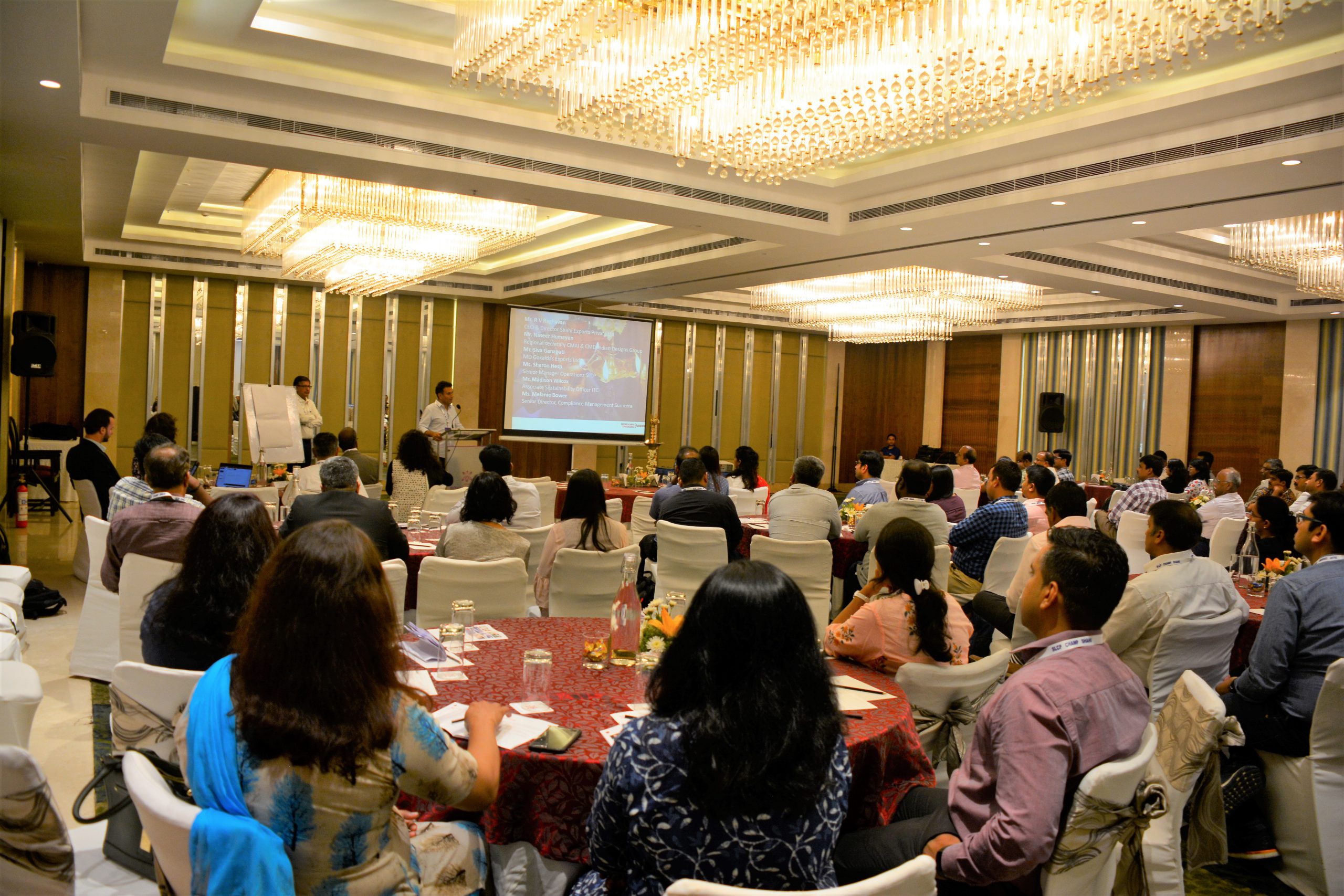
On May 30, 2019, Shahi hosted the India launch of SLCP – bringing together all stakeholders for a day-long event to discuss SLCP’s operations, brands’ adoption plans and manufacturers’ experience running pilots. Through group discussions, participants explored possible barriers and opportunities to implementing SLCP in their supply chain and facilities.
A full coverage of the event can be accessed view more.
-
A year on from Unit 8: What we’ve learned
Just over a year ago, a serious incident took place at one of our 65 factories, Unit 8, where unionized workers were attacked by non-unionized workers resulting in a violent exchange. It was widely covered in the media at the time and created truly regrettable reputational damage for our buyers. The incident and the behaviors that led to it are absolutely condemned by Shahi and go against our robust policies on freedom of association and anti-harassment. We take our responsibilities to our employees very seriously and have been leaders within the apparel sector in building a positive and supportive work culture. However, this incident is evidence that, despite many positive policies and initiatives, we have more work to do to protect the rights of all 100,000 of our workforce.
Shahi is committed to worker well-being and respecting our employees’ right to freedom of association. We acknowledge that the factory management’s initial response, based on internal reports, was not appropriate to the gravity of the situation and our senior management has since taken serious steps to remedy the situation for the affected workers and undertake wide-scale preventative actions. In the year since the incident happened, Shahi has reflected, investigated and made bold decisions and changes across the organization to prevent such incidents happening in future.
Below we answer some of the common questions that our stakeholders and the public have asked us in the last 12 months.
What happened at unit 8?
Our understanding of what happened is based on a wide range of accounts from factory workers and managers.
On April 2, 2018, Karnataka Garment Workers Union (KOOGU) put forth a charter of demands and requested to meet the Unit 8 management. These demands included better water facilities, improved transportation and higher wages.
On April 4, 2018, a worker who was a part of the union was late to work. On being questioned about his lateness, an argument ensued between the worker and his line manager which drew a crowd of workers. This escalated into a brief but violent outburst between the union and non-union workers, which culminated in a group of non-union workers pushing, shoving and forcibly removing the union workers from the factory premises. Following this incident, the factory management team at Unit 8 regrettably and inappropriately suspended the 12 unionized workers. However, following an investigation by Shahi’s leadership, this suspension was reversed and the union workers were reintegrated into the factory with 10 still in employment at Shahi.
How was the situation remedied?
Two investigations were conducted by Shahi’s leadership between April 19 and May 27, 2018. Through the investigations, it emerged that Unit 8’s factory managers failed to ensure a safe working environment and their attitude towards the union was also not aligned with Shahi’s values. Their condoning of violence, unfair dismissal of workers and prevention of freedom of association is a serious offence and has no place at Shahi. This is why the employment of the three workers identified to be individually responsible for the violence, along with the five members of factory management who were aware of their actions, was terminated. Since termination in India is highly regulated, the domestic enquiry is still ongoing and is expected to be completed by the end of June 2019. The suspension of the unionized workers was also reversed, and full efforts were made to compensate them and support them to rejoin the factory with no reservations. One year later, 10 of the 12 continue to work in the factory. Following the investigation, Shahi worked collaboratively with KOOGU, to resolve the initial issue, agree on steps to support worker voice in the factory and to sign an agreement with them on future good practice.
How did you reach a resolution with the union?
On June 25, 2018, Shahi and KOOGU signed a Memorandum of Understanding (MoU) after a series of dialogues. Worker Committee elections in Unit 8 were conducted by a third-party legal firm, ensuring a fair and effective process. KOOGU have expressed their satisfaction with the effort and all factory management in the unit have now undergone training on improving industrial relations.
The actions taken following the MoU have shown an honest commitment from both Shahi and the union to continue to improve relations with each other as well as conditions for workers. The feedback Shahi has received from various stakeholders, including unions and activists, is that our efforts have been effective and the MoU has become a historic move for a garment manufacturer in India. At this stage, around 12 months after signing the MoU, all the documented concerns have been corrected. Below is an update on all the actions taken. Along with remediating the MoU points, Shahi is rolling out a company-wide training program on industrial relations focusing on the importance of maintaining healthy relations at all levels in the factory and respecting every worker’s right to associate freely. As the industrial relations training rolls out, we are measuring feedback on its effectiveness as well as worker satisfaction.
On March 14, 2019, at the UN South Asia Forum on Business and Human Rights, Shahi’s head of Organizational Development, Anant Ahuja, shared the stage with KOOGU’s Honorary President, Sebastian Devaraj. The panel discussion openly discussed the challenges faced at Unit 8 in 2018 and the remediation steps taken since, in line with the UN’s Guiding Principles and in partnership with KOOGU.
A representative from KOOGU shared the following statement on the progress that has been made: “After discussions on the action points it was agreed that the commitment of Shahi Management to take steps to create an environment conducive for Freedom of Association and collective bargaining have been addressed satisfactorily.”
What preventative actions is Shahi taking for the future?
1. Industrial Relations (IR) training
Across all our units in South India, we have conducted IR training for factory management, which we plan to extend to other factories in 2019. We will also conduct refresher trainings and collect feedback from participants and our brand partners to make improvements. Shahi’s commitment to freedom of association has been communicated to workers across all factories and the policy is displayed on Notice Boards as well as in illustrated employee handbooks.2. Elections and strengthening of committees
Elections and strengthening of worker committees has been conducted in 45 factories. We follow a five-step process to strengthen worker committees:
– Elections
– Documenting process
– Training on roles/responsibilities
– Measuring effectiveness
– General awareness within the factory3. Worker Voice: SMS-based grievance redressal
An anonymous digital communication system is being piloted across two Shahi factories through Workplace Options. With the success we have seen of this tool in capturing feedback and issues from employees, Shahi will operationalize a two-way communication and grievance redressal tool across 20 factories in 2019.4. Worker surveys
We have redesigned our employee satisfaction survey, which will be implemented in partnership with an external agency across all factories. The goal will be to proactively capture the feedback of workers to identify issues preemptively.In addition to these four key steps, we are continuously developing our HR systems to effectively determine and address the concerns of all employees from workers to supervisors and above. In order to reach our large and diverse workforce of 100,000 people, we aim to develop and innovate solutions that can rapidly and effectively identify issues.
What is Shahi’s policy on Freedom of Association?
We have a clear policy that allows all employees to freely associate with any union they chose to at any time. This policy has been reiterated through announcements and continues to be displayed on notice boards in all factories as well as in illustrated worker handbooks. As above, training on IR has been conducted for a majority of our workers across 40 factories and we will continue to scale this up across all units. Senior management has also reiterated its commitment to freedom of association and collective bargaining and to creating a safe working environment for all.
-

Iron Woman: Fighting anemia among our female employees
India has the largest number of anemic women in the world, with more than half (51%) of all women of reproductive age being anemic. This has been attributed to multiple factors ranging from poor nutrition and repeated childbearing, to high incidence of infections. Apart from affecting mobility, mental health, and causing pain and discomfort, anemia can also result in significant productivity losses. Read this update to understand our commitment to women’ s health.
Considering the scale of the problem, the Directorate of Factories and Boilers’ in Karnataka recently launched a state-wide drive to test female workers in factories and assess the prevalence of anemia through Employee State Insurance (ESI). Taking a proactive and collaborative approach, Shahi launched the “IronWoman” a project that tests women for their blood hemoglobin levels and provides iron tablets to those found anemic. In the first phase, Shahi partnered with ESI to conduct hemoglobin testing for around 20,000 women in 25 factories. We found that 29% of women were anemic and provided all affected women with free iron supplementation and treatment for three months through ESI.

Hemoglobin testing in factories Realizing the depth and extent of this problem, in December 2018 we launched the second phase of this project in our rural factories and have since tested an additional 13,500 women. We found that the incidence rate in rural factories is 22%, almost 8% lower than urban factories. These are interesting insights for Shahi and we are still looking into why there is a difference between urban and rural factories and how Shahi can support women to improve their hemoglobin levels. This is why we have partnered with Namma Wellness, a healthcare organization that provides specialized medical support services to corporates, to retest these women after three months and check for improvements in hemoglobin levels.
As a majority female company, we believe that women’s health and well-being is a critical issue for us to address, and fighting anemia, which is considered to be the biggest cause of disability in India, takes top priority. We’re also committed to learning and sharing our experience from this program. Good Business Lab, a not-for-profit social innovation lab incubated by Shahi, is conducting a randomized controlled trial (RCT) on this project to understand how regularly the women took tablets, if they changed their dietary habits to eat more iron rich foods, and whether the improvement in health was reflected in their productivity, attendance, energy levels and general satisfaction towards work. Through this rigorous research, we aim to build the business case for the industry and the wider private sector for investing in women’s health, particularly the widespread problem of anemia among India’s women.
-
Gap Foundation’s 40th anniversary celebrations
In September 2017, Shahi was invited to be a part of Gap Foundation’s 40th anniversary celebrations. Three of our leaders were asked to speak about their experience driving Gap Inc.’s soft-skills training program called Personal Advancement and Career Enhancement (P.A.C.E.) across Shahi’s factories.
P.A.C.E. has been close to our heart from day one – Shahi’s inputs were taken at the time of program creation along with other credible partners. Mr. Jalandhar Giri, a Director at Shahi, has led the program at Shahi since its inception.
Because of Shahi’s commitment to this cause, we became natural partners, and with the assistance of Washington-based International Center for Research on Women (ICRW) and Swasti Health Resource Center, a Bangalore-based NGO, a life-transforming program came into being after intense research and deliberations.

P.A.C.E. training at a Shahi factory The garment industry employs a majority female workforce who often do not get to build a stock of soft skills needed to advance in their careers and better overcome personal challenges. P.A.C.E. has been designed to allow them unlock their potential through over 60 hours of training in various modules ranging from communication to financial literacy. Shahi was the first organization to run P.A.C.E. in its factories and has extended capsule versions of this program to key influencers in the participants’ lives, including their male co-workers, supervisors and family members. Since launching in 2007, this program has expanded beyond factories to include women and girls in community settings. Shahi has trained more than 35,000 women under P.A.C.E. and our goal is to train 48,000 women by 2024.

Shahi team with Doris Fisher, Co-founder, Gap Inc. At the Gap Foundation’s 40th anniversary celebrations Chitra Ramdas spoke about P.A.C.E. and its impact on female garment workers. JD Giri and Anant Ahuja were also invited to speak with groups from Banana Republic and Athleta who were keen to know more about Shahi’s experience. A particularly exciting moment at the event was meeting Doris Fisher (co-founder of Gap Inc.) who started Gap Foundation just eight years after opening the first Gap Inc. store, with the ambition of “doing more” than just selling clothes. Through her commitment to advance women in the supply chain, P.A.C.E. has been scaled all over the world.
Later in the week, Chitra and Anant were panelists along with Kindley Walsh Lawlor (former VP, Gap Foundation) and Hollywood actor Ashley Judd at an event held during the United Nations General Assembly. Ashley Judd is known for her social activism, particularly on women’s rights. She also sits on the Leadership Council of ICRW. The celebration was a reminder of the importance of investing in the women that power the global fashion industry and reaffirmed our conviction to keep innovating and doing more for them.
We’re happy and honored to have been part of Gap Foundation’s journey and hope to continue to advance women all over the world together.