Shahi participated in Bharat Tex for the third consecutive year, serving as a Legacy Partner. Our core message remained clear: building a resilient textile industry requires long-term vision, continuous innovation, and strong partnerships. True competitiveness comes from embedding sustainability and efficiency into daily manufacturing operations.
The four-day event was inaugurated by the Union Minister of Textiles, Shri Giriraj Singh. We had the privilege of welcoming him on the opening day for a walkthrough of our exhibit. The event brought together over 6,000 international buyers, 1,600 exhibitors, 1.3 lakh trade visitors, and industry stakeholders from 130 countries at Bharat Mandapam.
The Shahi Exhibit: Celebrating 52 Years of Manufacturing Excellence
We welcomed global buyers, policymakers, government officials, and peers to engage with our manufacturing capabilities, material innovations, and sustainability initiatives.
The exhibit featured a curated journey wall that traced our evolution over the decades. It highlighted Shahi’s growth from humble origins to a vertically integrated network of over 50 manufacturing facilities. It showcased our diverse product portfolio, high-quality garment construction across various knits, wovens, and next-generation low-impact materials.
Leadership Engagements
Shahi’s leadership team participated in key panel discussions and roundtables across conference tracks. They shared practical perspectives on global trade, manufacturing efficiency, policy prioritization, and sustainable sourcing.
Navigating Global Trade Uncertainty
‘India – A Trusted Partner in an Uncertain World: How Can Indian Companies Navigate a Rapidly Changing Global Trade Scenario‘
Building Globally Competitive Manufacturing Ecosystems
Harish Ahuja, Managing Director and Chairperson, emphasized that long-term capacity expansion must be guided by consumer demand rather than short-term tariff shifts. He highlighted India’s strong domestic fabric base, which enables over 90% domestic value addition, compared with 30%–40% in competing nations such as Vietnam and Bangladesh. He urged policy interventions to help manufacturers achieve sustainable double-digit margins and attract domestic investment.
Building Global Competitiveness in India’s Textile & Apparel Sector
At the panel discussion, Poorana Seenivasan, CEO of the Ladies Specialty Division, outlined key operational fundamentals. He noted that global competitiveness relies on building a supportive industrial ecosystem rather than individual corporate effort alone. Moving beyond low-cost labor, he urged manufacturers to focus on per-person productivity, process engineering, and technology adoption.
Decarbonization and Sustainable Sourcing
‘Dialogue for Sustainable Sourcing Solutions’
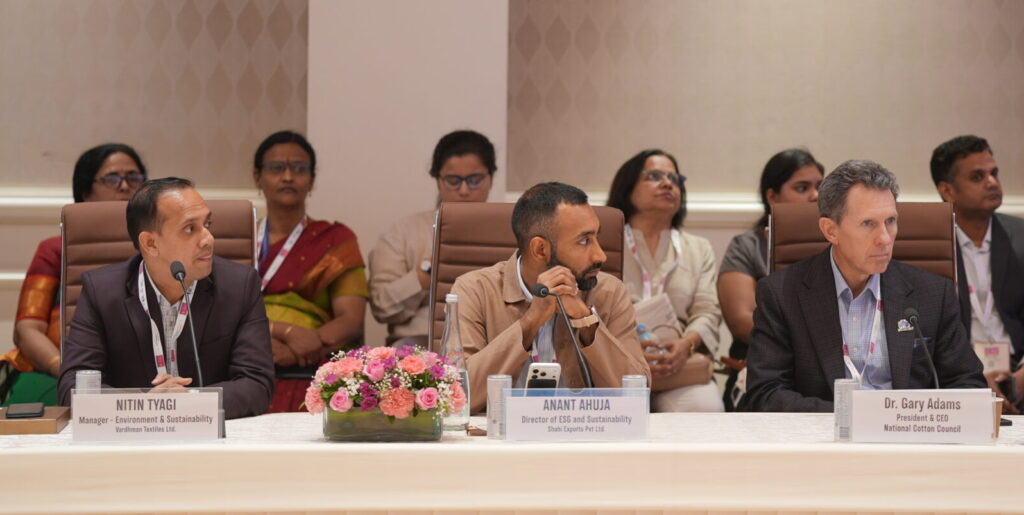
Speaking at the panel with Better Cotton Initiative, Anant Ahuja, Director of ESG & Sustainability, shared how sustainability must be integrated directly into core business decisions. He highlighted that the most scalable initiatives are those that improve both environmental and operational performance. This includes Shahi’s move to biomass energy, raising our carbon-neutral energy share, and the adoption of water-saving processing, such as Fibre52. He also stressed the need to simplify reporting frameworks and support upstream suppliers through long-term buyer collaboration.
Policy Reform and State Industrial Infrastructure
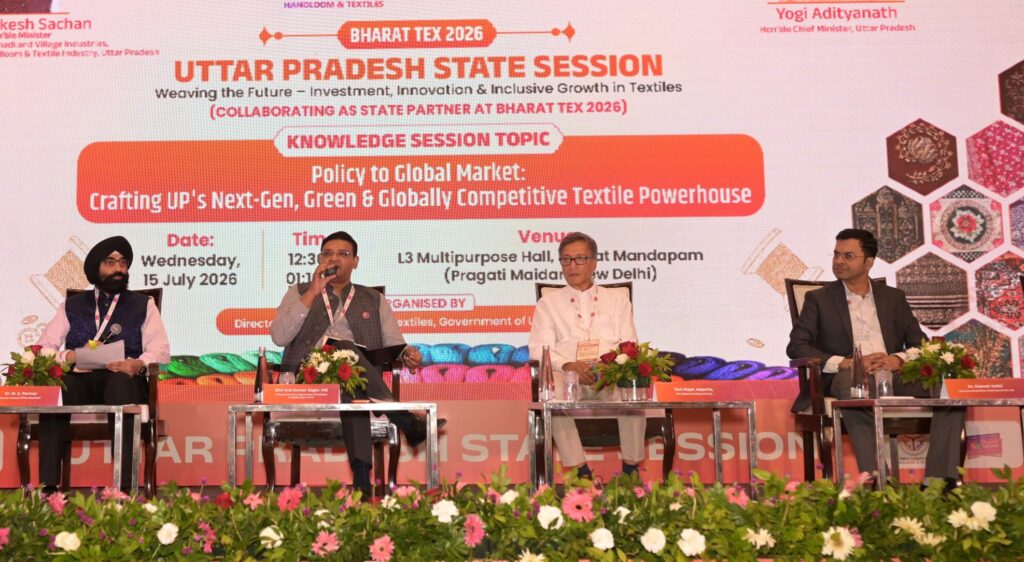
‘Crafting Uttar Pradesh’s Next-Generation, Green, and Global Textile Empire.’
Dr. Rakesh Sethi, Chief Operating Officer, spoke at the Uttar Pradesh State panel. He advocated for giving the apparel sector equal policy priority with agriculture due to its capacity to generate mass employment. He also called for active private-sector participation in shaping industrial policy and building green manufacturing clusters.
Regional Growth & Investment Frameworks
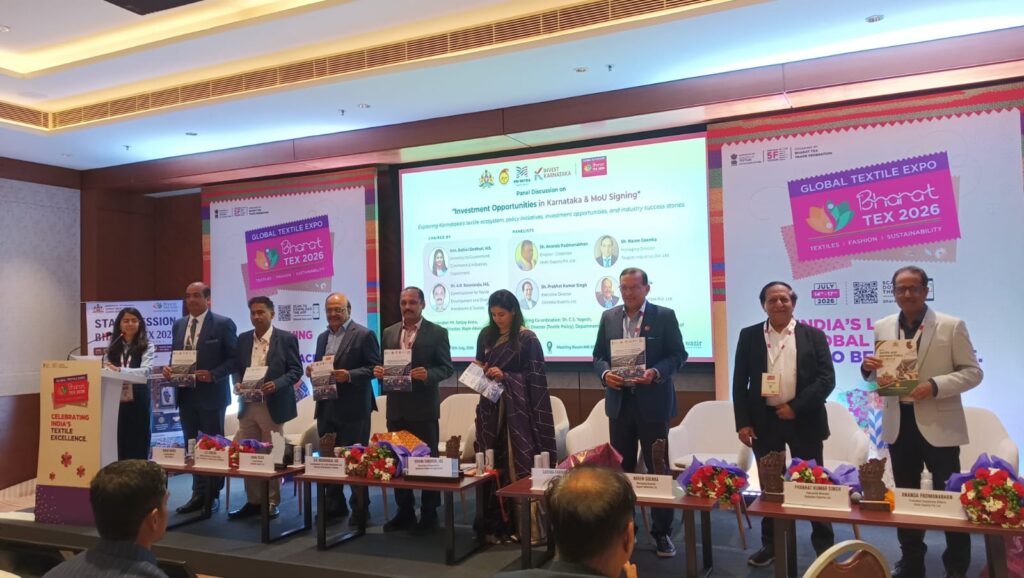
Joseph M T, Assistant Vice President of Administration, addressed the Karnataka State Session. He highlighted Karnataka’s growing industrial potential, detailing how strategic state partnerships, infrastructure support, and localized cluster development can attract long-term apparel investments.
Spotlight on Next-Gen Innovation & Heat Stress
The Shahi ESG & Innovation team attended the PDS x Fashion For Good (FFG) Innovation Space Spotlight and Pitch Forum at Bharat Tex. The session brought together global innovators, brand partners, and supply chain leaders to explore emerging technologies. Our team engaged with early-stage solutions across circular materials, low-impact processing, and supply chain traceability, reinforcing our commitment to testing and scaling next-generation sustainable practices.
A side session hosted by Good Business Lab and Sattva brought together key stakeholders—including buyers, manufacturers, research organizations, and non-profits—to address the pressing urgency of heat stress in India. The consensus was clear: heat adaptation must evolve beyond a mere worker-welfare or compliance issue to become a core business resilience strategy. Participants highlighted the need for context-specific, data-driven preventive measures rather than one-size-fits-all fixes. Achieving this requires cross-sector collaboration to share learnings and scale practical solutions.
The Road Ahead
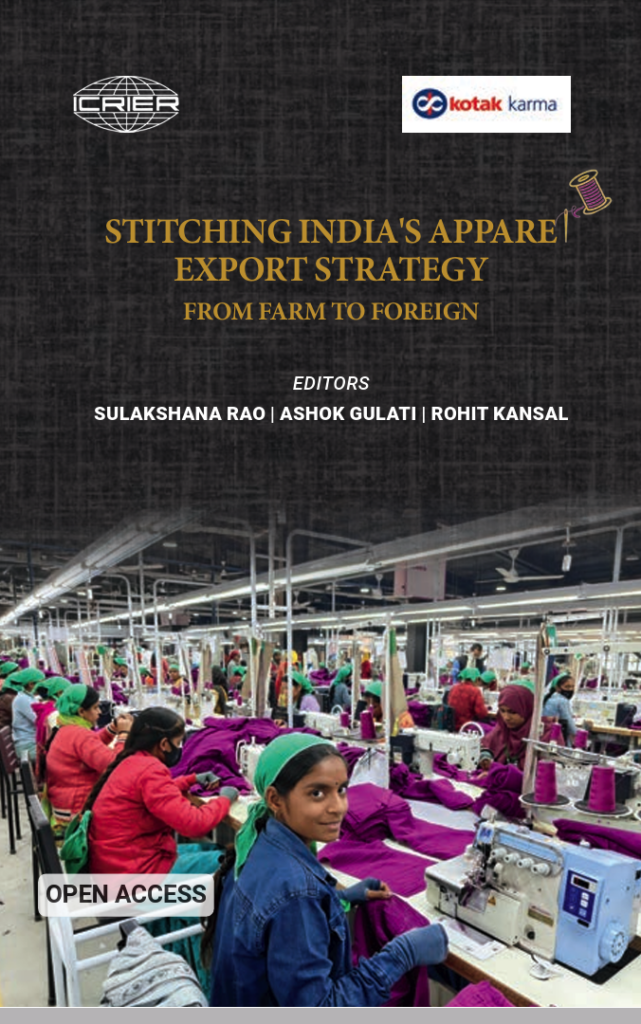
The event served as a platform to engage with international buyers, supply chain partners, and research institutions to discuss joint accountability across global value chains. A highlight was the ICRIER research initiative and book launch on global competitiveness, which included Shahi as a Case Study. The event also hosted dialogues with global bodies on co-investing in supply chain decarbonization, which reaffirms the core message shared across our panel sessions: building a resilient textile industry requires moving beyond transactional vendor relationships.
As Bharat Tex 2026 concluded, we look forward to advancing the future of Indian apparel manufacturing by delivering high-quality products to the global market.
Moving From Dialogue to Shared Action: The AAFA Heat Stress Toolkit
Translating theoretical guidelines into daily shop-floor practice requires frameworks built by the people who run the facilities. In September 2026, at Cascale’s Annual Meeting in Athens, the American Apparel & Footwear Association (AAFA) formally launched the AAFA Heat Stress Toolkit.
Commissioned by AAFA and facilitated by the Fashion Producer Collective (FPC), this five-part toolkit translates broad heat-stress principles into ready-to-use manufacturer guidance, a companion implementation workbook, brand management protocols, and a standardized supplier survey.
Crucially, this initiative marks a historic shift in global supply-chain governance: manufacturers were at the center of authoring their own implementation tools. Members of Shahi’s team co-authored the manufacturer guidelines and workbook alongside peers at Elevate Textiles, Inc., Epic Group, and YKK Corporation, with additional review support from Crescent Bahuman Ltd, MAS Capital (Private) Limited, TAL Apparel, Yee Chain, and the Vaada Hope Foundation.
Rather than introducing another rigid compliance audit, the toolkit grants factory management teams the ownership and flexibility to adapt heat-mitigation protocols to localized microclimates, structural layouts, and real-time worker feedback. It also gives global brands a blueprint to support suppliers without duplicating administrative burdens.
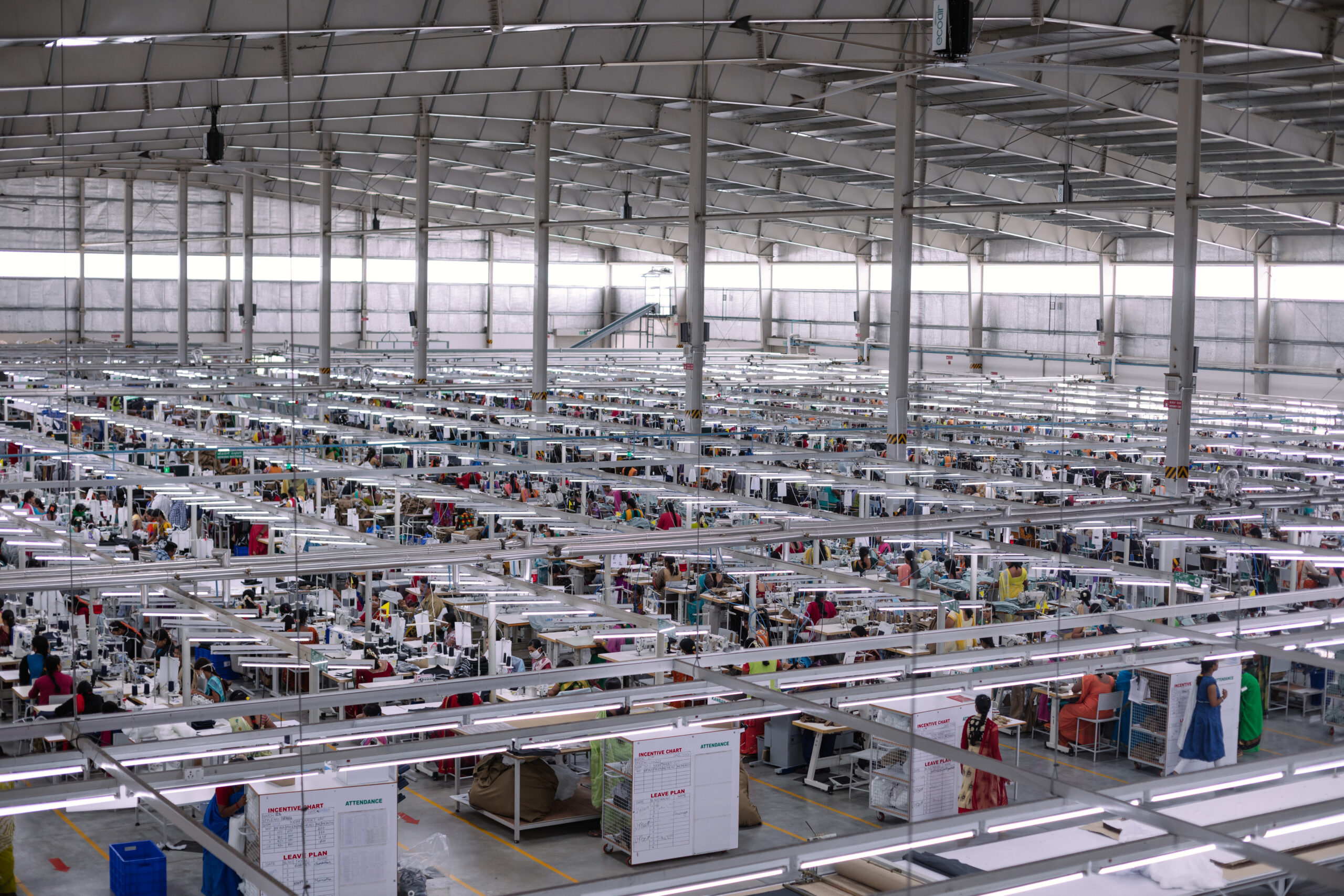
The inside of an apparel factory feels completely different depending on where you stand. In the raw fabric warehouse, the heat can be heavy, stagnant, and dry. Walk fifty paces into the finishing section, and the equipment adds humidity, driving up the wet-bulb temperatures (the metric thatdictates how effectively the human body cancool itself).
The variance in felt temperatures, coupled with the structural malleability of factories, presents a unique challenge: guidelines are everywhere but not uniformly applicable.
At Shahi, we have spent time mapping out the operational reality of modern manufacturing. With more than 50 manufacturing facilities and over 100,000 employees, we are treating thermal comfort as an operational baseline.
Understanding Baselines
Intense, dry pre-monsoon heat has always been a seasonal reality in northwestern and central India. However, climate change has fundamentally altered the baseline, requiring action to adapt to this new normal and to identify interventions across a diverse range of climates.
In April 2026, global interest in heat stress reached an all-time high. While Google searches for “what is heat stress” grew by 50% over the last five years, technical queries for “heat stress training” jumped by 140%. As global weather patterns continue to shift, what people are asking is “How do we deal with it?” and as the jump in the query really indicates: “How do we do it at Scale?”
The decade spanning 2015–2025 was the hottest on record for India, with 2024 tracking as the warmest year since 1901 (+0.65°C above the 1991–2020 average). As nighttime temperatures rise, it can also become harder for industrial buildings to dissipate the heat accumulated during the day. This creates a compounding thermal trap before the next morning shift even begins. A recent study in the Delhi-NCR region indicated a 37% increase in worker absenteeism during peak summer heatwaves. At Shahi, we ground our climate strategy in this internal baseline: mean factory floor temperatures can reach 35°C (95°F) during peak summer months.
Heat stress in India is not necessarily episodic; rather, it is the new, everyday reality we are grappling with. Hence, extensive contingency or extreme planning is necessary but not sufficient. Shahi’s focus is on driving year-round thermal comfort through a combination of measures.
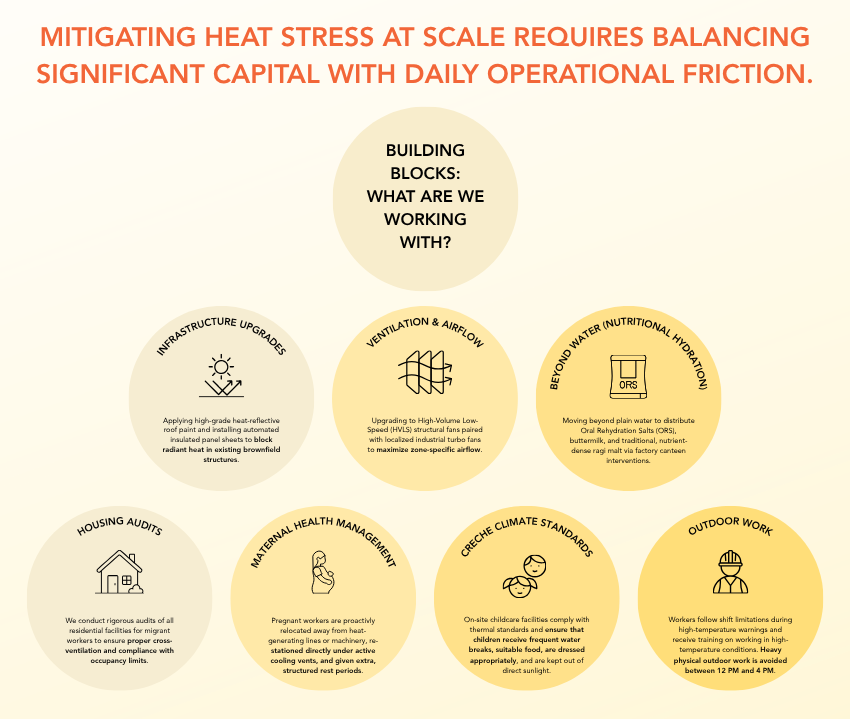
Building Blocks: What are we working with?
Mitigating heat stress at scale requires balancing significant capital with daily operational friction.
Shahi’s newer manufacturing units are intentionally designed using built-in heat-reduction measures from the ground up.
These include high ceilings, a limited number of floors to avoid vertical stacking, greenery planning, and more. Our extensive campaign to replace conventional lighting with energy-efficient LEDs achieved up to 50% power savings and reduced average indoor shop floor temperatures by 2.4°C, directly improving worker comfort and productivity.
Retrofits and upgrades in older buildings improve heat reduction and air circulation. This includes applying high-grade heat-reflective roof paint and installing automated insulated panel sheets to block radiant heat in existing brownfield structures. We are rapidly closing the gap toward our goal of 100% renewable electricity, with 68% of electricity currently coming from renewable sources.
“It is clear to us that while a minimum threshold is set by the central policy; however, we must recognize that no two facilities or regions are identical. This is where a centralized guideline must have a high-agency-driven, decentralized flexibility to determine the right set of measures at each facility.” — Jayraman Ramesh, Head of Governance
Worker Wellbeing: Beyond Contingencies
With a clear baseline, we integrated mitigation measures directly into our Occupational Health & Safety Management (OHSM) framework.
Hyper-Local Microclimate Analysis
Ambient outdoor forecasts do not accurately reflect the internal dynamics of an industrial facility. Thermal conditions vary significantly across factory sections, including Sewing, Finishing, Packing, Cutting, Washing, Boiler rooms, and Effluent Treatment Plants. Shahi’s maintenance and engineering teams conduct targeted internal floor tracking systematically throughout the day across all operational zones. As temperatures rise, factory managers ensure that cooling systems are operational and that air circulation patterns and hydration supplies are in place.
“A thermometer measures the temperature, but our workers tell us the actual impact. By integrating heat mitigation into our existing Occupational Health & Safety Management (OHSM) and worker-voice platforms, we ensure that safety protocols are driven by real-time human feedback, not just static legal compliance.” — Chithra Prasad, Head of Social Sustainability
Access to Care and Work Protections
Besides technical controls in place to manage ventilation, our on-site Health Centers and rapid-response first-aid teams step in. Shahi training protocols require responders to know how to distinguish between Heat Exhaustion and Heat Stroke and treat them.
Importantly, all hydration and cooling breaks are flexible and entirely non-penalized, protecting workers from operational or efficiency pressures.Moving beyond just plain water to distribute Oral Rehydration Salts (ORS), buttermilk, and traditional, nutrient-dense ragi malt via factory canteen interventions. Employees also participate in peer-monitoring networks to look out for early warning signs in their immediate teammates.
Vulnerable Profiles and Residential Accommodations
An effective heat management strategy should extend past active production lines to protect vulnerable individuals and cover residential facilities.
Housing Audits: We conduct rigorous audits of all residential facilities for migrant workers to ensure proper cross-ventilation and compliance with occupancy limits.
Maternal Health Management: Pregnant workers are proactively relocated away from heat-generating lines or high-density machinery, re-stationed directly under active cooling vents, and given extra, structured rest periods.
Creche Climate Standards: On-site childcare facilities must comply with thermal standards and ensure that children receive frequent water breaks, suitable food, are dressed appropriately, and are kept out of direct sunlight.
Outdoor Work: Workers follow shift limitations during high-temperature warnings and receive training on working in high-temperature conditions. Heavy physical outdoor work is avoided between 12:00 PM and 4:00 PM.
Amplifying Worker Voice through Digital Feedback
While technical logs provide helpful baseline numbers, capturing the direct feedback and experience of the workforce is critical for identifying localized operational issues. Shahi bridges this gap by leveraging Inache, our proprietary digital worker-voice platform. Using anonymized digital channels, Inache enables operators to directly flag real-time floor conditions such as a broken fan matrix, a malfunctioning water purification station, or localized stuffiness on a specific line. This combination of technical monitoring and anonymous reporting transforms heat mitigation from a top-down policy into an active, responsive feedback loop.
More than Mitigation: The Path Forward
Mitigating heat stress undeniably extends to broader macro-level issues the world grapples with. As our baseline establishes, for each region on a floor, the intervention to reduce heat generation at the source will require a host of innovative solutions. Shahi is partnering with our value chain to dive deeper and find solutions.
Let’s be candid: true partnership requires acknowledging what is difficult. When heat-stress metrics trigger safety protocols, it directly impacts the baseline mechanics of a factory.
The Operational Friction
Production Strain: With average working hours declining by 0.4 hours and overtime dropping by 32%, meeting strict delivery targets while maintaining mandatory rest cycles requires deep alignment with buyers.
Architectural Limits: Retrofitting older buildings presents physical limitations, facing a scarcity of scalable, commercially viable cooling technologies.
The Data Maturity Gap: The difficulty of tracking subjective, behavioral human outcomes with the same mechanical precision used for carbon or water data.
The true value of guidelines is their clear focus on joint accountability and shared responsibility. Upgrading heavy factory engineering infrastructure, installing large HVAC systems, or automated insulation retrofits requires significant capital. These expenses are long-term supply chain investments, not isolated supplier overheads.
An Integrated Approach for Brands and Suppliers:
Shared Capital Allocation: Executing co-investment programs to fund advanced structural cooling improvements and clean energy infrastructure.
Flexible Sourcing Timelines: Adjusting production metrics and delivery windows during extreme regional heatwaves so factories can manage safety adjustments without facing commercial or logistical penalties.
“Climate adaptation is one of the most complex challenges facing manufacturing today. Building resilience will require suppliers to reassess both operational costs and factory design, while working closely with brand partners to align on practical, long-term solutions. Adaptation cannot be treated as a traditional compliance exercise where investments are simply mandated. Meaningful progress will depend on shared commitment, coordinated action, and strategies that are both effective and economically sustainable.” — Anant Ahuja, Director ESG & Sustainability
Progress Over Perfection
As global trade policies adjust to new climate realities, international buyers and retailers must prioritize progress over perfection. There is a need to place a higher long-term value on verified operating logs, transparent development roadmaps, and honest, continuous improvement than on static, flawless data points.
At Shahi, our approach to heat stress guidelines is driven by proactive operational discipline and worker-centric sustainability beyond compliance. We view comprehensive frameworks as valuable references for benchmarking our internal progress, improving our data systems, and deepening our partnerships. Our ultimate commitment remains clear: to deliver world-class apparel products to the global marketplace without compromising the safety, thermal comfort, and fundamental dignity of the employees who drive our factory floors.