In 2019, Shahi became one of the first signatories of the Social & Labor Convergence Program (SLCP). The program now has 259 signatories, including brands, auditing firms, manufacturers, consultancies, standard holders, industry associations, and even national governments. Watch this video to see how Shahi reduced around 4,000+ hours due to reduced audits.
SLCP is a non-profit multi-stakeholder initiative that aims to eliminate audit fatigue in global supply chains. It does not set benchmarks for compliance. Instead, it provides a framework that ensures the effective collection of about 3,000 data points. So instead of conducting an audit for each brand, facilities can do a single audit, which is then verified by a single agency. This increases transparency in supply chains, reduces the need for social audits, and ultimately allows users to redeploy resources to improve working conditions.
Brands can access these data sets from a host platform and rate facilities according to their own standards. The uploaded data can be accessed from the host platform by the brands and rated according to their own standards.
“We envision a future where all our factories will only be doing a single SLCP audit and verification every year. Suppliers can only realize reduced audit fatigue when more and more brands adopt SLCP. Brands have the potential to drive convergence. With SLCP brands can help empower suppliers to invest more time and resources in sustainability and worker wellbeing.”
— Anant Ahuja, Head, Organizational Development
Srinivasa Rao Venkatesh, Chief Compliance Officer, and Gauri Sharma, Senior Manager, Organizational Development, serve as members of SLCP’s Converged Assessment Framework and the Communications and Stakeholder Engagement technical advisory committees. Their involvement helps SLCP align better with industry requirements, especially for manufacturers.
So far, 80% of our factories at Shahi have adopted SLCP, and we are working towards aligning a 100% by 2025.
At Shahi, we believe in sharing our experiences and learning with all the stakeholders in the fashion industry and beyond. This is an ongoing post to share insights from our speaking engagements in 2021. Read insights from previous years’ engagements: 2020, 2019.
December 14, 2021 | SLCP Signatory Webinar
Manjunatha Sriramaiah, Assistant General Manager of Compliance at Shahi spoke at the Social Labour Convergence Program Signatory Webinar 2021 held in December. He highlighted how Shahi became an early signatory to SLCP owing to the program’s numerous benefits, including value-added service for our customers, capacity building for our employees, and the tool’s credibility. Currently, 76% of our facilities have completed the SLCP self-assessment, saving us 4,416 hours due to reduced audits.
December 14, 2021 | #ETConvergenceSeries Industry 4.0: Connected Operations for smart manufacturing
Our Chief Technology Officer, Puneesh Lamba was featured on a panel at the coveted ET Convergence Series. He spoke about automated and smart manufacturing in the apparel industry and the potential it holds to develop more robust businesses. This panel was organized by The Economic Times and powered by Amazon Web Services (AWS), and Deloitte. Other esteemed guests on the panel represented MTR Foods, DP World, Patanjali Ayurved Limited, Carl Zeiss and Sigma Electric Manufacturing.
December 9, 2021 | Business for Social Responsibility
How to Enable a Just, Fair, and Inclusive Transition to Circular Fashion by BSR
Business for Social Responsibility (BSR) organized this panel discussion to launch the report ‘Keeping Workers in the Loop.’ The conversation revolved around the opportunities around circular fashion while emphasizing its impact on the job market for garment workers, especially women. Gauri Sharma, Senior Manager, Organizational Development, spoke about the context of circular economy and how the responsibility of a manufacturer is not just limited to recycling but also includes women in circular jobs. Incorporating their traditional techniques of repair, upcycle, and the like into the circular models makes for a more collaborative model. We must endeavor to ensure good quality jobs that align with frameworks such as SLCP.
Gauri Sharma, Senior Manager, Organizational Development, was invited to co-host a series on the fourth season of the Manufactured podcast hosted by Kim Van der Weerd. These episodes were in conversation with Matthew Wallace, CEO of DXM. Inc
DXM is a technology-driven on-demand manufacturing company co-owned by Shahi Exports, Brandix, MAS Holdings, Busana Apparel Group, and Carhartt. Gauri and Matthew speak about how building a soft relationship between various stakeholders in the industry is equally important as technological innovation in ensuring circular business models.
The Sankalp Global Summit was a three-day event that saw over 2521 delegates from 104 countries. Rajneesh Rai, General Manager, Environmental Sustainability, spoke on the panel ‘Getting to Net Zero – the Role of the Private Sector’ on Shahi’s tremendous progress and leading the way in being part of the solution by setting bold commitments to reducing the greenhouse gas emissions.
He highlighted some of the key achievements at Shahi, such as the Cradle to Cradle Certification for the ‘Arth Collection,’ declaring Science-Based Targets at some of our factories, among others. He also pointed out how favorable government policies and commercially viable technologies will help stakeholders transform into a sustainable ecosystem.
October 13, 2021 | Sedex South Asia 2021
SEDEX is a membership organization that provides online platforms to manage and improve the working conditions in the global supply chains. Srinivasa Rao Venkatesh, Chief Compliance Officer at Shahi spoke at the ‘Managing Supply Chain Risks in the Textile Industry,’ highlighting some of the risks faced by the industry, such as health and safety, licensing, and working hours.
These further expand to post-lockdown challenges, including job losses, and issues affecting migrant workers. He concluded by enumerating potential solutions we deployed at Shahi to enhance capacity building, monitoring, workforce empowerment, and providing a fair and respectful workplace.
September 9, 2021 | PI Apparel
PI Apparel is a membership community for apparel and footwear manufacturers that engage with the industry’s challenges and technologies. PI Apparel organized a sustainability spotlight in September where our Head of Organizational Development, Anant Ahuja, moderated the session on ‘What are the Practical Steps We Need to Take in Terms of Infrastructure, People & Technology to Underpin a More Sustainable Operation’? The session focused on the culture of sustainability among different organizations and how brands and suppliers can leverage technology to drive sustainability. The key to an impactful journey towards sustainability is collaboration at the core of business models.
September 1-2, 2021 | Thrive 2021, KGA Managers’ Conference
This year, KGA Manager’s Conference engaged with the theme ‘Lead with Empathy, Win with Agility’ to discuss the challenges and risks triggered by the pandemic. Anant Ahuja, the Head of Organizational Development at Shahi, participated in the ‘Sustainability: Imperatives & Roadblocks’ session.
He spoke about how at Shahi, collaboration with brands and research institutions supplement sustainable practices. Examples include the ZDHC Roadmap to zero programs, NIFT Chair 4.0, Cradle to Cradle Certified® Gold products, and a trial with HKRITA. He also shared a few suggestions on how KMART Group as a brand can help suppliers on their journey towards becoming sustainable. Here, sharing knowledge with suppliers, developing a capacity plan, and small interventions such as sourcing closer to the market and consolidation of shipments are a few steps that can considerably impact suppliers.
August 2, 2021 | Tamarind Chutney
A Webinar on ‘Technology and Innovation in Circular Fashion’
The webinar was co-organized by Tamarind Chutney and Chintan (Environmental Research and Action Group) with the support of Fredrik Ebert Stiftung (FES) Foundation. The panelists discussed the growing global recognition for moving from a wasteful linear supply chain to a closed-loop, a circular one.
Gauri Sharma, Senior Manager of the Organizational Development team, spoke about the need for innovations and technology to solve critical challenges and enable this transition. She described how Shahi is working on projects such as Cradle to Cradle products, HKRITA- SAP, microbial dyeing, and recycling, among others. She also spoke about suppliers’ challenges, including the price-sensitive nature of the industry, transactional and short-term relationships with brands, and lack of transparency.
July 15, 2021 | Walmart Global Sourcing Sustainability (Regenerative Retailer) Summit
The summit explored how the suppliers can work together with brands actively to pursue sustainability goals aimed at sourcing responsibly, eliminating waste and emissions, selling sustainable products, and protecting nature.
In the virtual session, he shared Shahi’s vision of ‘doing more with fewer resources’ along with the company’s progress in improving its impact in four distinct areas: energy, chemicals, water, and materials.
June 1-4, 2021 | United Nations Responsible Business and Human Rights Forum
The UN Human Rights Office for Southeast Asia organized five virtual sessions at the 2021 UN Responsible Business and Human Rights Forum. Anant Ahuja, Head of the Organizational Development at Shahi, spoke at ‘The Next Decade of Migration, Fashion and Human Rights’ panel, centered around the role, vulnerabilities, and experiences of migrant workers and the impact of future business trends on them, especially the female labor in the fashion supply chain.
He discussed a few practical examples of how Shahi is contributing to the wellbeing of migrant workers including implementing our skill development program since 2013, establishing the Migrant Support Centre in 2021, and our goal to provide access to vaccines to our entire workforce.
April 27-29, 2021 | Sustainable Apparel and Textiles Conference
The two-day event organized by the Innovation Forum addressed how apparel brands can adapt practices to deliver on growing stakeholder expectations and drive circularity while reducing the climate impact on the fashion supply chain. Anant Ahuja, Head of Organisational Development at Shahi spoke about the challenges, particularly the power imbalance faced in the textile industry, and how adhering to practices such as on-time payments and making long-term commitments with suppliers will help improve the buyer-supplier relationship.
April 13, 2021 | Transformer’s Foundation x Manufactured Live Event
The live panel discussion organized by Tranformer’s Foundation and Manufactured Podcast focused on consolidation and vertical integration in the fashion supply chain in a post-pandemic world, and how vertical integration supports sustainability within the suppliers. Anant Ahuja, Head of the Organizational Development at Shahi, reflected on Shahi’s journey and the values of sustainability and worker wellbeing that have been passed over generations. In the session, we discussed the several benefits of being vertically integrated including improved traceability, speed, cost, and time-saving mechanisms. Shahi hopes to bring together manufacturing expertise to further improve the vertical integration across the industry.
Watch a recording of the full panel discussion:
February 24- 26, 2021 | ReWire: Sustainability 2021
This 3-day virtual event was organized by MOTIF and The Mills Fabrica with selected disruptors in the sustainability industry. The event spotlighted emerging ecosystem standards, new materials, and a pathway towards circularity to fuel innovation across the fashion supply chain.
On the panel, “The infrastructure of sustainability” on February 24, 2021, we talked about our approach towards energy conservation and clean energy transition. In 2019-20, 77% of the electrical energy consumption across Shahi was carbon neutral. On February 25, 2021, we presented our new research project with The Hong Kong Research Institute of Textiles and Apparel. We are reclaiming textile waste to grow cotton more efficiently as a way to support cotton farmers. Register for free to access the session recordings view more.
February 23, 2021 | Manufactured Podcast, Season 3
Manufactured is a podcast started in 2020 to provide an insider perspective on sustainability in the fashion supply chain. Two members of Shahi’s Organizational Development team, Anant Ahuja and Gauri Sharma were invited to speak for the latest double-episode which is now in its third season.
We believe in the power of being transparent, sharing our experiences, and gaining valuable feedback to improve further through platforms like Manufactured. Part 1 of the podcast covers Shahi’s journey over the last 45 years, and our perspective on collaboration between buyers and suppliers to drive sustainability. Part 2 of the podcast covers how Shahi has benefitted from becoming a vertically integrated supplier, and insights on our collaboration to drive circularity in the fashion supply chain.
February 19, 2021 | Hong Kong University of Science and Technology (HKUST), MBA Session on Supply Chain Sustainability
The session organized by HKUST as a part of their MBA Program focused on sustainability considerations in the global supply chains. We were invited as a guest speaker to offer the MBA students a perspective on how Shahi, India’s largest apparel manufacturer, and exporter, embrace sustainability through focused social and environmental initiatives. The interactive session included questions from the students on the challenges of implementing a multitude of worker wellbeing programs, disseminating best practices across the industry, and managing a large workforce during the COVID-19 crisis.
Please write back to us at od@shahi.co.in for more information.
Apparel factories typically operate through assembly-line production. Large teams of up to 70 workers stitch and assemble all the components of a garment under the leadership of a line supervisor. In a fast-paced environment where success is measured by the ability to meet production targets, supervisors are often selected solely based on their technical skills.
While it is common practice for managers in corporate or white-collar jobs to receive management training, factory supervisors are rarely trained on the soft skills they need to harness the potential of large teams.
Recognizing this gap, in 2016, Shahi partnered with Good Business Lab (GBL) to design an extensive soft-skills program called STITCH (Supervisors Transformation into Change Holders) which encompasses sessions on topics ranging from problem-solving and coaching to gender sensitivity and improving workplace culture.
GBL’s research shows that STITCH enhances supervisors’ stock of soft skills, reduces turnover, and increases the workers’ productivity in their lines, thus raising incomes and the probability of receiving incentive bonuses. Shahi has already trained over 1400 supervisors in STITCH and enrolled more than 50 percent of supervisors in STITCH since 2017.
Designing an effective leadership training program
The training content was developed based on an extensive survey of 2,000 supervisors at Shahi on their managerial practices and styles, workplace behaviors, and personality characteristics. The data from these surveys was matched with historical data on productivity to determine the training needs of supervisors required to improve supervisors’ effectiveness and behavioral temperament at work. The surveys found that tenure, cognitive skills, internal locus of control, autonomy, and attention are significant influencers.
The STITCH training was designed to enhance core competencies and capacities of the supervisor to effectively manage their key roles through four modules (see Figure 1)
Module #1: Me as a person
This module helps supervisors understand and reflect on themselves as individuals, and recognize their strengths and values. The aim is to understand and strengthen their cognition of the ‘self’ before looking at themselves as supervisors.
Module #2: Me as a supervisor
The second module helps supervisors understand their roles by locating essential skills such as planning and organizing, problem-solving, conflict resolution, and prevention of harassment.
Module #3: Me as a team member
The third module helps supervisors broaden their perspective of what it means to manage a team by being a team member and effectively motivating the team and building engagement.
Module #4: Me as a leader
This fourth module helps the supervisors to develop their role as a leader. The module covers aspects like coaching a team effectively, being open to feedback, and changing the work culture by encouraging dialogue, openness, respect, and growth.
The sessions have been designed keeping in mind the need to support the transformation of supervisors at both a personal and a professional level. Shahi trainers deliver the training through weekly one-hour group sessions to a batch of around 20 supervisors over a period of 25 weeks (6-7 months).
Reflecting on her training experience, Pavithra, a supervisor in Unit 28 said, “The ‘Me as a Person’ module helped me understand myself. I make an effort not to judge others and think about how my behavior affects others. The program has made me not just a better supervisor but also a person. I find my level of patience considerably increased, and I hope my interaction with people leaves them with a smile.”
Soft skills boost performance on the factory floor
GBL’s impact evaluation validates Pavithra’s and many other supervisors’ experiences. The study concluded that thesupervisors who received the training had more skills in the dimensions trained, as they performed significantly better in post-training tests in all four modules. Further, productivity on lines managed by STITCH-trained supervisors increased by 7.3%, and trained supervisors were 15% less likely to quit relative to those who did not receive the training. Trained supervisors experienced 6% higher salary growth and they and the workers in their lines had a higher probability of receiving incentive bonuses compared to untrained supervisors.
Although the study did not find any significant direct impact of the training on workers’ wellbeing and supervisors’ satisfaction, stories of transformation shared by trainees indicate a positive change in their behavior and skills sets. Byresh KM, a housekeeping supervisor in Unit 11 shares his experience attending STITCH:
I was a demotivated employee that would neglect my responsibilities and constantly feel stressed. This would manifest in the form of anger and shouting, resulting in high levels of attrition in my team. After attending STITCH in 2021, my attitude towards life and work has completely shifted. I learned skills like patience and problem solving, which I now use to motivate my team, listen to their issues, and coach them on how to do better. My self-worth has increased – I feel like my work matters to the company and I want to contribute further by getting promoted from supervisor to housekeeping in-charge.
Mallesh V G, a supervisor in the manual brushing department in Unit 23, experienced a shift in mindset after attending the gender sensitivity module, “Before the training, I did not believe that women could be team leaders and felt that they can’t cope with additional responsibilities. STITCH taught me that gender is not important, but rather the person’s interest and skills are what matters. I now actively support women workers in my team to grow professionally.”
Future goals
Chitra Ramdas, General Manager, Organizational Development shares Shahi’s commitment,
In our experience designing and implementing this simple training has had a transformative impact on workplace relations and the work environment, leading to wider benefits for our organization. Our goal is to train 100% supervisors by 2024.
Shahi and GBL have developed a smartphone application-based screening application to identify the best candidates to hire or promote for managerial roles by scoring them on their personality, cognitive ability, and managerial quality, potentially eliminating workplace bias. This application will also identify gaps in the soft skills of these candidates which can be filled by delivering relevant STITCH training modules to them virtually.
We’re also extending our learning from STITCH to develop soft skills training for middle and senior factory and corporate management. An eight-month leadership development course has been designed with 17 modules to groom upcoming leaders at Shahi. This training will be extended to all leadership at Shahi’s factories and offices.
At Shahi, we have known the value of training on soft skills such as time and stress management, problem-solving, and execution excellence by training over 60,000 women in Gap Inc. Personal Advancement and Career Enhancement (P.A.C.E.) since 2007. Our goal is to train 90,000+ women in GAP Inc. P.A.C.E. by 2024.
In a fast-paced industry where speed of production and delivery is paramount, manufacturers often look to technical and operational solutions to drive efficiency. Soft skills training is usually not a top-of-mind solution for manufacturers. However, studies like this one by GBL prove that soft skills training is a simple yet highly effective tool to boost factory culture and performance, creating a win-win situation for both employees and the company.
This blog post has been updated on February 11, 2022 to include information on VDA 2020-21 payments.
This is the third of three-part series that records our journey on worker well-being through the COVID-19 pandemic.
The apparel industry was one of the first to bear the brunt of the restrictions that the COVID-19 crisis brought upon world economies. Manufacturers reset priorities in 2020 across consumer markets as most geared to operate in survival mode. Changes in operations across the industry demanded efficient immediacy to match humanitarian needs and keep businesses afloat, with the fate of more than 45 million people directly and 60 million in allied services at risk.
It is a challenge to determine the necessary support services and standardize them across the board. Almost 88-115 million people, who benefited from a decade worth of inclusive growth, are now slipping back into poverty after the first lockdown. In May 2020, unemployment in India reached a record high of 23.8%. Garment manufacturers retained many workers to produce masks and PPE gear. Manyworkers, however, hadto return to their hometowns as the uncertainty loomed larger.
Shahi repurposed its factories in Bangalore to cater to the global shortage of PPE kits. With an initial capacity of producing 12,000 PPE kits per day, Shahi could deliver 5,00,000 PPE suits by June 2020.
The Jeopardy
Workers stand to lose the most with the slowed-down economy in 2020. Things only began to look up in the first quarter of 2021 when the second wave caught the industry unawares. Brands that had set orders with Indian manufacturers and exporters doubted that the industry could deliver on time. Bangladesh and China received most of these orders since their garment factories were still up and running.
A survey conducted by the Clothing Manufacturers Association Of India (CMAI) reports that 77% of the respondents were contemplating a 25% reduction in staff. The impact for Shahi, however, has been considerably lower though not insignificant. During the first lockdown, only 3% of our migrant workforce left to return to their hometowns and villages.
As retailers opened shops in the west, consumers returned to shopping from stores in early 2021, which promised a steady recovery path for the industry. Though April showed the lowest decline, 55% of manufacturers reported less than 25% of their sales had been recovered (CMAI). Moreover, the second wave hit the apparel industries again as they remained unlisted as essential services. This time, however, repeated requests allowed the factories to run at 50% capacity.
A Comprehensive Response to COVID-19
Masks were made mandatory across factory floors and corporate offices
As a labor-intensive business, our priority is the health and safety of our 100,000 strong workforce. Shahi quickly adapted to the Covid Appropriate Behaviour (CAB) across factory floors by implementing regulatory guidelines and best practices. Masks, thermal screening, and sanitizers are available at all strategic points. We re-organized canteens and offices to adhere to social distancing rules. Interim care facilities were set up for support within or close to our factories and offices for employees and their dependents. These centers host beds, oxygen cylinders, and other essential medical equipment and medicines. Our in-house doctors are available on call to guide employees, apart from engaging medical specialists.
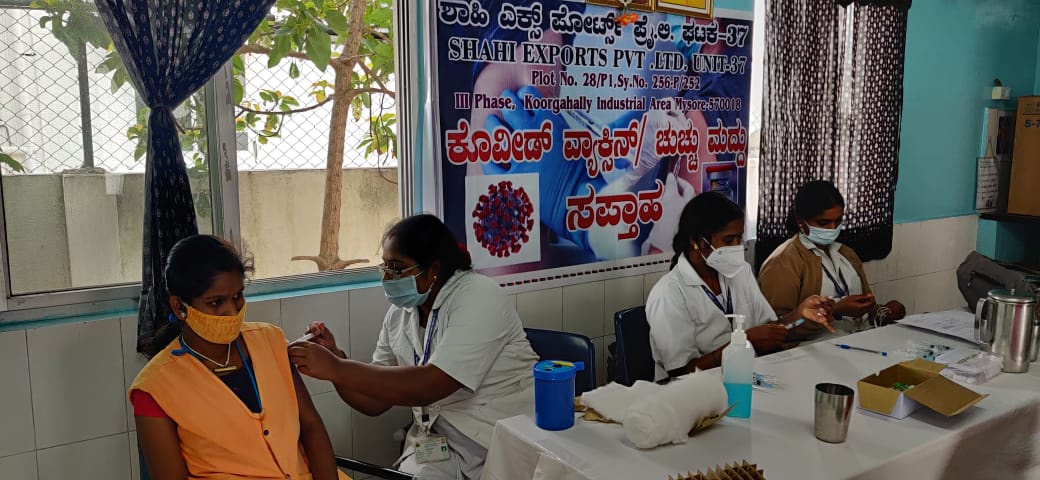
Shahi organized vaccination camps and facilitated access to vaccines across all its production units and corporate offices. 96.7% of our employees have been vaccinated against COVID-19 with the first dose and 70.3% with the second dose.*
Unfortunately, the death and devastation from the virus did not spare us. We lost 29 of our workers and staff to the pandemic. The company has extended support to deceased’s families to the tune of the deceased employee’s dues for up to 2 years.
Migrant Support at Shahi
The Migrant Support Center in Bengaluru has been up and running since January 2021
Migrant workers constitute an integral part of our workforce. Our migrant workers have the option of staying at designated residential services run alongside the Janodaya Trust. These hostels are a part of our Migrant Workers Livelihood Project which aims to provide safe and affordable living conditions to our workers who travel the lengths of the country to work in our factories. The pandemic put pressure on supply chains across industries; the resultant inflation threatened the workers’ sustenance.
We supported our workers by insulating them from the exorbitant rental costs and safety risks. Our migrant workers could, therefore, remain closer to their workplaces. They were given periodic reminders for COVID-19 protocols and had access to medical services should any need arise. We arranged for food and ration kits to help them maintain social distancing. These hostels designated 40 beds as a covid shelter for migrants in need at Bengaluru.
While our workers had a stable living place, they faced more long-term questions. Lockdowns across states forced factories to pull shutters down— temporarily for some, and permanently for othersExports reduced by more than 10 percent across most of 2020. The industry, valued at $16 billion in 2019, is down to $12-14 billion. With states going into lockdowns starting in late April this year, garment production was not deemed an essential service. A CMAI report on a survey conducted to measure the impact of COVID-19 on manufacturers and exporters shows 77% of the respondents were contemplating a 25% reduction in staff.
The primary incentive for workers at Shahi to stay behind or return when the lockdown was relaxed was the ex-gratia payment of net wages for all workers who returned by May 18, 2020 (two weeks after we opened our factories again).
VDA 2020
To help industries tide over the impact of the first lockdown, the Government of Karnataka (GoK) decided to defer the implementation of Variable Dearness Allowance (VDA) for the year 2020-21. The Trade Unions in Karnataka challenged the government order(GO) through a public interest litigation, and none of the apparel manufacturers, including Shahi, are part of this litigation.
The Honorable High Court of Karnataka announced a stay of the order pending further deliberation. The final decision on payment of 2020 VDA is pending. We share the concern that given the time that has already passed, the remaining time that the Court proceedings may take delays the payment of the dues indefinitely. We hope that the final decision will be made by the Court at the earliest, however rather than wait further for this judgment, we have paid the Karnataka 2020 VDA in the form of arrears for the months of April 2021 – January 2022. For our full statement on this read here.
In February 2021, the Government of Karnataka (GoK) announced the annual VDA increase applicable from 1st April 2021. Shahi has been paying this VDA amounting to INR 428.40 per month per worker from April 2021 onwards.
Shahi’s code of conduct clearly states that all employees shall be paid wages, overtime payments, and benefits in compliance with applicable laws. Operating more than 50 factories and employing over 100,000 workers, we intend to always remain a fully legal and ethical employer while continuously raising the standard for workers’ well-being in the apparel industry.
Where are we headed?
The experience from previous waves helped Shahi live up to its business commitments and worker-wellbeing. We continue to employ 100,000+ people across Shahi through the challenges by embracing sustainable measures. We communicated actively with our clients to apprise them of the situation as it developed. The industry looks forward to a full recovery as we enter 2022.
A steady flow of orders and continued collaboration amongst stakeholders draw out a path to sustained recovery.
Extending support to our workers has only been possible with the help of our partners, brands, and public and private health services. Their ultimate well-being lies in the continued collaboration of all stakeholders. However, it will take more than just capital to pump the industry back on its feet. Companies are gearing to strengthen support structures for their migrant employees and workers by creating robust CSR initiatives. Finding the right mix of incentives and directives is crucial for ensuring sustainable development.
Read Part I and Part II of the series to know more about Shahi’s journey on worker well-being through the COVID-19 pandemic.
This is the second part of a 3 part series on Shahi’s road to recovery from the gruesome COVID-19 pandemic. In this series, we speak to our employees about their experiences of dealing with the pressures of the pandemic and the support they found at Shahi.
“Achha to hum kaise jaanenge ki bade sheher mein kaha rehna hai aur kya karna hai? How will I know where to live, how to do things in a big city?” asked Arpita, looking quizzingly at me. Arpita is a lanky young girl of eighteen from Barbil. She isone of the thousands of women who wish to migrate to cities to work in garment factories. She joined her mother as a domestic worker ever since the country went into lockdown. Now, she is keen to develop her interest in stitching at Shahi’s skill development center in Odisha, which provides free sewing skills training under the Ministry of Textiles and Rural Development.
The Migrant Support Center in Bengaluru has been up and running since January 2021
Most garment factories in India are located in the cities. To work in one, Arpita would have to move and set up miles away from her family. She is excited by the prospect of living and working in a metropolitan city, though riddled with questions. Where to live? What if she doesn’t understand the language? How to book a supply of gas? What to eat? Is there a bathroom with running water? What about electricity? How to pay her bills for the first month? What happens if there is a lockdown?
I begin to tell her about the Migrant Support Centre in Bengaluru. Shahi runs the center in collaboration with Odisha Rural Development and Marketing Society (ORMAS).The center was designed byGood Business Lab (GBL) and H&M. The center supports the migrant community in Bengaluru, India, with access to services required to support their lives in an urban environment. It has been fully functioning since February 2021, which led to its invaluable contribution to the support response during the second wave in India.
Workers can easily register themselves at the center using their identity cards (or request support). The registration helps with post-placement tracking, which accelerates response to requests and communicating information about programs—the coordinators and staff schedule sessions for the workers for information on housing and access to utilities. Workers can also sign up for soft skills and advanced training in skills related to their work. They can attend information seminars on health, legal and financial literacy. The Support Center conducts programs like “Know your City,” highlighting popular tourist spots, utilities, and an introduction to the city’s culture.
So far, the center has registered 627 migrants across industries who receive post-placement support and have attended sessions on financial and legal literacy. The center has also supported them in setting up their bank accounts.
Beginnings: The need for a Migrant Support Center
Migrant workers and their families across industries share Arpita’s concerns. It is challenging for them to look for accommodation in safe neighborhoods with access to utilities.
Migrants make up a significant portion of the workforce at Shahi. Many are trained at our skill development centers and receive placement offers from Shahi and other manufacturing companies under our Migrant Workers Livelihood Projects (MWLP). Once trained, they face the challenge of relocating to an entirely new space. Skilled candidates migrating from different states of India are provided accommodation in the residential facilities managed by Janodaya. At the training centers, we provide complete information on these facilities, their facilities, and the process of enrollment. Once the trained candidates are employed at Shahi, they can visit the residences accompanied by post-placement officers.
Registering at the Migrant Support Center in Bengaluru
Migrant workers need an array of long-term protections. Some of these are guaranteed by identity documents like the Aadhaar, ration cards, and voter IDs. Many workers are ignorant of or simply do not know about its existence, purpose, and need. These IDs provide them access to health and banking services and further legitimize their position in their workplace. A support center for migrants thus seemed a necessity. It was a need that arose out of our experience with running the MWLP. As more and more youth are trained under our skill development centers, we realized that migrant services needed to be developed further to support them.
Shahi got together with ORMAS, GBL, and H&M to design a scalable and replicable Migration Support Center (MSC) framework. This effort brought together different perspectives— a brand, labor rights organizations, and state government initiatives into our research perspectives.
What Does a Migrant Need?
Good Business Lab interviewed training and placement staff at the home base and Human Resources and Hostel staff at the destination to understand the challenges workers faced. At the home base, where workers undergo training before leaving for Bangalore, families often object to the move out of their hometowns and villages. Workers also tend to withhold information about their health, afraid to lose their job offer.
Migrant workers receive financial literacy training
The next phase of the research involved an extensive study of existing frameworks of support centers. The exercise identified the following gap in services for migrants: easy access to basic amenities, social, financial, legal, and governmental services, and services like identity-related documents, information on housing, schools, hospitals, government schemes, and programs. Further, we identified that improving financial inclusion among migrants, including banking access and usage of formal remittance channels, is crucial.
Making services available is not where the task ends for a Migrant Support Center. Changing economic and social conditions create a gap between the training and cognition of workers in their new environments. This takes a toll on their mental health and expectations from their life.
How does it feel like to be a Migrant?
Moving is never easy. The impact of the move often manifests itself in the form of psycho-physiological changes in the behavior of migrants. They suffer from urban loneliness in response to the changes in their environment, isolating themselves and ignoring their health and mental well-being. They often feel stuck in their position where they must continue to sustain themselves and their families back home. Mount a pandemic over all this, and a whole whirlwind of problems crop up. People lost livelihoods, homes, and even their lives.
Regular engagement programs help Migrants connect with each other
India faced its migrant crisis amidst a raging COVID-19 pandemic in March 2020. Entire labor populations embarked on a departure from the cities back to their villages and towns. Support centers and emergency services crumbled under the pressure of sheer numbers— flagging the need for more resilient structures. While businesses moved to cut losses and costs in a stifled economy, workers and laborers found themselves stranded.
Limited employment opportunities and gradual re-opening of businesses led workers to move back to the cities. They now had to rebuild their lives— find a place to live, organize resources for survival— all with little to no cash flow. These are not novel in any way.
The MSC helps migrants in Bengaluru with adjusting to changes through community engagement programs, health and legal workshops, and more. They are encouraged to approach the staff in the residential facilities for support whenever they need it.
Resilient Response to COVID-19
Covid relief kits were provided distributed amongst migrants
During the first lockdown, only 3% of migrant workers left Shahi. Most were able to stay back comfortably in our residence halls. Shahi provided groceries, sanitizers, masks, and 24/7 medical support from Janodaya. In facilities managed by Janodaya, we set up ten beds with concentrators for emergency use by residents.
The MSC has supported workers in Bengaluru through the second wave. The facility turned forty beds in the hostel into isolation wards. Residents in all other facilities received support through ration kits and access to medical professionals. Workers were informed about COVID prevention protocols and care through WhatsApp groups. Our staff on the ground also ensured that all registered workers at the MSC received their vaccination doses.
All migrant workers at Shahi received their vaccines in our camps and centers set up in every factory. By now, 96.7% of our employees are vaccinated with the first dose against COVID-19, and 70.6%* with the second.
What does this mean for hopefuls like Arpita?
Our primary goal with the Migrant Support Center is to make them more accessible and valuable for workers in Bangalore. The services offered by the MSC were determined through four phases of research and implementation. The MSC supports in:
Enabling migrant workers to make more informed decisions
Weakening taboos around mental health and encourage seeking help
Creating an environment for overcoming linguistic and logistical barriers
Developing new solutions to address problems faced by migrant workers
Creating a services blueprint to use for scaling up MSCs nationally
Shahi is also focusing its energies on setting up factories closer to rural areas to bring employment closer to workers. This alleviates the emotional and financial cost of moving to work while bringing employment opportunities closer to home. This boosts the local economy and helps accelerate development.
To answer Arpita’s questions:
She will know her way around the city with the help of the Migrant Support Center. The center will train her to understand the importance of taking care of her health and knowing her legal rights. She will have the support of the staff at the MSC and a 627 strong and growing community.
This is the first part of a 3 part series on Shahi’s road to recovery from the gruesome COVID-19 pandemic. In this series, we speak to our employees about their experiences of dealing with the pressures of the pandemic and the support they found at Shahi.
India and the Second Wave
In the summer months of 2021, India faced its deadliest wave of the COVID-19 pandemic. The numbers reached a global record of more than 400,000 reported cases in a single day at the peak. As states entered lockdowns, Shahi geared to collaborate with local health services, NGOs, and private and public hospitals close to all its units to arrange vaccination camps and drives for its employees.
96.7% of the 100,000+ employees at Shahi have successfully been vaccinated with the first dose against COVID-19. More than 70.6% have now been vaccinated with the second dose after the mandatory 84-day wait period.
As of October 21, 2021, India has delivered 1 billion vaccination doses. It is the second country in the world after China to cross the billion mark. This journey was made extremely challenging by the sheer expanse of its population. The challenges to the vaccination campaign were both logistical and social. Vaccine shortages, misinformation, and even a general fear of getting infected at health centers and camps caused the initial days of the vaccination turn-out to be lower than expected.
Shahi took a proactive approach to deal with these challenges. In May 2021, the first camps were set up in or close to our units, other drives were conducted in collaboration with local health services. Amidst shortages, the challenge was to maintain a quick turnaround with the arrival of vaccines at the health centers and camps at our units. The human resources team at Shahi employed a continuous notification system over intercoms and made announcements in-person on the shop floors. Our supervisors conveyed the particulars down their lines and counseled workers to allay fears.
“There were announcements and notices for the camp, but ultimately it was the word of mouth amongst workers that spread the news”, said Urvashi Rai, Assistant Manager, at one of our factories in Noida, Uttar Pradesh.
Combating Misinformation and Providing Counseling Support
A varied number of misinformed beliefs have been rampant in wake of the rising infection rates and deaths due to the novel coronavirus. Communities share widespread skepticism on the efficacy of vaccines and their side effects in the long run— especially for people with comorbidities and pregnant women.
Yogesh, a 30-year-old production checker at our factory in Noida, notes, “I was scared from the after-effects, mainly fever, because of my pregnancy. My mother-in-law strictly told me to not get vaccinated, but I still went ahead with it because I knew its importance. I was only scared of the fever.”
While camps were set up in our units to make it accessible and hassle-free to get vaccinated, our HR and medical staff engaged with employees to address questions and talk through any medical complications due to comorbidities. It was an important exercise to undertake to convince workers to avail vaccines.
“Specifically for the pregnant workers, we arranged counseling sessions to build their confidence in vaccination. I conducted these counseling sessions.”, said Urvashi.
“Yes, I was scared of the vaccination at first, but since it was important to get it taken for my health and also because there were announcements in the company about the requirement of getting vaccinated, I took it”, said Sunitha, from the Industrial Engineering department at our unit in Bengaluru.
Vaccination Days
Workers registering for the vaccine in our factory in Faridabad.
Prior to the vaccination day, employees were counseled on following safety protocols during the vaccination process such as distancing and wearing masks. On the day of vaccinations, employees were given reminders to carry necessary documents. They were led to sequestered areas in the factory where the camps had been set up following our covid protocols.
“We had to take a token and wait in line for our turn. After getting the vaccine, we were even made to sit for 10-15 minutes to see any immediate side effects,” said Madhu, a sewing operator, at Faridabad. “On the day of vaccination, if a worker was not feeling well, they were made to sit in the back and rest.”
Our goal was to ensure that workers did not feel burdened at the prospect of developing symptoms in response to the vaccine. Supervisors kept a close eye on any changes in the health of the workers in their lines, and they were able to take leave from work in case of any side effects. We also provided medication for side effects such as fever.
Dr. Leena Thakkar, our Chief Medical Officer said,
“It is a mammoth task to overcome the inertia of reluctance amongst a workforce that is so diverse and harbors migrants. We had to build their trust in the vaccine asserting the benefits of the vaccine over its temporary and treatable side effects. Its efficacy is in the fact that it prevents hospitalization and severe escalation in the event of a COVID-19 infection. Our vaccination drive is the result of effective collaboration between various departments working towards a common goal – vaccination for all.”
Workers Testify to Last-mile Access
With such a large population to vaccinate, time is of the essence to disrupt the spread of disease. Having access to vaccination centers and camps close at hand is essential.
“It is good that we would have had to look for centers, wait in the heat, summers were at their peak that time, and even take a day off from work. All that got easy with the vaccination drive at Shahi”
-Amarpal, Finishing department at one of our factories in Faridabad, Haryana.
Worker receiving a vaccine shot at our camp in Bengaluru
Constant counseling and support were also extended to migrant workers from various states working in our factories in Bengaluru through our Migration Support Center. We ensured that they received both doses of the vaccine which enabled them to continue to work safely and support themselves and their families during the crisis.
“Most of the employees are completely dependent on the daily wages, this vaccination drive made us save money and time”, said Sunitha, “Otherwise, we would have to go to the local public centers and wait in line for hours together and lose a day of work. I am grateful to Shahi for organizing this vaccination drive and helping employees.”
As the world recovers from the loss of lives, disrupted supply chains, and slowed economies in the wake of the pandemic, Shahi has been committed to building resilient response systems. Vaccinating our employees has been the most essential part of our strategy to jumpstart the business and ensure the well-being of our employees.
We recognize that to fulfill our commitment to protect workers’ wellbeing, all stakeholders in the industry need to work together. This is why we have endorsed ILO’s Call to Action on “COVID-19: Action in the Global Garment Industry” which aims to generate actions from across the global garment industry to protect workers’ income, health and employment, and support manufacturers to survive during the COVID-19 crisis. The global action also calls for working together to establish sustainable systems of social protection for a more just and resilient garment industry.(more…)
We love to connect with our industry peers and all other important stakeholders to share our experiences and exchange ideas. In this ongoing post, discover all the conferences and events we have spoken at in 2020.
Collaborations and partnerships between stakeholders are critical to solve the world’s most pressing challenges across people, planet and profit. This blog series ‘Collaboration insights’ reflects on our partnerships with various stakeholders, starting with business and academia.
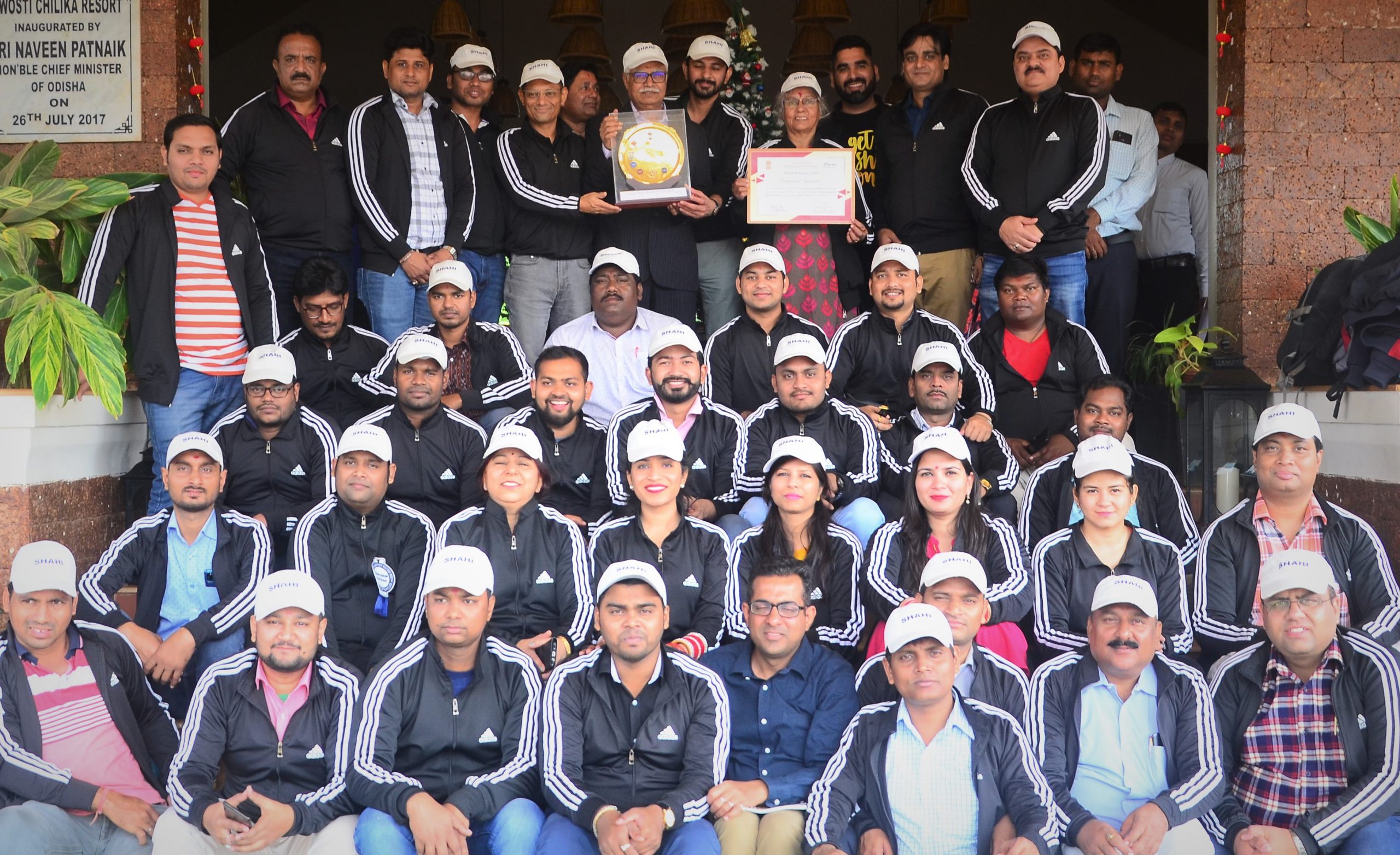
It was an honor to receive the “Best Performer Employer – Rank -1” National Award 2019 under Deen Dayal Upadhyaya Grameen Kaushalya Yojana (DDU GKY) by the Ministry of Rural Development (MoRD), Government of India (GoI).