For years, sustainability tools in the apparel sector have traveled down a strict one-way street: from brands and consultancies down to manufacturers. What they are missing are the variables and nuances that factory managers on the ground experience and must tackle to first prove the financial return on those upgrades to even begin the conversation with brands, banks, and their own leadership. But that can be fixed with a simple tool that no one built until now.
Shahi Exports co-commissioned and led the development of Bang for Buck—a collaborative project facilitated by the Fashion Producer Collective, alongside fellow manufacturers Elevate Textiles and Epic Group, with support from GIZ FABRIC and technical expertise from Grant Thornton Bharat. Quietly radical in its approach, this free, open-access tool covers 22 decarbonization technology measures. These are practical, proven interventions selected by suppliers to work within real-life constraints across diverse factory setups. The tool enables sustainability managers to calculate the exact emissions impact relative to financial ROI, giving them precise data and the language to justify green investments to stakeholders.
What makes Bang for Buck truly unique is the intensely collaborative process behind it. Suppliers weren’t brought in to simply “review” at the eleventh hour but were made co-designers from the very first page. Every assumption was named and debated out loud.
We didn’t just stop at asking how much a technology could cut emissions, but went on to dig deeper. Does this data actually exist within a standard manufacturing company? Who will own it? Is the output robust enough for a plant manager to stand in front of a CFO and win the argument? Even the final paper was written jointly, making sure the manufacturer’s voice remained primary.
The process ultimately revealed:
While technical realities like grid factors and local infrastructure vary by region, the core pressures manufacturers face are identical worldwide.
Whether in South Asia or Southeast Asia, suppliers grapple with accessing upfront capital, verifying technology performance, and communicating ROI. Bang for Buck engages with these realities and changes the traditional supply chain dynamic, proving that repeatable, supplier-led collaboration is not only possible but indeed essential for genuine industry transformation.
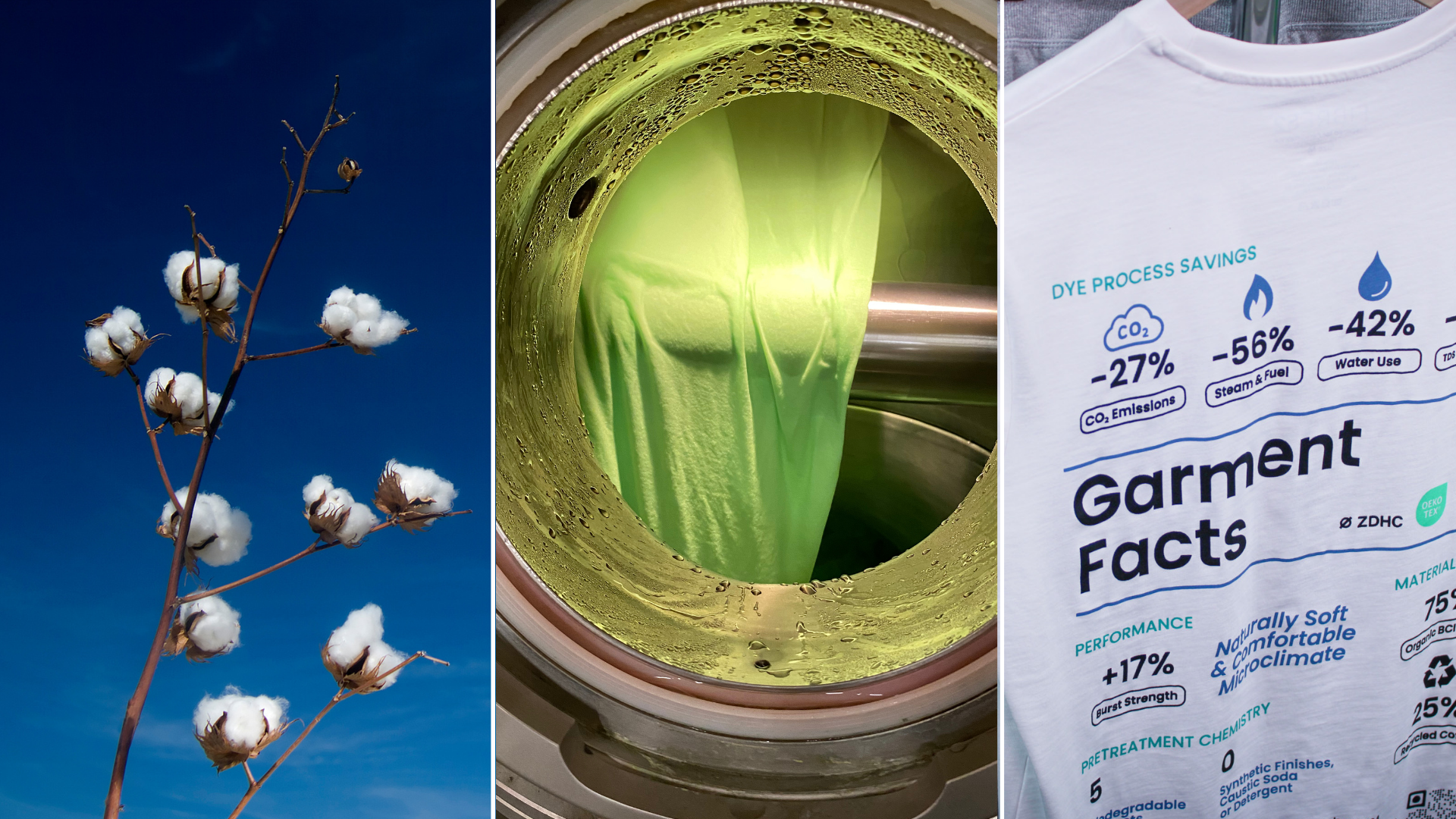
New Delhi, India [Date – April 21, 2026]: Shahi Exports, one of India’s largest apparel manufacturers and exporters, has partnered with US-based Innovo Fiber LLC to scale the Fibre52® cotton pretreatment technology across its integrated textile operations. This initiative at Shahi’s knits processing facility marks the largest industrial-scale deployment of the technology globally and a significant step forward in lower-impact cotton processing at scale.
Together, the partnership brings Fibre52®’s patented biochemistry platform with Shahi’s manufacturing scale to advance more resource-efficient cotton processing within large-scale textile production.
Cotton pretreatment is one of the most resource-intensive stages in textile manufacturing. Fibre52® introduces a drop-in, low-temperature pretreatment system that uses ZDHC MRSL v3.1 and OEKO-TEX®-approved chemistries. The process can preserve the natural wax and softness of cotton fiber while eliminating the use of caustic soda and reducing resource intensity compared to conventional pretreatment.
Since early 2024, Fibre52®’s trials at Shahi progressed through a structured validation process of 5MT, 20MT, and, more recently, 100MT fabric trials. The results demonstrated reductions of approximately 25% in water consumption and 49% in steam consumption compared to conventional pretreatment systems.
As part of the scale-up roadmap, Shahi plans to transition approximately 25% of its knit processing capacity to the Fibre52® pretreatment system, representing close to 3,000 tons per annum. Thismarks the shift from controlled trials to industrial adoption within a large, vertically integrated manufacturing environment.
Shahi and Fibre52® are advancing this collaboration as a long-term innovation platform. The focus is on expanding applications, deepening integration across product categories, and reinforcing scalable pathways for lower-impact textile manufacturing.
Laura Thornquist, President of Innovo Fiber, Fibre52®’s parent company, said:
“What makes this partnership unique is not just the technology, but the alignment of vision. Shahi and Fibre52® came together with a shared commitment to rethinking cotton processing at scale. When innovation capability and manufacturing discipline work in sync, real transformation becomes possible.”
Anant Ahuja, Director of ESG & Sustainability, Shahi Exports, said:
“This collaboration reflects the value of close partnership. The Fibre52® team brought a different approach, and Shahi focused on how it could work within our production environment. Together, this has progressed from early validation to measurable production outcomes. It is encouraging to see how sustainability and performance can come together at an industrial scale.”
About Shahi Exports
Shahi Exports is one of India’s largest integrated apparel manufacturers and exporters, supplying leading global fashion and lifestyle brands. The company operates a broad network of textile and garment manufacturing facilities and continues to invest in manufacturing innovation, responsible sourcing, and resource-efficient production.
Innovo Fiber LLC is a US-based technology company and the owner of the Fibre52® cotton pretreatment platform. Fibre52® is a patented system designed to prepare cotton for dyeing while preserving the fiber’s inherent qualities, while reducing the resource intensity compared to conventional cotton processing.
Why Innovation Scaling in Fashion Has an Integration Problem
For the past decade, the fashion industry has pursued innovation in materials, chemicals, and decarbonization with urgency, but one critical factor remains overlooked: supply chain integration.
Brands, funders, startups, manufacturers, and ecosystem partners often operate in silos, despite sharing similar goals. Startups often prioritize partnerships with brands over manufacturers. Brands struggle to make off-take commitments to their manufacturers. Manufacturers are stuck in pilot frenzy, disproportionately bearing financial risk relative to their margins. Funders and VCs sit at a distance from all of this – wondering where to make the most bang for their buck.
True scale is only possible when all four players—startups, brands, funders, and suppliers—work together.
Brands: The Power of the Pull
In fashion, demand signals start upstream. That’s why we begin with brands to convert promising pilots into larger production runs. Here, it’s important to understand the difference between product innovation (like a new material) and production innovation (like a new process). While a new process might offer immediate efficiency gains for a supplier, a new material requires a brand’s commitment to be adopted. But we’re lagging behind as an industry: A report by Fashion for Good states that while 51% of brands have committed to using preferred sustainable materials by 2030, the current global production of next-gen materials is less than 1%.
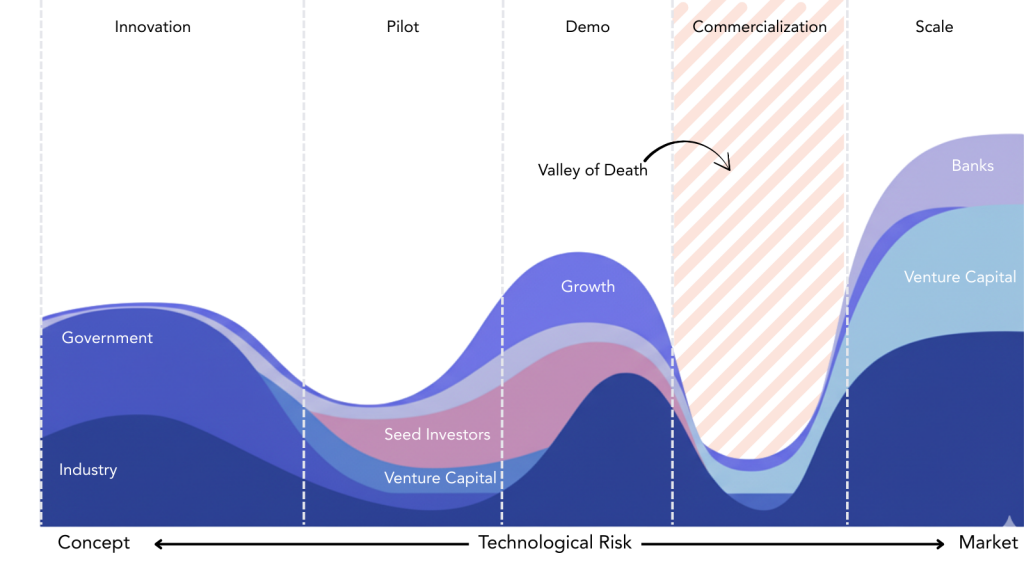
Valley of death
Brands often struggle to “pull” these innovations through long-term offtake agreements due to premium costs or minor quality differences before a startup achieves economies of scale. Brand commitments are crucial in derisking the investment for suppliers and helping innovators survive the “valley of death” — a stage between demo and scaling where innovations sink without the required support. Brand consortia can also play a vital role. For example, Fashion for Good has recently launched two “Fiber Clubs” to generate streamlined demand and provide much-needed orders to mills that have relentlessly tested these materials. This helps prevent pilot fatigue for manufacturers, where different brands conduct similar trials in silos.
Startups: From Brand-First to Supplier-First
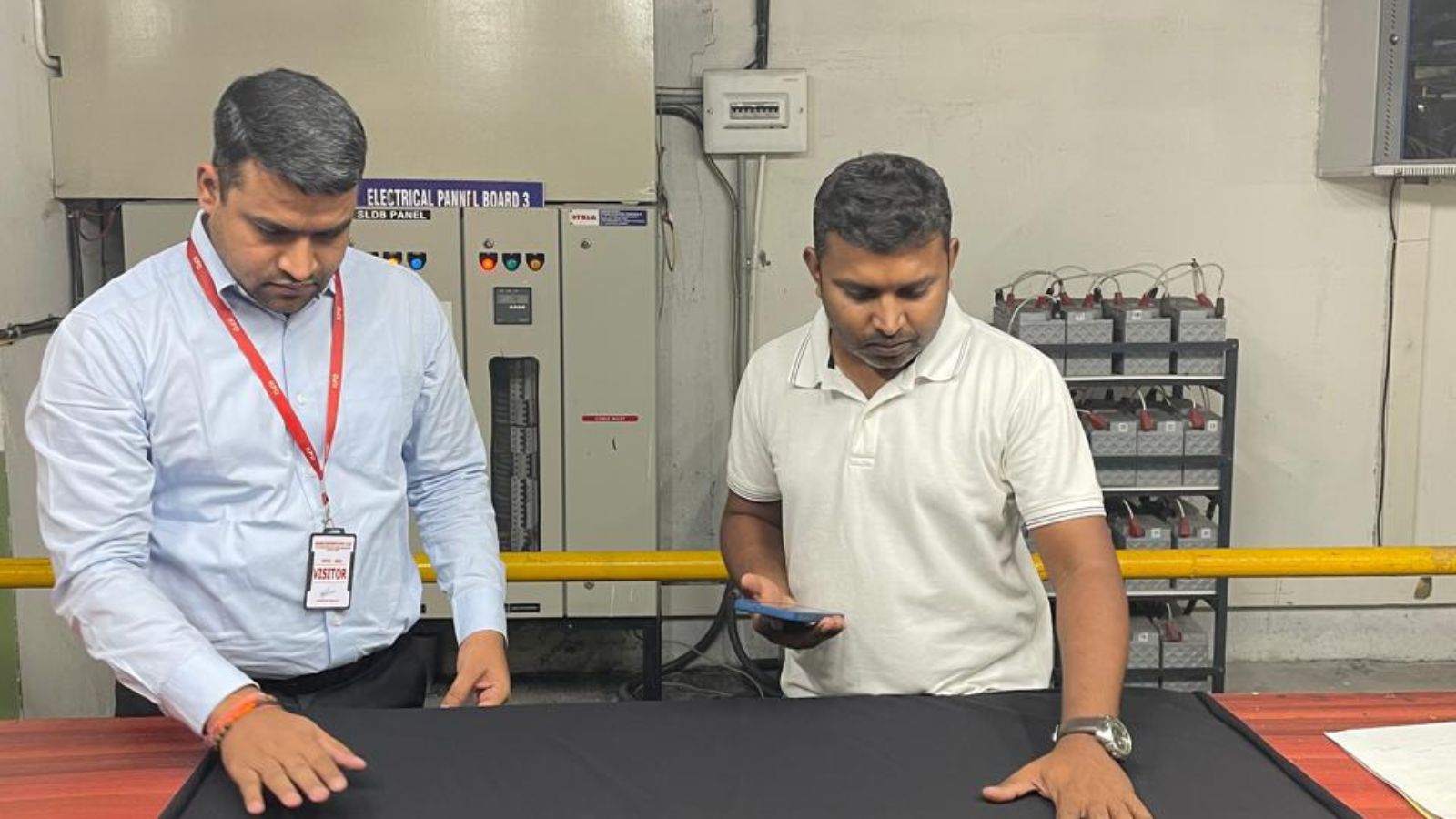
Bio-based prepare-for-dye innovation trial
For Production Innovation, startups must innovate for the manufacturer, not just the brand. Off-take commitments create predictable demand—but demand only converts if plants can actually run the process. That hand-off is where startups must shift from “brand-first” to “supplier-first.”
A successful pilot doesn’t guarantee a viable integration in a factory setting. In our experience, the startups that successfully scale are the ones that prioritize direct partnerships with suppliers. They get on the ground, in the mills and factories, to run pilots, tweak recipes, and build trust. They’ve focused on making their value proposition to manufacturers operating on razor-thin margins clear: reducing costs or improving efficiencies. For example, we’re currently working with a bio-based prepare-for-dye startup that has honed its technology for its mill partners, showing tangible resource savings in steam, water, and time. It took us 18 months to go from pilot to bulk trials, and we are now working with them to forge a long-term partnership.
Funders and VCs: Accelerating Commercial Feasibility
Even supplier-first startups hit a wall if there are financial constraints. This is where aligned capital can be most effective.
Financial institutions, VCs, and philanthropic funds are vital to scaling. By linking directly with suppliers, they can accelerate commercial feasibility and make better-informed investment decisions. Funders want their portfolio companies to have industry linkages for testing and validation, and suppliers hold the technical expertise.
This collaboration moves a technology from theoretical to practical assessment. For example, we’ve worked with a research institution on a grant-funded study on electrification and decarbonization. We were also able to run a grant-funded pilot for an electrical water recycling technology. This helped us move quickly from a theoretical to a practical assessment of the technology for commercialization.
Suppliers: The Technical Heart of Innovation
Financing and studies can de-risk the idea, but suppliers de-risk the integration.
Suppliers are often seen as passive implementers, but they are the technical heart of innovation. They possess the operational know-how to make a startup’s solution industry-ready. By recognizing their power in innovation integration, suppliers can be proactive partners. They are the most savvy and technically sound stakeholders in the supply chain, and they have the knowledge to mentor and guide startups on the viability and scalability of new solutions.
Across these roles, the pattern is clear: demand signal (brands), an impactful idea that can scale (startups + suppliers), and acceleration capital (funders) locked in a single plan—not a sequence of uncoordinated actions.
At Shahi, we have developed a four-part process:
This systematic approach allows us to find solutions that directly address our needs, reimagine ideas that aren’t a win-win, and mentor startups to navigate the complexities of a real production environment.
Define: We frame the problem statement based on the requirements of a mill or business unit. For example, our mills are currently looking for technologies beyond biomass to phase out coal.
Scout: We leverage our network of accelerators and partners to identify startups that solve our problems. For example, we collaborated with a corporate innovation accelerator to host a “Pivot with Purpose” deal flow session, where nine energy startups presented their technologies to our teams.
Direct technical due diligence by engineering experts
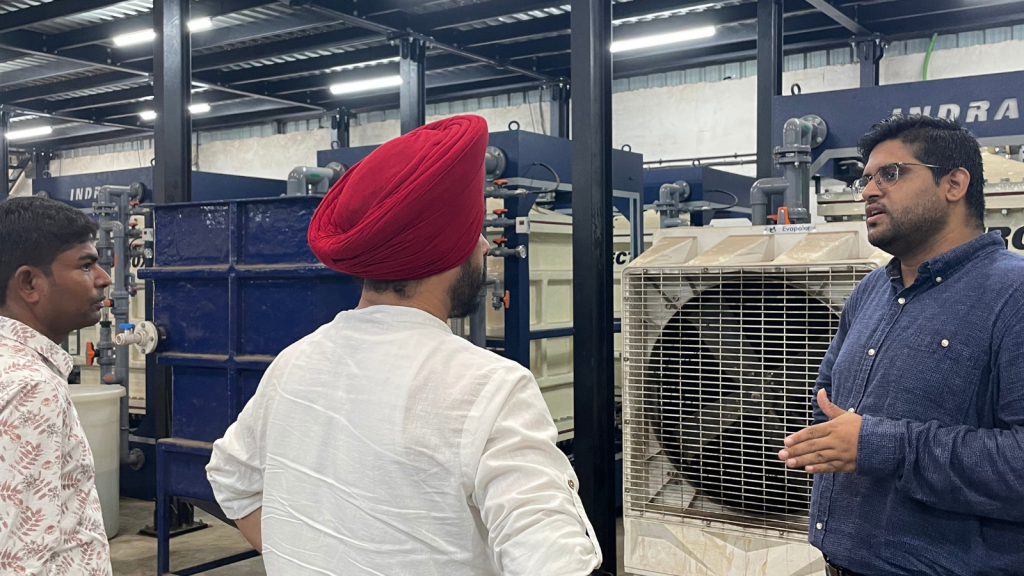
Pilot: We design a pilot plan in a controlled environment with a technical lead. For example, for an electrical water treatment technology, the pilot machine and the startup technician stayed at our facility for 10 days, being closely monitored by our Engineering Head. Together, they determined the efficacy of the solution, tweaking the system as they went along.
Scale: Once a technology clears the pilot and commercial feasibility, it can move into scaling. We recognize that just because something works in a pilot, it may still fail in bulk. If it’s a product innovation, brand pull is needed. For example, we’re currently working with a couple of brand partners to produce bulk orders of a textile-to-textile recycled material.
So what does a new innovation system look like?
If we want to achieve true decarbonization and circularity by 2030, we must move beyond pilots that don’t scale. One-off experiments waste time, while integrated partnerships change systems. That means: brands committing to off-take instead of just targets; startups optimizing for factory floors, not press releases; funders underwriting the uncertain middle, where risks are highest but impact is proven; and suppliers leaning in to this process to make innovations industry-ready.
At Shahi, we’ve built our Define–Scout–Pilot–Scale model to make this kind of integration practical and repeatable. We frame the problem with our mills, bring in the right innovators, and only scale when economics and reliability are clear.
If you’re a brand, startup, or funder ready to co-design the future of sustainable fashion,
* S. Barr, T. Baker, S. Markham, A. Kingon, “Bridging the valley of death: lessons learned from 14 years of commercialization of technology education”, Academy of Management Learning and Education, vol. 8, no. 3, pp. 370-388, 2009.
India’s textile and apparel sector has long been a cornerstone of its economic activity. It has employed millions, fuelling exports, and seamlessly blending traditional craftsmanship with modern industrial prowess. In FY 2024–25, the sector recorded impressive exports worth $36.61 billion, marking over 6% growth from the previous year. Apparel exports spearheaded this momentum with a robust 10% increase. It underscores a strong global demand and India’s escalating prominence in the international supply chain.
As one of the nation’s largest apparel manufacturers, Shahi Exports stands at the nexus of this dynamic growth and the intricate policy ecosystem that underpins it. Sustained private investment and relentless innovation continue to fortify India’s textile value chain. However, the trajectory toward achieving long-term global leadership hinges critically on the agility and effectiveness with which policy support evolves.
Infrastructure and Integration
World-class infrastructure is an undeniable differentiator in textile competitiveness. Streamlined shipping, reduced logistics overheads, and strategically integrated production hubs directly amplify buyer confidence and accelerate lead times. The ambitious PM Gati Shakti National Master Plan represents a pivotal stride.
The scheme aims to slash logistics costs from 13–14% of GDP to a more competitive 8%. Initial impacts are already tangible. Notable savings from direct port delivery and significantly faster cargo movement, have enhanced exporter competitiveness. Complementing this, the PM MITRA Park Scheme proposes the establishment of seven cutting-edge, integrated textile parks. These parks are envisioned to consolidate the entire value chain— from fiber to fashion, within singular, efficient zones. This has generated substantial employment and dramatically improved operational efficiencies.
Trade Facilitation and Regulatory Reform
India’s consistent ascent in the World Bank’s Logistics Performance Index—climbing from 44th in 2018 to 38th in 2023—is a clear testament to improved customs processes, sophisticated multimodal logistics, and enhanced cargo visibility. Yet, a persistent challenge remains: uniform implementation across states. For manufacturers operating facilities across diverse geographies, the labyrinth of inconsistent state-level regulations and protracted approval timelines imposes significant compliance burdens, introducing unpredictable costs that frequently undermine the benefits of national-level reforms. A truly streamlined, pan-India regulatory framework is indispensable for fostering seamless expansion and achieving scale.
Modernization and Product Diversification
India’s textile exports will defined, not just by volume, but also by the sophistication and diversity of its product offerings. Global buyers are increasingly prioritizing agility, high-performance fabrics, and diversified sourcing strategies. Leading the charge, companies like Shahi are proactively expanding into dynamic segments such as activewear and technical textiles. To forge a genuine leadership in these burgeoning categories, India’s policy frameworks must champion R&D, strategic market development, and ground-breaking innovation. This necessitates easier access to capital to boost prototyping, support for nascent textile technology, and better Intellectual Property (IP) protection. Manufacturers risk being confined to traditional product categories, and ceding ground to more agile global competitors without these critical enablers.
Skilling and Workforce Readiness
The inexorable shift towards automated, tech-driven manufacturing necessitates a fundamentally transformed workforce. India’s demographic dividend can be fully harnessed into an industrial advantage with correspondingly evolved skilling ecosystems. At Shahi, we have proactively invested in state-of-the-art on-site training centers, comprehensive digital literacy programs, and initiatives to empower women’s advancement. However, replicating such impactful efforts nationwide to meet the industry’s rapidly evolving demands mandates far stronger public-private partnerships.
Skill development policies must transcend mere technical proficiencies. They must focus equally on cultivating adaptive capacities and equipping workers with the mindset for lifelong learning. The paramount attention must be on women and rural youth, who collectively represent the backbone and potential of the Indian workforce.
Sustainability as a Competitive Advantage
Sustainability has transcended its status as a mere differentiator; it is now an immutable, fundamental requirement for global market access. International brands are relentlessly elevating standards for environmental and social compliance, demanding heightened traceability and transparency across the supply chain. Pioneers like Shahi have proactively adopted measures such as advanced wastewater recycling, significant renewable energy integration, and robust worker well-being systems. The journey, however, remains financially formidable for many in the sector, particularly MSMEs. This is precisely where policy can exert a profound catalytic influence. Some ways to facilitate this are:
Access to green finance,
Actively incentivizing the adoption of clean technologies, and
A strategic alignment can propel India beyond mere compliance-driven change towards innovation-led leadership and lead securing its future market access.
India’s textile and apparel sector possesses the foundational strength and ambitious vision to lead on a global scale. Transformative potential will only be fully realized if policy frameworks respond with the urgency and foresight at this pivotal moment. Upgrades to infrastructure, radical regulatory streamlining, strategic skilling investments, and targeted sustainability incentives must be delivered as a meticulously coordinated national strategy. The private sector stands ready and eager. It is now incumbent upon the policy ecosystem to decisively unlock the full potential of one of India’s most strategic and impactful industries.
At Shahi, we believe in sharing our experiences and learning with all the stakeholders in the fashion industry and beyond. This is an ongoing post to share insights from our speaking engagements in 2024. Read insights from previous years’ engagements: 2023, 2022.
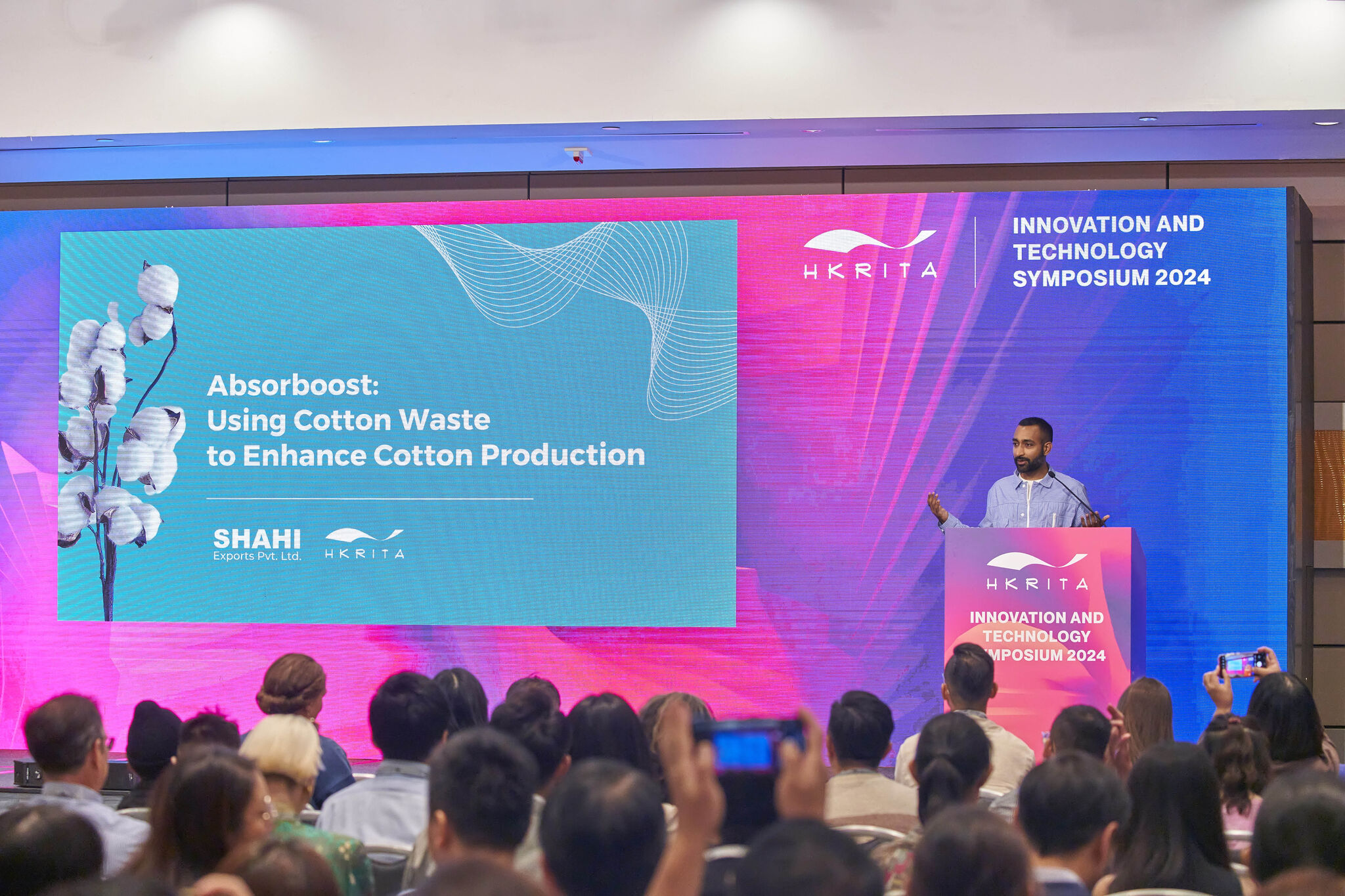
4 September | Innovation and Technology Symposium 2024
Anant Ahuja, Director of ESG and Sustainability, participated as a speaker at the HKRITA – The Hong Kong Research Institute of Textiles and Apparel Limited’s I&T Symposium 2024. The symposium explored turning lab innovations into real-world applications that drive meaningful change across fashion and textiles.
Anant’s session on ‘Scaling Innovation in Textile Manufacturing’ highlighted Shahi’s collaborative efforts with HKRITA in developing Aborboost- a cellulosic superabsorbent polymer (C-SAP) made from cotton textile waste. This development underscores the need for a closed loop in textile waste management systems that help farmers and the environment.
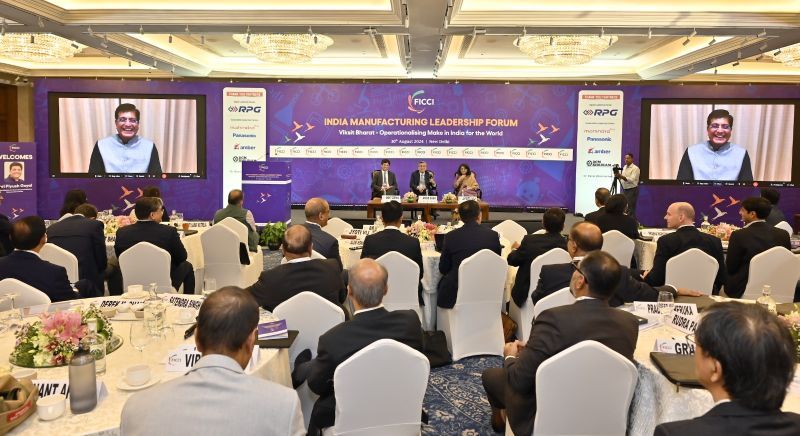
30 August | Indian Manufacturing Leadership Forum
Anant Ahuja attended the International Manufacturing Leadership Forum, organized by the Federation of Indian Chamber of Commerce (FICCI). The forum focused on strengthening India’s manufacturing competitiveness. Industry leaders gathered to discuss challenges and strategies that can position India as a global manufacturing hub.
The discussions explored actionable steps to advance the Make in India vision. Participants also called for supportive government policies. The event emphasized collaborative efforts essential for building a robust manufacturing ecosystem that boosts India’s global economic standing.
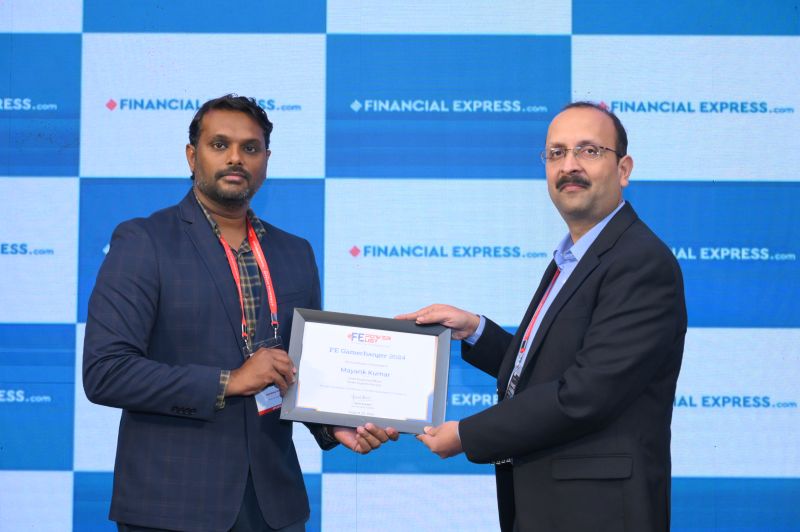
23 August | Finance Leadership Dialogue
Mayank Kumar, CFO of the Ladies Speciality Division (LSD), represented Shahi at the second edition of the Finance leadership dialogue hosted by the Financial Express in association with Oracle.
The dialogue saw an exchange of ideas on ‘Technological Innovation Changing Financial Landscape.’ Several industry leaders came together to discuss the impact of technology in a digital-first era. They explored the shifting nature of a CFO’s role, emphasizing the incorporation of innovation and analytics by the businesses. The dialogue aimed to foster collaboration to address key challenges and identify opportunities in today’s evolving financial landscape.
5 August | The Good Business Forum: Redesigning the Bottom Line
Shahi participated in ‘The Good Business Forum: Redesigning the Bottom Line’ event organized by Good Business Lab at the Bangalore International Centre. The forum brought together industry leaders and innovators to explore the impact of worker well-being on global competitiveness.
Anant Ahuja opened the event with a keynote on sustainable practices. Shahi’s involvement extended to two panels. Senior GM Chitra Prasad joined the panel titled ‘Shared value creation requires co-designing with stakeholders’, discussing collaborative designs for behavioral change with peers from RISE and TATA Motors.
In another panel, ‘Worker voices empower business transformation’, Shahi’s S.R. Divya, Operator, and Shabana Banu, IE Assistant, shared their insights, underscoring the importance of worker voices in the evolution of a business.
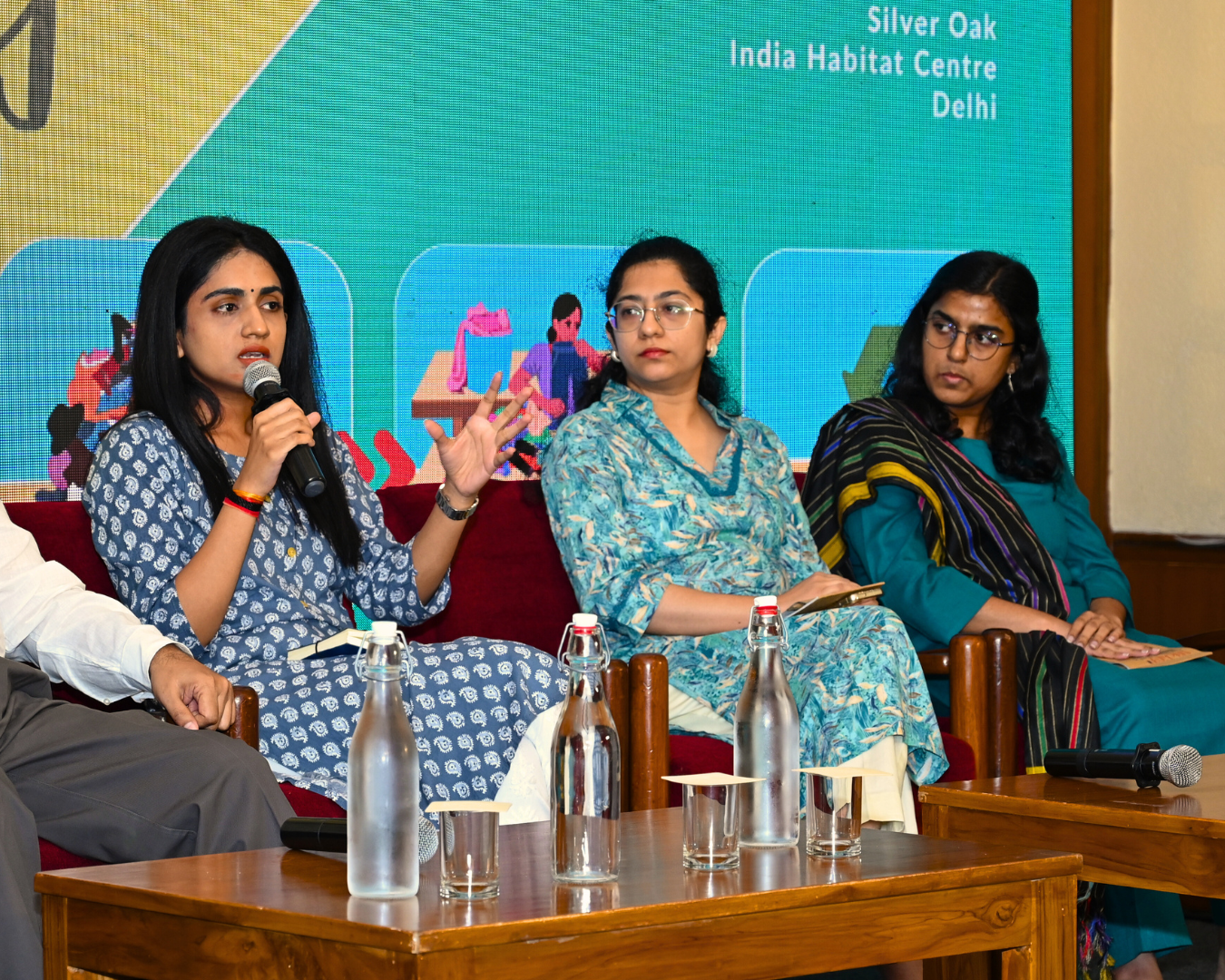
28 June | Stitching Sustainability: Change With Every Thread
Kritika Chauhan, Manager of ESG & Innovations, participated in a panel discussion at the “Stitching Sustainability: Change With Every Thread” event organized by Saahas and GIZ. She spoke about Shahi’s waste management and circular models for textile waste.
Kritika emphasized the importance of R&D, innovation, and embracing recycled materials along with the potential of bringing new technologies to India.
The event focused on sustainable practices in the textile industry, exploring opportunities and charting a path forward.
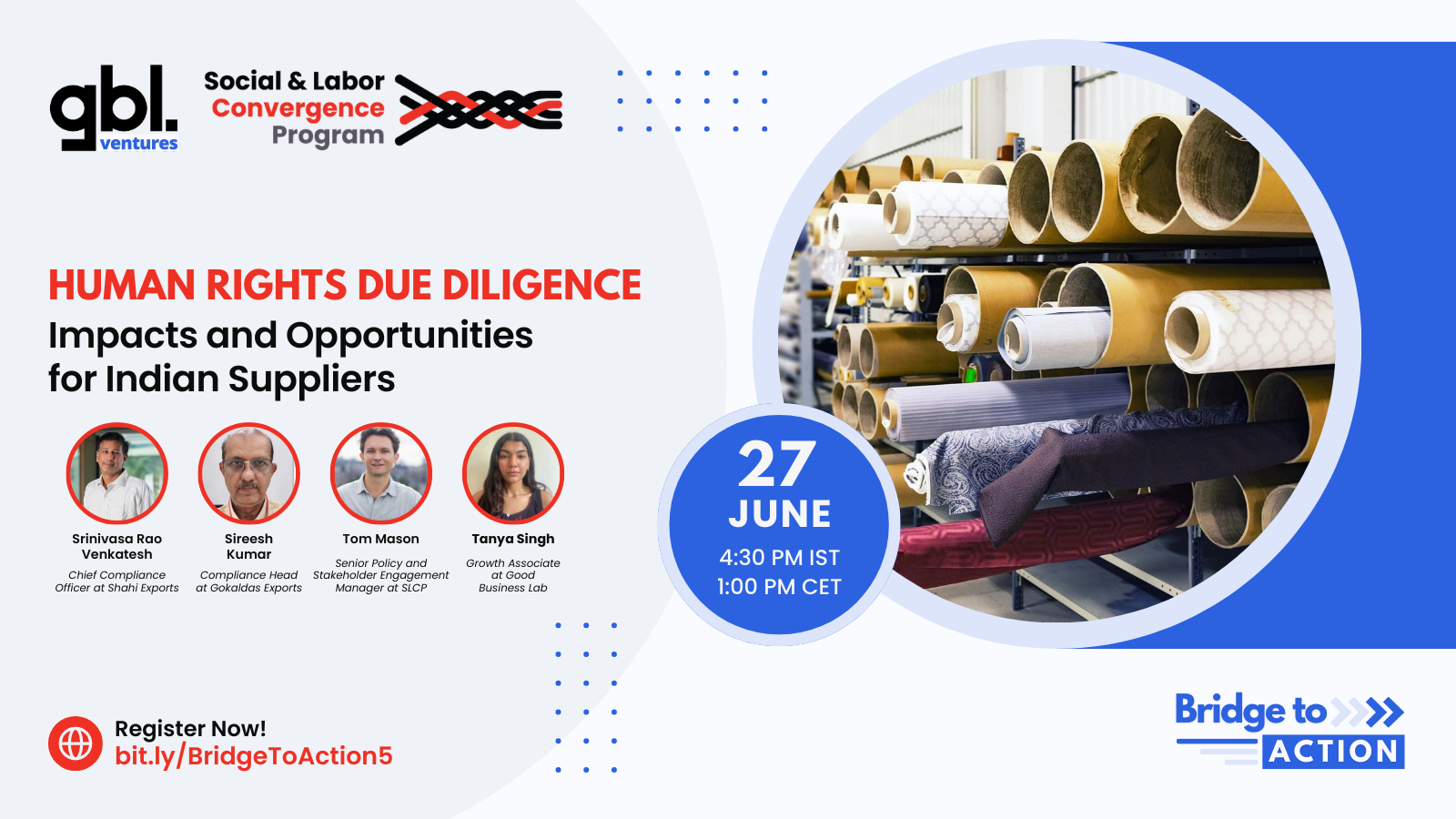
27 June | GBL X SLCP | Human Rights Due Diligence: Impacts and Opportunities for Indian Suppliers
Srinivasa Rao Venkatesh, Chief Compliance Officer, attended a panel discussion on Human Rights Due Diligence: Impacts and Opportunities for Indian Suppliers along with the speakers from GBL, SLCP and Gokaldas Exports.
The panel emphasized supporting suppliers and understanding their perspectives, highlighting the role of social compliance tools and grievance solutions in meeting requirements and fostering business success. They underscored the transformative impact of effective communication with workers and grievance redressal mechanisms on organizational change and benefits.
Mr. Rao mentioned transitioning from diversity to convergence to improve due diligence. Shahi established a governance team to oversee worker risk, health, safety, and compliance, leading to the development of Inache, a platform aligned with global standards for worker empowerment.
14 June | TESCO Supplier Summit 2024
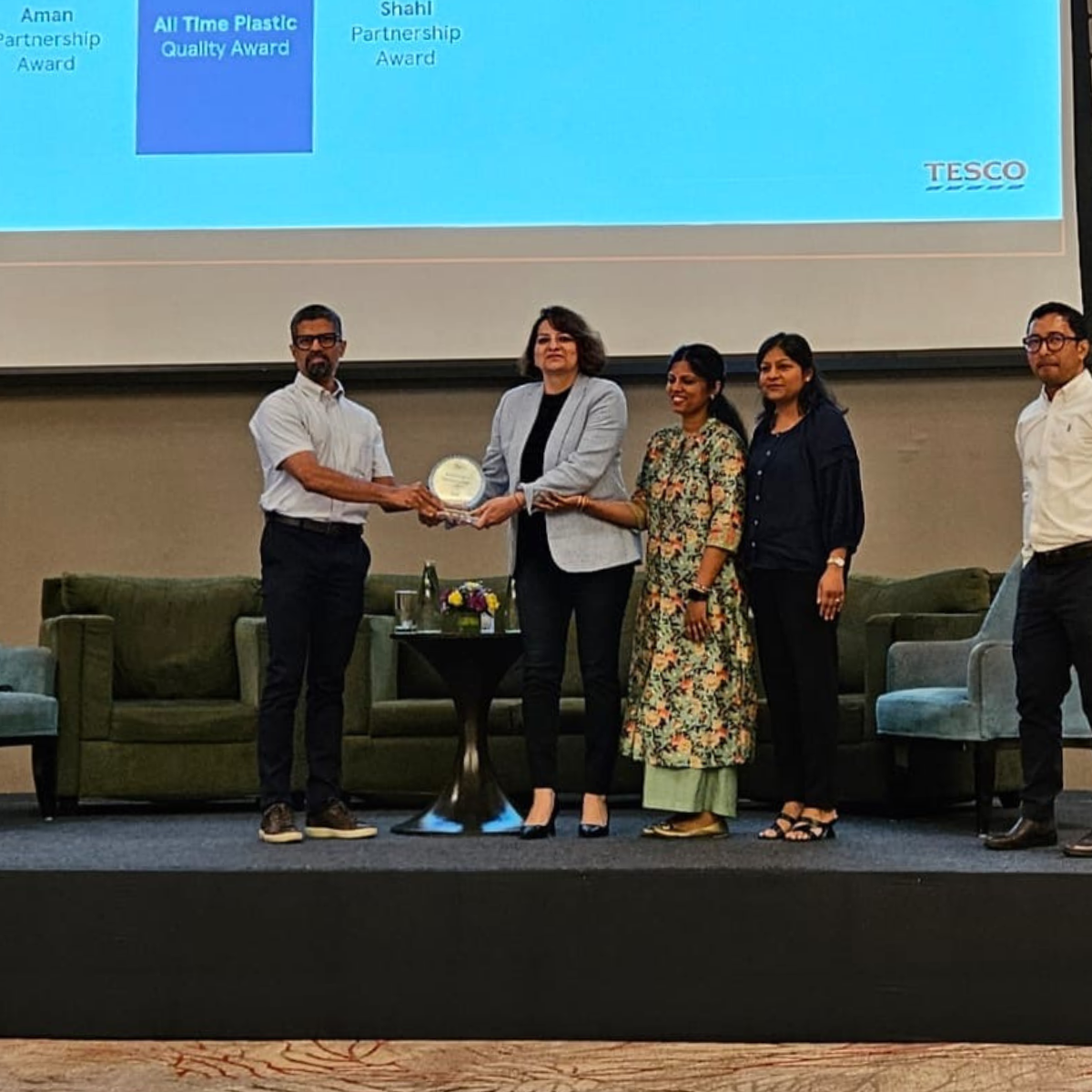
Shahi attended the Tesco Supplier Summit in Bengaluru, where we actively engaged in key panel discussions. Chitra Prasad, Senior General Manager of Organizational Development, shared valuable insights on gender, supply chain, and labor agency management. Additionally, Puja Tickoo, Executive Vice President of the Ladies Speciality Division, discussed Shahi’s commitment to responsible business growth by integrating environmental sustainability into all stages of production.
22 May | Global Fashion Summit 2024
Our Managing Director and Chairperson, Harish Ahuja, represented Shahi at this year’s Global Fashion Summit: Copenhagen Edition, presented by Global Fashion Agenda.
In the panel discussion, ‘Collective Financing Models for Climate,’ he underscored the universal challenge of decarbonization and highlighted the potential learning from other industries to gain valuable insights. He emphasized the necessity of collaborative solutions in the fashion sector, including alignment on decarbonization goals.
Harish stressed the need for brands and retailers to collectively finance research and innovation to address unsolved challenges, such as renewable energy storage and efficient order placement to prevent overproduction.
Venkat Rao, Chief Compliance Officer, participated in the panel ‘The SLCP Process & System’ organized by the Social & Labor Convergence Program. The panel discussed the SLCP process and system, covering topics such as the assessment process, timeline, and how to effectively navigate and maximize the use of the Gateway and Accredited Host platforms.
6 April | ‘Sustainability: Balancing People, Profits, and Planet’ hosted by Shiv Nadar Institute of Eminence (SNIoE)
Anant Ahuja, Head of ESG, participated at the Annual Economics Conclave – Iqtisadiyyat’24 hosted by Shiv Nadar Institute of Eminence (SNIoE).
In his keynote address on ‘Sustainability: Balancing People, Profits, and Planet,’ he discussed integrating sustainable business practices within manufacturing industries, highlighting the necessity of balancing profitability with responsible operations for the well-being of people and the environment.
01 March | ‘Traceability Pilots in Indian Cotton Supply Chains: Lessons for Sustainability and Due Diligence’panel by the U.S. Department of Labor
Kritika Chauhan, AM, Communications & Sustainability Innovation participated in a panel ‘Traceability Pilots in Indian Cotton Supply Chains: Lessons for Sustainability and Due Diligence’ organised by the U.S. Department of Labor.
The panel discussed how technologies can support labor due diligence, with a focus on additive product tracers and isotope testing. Sharing the key learnings from the STREAMS traceability pilots, Kritika shared that as the first mill to implement YESS, Shahi looked forward to exploring complementary technologies and future advancements.
28 February | Masterclass organised by Good Business Lab
Deepak Rautela, Associate Vice President, Training & Organizational Development, spoke at the Masterclass on “Enhancing Business Gains through Worker Communication” organized by Good Business Lab at Bharat Tex 2024. He was joined by Lavanya Garg, Director, Strategy, Partnership, and People Operations at Good Business Lab, and Renukaprasad B, Senior Manager of GBL Ventures.
He shared insights on the transformative impact of Inache, an anonymous and digital grievance redressal tool, from the use-case experience of Shahi and how it has helped improve worker communication from the shop floor.
28 February | ‘Redefining Natural Fibers: Collaboration for High-Value Products’ panel at Bharat Tex 2024
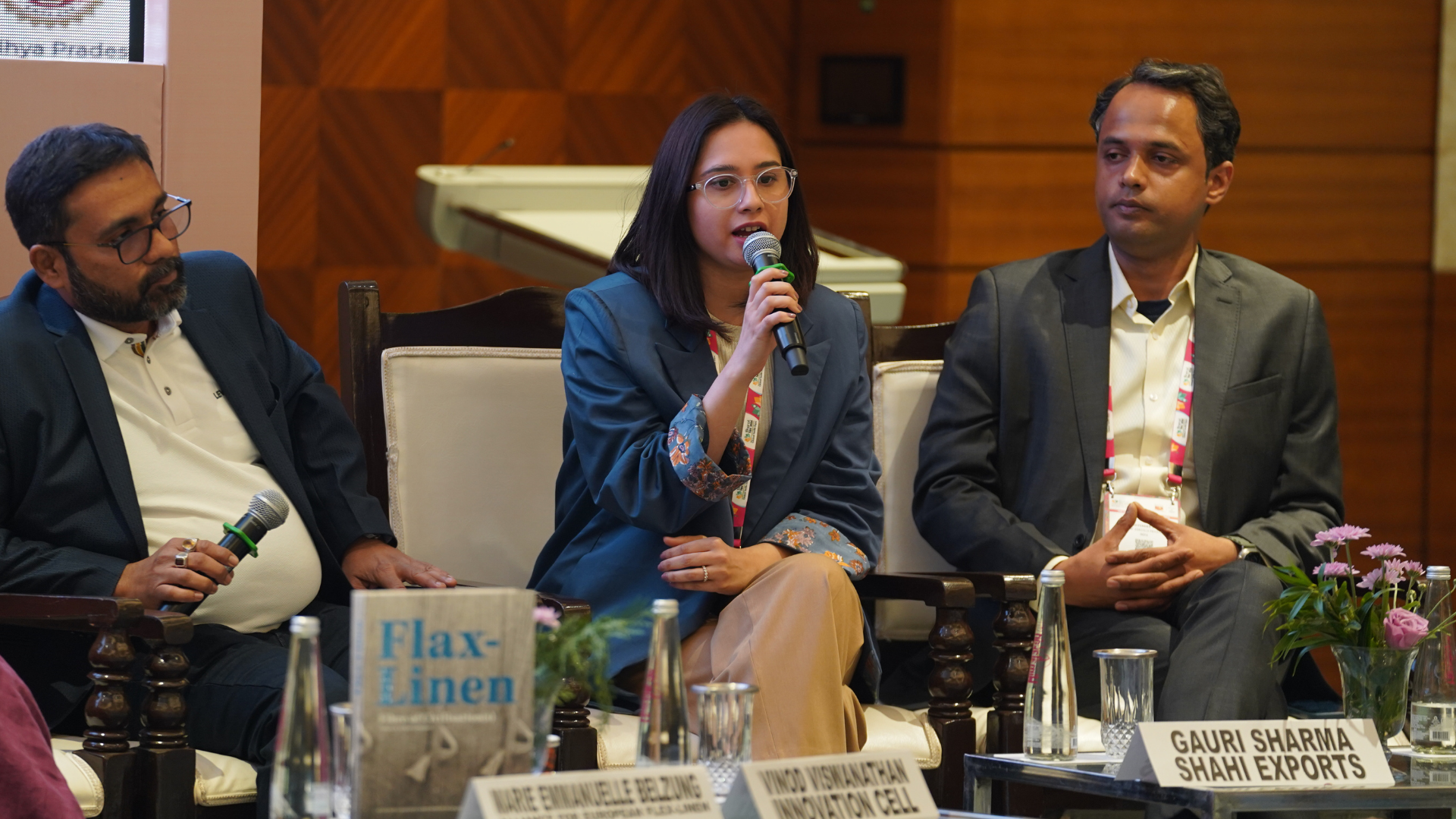
Gauri Sharma represented Shahi at a panel discussion on ‘Redefining Natural Fibers: Collaboration for High-Value Products’ at Bharat Tex 2024. She shared, “Innovation in sustainable materials faces hurdles in scaling up due to certification costs and performance expectations. Alongside sustainability, we need to focus on performance and added benefits to the consumer. Supporting innovations emerging in India, especially in the transition from pilot to commercial stage, requires collective efforts from both industry and government.”
28 February | ‘Doing Business in India’ panel organised by Invest India
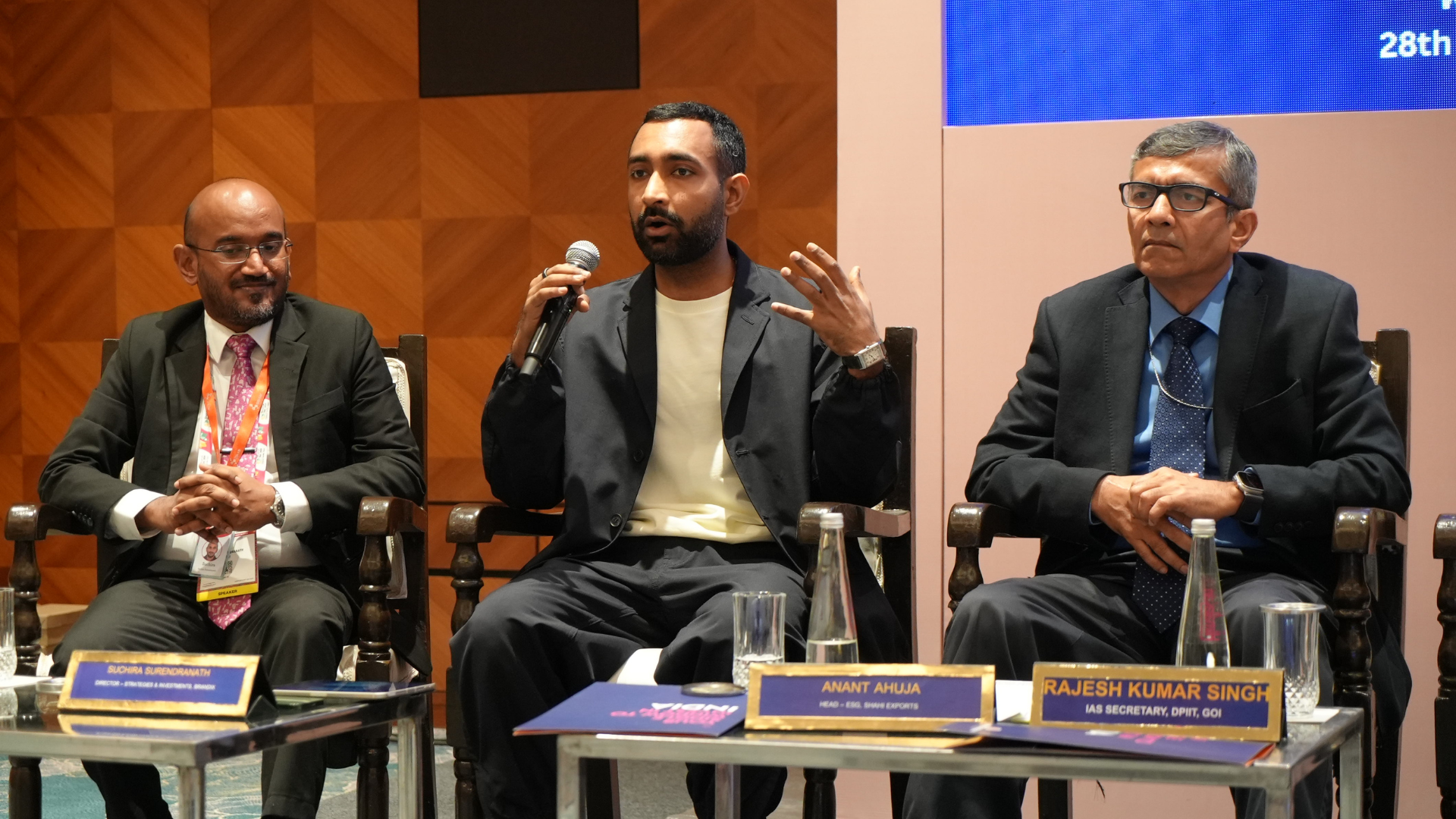
Anant Ahuja, Head of ESG, participated in a panel ‘Doing Business in India’ organised by Invest India at Bharat Tex 2024. He highlighted the role of manufacturers in advancing sustainability, emphasizing the importance of collaboration across the supply chain to achieve decarbonization, use sustainable materials, and address other key sustainability goals.
The panel aimed to drive growth and elevate India’s global competitiveness in textiles, making it an attractive destination for investment.
27 February | Vision 2047 in Textiles
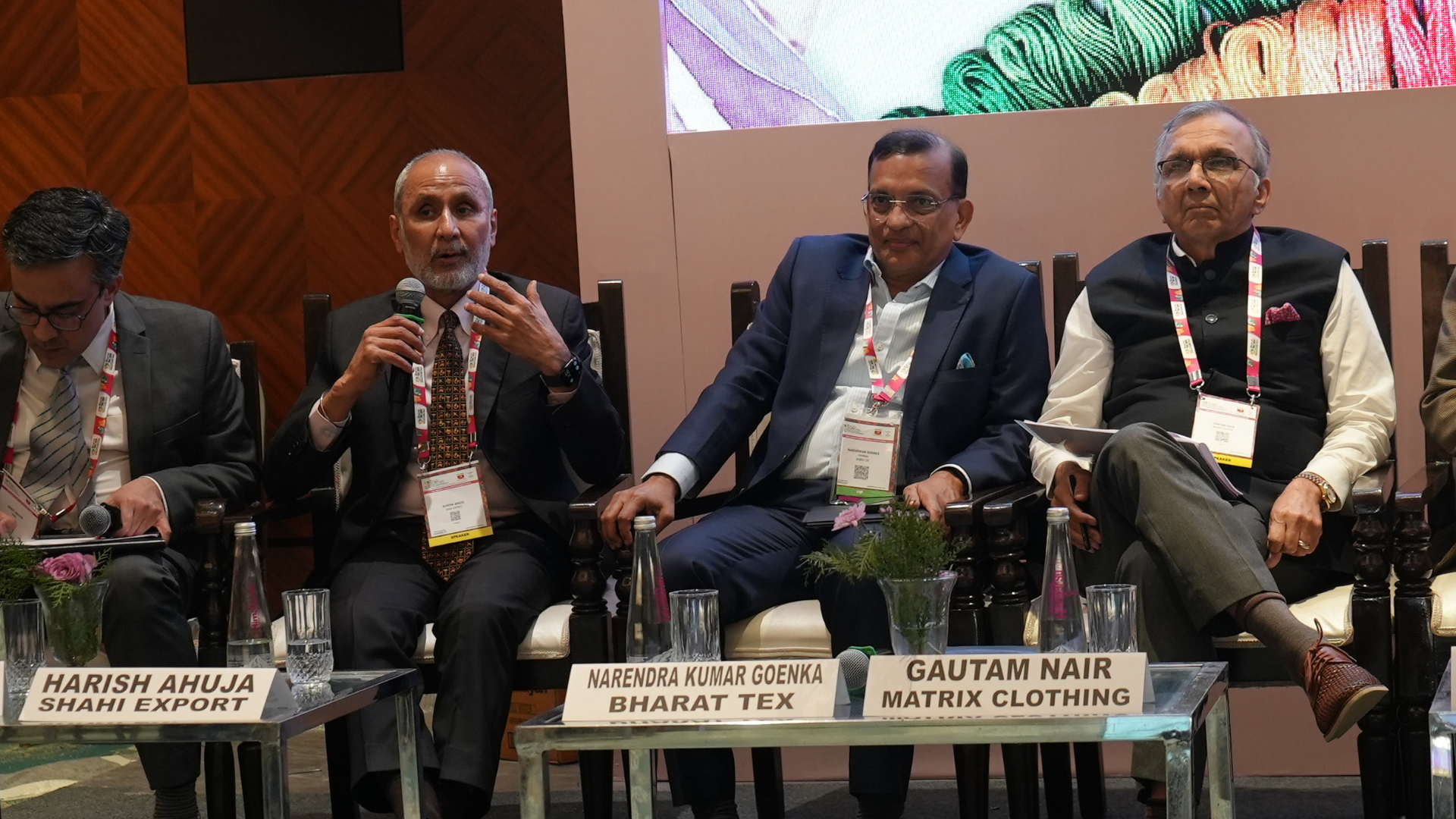
Harish Ahuja, Managing Director and Chairperson represented Shahi at a panel titled ‘Vision 2047 in Textiles’ hosted by NITI Aayog at Bharat Tex 2024. He shared his views on achieving the vision of making India the world’s largest textile hub. He mentioned, “As a roadmap ahead, the Indian textile industry’s primary vision should be to have a systemic approach toward sustainability to boost the global value chain. By focusing on building a robust value chain, enhancing infrastructure, scaling economies, and prioritizing quality, we can reignite India’s growth in textiles, propelling us towards Atmanirbhar Bharat (self-reliance).”
26 February | CXOs Roundtable at Bharat Tex 2024
Shahi participated in an exclusive CXO Roundtable organized by KPMG at the Bharat Tex, which facilitates collaboration with industry peers on strategic initiatives. Harish Ahuja, the Managing Director and Chairperson, represented Shahi at the roundtable.
The panel discussed the steps India needs to take to reduce reliance on imported raw materials. Other takeaways included focusing on scale, sustainability, and quality to make India a global manufacturing hub for textiles and apparel. He shared, “Through collaborative platforms and a focus on operational efficiency, the textile industry can drive innovation and sustainable growth. Smart automation and cutting-edge technology, empowering women, and accessing global markets are key strategies for success in the sector.”
21 February | OECD – OCDE Forum on Due Diligence in the Garment and Footwear Sector
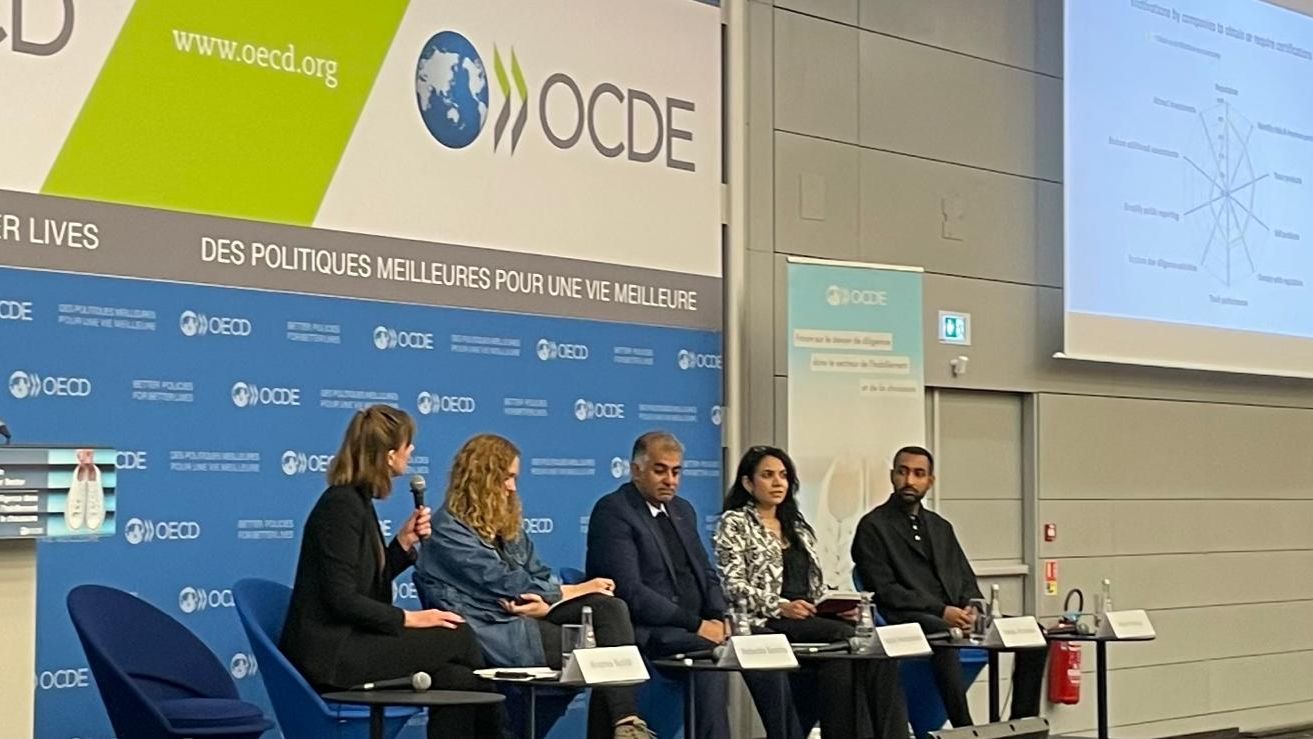
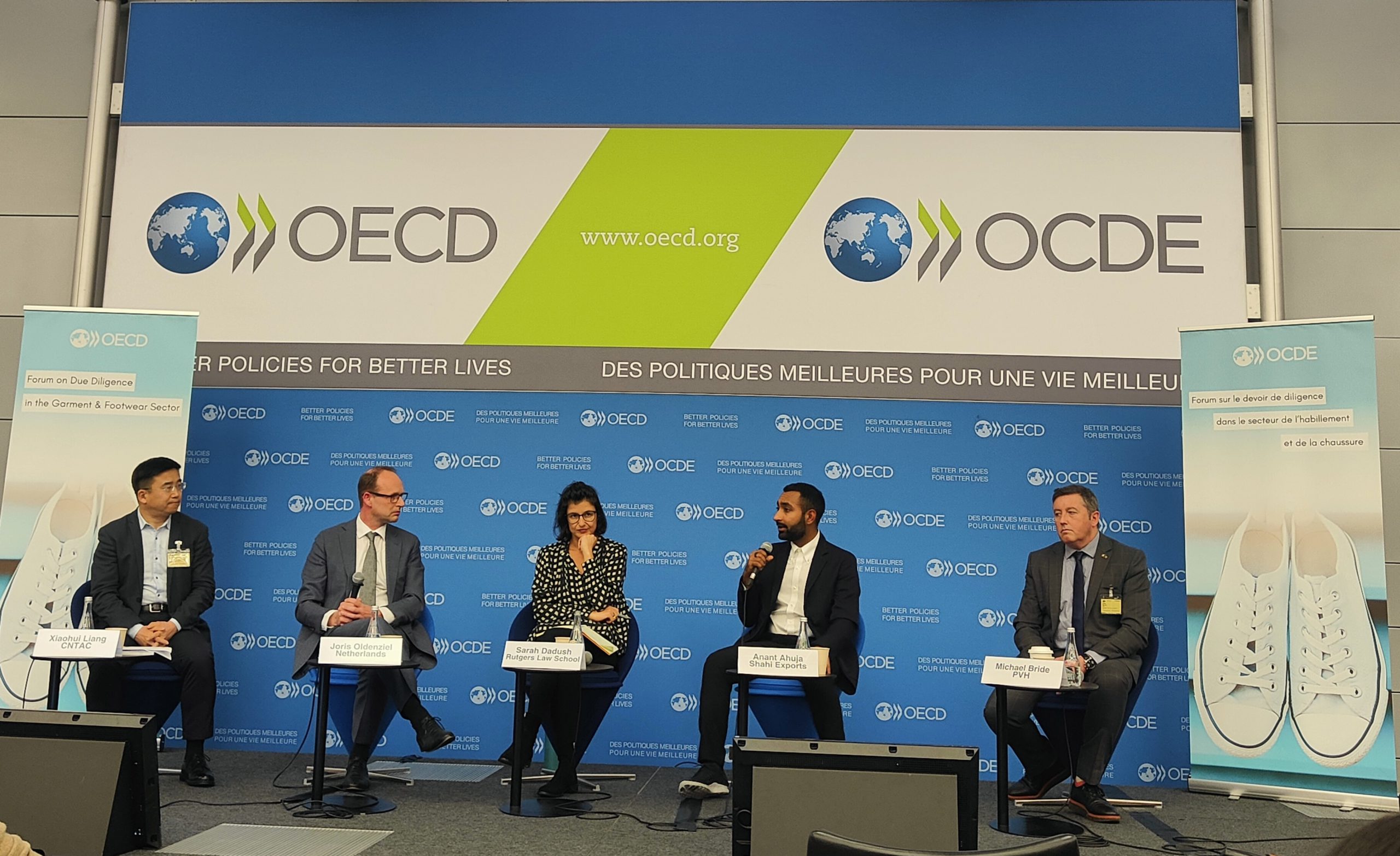
Anant Ahuja, represented Shahi at the OECD – Forum on Due Diligence in the Garment and Footwear Sector. In the panel, ‘More than just paperwork? He highlighted the role of certifications in due diligence as a supplement to compliance with standards, driving improvements, and addressing challenges in the supply chain.
20 February | ‘Mill Conformance with Due Diligence Requirements – The Good, the Bad, and the Ugly’ at the OECD – OECD Forum
Kritika Chauhan, Assistant Manager, Communications & Sustainability Innovation, was a panelist on ‘Mill Conformance with Due Diligence Requirements – The Good, the Bad, and the Ugly ’ by the Organisation for Economic Co-operation and Development (OECD). She shared Shahi’s experiences in understanding, meeting, and assessing the requirements of the YESS due diligence standards. She also explored strategies to scale due diligence efforts to address potential and actual forced labor risk.
19 February | Moderated Panel Discussion at the OECD – OECD Forum
Anant Ahuja moderated a session by Better Buying Institute at the OECD—OCDE Forum on ‘Empowering suppliers and supporting buyers in using data to accelerate purchasing practices improvements’. The panel discussed obstacles hindering the acceleration of purchasing practices and explored strategies for utilizing BBI data to address these challenges and promote optimal practices for driving change.
The speakers on the panel were Marsha Dickson from Better Buying Institute, Michael Levine from Under Armour, Nikhil Hirdaramani from Hirdaramani Apparel, Pat Noonan from SanMar Corporation, Stanley Szeto from Lever Style, Marc Beckmann from GIZ-FABRIC, and Janet Mensink from SLCP.
14 February | Supplier Journey with Walmart
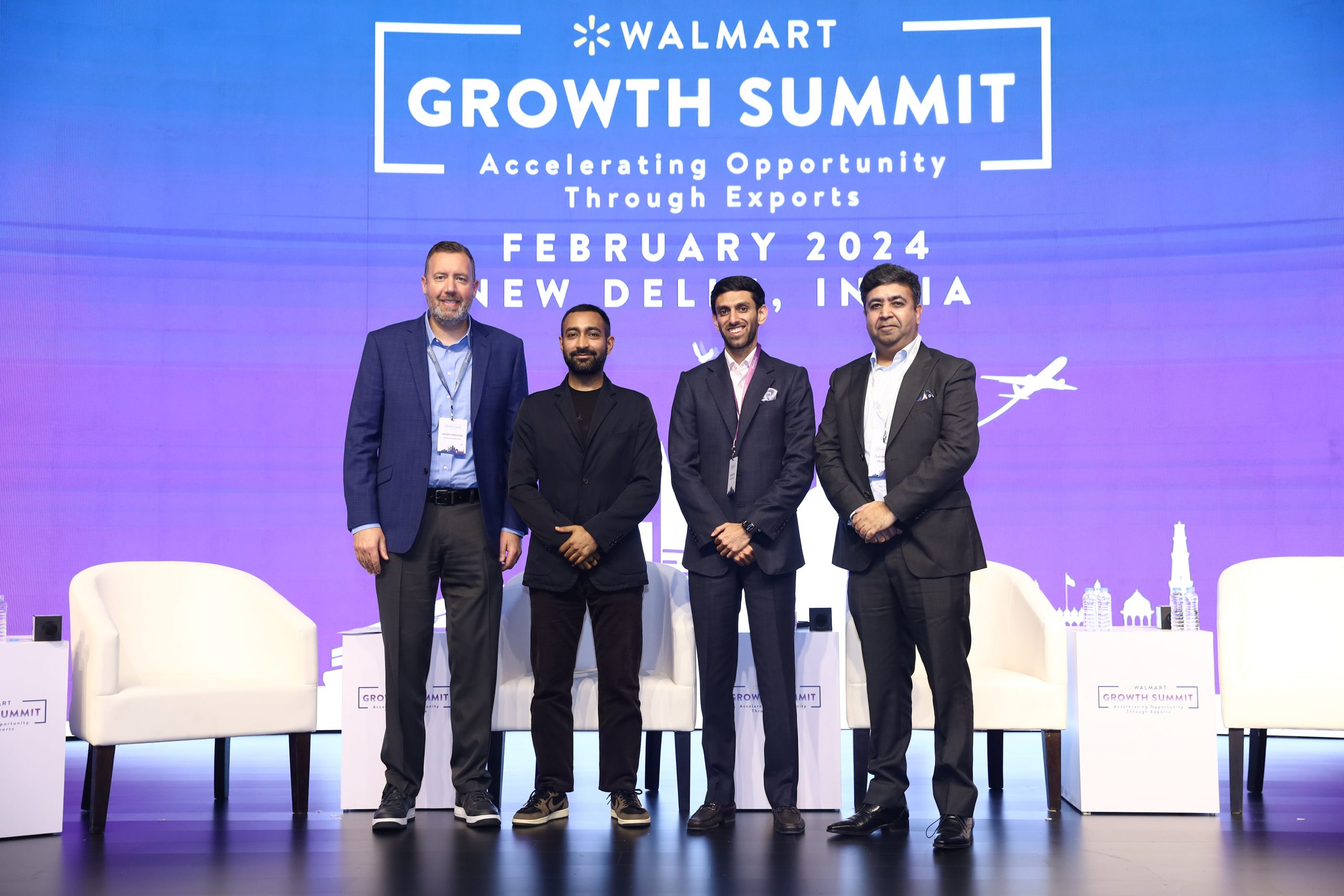
Anant Ahuja, spoke at the Walmart Growth Summit 2024 in a panel titled ‘Supplier Journey with Walmart.’
He discussed Shahi’s journey with Walmart, highlighting our collaborative efforts. He stated, “Our supplier journey with Walmart spans over three decades. Their commitment to innovation and sustainability drives us to continuously improve, aligning perfectly with our values. By investing in the supply chain, we aim to grow the positive impacts our business can have.”
New Delhi, May 14, 2024: Shahi Exports, India’s largest apparel manufacturer and exporter, announced a joint venture with Little King Global, one of Taiwan’s premier synthetic sportswear fabric manufacturers. The joint venture is a part of the company’s expansion roadmap. This collaboration marks the birth of a state-of-the-art processing unit for synthetic performance fabrics strategically located in Shimoga, Karnataka. The venture will also boost employment in Shimoga, making Shahi one of the largest employers in the manufacturing sector in this region.
The production line is set to be fully operational by the end of this year, boasting an impressive initial production capacity of 500 tons per month. This capacity is slated to double in the future, reaching an ambitious 1000 tons per month.
Mr. Ramalingam T, CEO, Knits Division at Shahi Exports, said,
“This is an important step for us to expand our footprint and focus on enhancing our product portfolio. Our partnership with Little King Global is not just a venture but a commitment to our customers, assuring them access to the very best in class when it comes to synthetic fabrics. Our goal is continual improvement and relentless focus on product development as we continue growing and increasing the scale of operations. We also aim to contribute toward boosting employment generation across the country.”
With technology and expertise directly from Little King Global, a company revered for over four decades of experience and accredited by major sportswear brands, the Shimoga facility is poised to set a new benchmark in fabric manufacturing. Little King Global’s innovative prowess is renowned, with its flagship innovation center in Taiwan emphasizing relentless advancement, from fibers and yarns to varied knitting and processing techniques.
Mr. Bruce Liao, Vice President, Little King Global, said,
“Our mission is to be a world-class partner in supplying sustainable, functional fabrics for brand customers. Shahi is well known for its ESG framework, worker well-being initiatives, and innovation in the textile and apparel industry. With the global supply chain shift and the rise of India’s manufacturing trend, we should leverage the best resources from advanced technologies, economical production, and talent for our Shimoga plant. Once the plant is operational, we will offer recycled, responsive, and resilient services for our valued customers.”
At Shahi, we believe in sharing our experiences and learning with all the stakeholders in the fashion industry and beyond. This is an ongoing post to share insights from our speaking engagements in 2023. Read insights from previous years’ engagements: 2022, 2021.
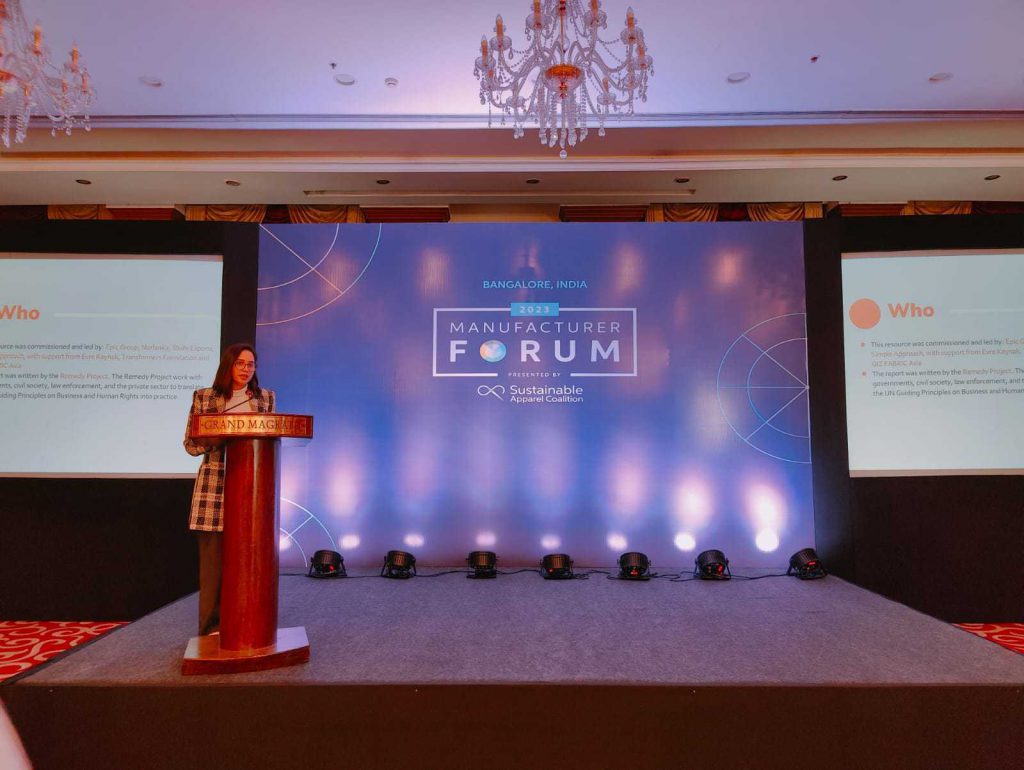
04 December | Sustainable Apparel Coalition’s Manufacturer’s Forum: Bangalore
Gauri Sharma, Assistant General Manager, Communications & Sustainability Innovation, represented Shahi at the SAC’s Coalition Manufacturer’s Forum in Bangalore to present the key takeaways from ‘An Apparel Supplier’s Guide: Key Sustainability Legislations in the EU, US, and UK’ a groundbreaking resource on sustainability-related legislation in the apparel industry.
Gauri shares how Shahi partnered with a group of suppliers, including Epic Group, Norlanka, Simple Approach, along with Transformers Foundation and Deutsche Gesellschaft für Internationale Zusammenarbeit (GIZ) GmbH, to develop this comprehensive resource to build an understanding of policies initiated in the global north and how they often have a ripple effect down the supply chain in regions outside the jurisdiction of the policy.
From increased reporting requirements to supply chain traceability, the report researched and written by The Remedy Project examines key focus areas, potential legal implications, and operational considerations for apparel suppliers & beyond.
01-02 December | Reimagining Textile Waste in India Conference by Fashion For Good
Gauri Sharma spoke at the ‘Reimagining Textile Waste in India Conference’ held in Delhi on December 1st and 2nd. The event gathered multiple supply chain members to discuss the enablers for a future of circularity, including innovators like Renewcell, with whom Shahi is working actively as the Indian supply chain partner.
The event paved the way for more conversations and projects around textile waste and circularity in India and how we can work together collaboratively in the coming months.
29 November | SAP Concur- Indian Economy Looking Ahead- Crystal Ball Gazing
Pravin Dalal, DGM Environmental Sustainability at Shahi, spoke at SAP Concur- Indian Economy Looking Ahead- Crystal Ball Gazing. He was joined by Vijay Kumar Nagaraju, Deputy General Manager – Environment, Sustainability & ESG, Brigade Enterprises Ltd. The panel, moderated by Hoshie Ghaswalla, CEO of Business World Engage, discussed ‘ROl on Sustainability,’ where Pravin shared insights on the importance of integrating sustainability initiatives into organizational practices. He shares, “Embedding sustainability in organizational practices through a dual approach—top-down and bottom-up—is crucial. Beyond measurable ROI, focus on indirect benefits like a positive reputation, enhanced brand value, and talent retention for enduring organizational value.”
27 October | ‘Future of Work and Skills For Emerging Markets’ by Good Business Lab
JD. Giri, Director at Shahi, spoke at the ‘Future of Work and Skills For Emerging Markets’ conference hosted by Good Business Lab (GBL), Abdul Latif Jameel Poverty Action Lab (J-PAL), and 21st Century India Center at the Massachusetts Institute of Technology.
The panel discussed ‘Soft Skills, Hard Skills, Digital Skills?: Upskilling India’s Workforce’, where he shared insights on upskilling India’s workforce by integrating soft skills with technical prowess to empower workers and improve work culture. He was joined by Raffaella Sadun, Professor of Business Administration at Harvard Business School, Co-Lead at Digital Reskilling Lab, and Daniel Uribe Villa, Principal of VélezReyes+.
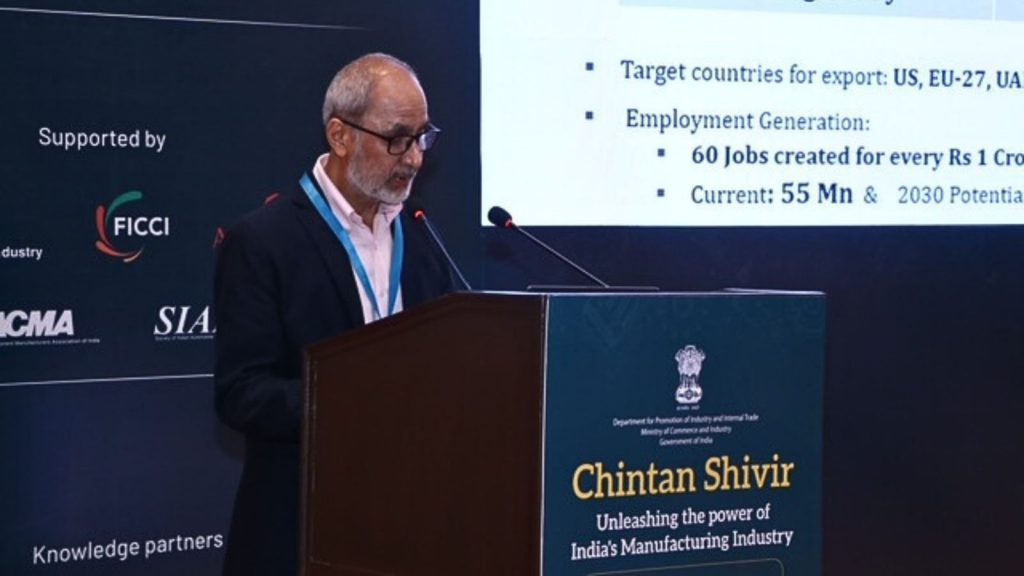
13 October | Chintan Shivir Event hosted by the Ministry of Textiles, Government of India
Harish Ahuja, Managing Director and Chairperson at Shahi, represented the Textile and Apparel Industry at the Chintan Shivir event hosted by the Ministry of Textiles, Government of India.
He painted a comprehensive picture of the textile industry, highlighting the current sector profile and setting ambitious goals, along with a plan of action for the shift in the current ecosystem and policies, technological advancements, and employment.
07 October | Panel Discussion by the Ministry of Textiles, Government of India
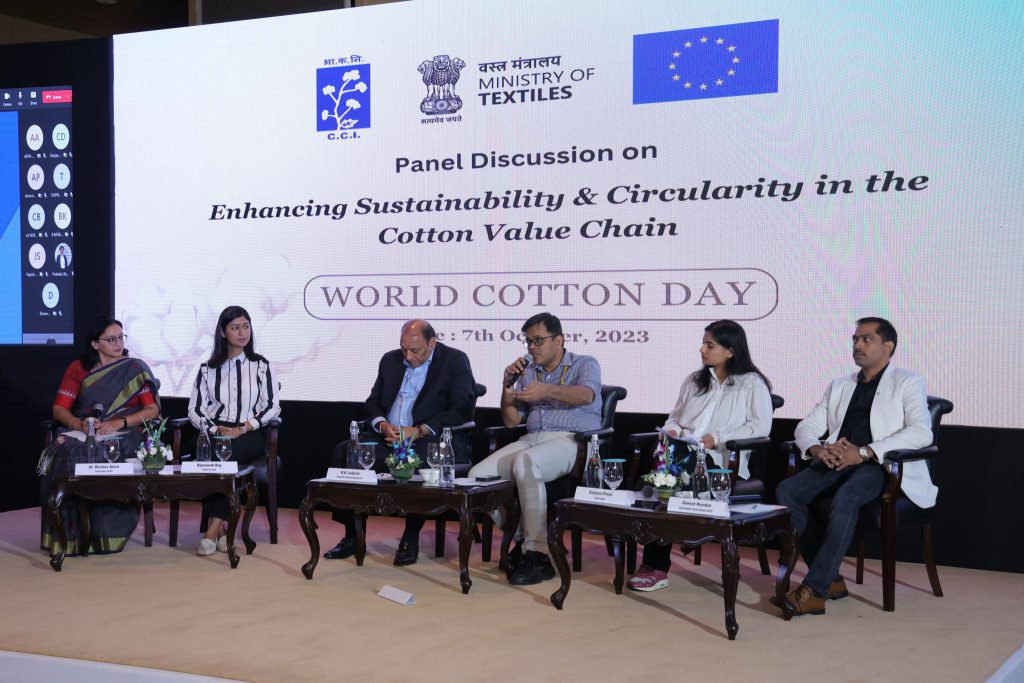
Sanjana Pimoli, Assistant Manager, Communications and Sustainability Innovation, represented Shahi in a World Cotton Day panel discussion on ‘Circularity in the Cotton Value Chain.’ The Ministry of Textiles organized this panel in collaboration with the Cotton Corporation of India Ltd (CCI) and the EU Resource Efficiency Initiative (India).
Sanjana shared Shahi’s comprehensive approach to integrating elements of circularity in our business, particularly concerning cotton sourcing and waste management at different supply chain stages. She also highlighted challenges in scaling innovations and the need for collaboration to ensure that all stakeholders are involved in creating solutions for a just transition for the industry.
26 September | NOMI Network2023 Summit
Anant Ahuja, Head of Organizational Development, spoke at the Nomi Network 2023 Summit in a panel titled ‘Closing Wealth Gaps: Innovations in Global Supply Chain.’
He discussed Shahi’s journey and how the mission of NOMI Network, centered on empowering women from marginalized backgrounds, aligns with Shahi’s dedication to promoting gender equality and social inclusion. Anant also highlighted the various training programs, employment opportunities, mentorship initiatives, and support Shahi offers to candidates from the NOMI Network, enabling them to navigate workplace challenges and fostering their personal and professional development.
23 August | 16th Edition of the Environment and Energy Conclave by BCCI
Kritika Chauhan, Assistant Manager, Communication and Sustainability Innovations, participated in a panel on ‘Sustainable approach and circular economy.’
At the 16th Edition of the Environment and Energy Conclave by The Bengal Chamber of Commerce and Industry. She shared, “Circular business models impact environmental sustainability, and collaboration within the supply chain can ensure scalability.”
20-21 July | Apparel Sourcing Week 2023
Anant Ahuja, participated in a panel on ‘Green Manufacturing: Significance and Strategies for Implementation’ at this year’s Apparel Sourcing Week hosted by Apparel Resources.
During the panel, he shared insights from Shahi’s journey in adopting sustainable practices. He addressed the challenges of implementing these practices, especially the additional costs often associated with them.
Anant also highlighted that sustainability is an exercise in both environmental and social well-being. And how a commitment to evidence-based worker well-being measures results in impactful programs that empower workers and promote a positive impact on the communities in which Shahi operates.
18 July | Women Deliver Conference 2023
Shahi co-hosted a virtual concurrent session on “Breaking the Glass Ceiling: Growth for Women in Low-Income Work” together with Good Business Lab and the United Nations Foundation at this year’s Women Deliver Conference. In a first, Shahi was represented by a factory worker and presented cross-cutting views from across the value chain, including insights from lived experience, research, on-ground implementation, and policy perspectives.
Kalyani Pandey, Needle Keeper, shared “Women face biases right from home and at work, where they expect us to drop the ball in quality and responsibility. The programs I have been a part of have helped break down different aspects of my life that potentially impact my work. It showed how awareness, communication, time management, and financial planning can help bring about big changes at work and at home.”
Additionally, Chitra Ramdas, General Manager, Organizational Development elaborated “The effort does not stop at training. It is important to close the loop on equality programs with real transitions on the shop floor in both decision-making and remuneration for women who take on more responsibilities on the shop floor. To build a culture of gender equality, organizations need to work on policies and practices coupled with supportive team members and develop leaders as champions.”
10-11 July | YESS Launched in Pakistan and India
Anant Ahuja, Head of Organizational Development, and Amanullah S.P, Assistant General Manager, Spinning, were speakers at the webinar organized by Yarn Ethically and Sustainably Sourced (YESS), supported by Responsible Sourcing Network (RSN). YESS launched its due diligence standard in India and Pakistan this year with successfully conducted mill assessments.
Shahi became the first mill in India to undergo this assessment, and the speakers shared Shahi’s positive experience and valuable learnings.
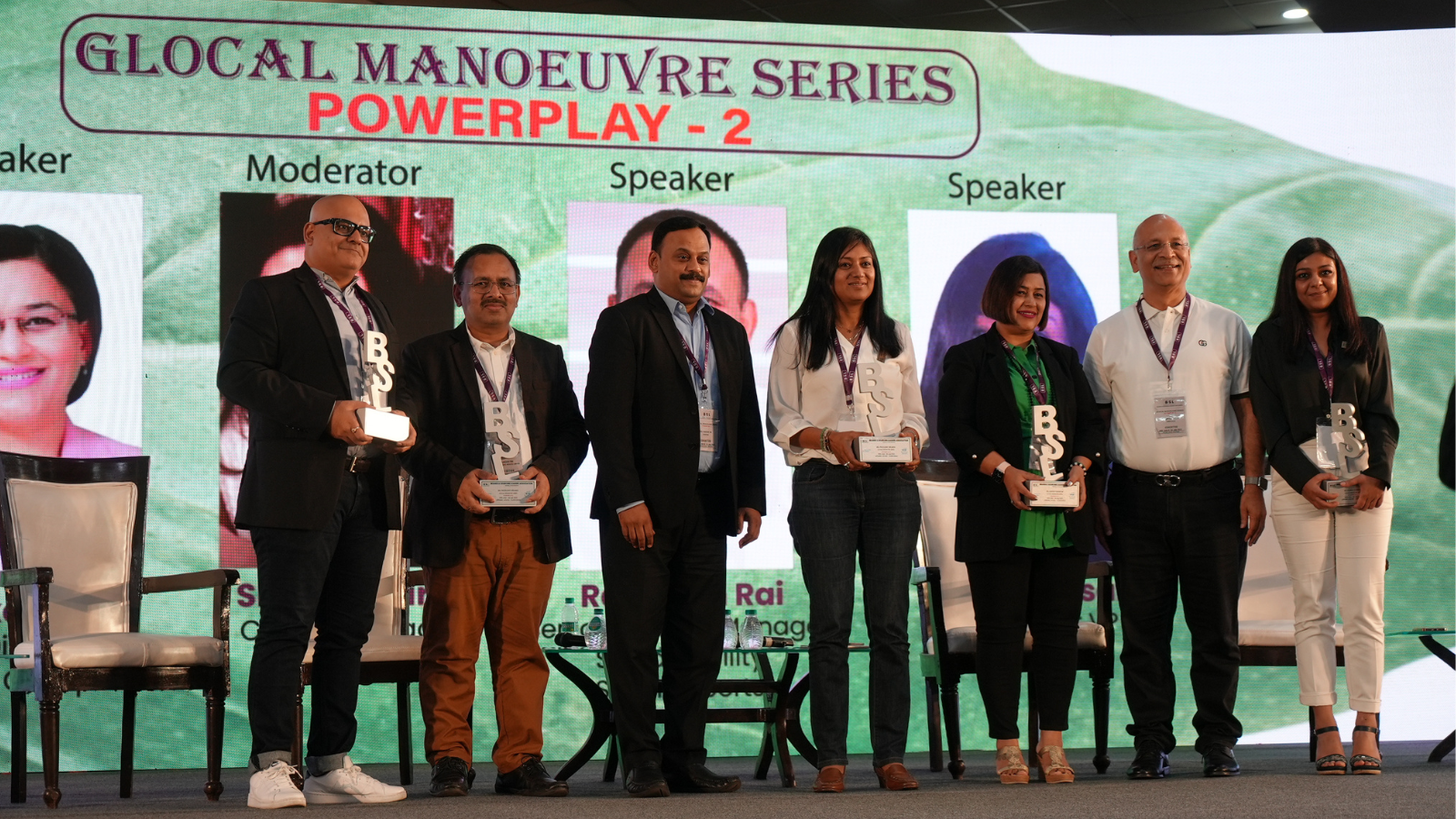
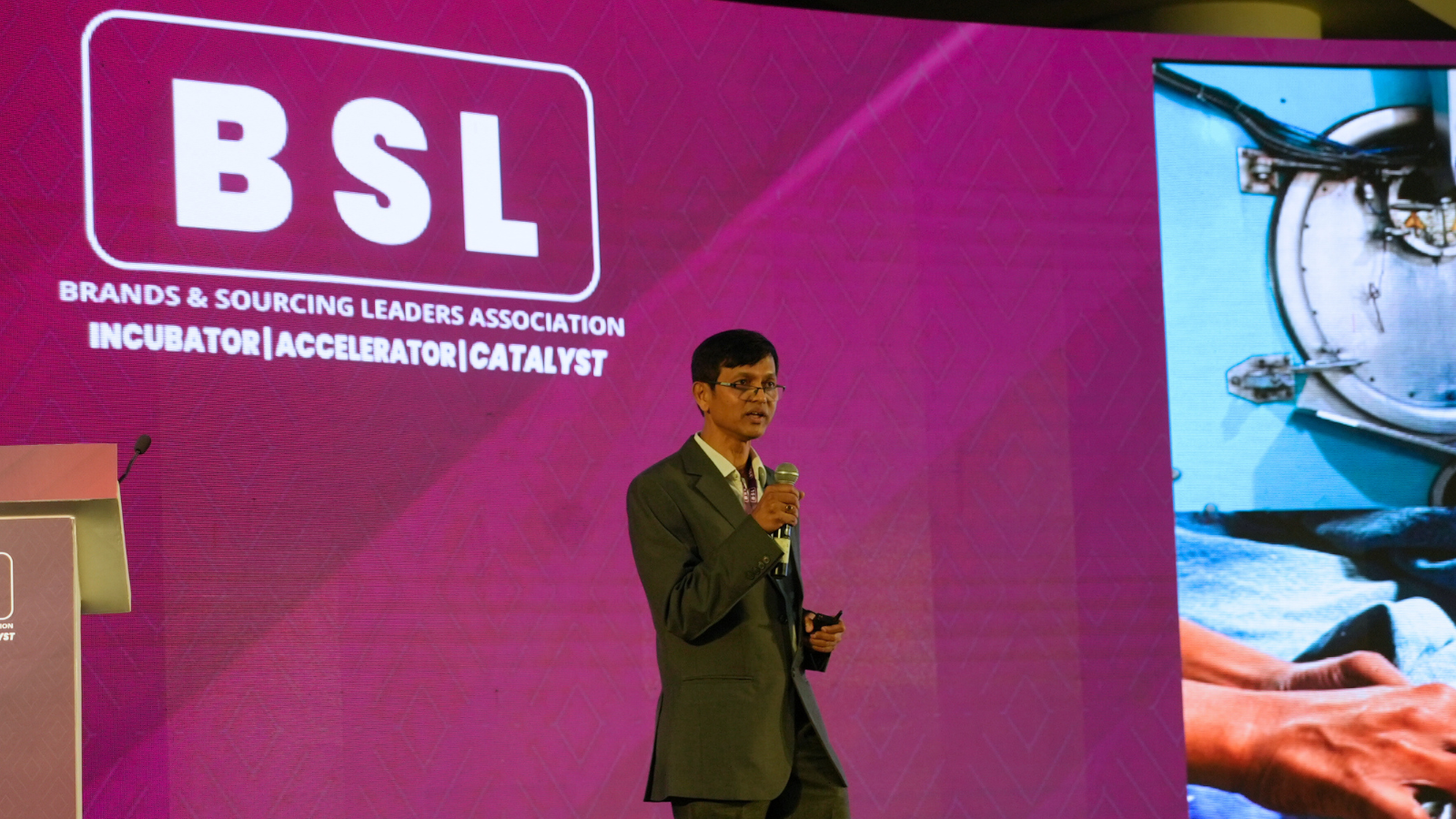
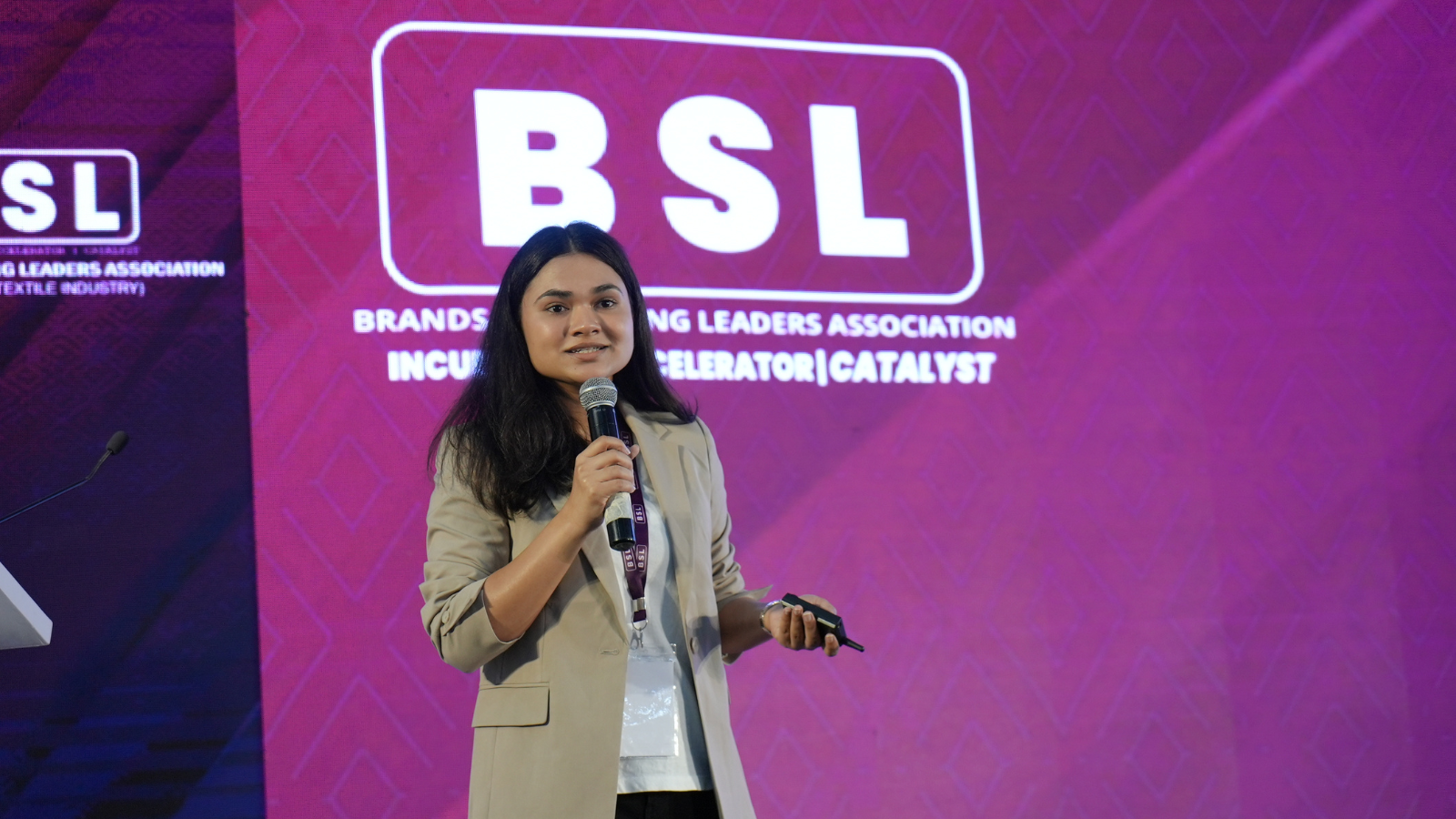
30 June-1 July | BSL’s Glocal Maneuver Series Powerplay-2
Rajneesh Rai, Senior General Manager of Laboratory & Environmental Sustainability, participated in a panel discussion titled “Good Earth: One Earth-ESG Goals and Beyond” at the Glocal Maneuver Series Powerplay-2 event organized by the Brands Sourcing Leaders Association (BSL).
This panel brought together industry leaders to delve into the future of sustainability and its impact on businesses globally. In the discussion, Rajneesh provided his insights on the roadmap to prepare for the future of sustainability. He emphasized the importance of taking proactive measures in the present, with a strong sense of responsibility. He walked the audience through how Shahi aims to reduce environmental impact through materials and processes by working with innovators to explore alternative materials with lower environmental impacts, reduce process-related footprints, and optimize resource consumption.
Furthermore, Shahi’s sustainability journey, deeply rooted in our “Responsible for” framework, integrating social and environmental well-being, was showcased in a spotlight session by Pravin Dalal, Deputy General Manager of Environmental Sustainability, and Snigdha Voruganti, Senior Executive of Communication and Sustainability Innovations. Their insightful presentation highlighted our ongoing efforts to drive positive change and make a lasting impact.
28 June | Roundtable at Global Fashion Summit
Sanjana Pimoli, Assistant Manager, Communications & Sustainability Innovations, participated in a roundtable hosted by Global Fashion Agenda with London College of Fashion’s Centre for Sustainable Fashion as a segment within the Next Gen Assembly programme for young sustainability talents. The roundtable discussed how storytelling could be used to drive ambition to action in fashion system transformation.
Sanjana spoke about the agrarian crisis triggered in India due to climate change and the importance of innovations such as Cellulosic Superabsorbent Polymer in securing farmers and making the textile industry circular. She also emphasized the systems change required in scaling these innovations.
13 June | Planet Textiles by Sustainable Apparel Coalition
Gauri Sharma, Assistant General Manager, Communications & Sustainability Innovation, was among the esteemed speakers at Planet Textiles on June 13, 2023. She shared insights on ‘Scaling Processing Technologies in the Fashion Industry to Achieve Our Climate Goals: Barriers and Solutions.’
There is an unprecedented level of urgency for the industry to decarbonize, which requires a shift from incremental to disruptive innovation, especially during the energy-guzzling textile processing stage. By setting this context, Gauri emphasized that manufacturers must be part of the problem-solving from the beginning. They require industry stakeholders to share the risk, jointly invest, and build long-term partnerships to scale upcoming technologies that enable the shift from wet to dry processing.
08 June | Open Perspectives by H&M Foundation
Anant Ahuja, Head of Organizational Development, spoke on a panel, ‘Changing the System’, as part of H&M Foundation’s annual Global Change Awards. Anant highlighted the significance of social innovation in the apparel industry, given that it employs millions of people, particularly women, in the supply chains. Social innovation can be more complex than environmental because it requires an understanding of local contexts, and its impact can be hard to measure. Anant shared Shahi’s evidence-based interventions, which have had a measurable positive impact on both business and workers, and called upon the industry to invest equally in social programs and innovators.
06 June | United Nations Responsible Business and Human Rights Forum, Asia-Pacific
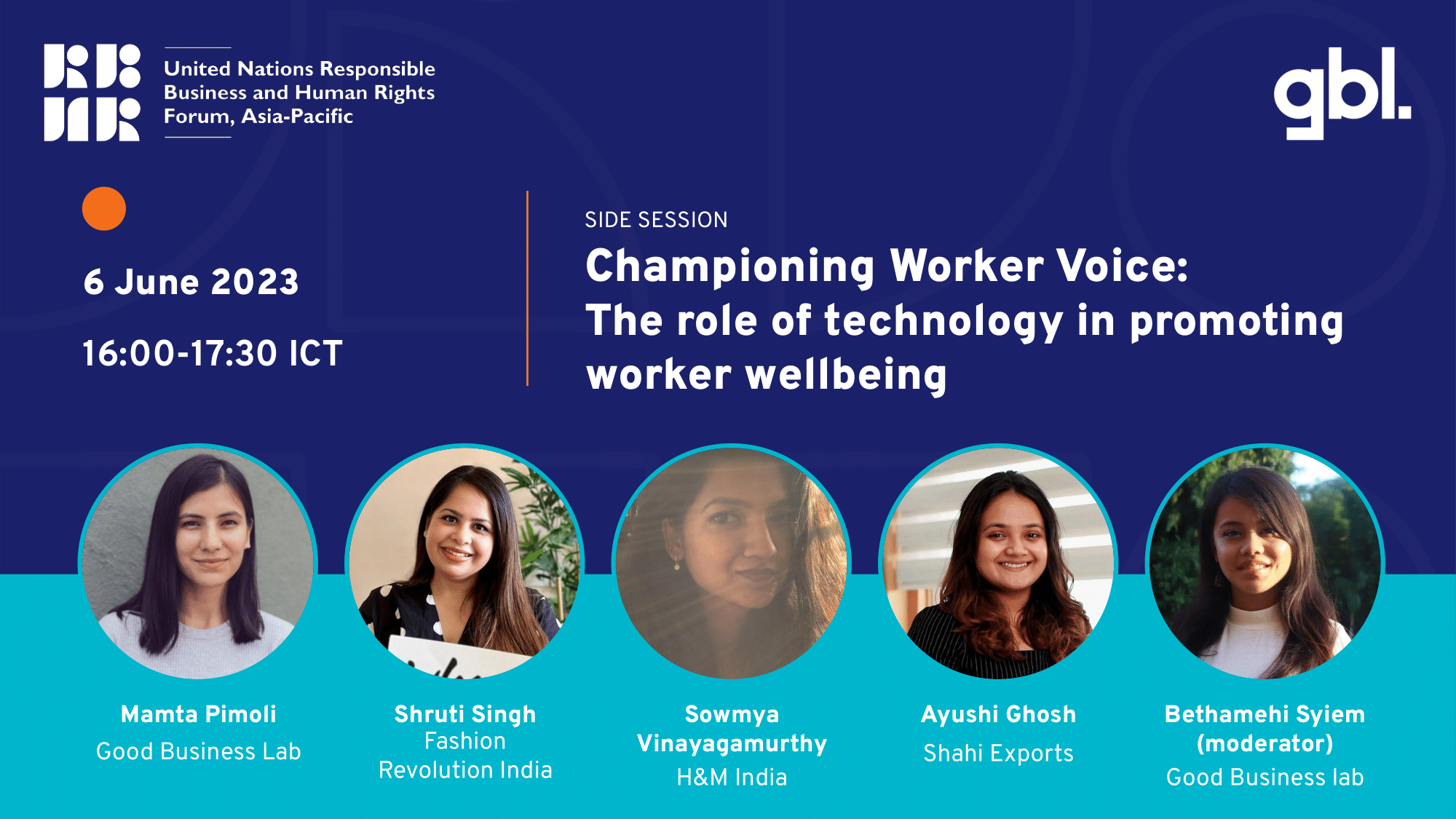
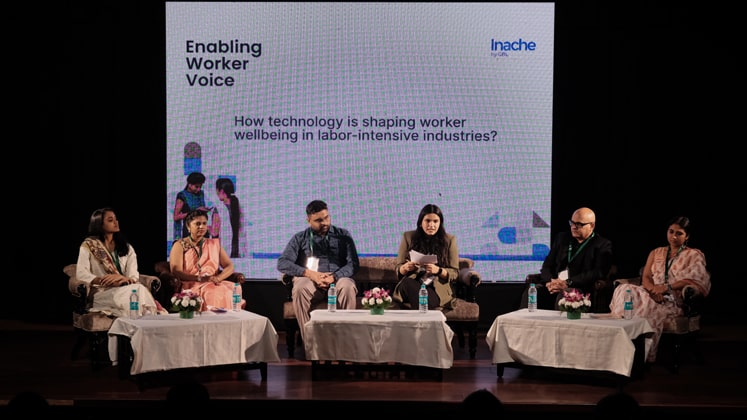
Ayushi Ghosh, Senior Executive, Communication and Sustainability Innovations, represented Shahi in a side session on ‘Championing Worker Voice: The Role of Technology in promoting worker well-being’ at the UNDPv B+HR forum this year.
In this panel, Ayushi spoke about the enduring principles of worker’s voice, emphasizing the importance of listening, understanding, and remediation, even as communication mediums have evolved over time. She stressed the goal of including worker voice in driving meaningful action and supporting a healthy work environment while fostering a thriving business. She highlighted the need to build the employer’s ability to listen and ensure that workers are equipped to utilize the available communication channels effectively. Understanding the journey that their voice takes through these channels is key.
20-22 April | Odisha Skill Conclave 2023
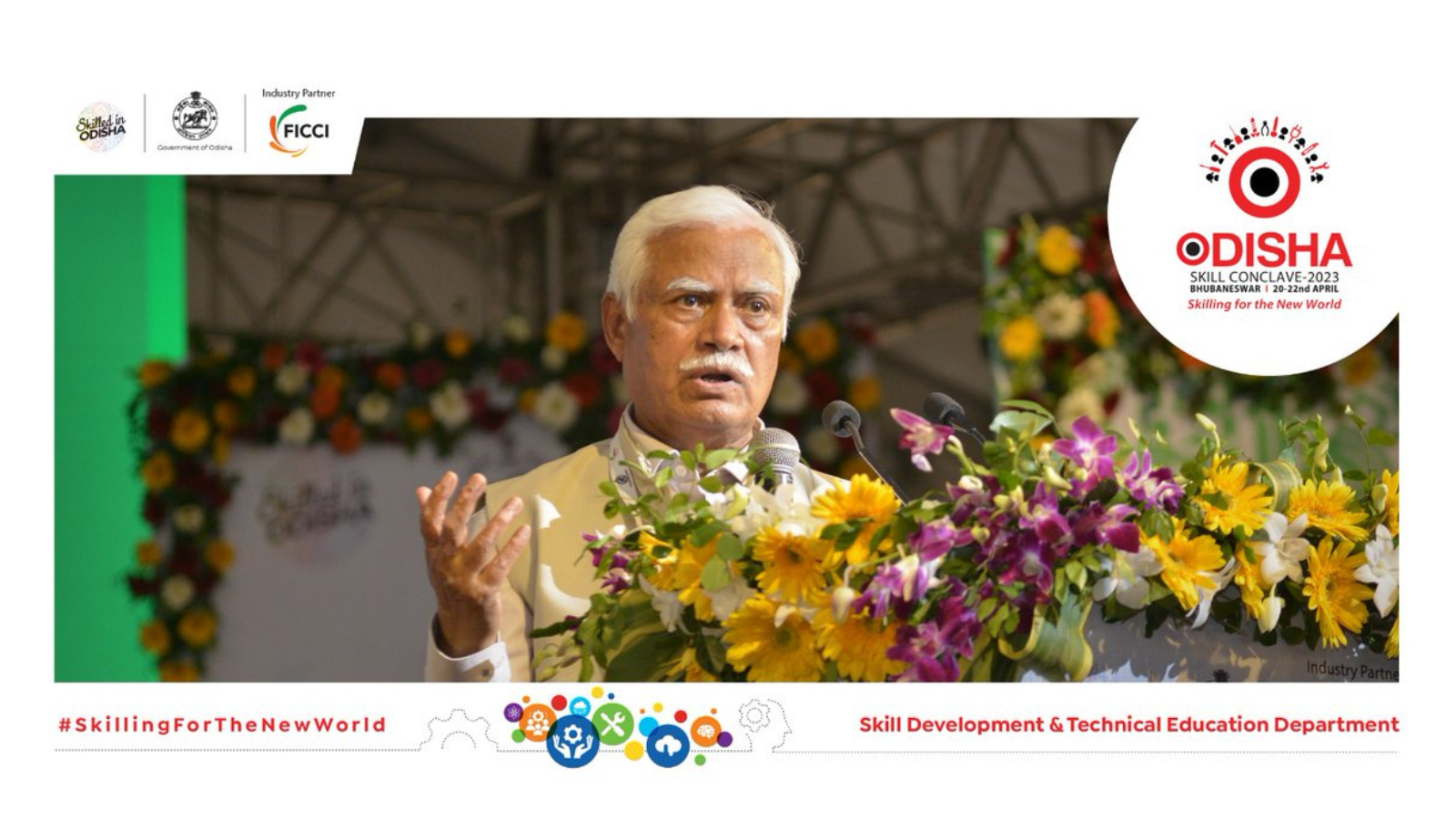
Odisha Skill Conclave 2023 was a three-day event that brought together leaders from Industry, Academia, and International Organizations to explore innovation, best practices, and the role of partnerships in generating employment and unlocking the potential of Odisha’s workforce.
The Government of Odisha has been a long-standing partner in Shahi’s path to making skilling accessible to youth and women in India. JD. Giri, Director at Shahi, described our journey together to empower the next generation of skilled professionals and drive economic growth.
19-21 April | AIChE: Global Polymers and Textiles Conference
Anant Ahuja presented the research on cellulosic superabsorbent polymer (CSAP) at the #AIChe Global Polymers and Textiles Conference held at the University of Massachusetts amidst industry leaders, designers, and academics.
He emphasized the use case of CSAP as a climate adaptive measure to de-risk cotton farmers against crop failure due to water stress. Anant also spoke at the circularity and supply chain management panel and shared his thoughts on the strategic collaboration required to accelerate sustainability in the industry. He highlighted how HKRITA – The Hong Kong Research Institute of Textiles and Apparel Limited’s model of applied research and partnership with the industry enabled us to work efficiently on R&D on CSAP.
15-17 March | 3rd Global Textile Conclave
Anjani Mishra, Deputy General Manager of Skill Development, represented Shahi at the 3rd Global Textile Conclave organized by the Confederation of Indian Textile Industry (CITI).
In a panel on ‘Increasing Economic and Social Opportunities for Women in the Textile and Apparel Industry,’ he spoke about Shahi’s commitment to improving the socio-economic status of female candidates through skilling & gainful employment across 70+ skill development training centers in 15 States in India. He emphasized the importance of Upskilling & Re-skilling existing female employees to improve career progression within the organization.
16-17 February | OECD Forum on Due Diligence in the Garment & Footwear Sector
Anant Ahuja represented Shahi at the 2023 OECD – OCDE Forum on Due Diligence in the Garment and Footwear Sector. He spoke at the panel “Due diligence costs and responsibilities:
Collaborative approaches to buyer-supplier relationships” about the value of multi-stakeholder initiatives on due diligence that involves suppliers, brands, NGOs, and other experts to address the challenges in a local context.
28 February | Organic Cotton & Textiles Conference 2023
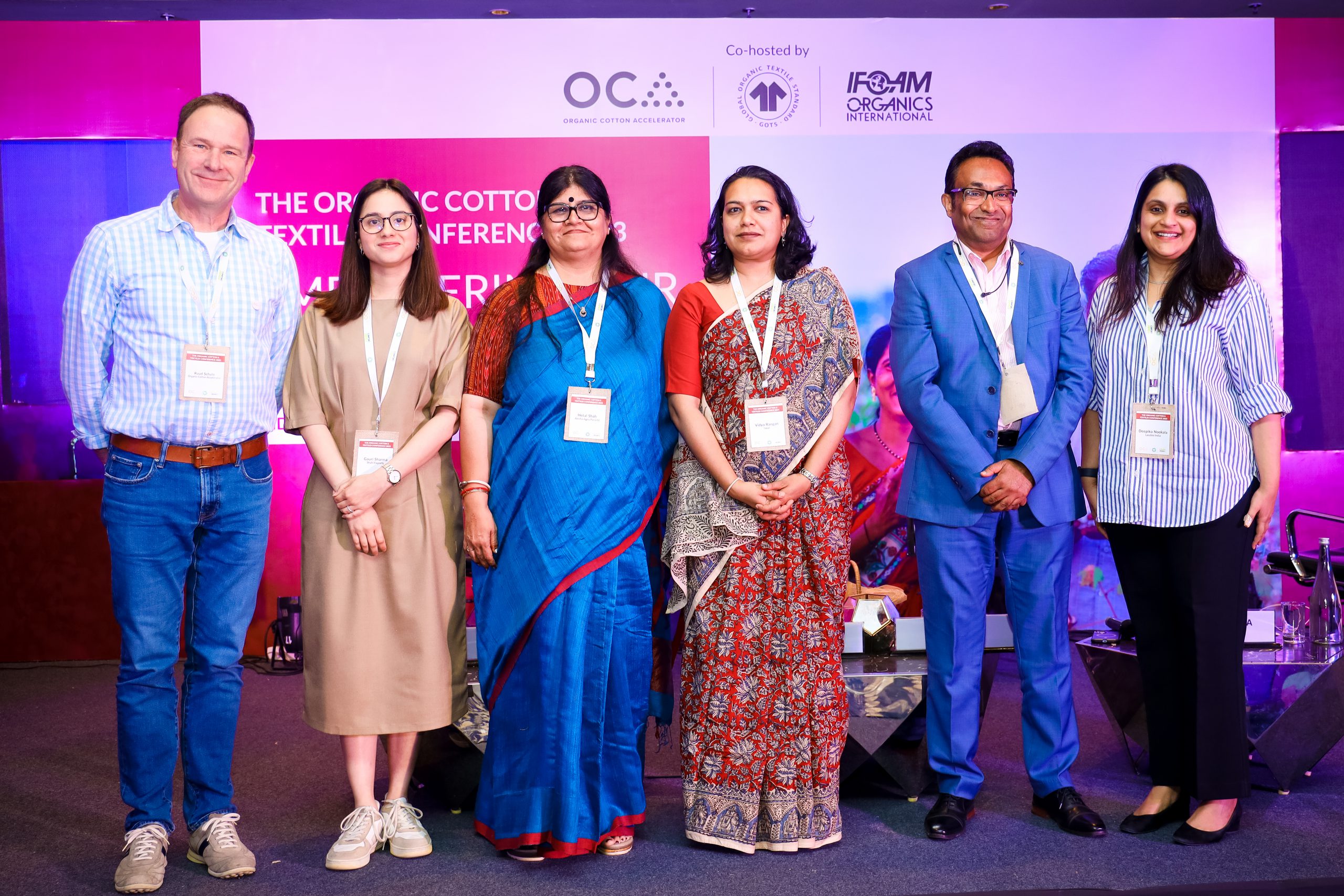
Gauri Sharma, Senior Manager, Communications and Sustainability Innovations, Shahi spoke at the Organic Cotton & Textiles Conference 2023 about the social protections that need to be embedded and strengthened at the farm level in cotton production and the pertinent role of emerging policies in enabling these changes.
She also highlighted how a vertically integrated manufacturer like Shahi could play a role in accelerating authentic organic cotton in the industry sustainably.
31 January | BSR KWIL Conference
Gauri Sharma, Senior Manager, Communications and Sustainability Innovations, represented Shahi at the Business for Social Responsibility (BSR) event focusing on their ‘Keeping Workers in the Loop’ (KWIL) Project. In the panel ‘PROGRESS TOWARDS A JUST, FAIR & INCLUSIVE CIRCULAR FASHION SYSTEM’ joined by H&M, ILO, and Hasiru Dala, she shared how the learnings from the KWIL project motivated Shahi to take on a lens of social wellbeing in circularity.
After engaging in the KWIL research last year, Shahi took on projects and pilots on circularity while keeping worker well-being at the center. She also emphasized the role of strong brand-supplier relationships in the fair transition to a circular economy.
30 January | Shades of Blue
Chitra Ramdas, General Manager, Organizational Development at Shahi, participated in a panel discussion on ‘enabling worker voice,’ an essential tool for a thriving business and work environment for manufacturers at Shades of Blue by Good Business Lab.
Shades of Blue was an experience center curated at the Alliance Française de Bangalore that explored blue-collar labor and its many complexities through a fresh way of understanding India’s older garment sector and the emerging gig economy.
24 January | IOM Panel
Anant Ahuja, Head of Organizational Development, represented Shahi in the Indo-Pacific Supply Chain Guidelines Launch hosted by the International Organisation of Migration (IOM). He shared the myriad of challenges faced by migrant workers, including lack of affordable housing, health facilities, and social isolation, among others. Shahi is working closely with ecosystem partners to build a model and ecosystem of support for migrant workers at Shahi in the form of a migrant support center. The aim is to create an enabling environment for migrant workers to access job opportunities and create a model center that can be adopted and scaled across industries and geographies.
December 6, New Delhi: Shahi Exports, India’s largest apparel manufacturer and exporter, released its second Sustainability Report for FY 2022-23 today. The comprehensive report details the company’s extensive initiatives across key focus areas, including Energy and Emissions Management, Water Efficiency, Chemical and Materials Stewardship, Waste Towards Circularity, Empowered Workforce, Employee Health and Well-being, Fair and Respectful Workplace, and Corporate Social Responsibility (CSR).
Anant Ahuja, Head of ESG at Shahi Exports, said, “The past year has marked significant shifts in the narrative, perspective, and business of sustainability in fashion.As the industry evolves,Shahi remains committed to conducting our business in a way that reduces negative impact and maximizes the positive impact on our people and the planet. The Sustainability Report is an important tool in helping us track our progress and identify areas where we can make further improvements. The data and insights reported over the past two years have been invaluable in helping us develop more strategies aligned with long-term thinking on our growth journey.”
Key highlights of the report:
Shahi has moved the needle on Planet targets by:
Increasing renewable energy capacity to 92.5MW brings it closer to 100% renewable electricity goal by 2026.
This year, Shahi phased out coal from garment factories and continue to work on coal elimination in mills.
Achieved Higg FEM verified average score of 78.05%, compared to the global average of 59.67%.
Shahi’s efforts have not gone unnoticed, and have received several international and national awards for the commitment to environmental stewardship, like the International Green Apple Environment Award by The Green Organization and the Excellence in Performance Award by The Confederation of Indian Industry under the ground-mounted solar category.
On the People front:
Shahi has invested 1.2 million hours in upskilling its employees in behavioral & technical skills.
The company continued to invest in soft skills training for women through the Gap Inc. PA.C.E. program, reaching 86,000+ women since 2007 and completing 96% of 2024 training target.
It partnered with the International Organization for Migration (IOM) to support migrant workers and launched the YESS: Yarn Ethically and Sustainably Sourced program to mitigate the risk of forced labor in supply chain.
Harish Ahuja, Managing Director and Chairperson of Shahi Exports said, “Over the years, Shahi has always demonstrated a deeper understanding of the changing landscape of our environment and the role that sustainability as a concept plays in this shift. As Shahi turns 50 next year, we believe sustainability efforts will increasingly underpin our success and drive industry-wide transformation. We will continue in the spirit of collaboration, share our best practices, and advocate for collective action.”
At Shahi, we believe in sharing our experiences and learning with all the stakeholders in the fashion industry and beyond. This is an ongoing post to share insights from our speaking engagements in 2022. Read insights from previous years’ engagements: 2021, 2020.
Puneesh Lamba, Chief Technology Officer of Shahi, received the recognition for IoT Icon in the CIO Power List 2022. The CIO Power List, presented by CORE Media, recognizes India’s most influential Chief Information Officers (CIOs), IT Leaders, and Digital Leaders. They have demonstrated extraordinary vision and outstanding work in the last year in enterprise technology. They have leveraged technology to improve processes, customer touchpoints, and experiences.
An exclusive ceremony was held on 20th-21st May 2022 in Mumbai, honoring over 130 CIOs across two main categories: Business Icons and Technology Icons.
Business Icon recognitions are conferred upon select CIOs/IT Leaders from 23 categories and across 13 different industry verticals, while Technology Icons upon leaders across 20 different technology categories.
“Congratulations to all the CIO Power List 2022 winners. In the new digital economy, these CIOs and Digital Leaders are at the forefront, driving transformation that enables organizations in staying ahead with innovation for growth and success in the global marketplace. The CIO Power List recognitions are bestowed upon visionary leaders. It is our privilege to honor them as they rise above disruption and establish IT as the biggest driving influence on enterprise transformation and new business models”, said Anoop Mathur, Founder, and President, CORE Media.
Making the Power List
The CIO Power List 2022 awardees are finalized based on an algorithm considering a wide range of data collected on CIOs and Digital Leaders across multiple channels. This includes data collected from their online reputation, business publications, and features, combined with data on awards, honors, and recognitions won; achievements, a random sampling of social media engagements, and a national survey of peer CIO review. Additionally, there are inputs from the CIOs themselves on their key moments in the past year.
From the CTO
“This award is the testimony to the fact that Shahi has taken huge strides in digitizing its operations. Solving business problems by leveraging technology has become a practice in Shahi; hence we are a more productive, efficient, and progressive company. Our “Digital First” approach has helped immensely in delivering value to our customers and employees.” – Puneesh Lamba
Puneesh is responsible for building Shahi’s IT & Digital strategy and execution. He carries 28 years of experience as a Senior IT & Digital Leader across industries in India, the USA, and Europe. He has worked for multinational companies like General Electric/Genpact and TATA Consultancy Services and Indian Conglomerates like Escorts Ltd., Punj Lloyd, CK Birla Group, and Ballarpur Industries.
As one of India’s pioneers in embracing disruptive technologies like Artificial Intelligence, Robotic Process Automation, the Internet of Things, and Predictive Analytics, Puneesh is a proponent of digital means to enable business strategy growth. He has won many prestigious awards like CIO100, CIO200, CIO500, Power List, and CIO 1000. He is also a jury member at NASSCOM, Frost & Sullivan, and 9Dot9 media.