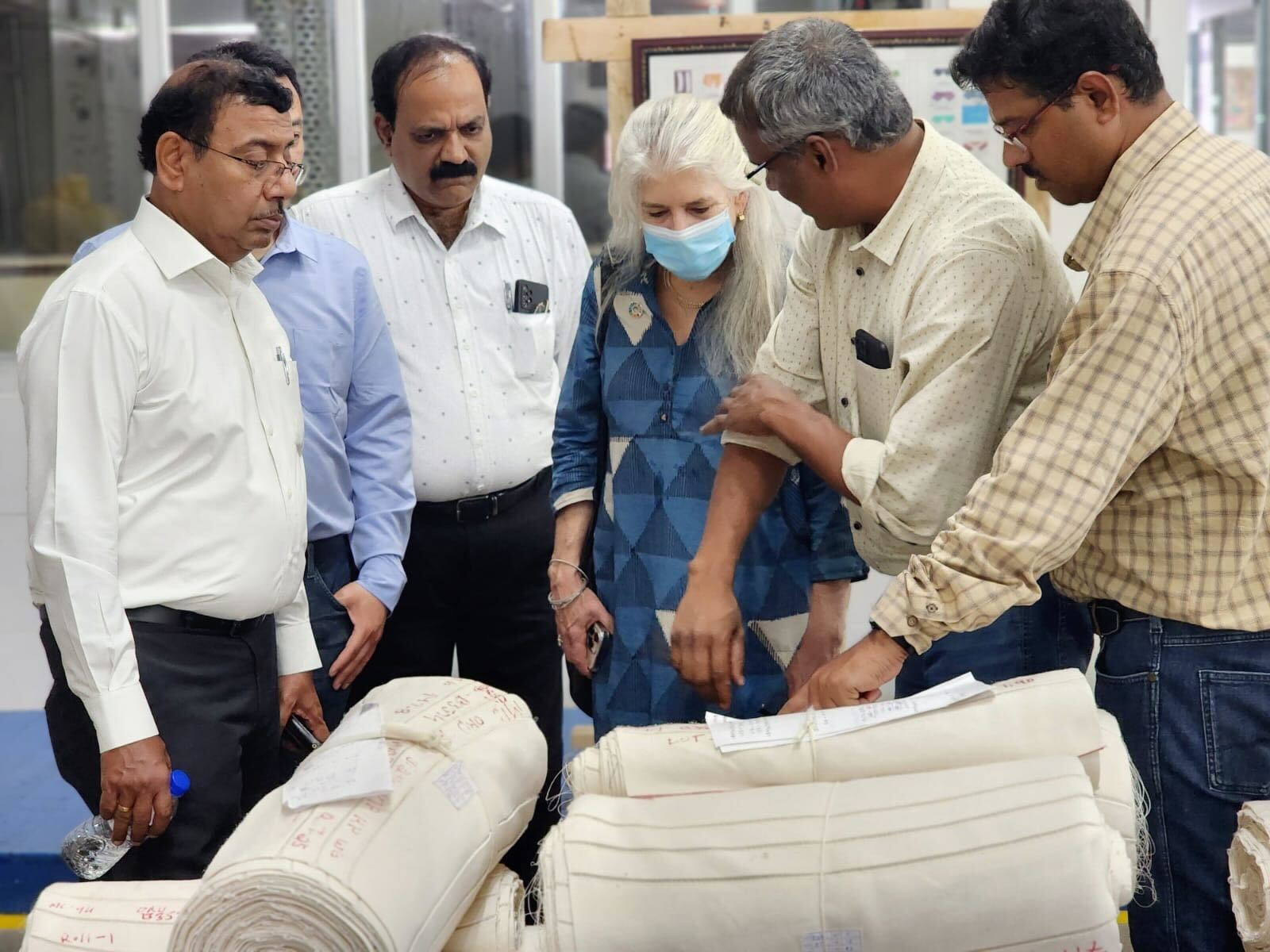
For years, sustainability tools in the apparel sector have traveled down a strict one-way street: from brands and consultancies down to manufacturers. What they are missing are the variables and nuances that factory managers on the ground experience and must tackle to first prove the financial return on those upgrades to even begin the conversation with brands, banks, and their own leadership. But that can be fixed with a simple tool that no one built until now.
Shahi Exports co-commissioned and led the development of Bang for Buck—a collaborative project facilitated by the Fashion Producer Collective, alongside fellow manufacturers Elevate Textiles and Epic Group, with support from GIZ FABRIC and technical expertise from Grant Thornton Bharat. Quietly radical in its approach, this free, open-access tool covers 22 decarbonization technology measures. These are practical, proven interventions selected by suppliers to work within real-life constraints across diverse factory setups. The tool enables sustainability managers to calculate the exact emissions impact relative to financial ROI, giving them precise data and the language to justify green investments to stakeholders.
What makes Bang for Buck truly unique is the intensely collaborative process behind it. Suppliers weren’t brought in to simply “review” at the eleventh hour but were made co-designers from the very first page. Every assumption was named and debated out loud.
We didn’t just stop at asking how much a technology could cut emissions, but went on to dig deeper. Does this data actually exist within a standard manufacturing company? Who will own it? Is the output robust enough for a plant manager to stand in front of a CFO and win the argument? Even the final paper was written jointly, making sure the manufacturer’s voice remained primary.
The process ultimately revealed:
While technical realities like grid factors and local infrastructure vary by region, the core pressures manufacturers face are identical worldwide.
Whether in South Asia or Southeast Asia, suppliers grapple with accessing upfront capital, verifying technology performance, and communicating ROI. Bang for Buck engages with these realities and changes the traditional supply chain dynamic, proving that repeatable, supplier-led collaboration is not only possible but indeed essential for genuine industry transformation.
They say it takes a village to raise a child– an entire community must provide for and interact positively with children for those children to experience and grow in a safe and healthy environment. But what must they grow into? A healthy standard of living? Access to fair livelihood? Survival with dignity? Opportunity for prosperity? What does that child need after it is done “being raised?”
At a wider scale, these questions turn into larger humanitarian conversations where there is a standard or a means that society aspires to achieve— Human Rights, a common understanding of the basics of human existence. But let’s roll back a little from an existential crisis to a real one that manifests itself in countries, economies, businesses, and the very same communities— forced labor.
Understanding Forced Labor
Forced Labor has deep historical, geopolitical, and socio-economic roots from ancient civilizations using enslaved people to medieval serfdom. Colonial powers exploited indigenous populations and harsh working conditions during the Industrial Revolution. The 20th century witnessed forced labor camps in totalitarian regimes. Forced labor, also known as involuntary labor or slavery, is a form of exploitation in which individuals are compelled to work against their will, often under threat of violence or other forms of coercion– a gross violation of human rights and considered a form of modern-day slavery.
The United Nations Forced Labour Protocol (UNFLP) is a pivotal instrument that underscores the urgency of combatting forced labor practices within various industries, most notably the textile sector. The UNFLP, introduced as an amendment to the broader International Labour Organization’s (ILO) Declaration on Fundamental Principles and Rights at Work, has propelled the issue of ending forced labor in the textile supply chain to the forefront.
The Current Discourse
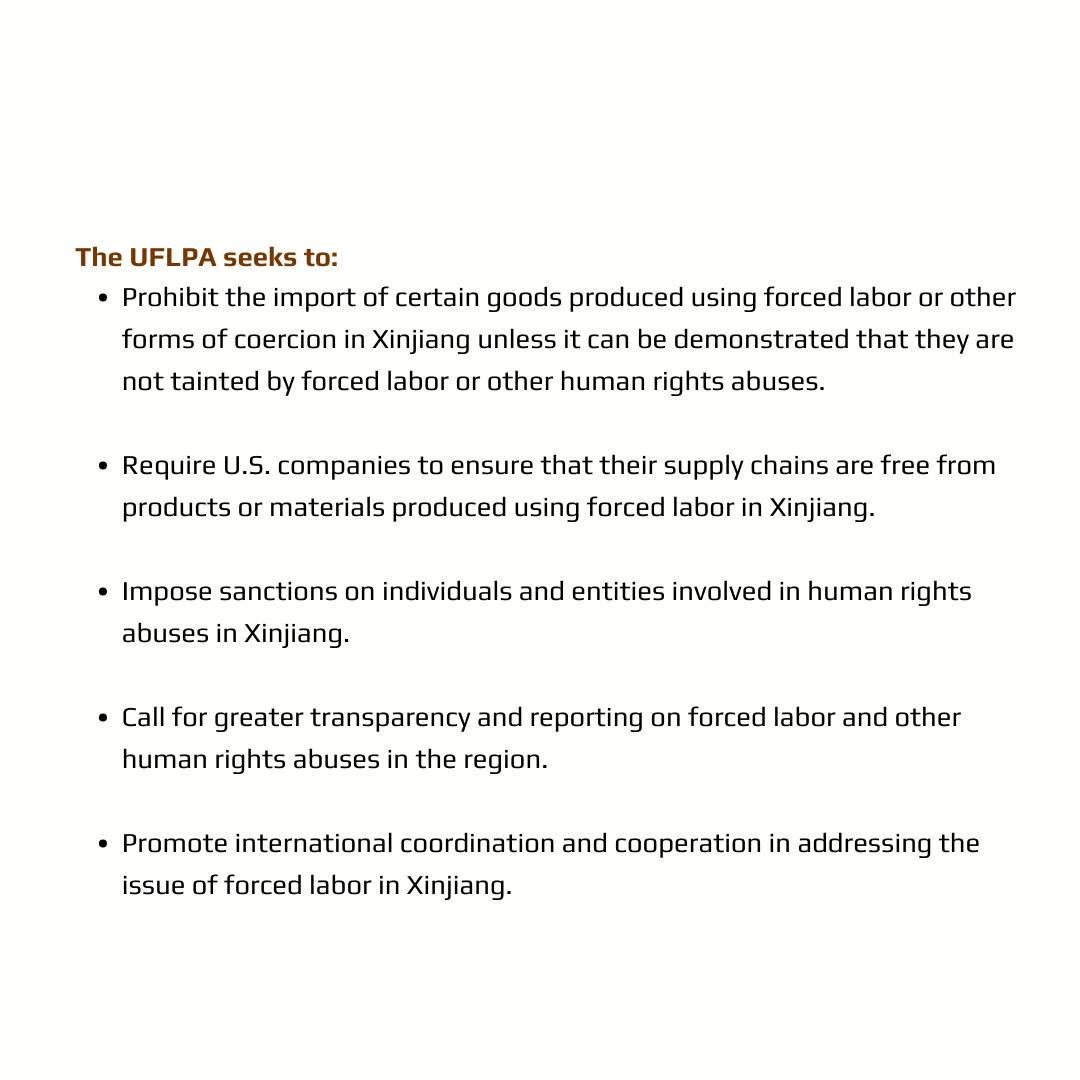
The eradication of forced labor within the textile supply chain has emerged as a fervent and pressing global concern, capturing widespread attention due to a confluence of factors. At the heart of this discourse lies the “Uyghur Forced Labor Prevention Act” (UFLPA), which came into force in the US in June 2022.
The UFLPA is a piece of legislation introduced in the United States Congress aimed at addressing and preventing forced labor and human rights abuses in the Xinjiang Uyghur Autonomous Region (XUAR) of China. The Uyghur people have faced widespread allegations of human rights violations, including forced labor, mass detentions in so-called “reeducation camps,” and other forms of repression in Xinjiang.
For Shahi, this resonated with our Responsible for People framework, which takes inspiration from our founder’s motivations for creating fulfilling and sustainable employment for women. As a vertically integrated manufacturer, we touch a large chunk of the upstream stakeholders. This makes us hyper-aware of the supply chain’s circumstances and the impending impacts that global policies, discourses, and paradigm shifts have on them.
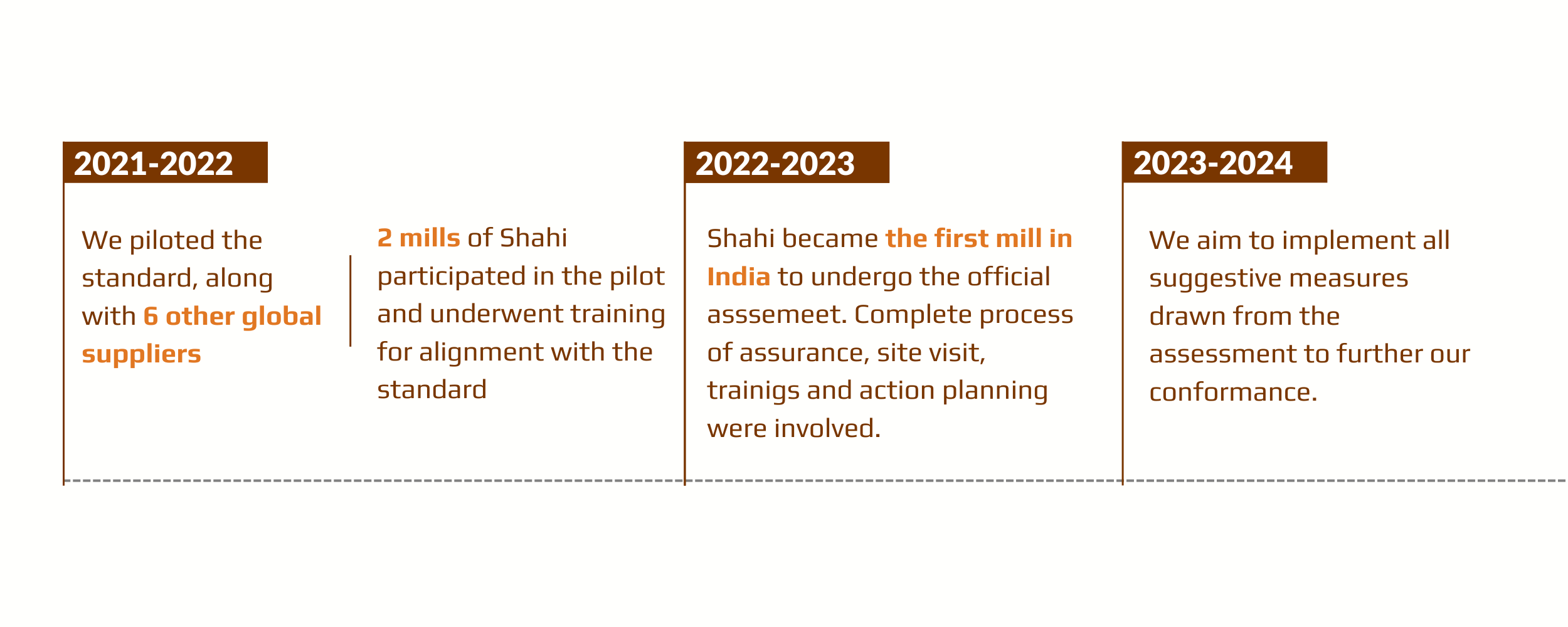
In 2021, we started exploring Yarn Ethically & Sustainably Sourced (YESS), an initiative spearheaded by the Responsible Sourcing Network (RSN). RSN is a non-governmental organization that champions the human rights of vulnerable communities in mining and harvesting raw materials found in products we use daily. The next year, we piloted the YESS Standards, along with 6 other global suppliers, and are now the first mill in India to take the lead in implementing robust due diligence measures.
“Due diligence will help us align with upcoming legislation and also build capacities on critical topics like forced labor.”
— Anant Ahuja, Head, ESG
The Challenge: an Indian Supplier’s Perspective
India has a comprehensive legal framework to combat forced labor and protect workers’ rights. India’s Constitution prohibits forced labor under Article 23, the Bonded Labour System (Abolition) Act, 1976; Child Labour (Prohibition and Regulation) Act, 1986; Minimum Wages Act, 1948; Immoral Traffic (Prevention) Act, 1956, Inter-State Migrant Workmen (Regulation of Employment and Conditions of Service) Act, 1979, The Factories Act, 1948, and other labor laws.
The apparel and textile supply chain is a sprawling web across multiple countries. The numerous stakeholders create a diverse landscape of territorial and customs laws– making it challenging to monitor and regulate labor practices effectively. Being the 5th largest sector in employment, the global nature of this industry intensifies the urgency to address forced labor.
Aligning our Knits textile division with the YESS Standards, our aim is to drive slavery out of cotton production by eliminating the trading of cotton at risk of being produced through forced labor and increasing the use of ethical cotton. The YESS program assesses management systems and inventory controls of mills to identify, assess, and mitigate the risks of forced labor based on the Organisation for Economic Co-operation and Development (OECD) due diligence framework.
“Dedicating efforts to strengthen sustainable governance systems has kept Shahi in the forerunning. With YESS, we will strengthen our due diligence and continue to provide ethically sourced and produced garments to our customers.”
— Ramalingam T, CEO, Knits Division
As a leading manufacturer, our awareness and understanding make our support of international efforts in investigating, monitoring, and mitigating forced labor crucial. Shahi serves on the Advisory Committee of YESS, which brings together different industry players, such as brands, suppliers, and NGOs, to strategize the development of YESS into a commercial and practical standard.
Leveraging Due Diligence
At Shahi, our existing processes allow us to vet, review, and select our suppliers through due diligence. The responsibility is spread across our Sourcing, Warehousing, Accounting, Auditing, and compliance teams. From vendor due diligence to ensuring product quality, we have clear transparency and record-keeping
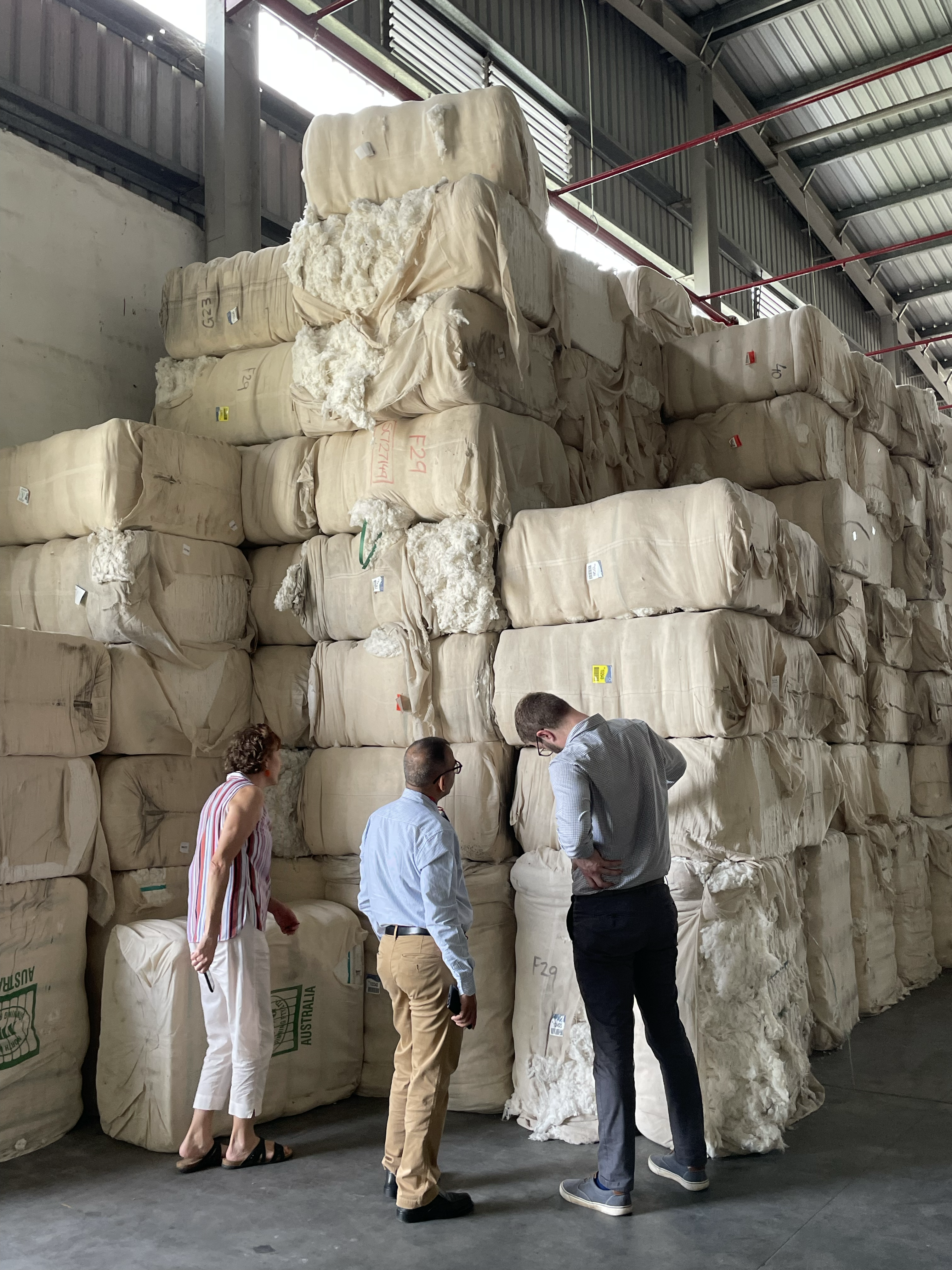
Verifying the source: We mandatorily seek proof of upstream supply chain— yarn and cotton purchase from our suppliers to check and verify the origin of the yarn and cotton.
Adherence to Policies: We require our suppliers to adhere to our Vendor Code of Conduct, Prohibition of child labor policy, Prohibition of Bonded and Forced labor, Modern Slavery and Human Trafficking Policy, and our Cotton Sourcing policy to ensure that cotton is sourced in compliance with the YESS Standards.
Vertical integration: This has served as a tool to keep track of our yarn inputs right from spinning.
Aligning with YESS
Empowered by the YESS frameworks, we strive to only purchase cotton materials from sources verified as not involving or contributing to forced labor in cotton production. The standards have helped us achieve added qualifications in our due diligence process.
“YESS is a more conversational assessment wherein the facility can explain its unique systems and processes around due diligence. The sourcing teams are able to solve queries and doubts, which is not possible in one-sided audits.”
— Amanullah SP, AGM, Spinning Production
Governance
Support and build capacities of cotton-supplying counterparties to improve performance and conform to responsible cotton-sourcing policy.
Exercise due diligence in consistency with US UFLPA
Organize formally responsible sourcing teams within our existing sourcing teams
Assessment and action
Annual assessments through YESS auditors to verify conformance status and continually identify opportunities to improve our responsible cotton due diligence management system.
Preparing reports on progress and sharing with the YESS
Where risks of forced labor in cotton production are identified, develop a risk management plan that engages internal and external actors in the supply chain who can collectively mitigate the risks of adverse impacts.
“I am impressed with Shahi’s team for not only taking a deep dive into the nuances of forced labor but then strengthening their processes and implementing a due diligence approach to identify, assess, and mitigate this abuse. I appreciate they care about contributing to solutions that have an impact.”
— Patricia Jurewicz, CEO of RSN/YESS
What we look forward to
We look forward to strengthening our relationship with our suppliers and supporting them with our learnings from sustaining a 115,000-strong workforce and exposure to evolving standards and our position in the industry.
With YESS, we have made an attempt to align the company with the upcoming legislation— a proactive measure that gives us the confidence to serve international clients. As we write this piece, more regulations will be adopted worldwide. In the upcoming years (Years 2 and 3), through YESS, Shahi will be able to implement the vision behind these regulations and contribute to mitigating the risk of forced labor.
New Delhi, 24 May, 2023: Responsible Sourcing Network and Shahi Exports announce their collaboration in promoting due diligence towards ethical cotton sourcing practices in the garment industry. The partnership aims to build a transparent and forced labor-free supply chain for cotton as countries across the world move to strengthen due diligence and sourcing standards.
YESS: Yarn Ethically & Sustainably Sourced is an initiative by Responsible Sourcing Network that dedicated several years to developing rigorous due diligence standards to achieve a forced labor-free cotton supply chain for the garment and textile industry.
The YESS standards were officially presented in India on May 2, 2023 at a workshop in Bengaluru, Karnataka, attended by multiple industry members. The workshop highlighted the significance of due diligence in building an ethical supply chain for cotton sourcing and furthering the goal of preventing forced labor.
“This joint effort represents a significant milestone in the pursuit of responsible and transparent cotton supply chains. As we expand conducting assessments in India later this year, we invite industry members to join this collective advancement and have their mills trained and assessed,” said Patricia Jurewicz, CEO of Responsible Sourcing Network.
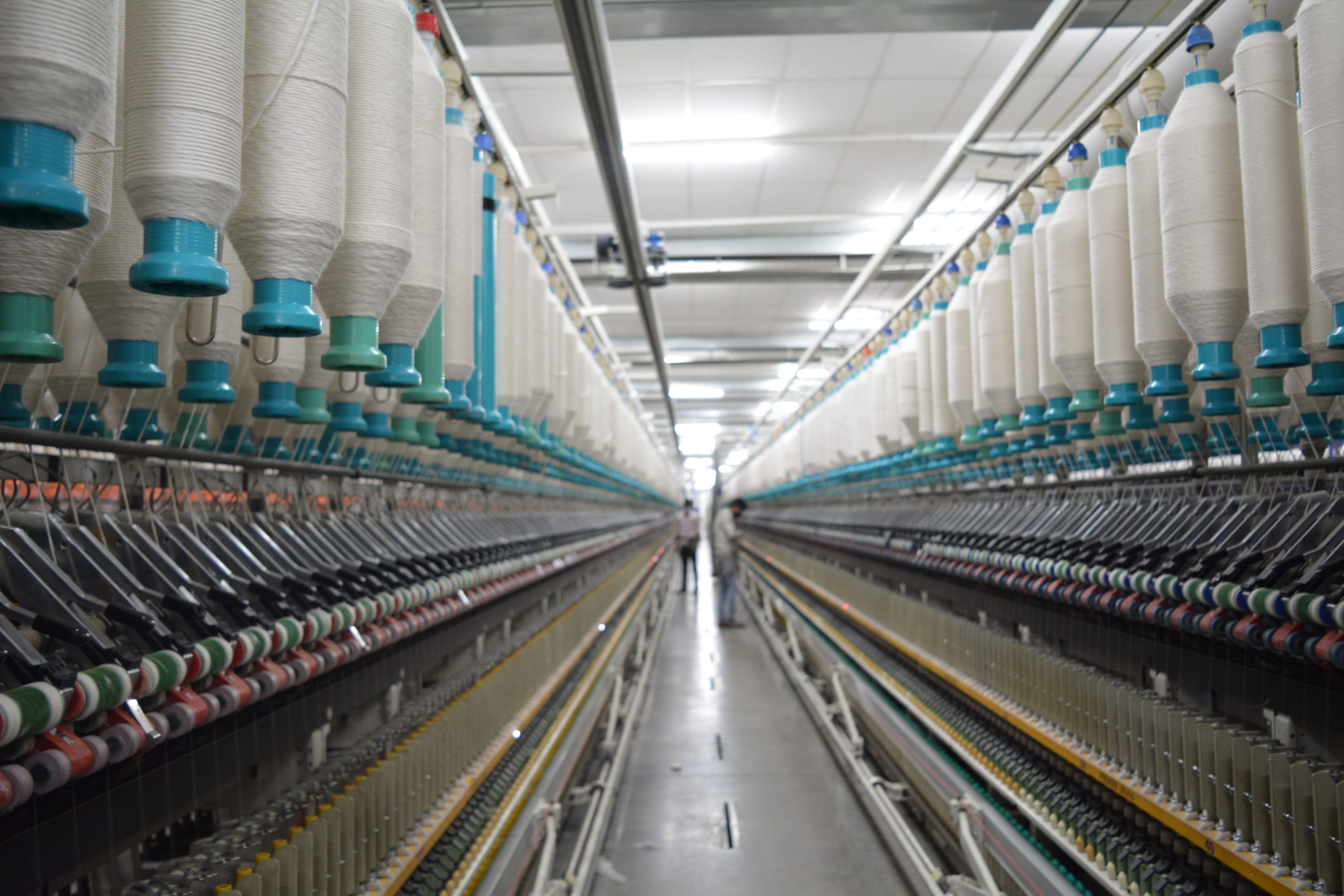
Shahi Mill and Spinning Facility at Shivamogga underwent India's first YESS assessment
Following the workshop, YESS conducted its initial independent assessments in India at Shahi Exports’ knitting and spinning facilities in Shivamogga. The YESS program assesses management systems and inventory controls of mills to identify, assess, and mitigate the risks of forced labor based on the Organisation for Economic Co-operation and Development (OECD) due diligence framework. In 2022, Shahi was one of the seven global suppliers that piloted the YESS Standards and has now become the first mill in India to take the lead in implementing robust due diligence measures.
“As India’s largest apparel manufacturer and exporter, Shahi is committed to producing goods using ethical, fair, and sustainable practices. We are thrilled to embark on this journey and align ourselves with global standards of due diligence. We recognize that efforts towards traceability require industry collaboration, and we are confident that YESS will provide valuable support in achieving this goal.” stated Anant Ahuja, Head of Organizational Development at Shahi Exports.
While already operating with firm checkpoints for cotton sourcing, the YESS assessment provided additional insights that enabled Shahi to further strengthen its management processes in response to evolving legislation and growing consumer demand on traceability against forced labor.
Spinners and textile mills play a critical role in facilitating visibility and due diligence in the complex cotton-sourcing landscape as gatekeepers. YESS recognizes the position they hold and values their partnership in connecting the industry agenda across the global supply chain.
Puneesh Lamba, Chief Technology Officer of Shahi, received the recognition for IoT Icon in the CIO Power List 2022. The CIO Power List, presented by CORE Media, recognizes India’s most influential Chief Information Officers (CIOs), IT Leaders, and Digital Leaders. They have demonstrated extraordinary vision and outstanding work in the last year in enterprise technology. They have leveraged technology to improve processes, customer touchpoints, and experiences.
An exclusive ceremony was held on 20th-21st May 2022 in Mumbai, honoring over 130 CIOs across two main categories: Business Icons and Technology Icons.
Business Icon recognitions are conferred upon select CIOs/IT Leaders from 23 categories and across 13 different industry verticals, while Technology Icons upon leaders across 20 different technology categories.
“Congratulations to all the CIO Power List 2022 winners. In the new digital economy, these CIOs and Digital Leaders are at the forefront, driving transformation that enables organizations in staying ahead with innovation for growth and success in the global marketplace. The CIO Power List recognitions are bestowed upon visionary leaders. It is our privilege to honor them as they rise above disruption and establish IT as the biggest driving influence on enterprise transformation and new business models”, said Anoop Mathur, Founder, and President, CORE Media.
Making the Power List
The CIO Power List 2022 awardees are finalized based on an algorithm considering a wide range of data collected on CIOs and Digital Leaders across multiple channels. This includes data collected from their online reputation, business publications, and features, combined with data on awards, honors, and recognitions won; achievements, a random sampling of social media engagements, and a national survey of peer CIO review. Additionally, there are inputs from the CIOs themselves on their key moments in the past year.
From the CTO
“This award is the testimony to the fact that Shahi has taken huge strides in digitizing its operations. Solving business problems by leveraging technology has become a practice in Shahi; hence we are a more productive, efficient, and progressive company. Our “Digital First” approach has helped immensely in delivering value to our customers and employees.” – Puneesh Lamba
Puneesh is responsible for building Shahi’s IT & Digital strategy and execution. He carries 28 years of experience as a Senior IT & Digital Leader across industries in India, the USA, and Europe. He has worked for multinational companies like General Electric/Genpact and TATA Consultancy Services and Indian Conglomerates like Escorts Ltd., Punj Lloyd, CK Birla Group, and Ballarpur Industries.
As one of India’s pioneers in embracing disruptive technologies like Artificial Intelligence, Robotic Process Automation, the Internet of Things, and Predictive Analytics, Puneesh is a proponent of digital means to enable business strategy growth. He has won many prestigious awards like CIO100, CIO200, CIO500, Power List, and CIO 1000. He is also a jury member at NASSCOM, Frost & Sullivan, and 9Dot9 media.
Efforts at Shahi have taken a shift in the last year, and going digital has become the mantra. The focus is primarily on three objectives: improvement in growth, productivity, and experience. While growth and productivity are the focus of every organization globally, experience drives Shahi Exports. It means providing an excellent experience to our customers, employees, and other stakeholders. However, we cannot build this experience without a conscious effort to do it thoughtfully and sustainably.
As part of the strategy to develop this all-around quality experience, we have been engaging novel digital solutions. Using emerging technologies can help an organization unlock new opportunities, including ways to reduce our impacts on the environment.
A few of my favorite initiatives that we have been able to do this year is effectively converting physical activities to virtual ones in a short span of time due to reduced customer and employee travel in the wake of the COVID-19 pandemic. These have helped us save time and money and have reduced our carbon footprint due to significantly reduced fossil fuel usage. These initiatives range from virtual tours of our factories by customers using augmented reality-based solutions to leveraging blockchain-based fiber to retail traceability to ensure ethical sourcing practices.
Where the world is at
Globally, leaders aim to enhance organizational performance through digital technologies. These have become the core of every organization’s strategy these days. Boards have realized that leveraging the right technology to solve the correct problems can give them an edge over the competition. Labor-intensive companies have a big opportunity to transform themselves into tech-driven companies.
The wave of leveraging emerging technology, before the pandemic, gave the world some outstanding new companies in media, shared resource usage, gaming, education, and technology itself. These companies disrupted the existing business models making some even larger companies go out of business. The pandemic changed the context of all such disruptions. People who were shy to use digital technologies or even online meetings had to do it mandatorily now. Many of them cannot imagine going back to old ways.
We divided our digital initiatives into ‘foundational,’ ‘desirable,’ and ‘disruptive’ categories. While foundational and desirable types have precedents in the industry that we can emulate, it is the disruptive initiatives that we take the lead in to solve problems in a novel and more efficient manner.
Utilizing the RRP Mantra
Automation and intelligent solutions optimize manufacturing processes.
Anything that moves from table to table moves at a snail’s pace compared to anything that moves from system to system. To make automated decisions in augmented or virtual reality provides an experience as good as seeing the real thing and collaborating around it. Internet of things technology is also used extensively to calculate and improve productivity at shop floors and move the technology right to the network’s edge.
RRP is our mantra in process automation. First, we automated Repetitive, Rule-based, and Predictable processes and aimed to convert others into RRP processes by eliminating exceptions and process deviations. A simple example is the process of approvals. The first step will be a request, followed by a review, further discussion if needed, and then final approval. Digitalizing the process cuts down extensively on resources and time used to follow through each step.
Another example is the transfer and delivery of material. Tracking the movement of a package through a document that is manually checked at the gate of a facility exposes it to human error and forgery. We can mitigate this by adding a simple QR code to the document, making it unique, reducing human error, and ensuring that data about the movement of the package is stored on a network. This has been a practical exercise that has given us fantastic results in achieving much better productivity overall.
Exploring Ideas
Being disruptive requires a lot of experimentation and working with traditional partners. We have now started working extensively with disruptive start-ups and academia, as well as mining the massive pile of ideas that our employees generate as part of our innovation program. Our recent engagement with NASSCOM for their Manufacturing Innovation Challenge has helped us reach out to young innovators. We are now working on solutions and hope for great results.
Augmented mixed virtual reality to design a clothes in 3D fashion design software program creating virtual, true-to life garment visualization with cutting-edge simulation technologies for the fashion
Some of the experiments revolve around:
RFID-based productivity improvement.
Automatic guided vehicles,
Computer vision-based productivity improvement,
Automated measurement solutions,
Converting 2D images into 3D models with real-time collaboration,
AI-based identification of fabric composition,
Fabric inspection recording automation,
Natural Language Generation based training videos translation in vernacular languages,
RFID-based productivity improvement.
There are many more, and we are not afraid to experiment and fail, but we have seen that our success rate has outgrown our failure rate very fast and has enabled us to become a more innovative company.
Shahi has further improved its turnaround time through our interventions as an agile business. It has even helped our customers increase the accuracy of forecasts. Faster deliveries enable them to forecast their demand closer to the season. Accuracy, therefore, is significantly improved and reduces slow-moving or dead inventory. More robust forecasts act as an essential enabler of sustainable supply chains.
Track & Trace
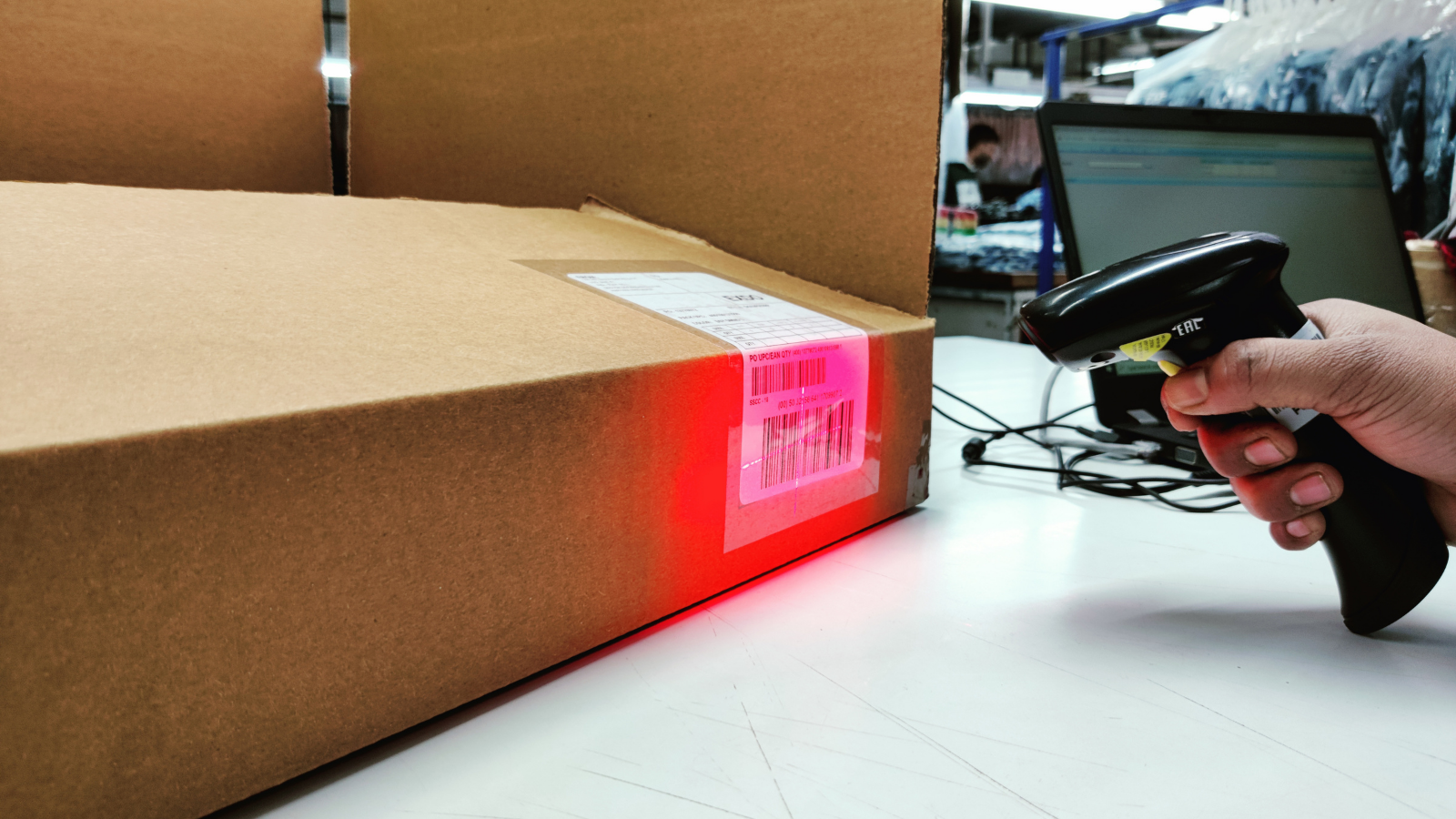
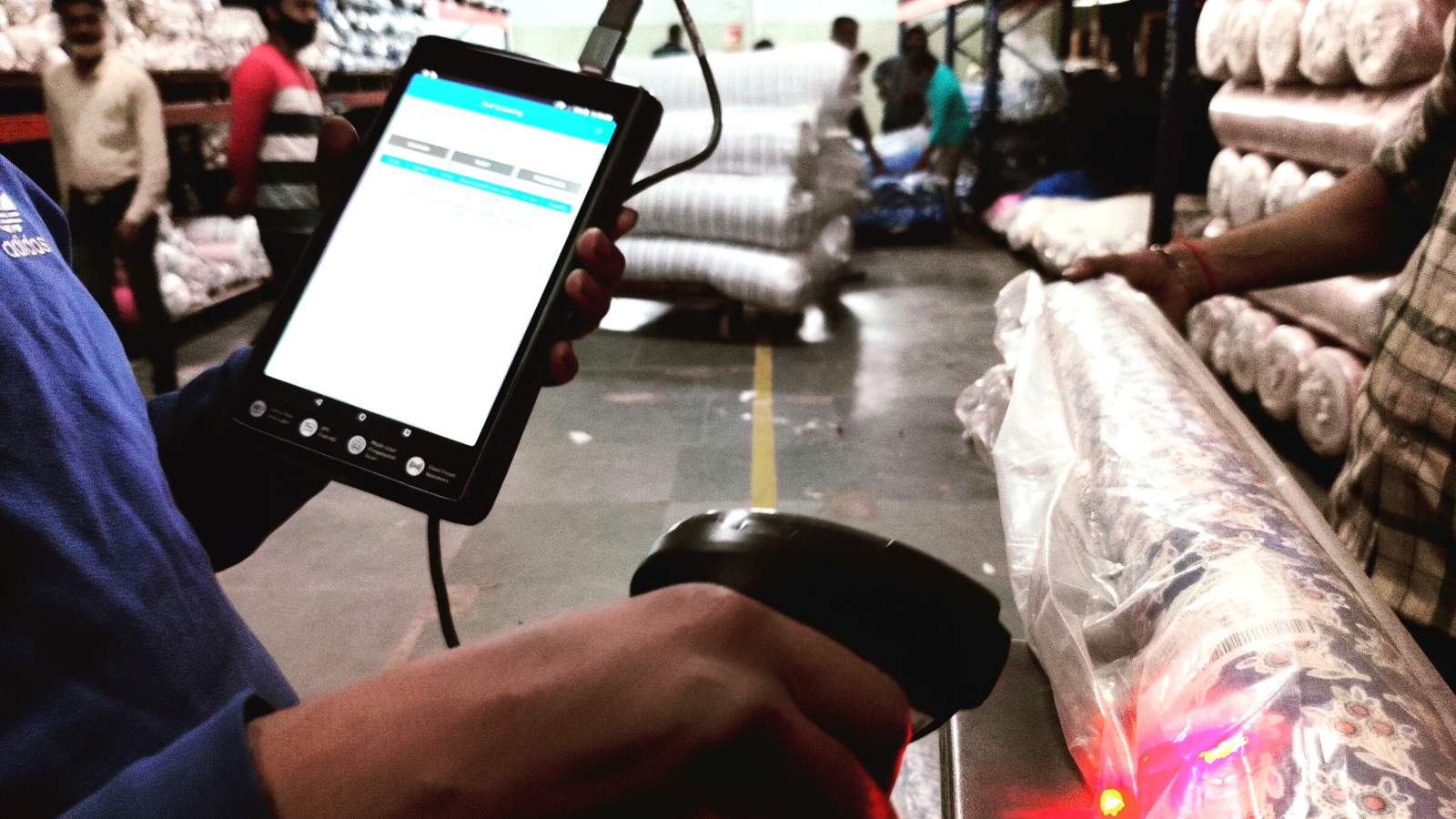
Each fabric roll is given a barcode which tracks its movement from cutting through garmenting and packaging.
An initiative that has helped us immensely is our acclaimed ‘Track & Trace’ mega project. Track & Trace is one of our projects which has helped us immensely in reducing paper usage. Each fabric roll is assigned a barcode, and this code is used to scan it for all purposes -entry, storage, cutting, and shipping. This is leading to improved transparency in the supply chain. Additionally, it resulted in greater agility, lower cost, and higher visibility of fabric/garment movement. It also reduced manual data entry at multiple points, which is another focus area we had in our mind. This initiative’s end-to-end nature ensures that our efficiency at each stage (warehouse, cutting, sewing, packing, and shipping) is measurable and provides us with rich data for taking steps to improve it further. Before this initiative, the manual receiving from the mills and fabrics utilized our resources- time and effort inefficiently.
Track & Trace has improved the transparency along Shahi’s supply chain. Each fabric roll is assigned a barcode, and this code is used to scan it for all purposes -entry, storage, cutting, and shipping. Currently, we are working on the last phase of Track & Trace that will complete the entire chain by improving transparency at the packaging and delivery stages of the shipment to our customers.
Securing our digital assets
With more and more devices, web applications, and mobile apps connecting to the network, it becomes imperative to ensure no hindrance in business continuity. We must neutralize external threat actors before they can steal crucial data or damage the network infrastructure. Shahi Exports took considerable strides in ensuring that our data center, network, and applications on the cloud are best in class and our information security solutions and practices are of the highest possible standard.
Data is the new oil, and leveraging its value will give precious actionable insights and potentially impact business models. The future at Shahi will employ data science and analytics in our sustainability strategy, making for some fascinating possibilities for the industry. The ideas we are currently working on show a promising future of scaling up across all our operations. It all starts with encouraging ideas and taking small steps to get to a big solution.
Puneesh Lamba is the Chief Technology Officer at Shahi Exports Pvt. Ltd. He is responsible for building Shahi’s IT & Digital strategy and its execution.
Puneesh carries an experience of 28 years as a Senior IT & Digital Leader across industries in India, the USA, and Europe. He has worked for companies General Electric/Genpact and TATA Consultancy Services as well as Indian Conglomerates like Escorts Ltd., Punj Lloyd, CK Birla Group, and Ballarpur Industries.
As one of India’s pioneers to embrace disruptive technologies like Artificial Intelligence, Robotic Process Automation, Internet of Things, and Predictive Analytics, Puneesh is a proponent of digital means to enable business strategy for growth. He has won many prestigious awards like CIO100, CIO200, CIO500, Power List, and CIO 1000. He is a jury member at NASSCOM, Frost & Sullivan, and, 9Dot9 media.