Tag: Product

  • Sustainability Spotlight | The classic blue denim

    Sustainability Spotlight | The classic blue denim

    To name a piece of versatile, durable, and timeless clothing, very few would hesitate to pick the go-to pair of blue denim. Tracking the evolution of denim in the fashion industry, it is often surprising to people to know that the initial design for denim was made for miners and seafarers. The durability of denim made it an instant favorite for all heavy lifting work in the 1800s.

    Over time, denim has crossed oceans and continents to lodge itself firmly in fashion history. What evolved from a completely practical utilitarian trend turned into a rebellious cultural shift in the 1960s and eventually a lifestyle choice. (read: The history of Denim Jeans).

    But as it transforms from workwear to casual, how did manufacturers re-create that same worn-down look? 

    Wearing The Pair Down

    Denim washing and finishing is a highly resource-intensive process. Conventional methods of mass production also use a large amount of water, chemicals, and energy to produce a pair of jeans.  To find out more, we took a trip to Unit 23, Shahi Exports’ Denim Unit in Bengaluru.  

    Pulling off Denim

    Shahi set up the Denim Division in 2010, with Unit 23 in Bengaluru. Currently, Shahi has two denim garmenting units (Units 1 & 23) and a laundry with a production capacity of 12 million pieces per year. Since then, this newest addition has led the growth towards sustainable operations internally and with the customers.

    “Judiciously utilizing the four essential resources— chemicals, energy, water, and our people define sustainability for us. Sustainable operations are not limited solely to environmental factors, but the well-being of our workers is equally important,” Mr. Nandheesh Gowda, General Manager, Laundry.

     Shahi has adopted the Laundry 5.Zero strategy that has been predicted to revolutionize the denim industry.

    We bring together cutting-edge technology from all over the world to make a truly global product, not just fashionable but sustainable.

    Scrubbing the Chemical Out 

    Rethinking the production from the design stage, keeping in mind circularity, is key to ensuring the sustainability of the product. The design team at Shahi starts working from the initial stage– design to minimize the environmental impact of the production. We opt for lighter shades of denim which require a light wash. They demand significantly shorter washing cycles, thus reducing the environmental impact.

    A pair of jeans can be ‘weathered or distressed’ using wet and dry finishing processes. Traditional methods of distressing the fabric require workers to scrub them by hand. As the scrubbing sheds layers of blue dust, it is harmful to workers’ health. The finishing process may also require washing with chemicals. Aligning with Laundry 5.Zero, Shahi uses laser technologies to reduce the use of grinders and scrubbers.

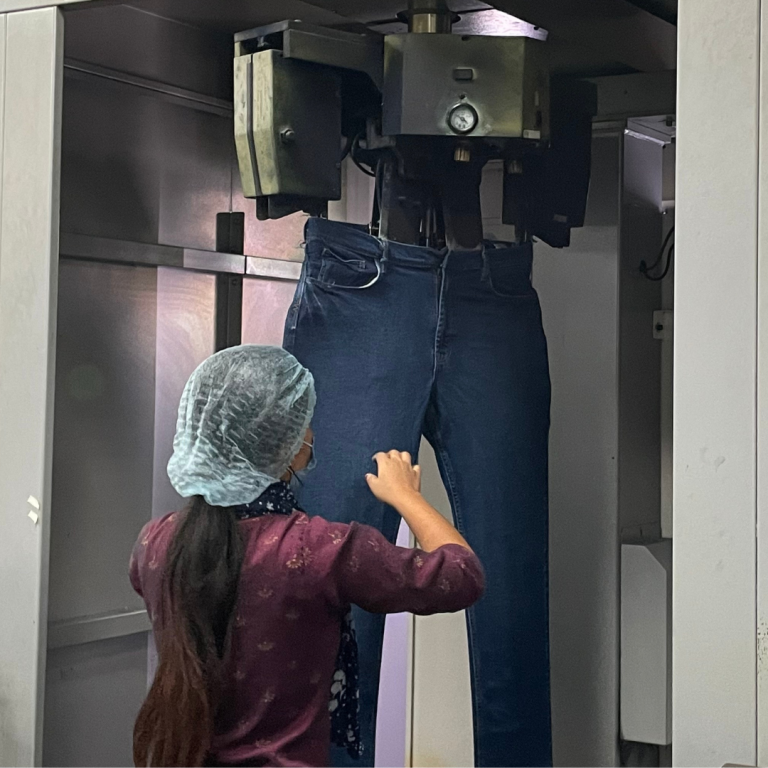
    The intensity of the distressed look depends on three major factors: wavelength, power density, and pulse width of the laser beam. A computer inputs the desired design and guides the laser over the fabric to create a fading or distressed look. It concentrates heat to decompose the dye according to the desired wash style.
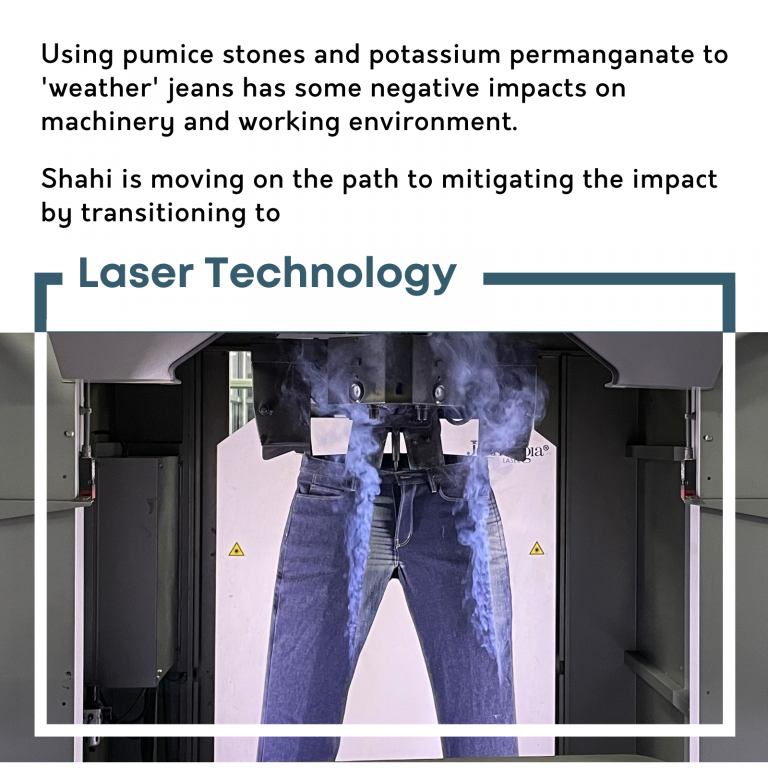
    This novel technique provides an alternative to traditional methods such as acid washing, sandblasting, and using potassium permanganate and therefore helps us create a safe and comfortable working environment for our workers. Additionally, laser technology increases our flexibility, speed, and precision to meet significant production needs.

    Shahi has developed a single window to facilitate the purchase of chemicals. It helps us to screen the required information about a chemical before purchasing it. The single window is compliant with international standards such as the Zero Discharge of Hazardous Chemicals Manufacturing Restricted Substances List. It makes sure that we do not use any restricted chemicals harmful to the environment in our production and eases the procedure to procure the chemicals. Streamlining the process also helps Shahi align with the needs of our customers. The larger goal is to protect our production workers, local communities, and the environment from the impact of banned or hazardous chemicals and, ultimately, the consumer.

    Shahi constantly collaborates with the best chemical suppliers to better their processes in the Denims Division.

    Sustaining the Classic Blue

    The classic blue in denim is created through water-intensive washing processes. A significant way to develop a more sustainable operation for producing denim is to focus on its water consumption. Shahi explored technology providers from around the world to bring down our material liquid ratio (MLR) from 1:6 to 1:1.

    The principle

    e-Flow technology was ideal for reducing water consumption. The technology turns the chemicals into nanobubbles before being subjected to the washing machine. Nanobubbles of air act as a carrier to transmit chemicals into a garment with a minimal quantity of water and zero discharge. This has led to an average of 95% water savings for every denim washed.
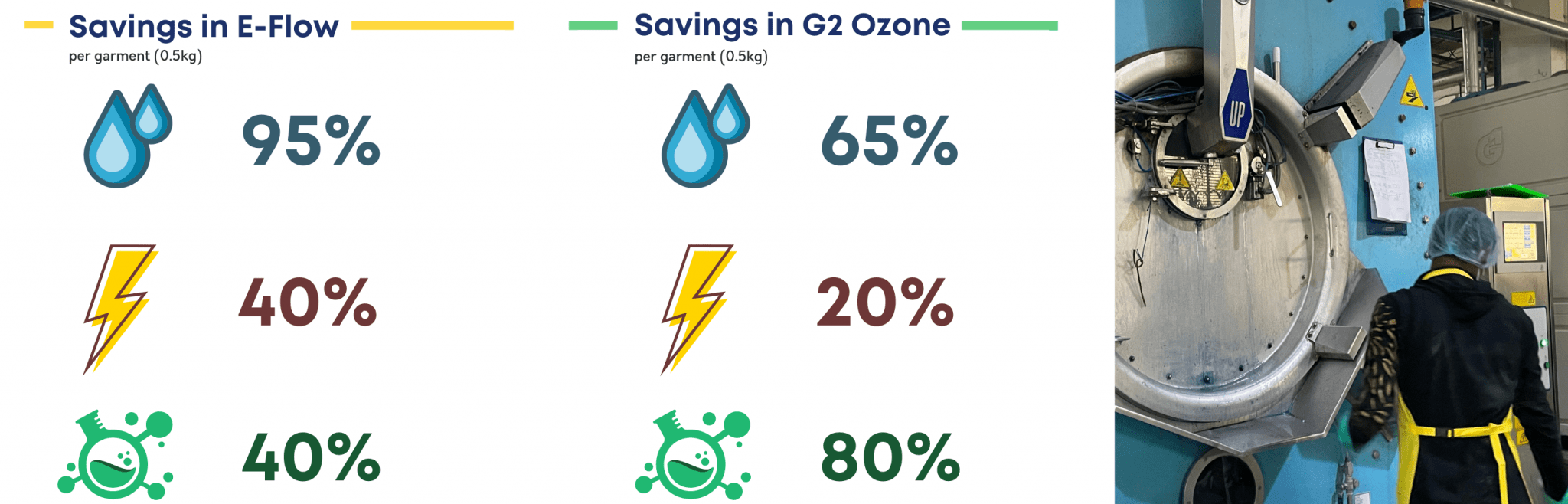
    Another technology is the G2 Ozone washing machine, which generates ozone from the air to catalyze the indigo fiber dyeing and produces the authentic worn-down look in the desired shade. The water consumed is reduced by 65% and the energy by 20%. The ozone is re-converted into oxygen and released into the air, leaving no harmful by-products.

    While reducing water consumption in denim production is essential, it is equally important to reduce dependence on fresh water as much as possible. By installing state-of-the-art effluent treatment plants, Shahi recycles and reuses 100% of its water usage. Our denim laundry achieved the Zero Liquid Discharge (ZLD) standard in 2019. We constantly monitor the water conserved in laundry through our Environmental Impact Measurement (EIM) tools.

    Going the Extra Mile on Energy

    85% of the electrical energy consumed in Unit 23 is renewable. Additionally, the unit utilizes zero coal for its operations. Shahi set up a solar power plant of 84 megawatts and 9 megawatts of wind power. We aim to suffice 100% of our electricity needs with renewable sources by 2026.  Substituting conventional sources for low carbon and sustainable alternatives for thermal energy is a top priority for Shahi.
    We have several initiatives running across the units, for example— converting most of our high-speed diesel-fired boilers into agro-waste or PNG-fired boilers to generate steam.

    Our newer units are built to incorporate green building principles to minimize energy consumption and leverage natural lighting on the shop floor. All the new units harness sunlight to illuminate our shop floors, and the architecture facilitates natural ventilation that reduces heat dissipation from electric lighting fixtures. The reduced temperatures on the shop floor impact our workforce and their environment directly.

    Synergizing People and Resources

    People and their well-being are integral to sustainability at Shahi, and worker well-being focuses on providing a safe and healthy environment and creating opportunities for growth

    In a study with the Good Business Lab, we observed that Replacing fluorescent lights with LEDs reduces energy consumption by roughly 85%, reducing the average indoor temperature by 2.4°C. Incidentally, a transition to LED lights also increases the workers’ productivity on the shop floor. 83% of all the lights at Unit 23 comprise LED lighting. We launched a campaign to replace conventional T8 task lamps with LED lighting for individual workers’.

    What does it really take to pull it off?

    With conscious consumerism on the rise, and the industry grappling with limited resources, the beloved go-to pair of denim will have to transform itself into its most low-impact versions that require minimal resources — and also maximize its life cycle. This means that manufacturers and brands have a pivotal role in revolutionizing the industry right from the designing stage. 

    Shahi invested significantly in state-of-the-art machine equipment to upgrade the factory and laundry facilities. To name a few of our many initiatives in the Denims Division— 

    • Laser machines from Jeanologia, 
    • Chemical auto dosing, 
    • Using Ozone, e-Flow, and other water-efficient technologies,
    • Developing a single-window chemical purchase window to prevent the entry of restricted chemicals, and 
    • Collaborating with the best chemical suppliers.  

    Making it even better

    But, Shahi is not stopping here. Our teams constantly look for ways to produce denim wear, maintaining Laundry 5.Zero principles; or synonymously ‘The Jeans of the Future.’ The key is to find the perfect set of equipment and technologies that complement each other in energy, water, and chemical consumption. 

    We are working on additional strategies like:
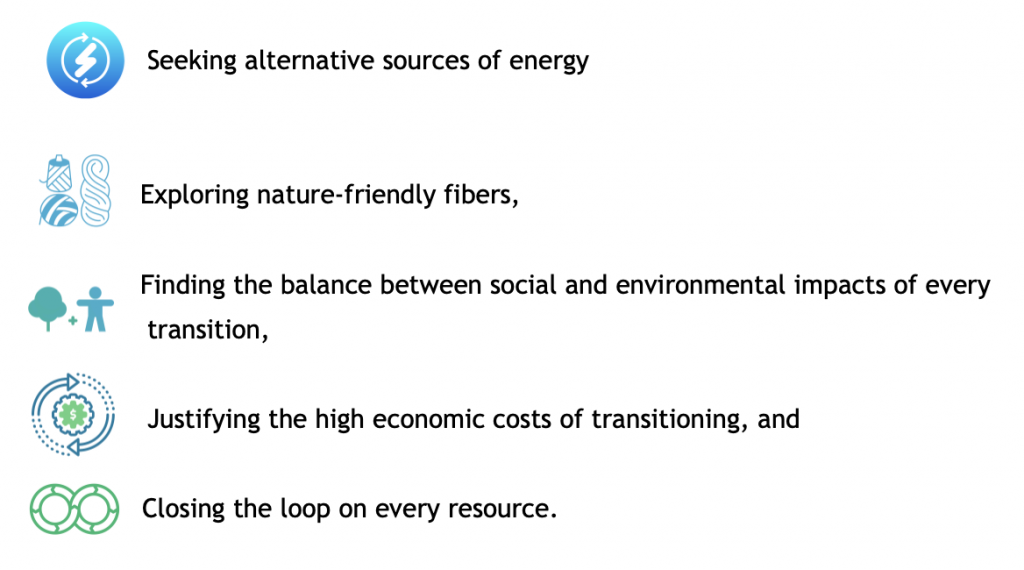
    Unit 23 showcases sustainable operations at every step of the way and progressively eliminates processes that degrade the environment in bringing a piece of denim alive. We look forward to what the future of the denim industry beholds.

     

  • How Shahi created a first-of-its-kind circular dress

    How Shahi created a first-of-its-kind circular dress

    Inspired by nature, held by three pillars: innovation, design, and chemistry. 

    Does waste equal food? In the pre-industrialized economy, products had a natural biological cycle where the inputs naturally decomposed and served as nutrients for the planet. Products made out of metal were refurbished to make new ones. All the inputs derived from Earth ideally should go back to it. But, today, does waste still equal food for the planet? How do we envision growth in today’s world while prioritizing the environment? Is there a way we can manufacture products aligning with the growing population and their lifestyle choices without harming the environment, in fact, by nurturing it?


    On asking a few people about what Cradle to Cradle is, I received a myriad of answers. Someone said it is probably a place where a baby sleeps. Some others hit it a little closer: a process for people to know how a product is truly made; a benchmark for sustainable products; and a design philosophy that genuinely outlines the lifecycle of a product focusing on the recycling mechanisms. 

    Anant Ahuja, Head of Organizational Development at Shahi, says, 

    “Cradle to Cradle represents a way to make products that are in tune with nature and manufactured sustainably. The resources that are required to manufacture must be replenished and extracted ethically. You can imagine a world where we can produce as much as we want, and the reason we can do it is due to the positive impact and the life cycle of the product. We turn the waste into fuel.”


    The Concept

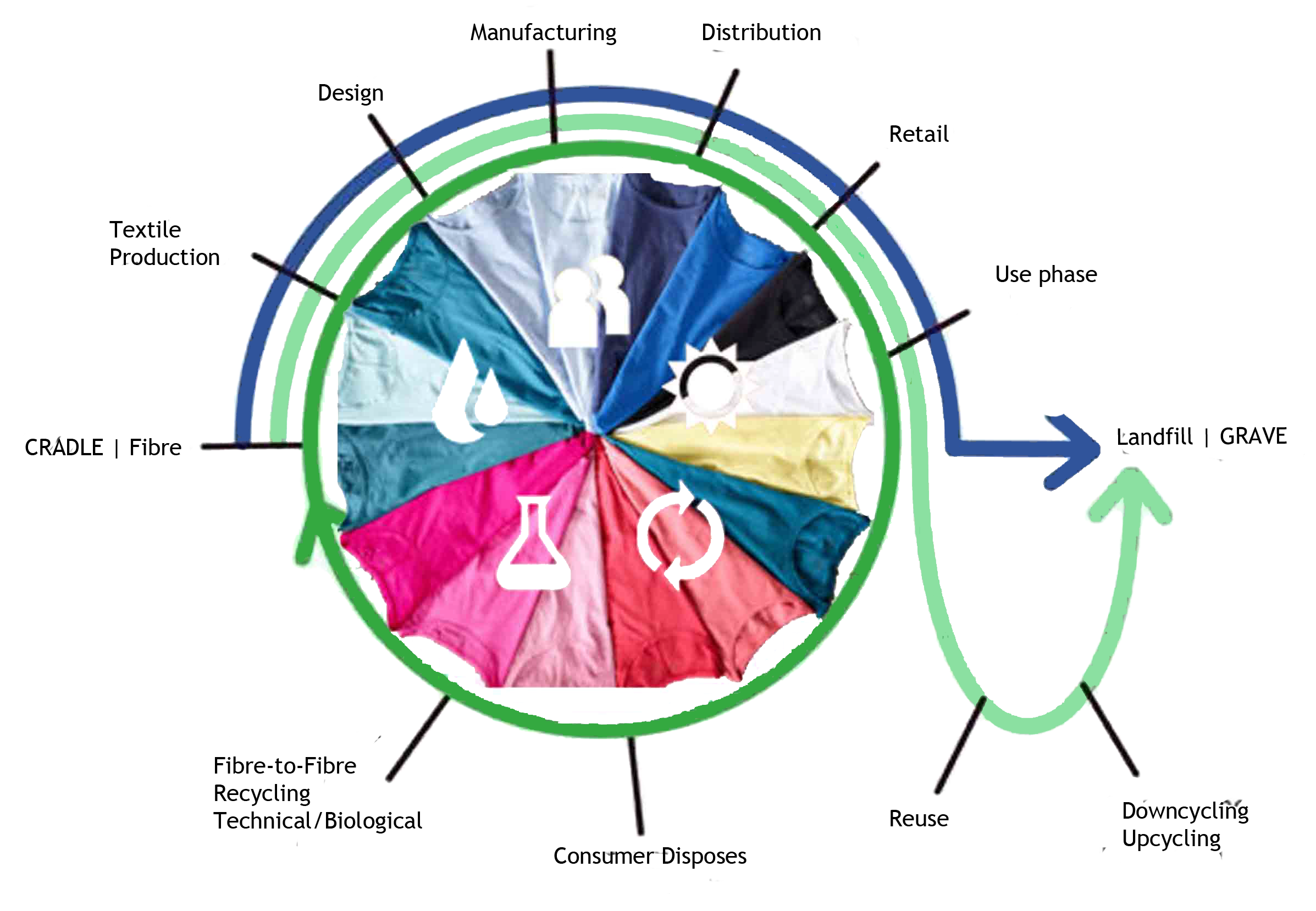
    Cradle to Cradle is a revolutionary design concept integrating two distinct fields —  design and science to achieve a high level of sustainability. By focusing on doing ‘more good than less bad,’ Cradle to Cradle Certified® products create a positive ecological impact rather than simply minimizing their environmental footprint. The goal is not just to substitute harmful chemicals and other raw materials with more sustainable alternatives but also to rethink the lifecycle of products — from design to disintegration. The emphasis is on increasing durability. Once disintegrated, the value of the materials used in production is not lost but rather preserved and brought back to the loop.

    C2C1 copy
    Cradle-to-Grave vs Cradle-to-Cradle

    Every raw material used counts. Each material holds immense value and should not end in a grave

    Five different aspects measure the holistic development of a Cradle to Cradle Certified® product: material health and re-utilization, renewable energy, carbon management, water stewardship, and social fairness. Each of these is given an achievement level based on the guidelines ranging from Bronze to Platinum. The products based on these principles can range from buildings and construction materials to cosmetics and textiles. 


    ‘Arth,’ what does it mean?

    Arth

    In late 2018, Shahi was presented with an opportunity to become India’s first woven apparel and textiles manufacturer to create Cradle to Cradle Certified® products with our ‘Arth’ collection in partnership with C&A. 

    Arth symbolizes our responsibility towards the planet in a quest to find meaning behind ‘doing more good than less bad.’ Shahi received the Gold achievement level owing to its holistic performance on the parameters set by the Cradle to Cradle Products Innovation Institute. Everything that comes from the Earth must return to it. 

    “The concept of Cradle to Cradle presents an opportunity to present our commitment towards circularity: everything that we utilize goes back safely to the environment. It was a pioneering step to add such product manufacturing capability to our organization.  The dress (product) has motivated us to explore better raw materials and technologies; as it is also backed by a continuous improvement principle along with zero environmental impact and elimination of waste generation concept. We hope that we continue to work on exciting and innovative projects such as this one with our other stakeholders.”

    – Rajneesh Rai, General Manager, Environmental Sustainability and Laboratory.

    In this article, we share our learnings, insights, and the benefits, and opportunities for building our first Cradle to Cradle Certified® product by looking at the overall product development, materials, resources, social fairness, and the way forward.


    Rethinking product development

    Our product’s design and production processes are based on a circular economy model. At the end of its lifecycle, a  Cradle to Cradle Certified® product is returned to the biosphere either as compost or reprocessed to make new products. Here is how we took on the opportunity to change our production pattern for this collection.

    Design

    Designing a Cradle to Cradle Certified® product demands many resources, dedication, perseverance, and openness to explore new areas. It took us more than 18 months from the inception of the product to deliver to our brand partner  C&A. This period also includes the certification process for our facilities. The process has been significantly different from any other product we have manufactured. The changes in the processes also made us appreciate the speed of adaptation and the appetite for innovation at Shahi.

    2

    When we started designing the product from scratch, our progress was slow due to the lack of knowledge and resources available, coupled with the nationwide lockdown in early 2020. We began with a series of questions on which resources and techniques can be used in a Cradle to Cradle Certified® dress. They revolved around printing over the product, label of the garment, and use of Cradle to Cradle Certified® raw materials such as buttons and thread. The journey was made more accessible and collaborative with active involvement from C&A and the Cradle to Cradle Products Innovation Institute. 

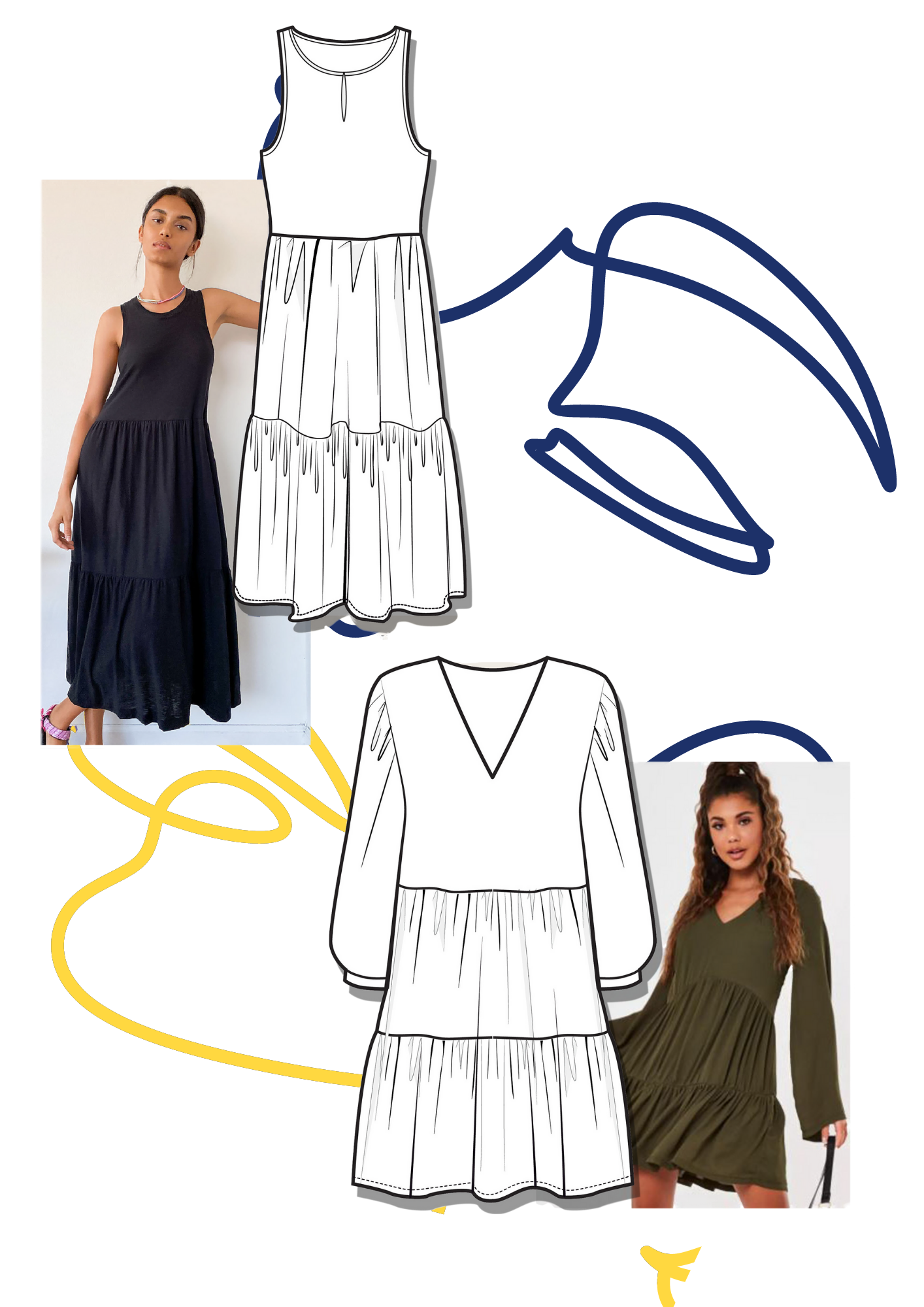
    The Arth collection sports a relaxed mid-length dress with buttons made from natural coconut, which breaks down with a biological cycle. The dress made us go back to the basics of designing. The boundaries put on using certain chemicals, dyes, and trimmings helped us become more innovative in constructing the Cradle to Cradle Certified® dress.

    DSC_0526

    The ideation process required us to extend our imagination beyond the aesthetics of the design. We emphasize how easily the product can be disintegrated and put back in the cycle without losing any value. Keeping in mind the core principle of Cradle to Cradle Certified®, the focus has been to balance the dress’s design and durability. For this reason, the dress has a clean finish with minimum accessories. 

    Sona Mishra, the designer who developed the dress, says, “To make a Cradle to Cradle Certified® product, you must go back to your basics: silhouettes, minimal accessorization, and use of Cradle to Cradle Certified® raw materials, dyes, and auxiliaries. We were really able to bring out the essence of a truly circular product with this process.” 

    Material

    The fabric was made at our state-of-the-art Woven Processing Division (WPD) in Shimoga using 100% Global Organic Textile Standard certified organic cotton. More than 96% of this cotton is rapidly renewable, and 86% of the water used in the fabric processing was recycled. The finished products are 100% carbon neutral and recyclable. The brand tag on the products was designed in-house using recyclable materials and procured from a verified vendor.

    The Cradle to Cradle Certified® Product Standard lists restricted chemicals to avoid while manufacturing the products. An official Restricted Substance List indicates the maximum concentration of each restricted substance allowed in the products. 

    The material health and re-utilization category ensure that Cradle to Cradle Certified® products uses chemicals that are: 

    • Safe for society and the planet.
    • It can be further recycled or bio-degraded through biological and technical cycles. 

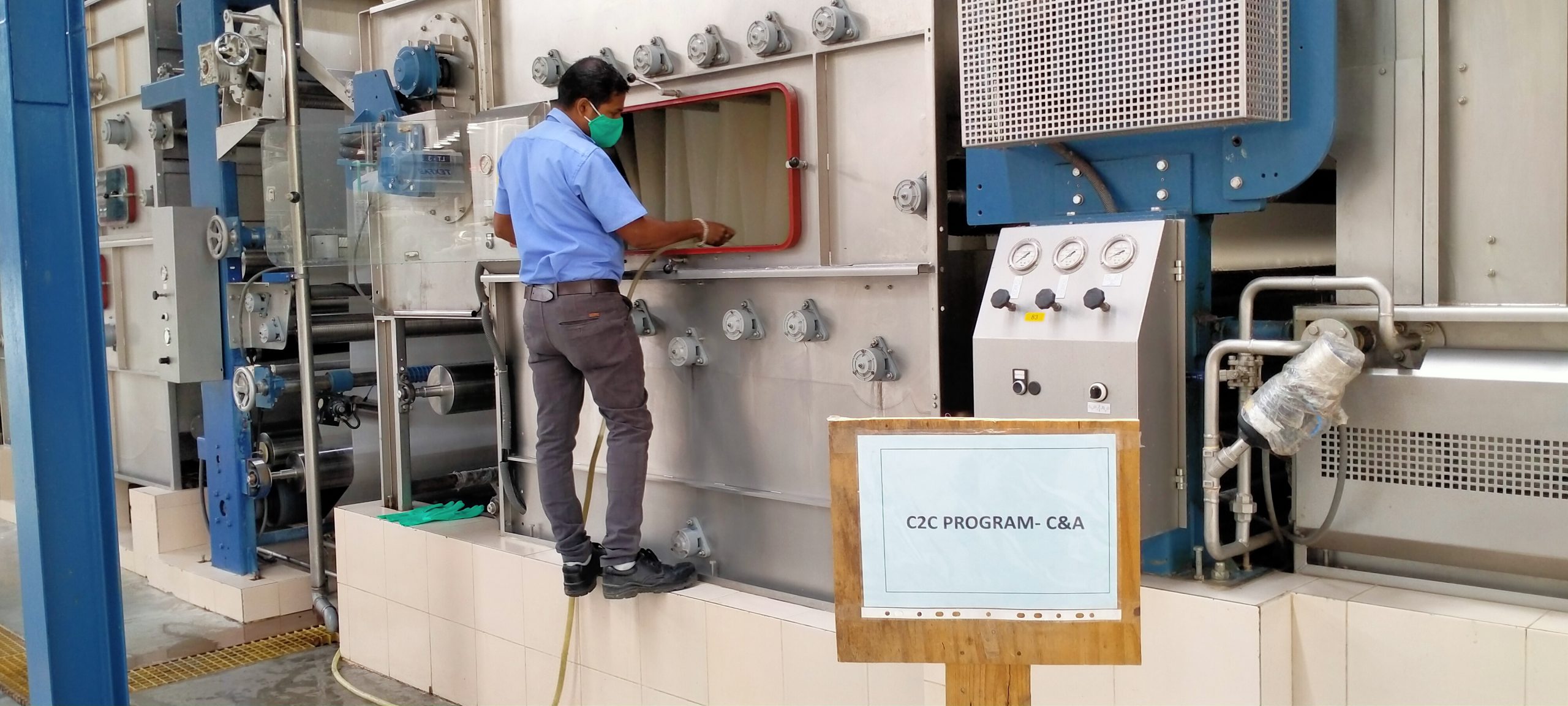
    To avoid contamination with other chemicals, we diligently cleaned all the machines and equipment to be used to produce the

    Machine Cleaning
    Machines were clearly marked and cleaned out for the Arth Collection

    Arth collection. The production lines were separated and clearly marked for Cradle to Cradle Certified® production. We used alternative chemicals accepted under the Cradle to Cradle Products Innovation Institute guidelines.

    Making a Cradle to Cradle Certified® product definitely demands more investment in raw materials. The key is to find the right blend that synchronizes together. Due to limitations in using chemicals for dyeing, we went ahead with two basic shades for the fabric: Black and Henna. evaluated the Material Health Certificate for products that adhere to restricted substances.

    The material chemistry was independently assessed by MBDC Laboratory, USA on restricted substances and impacts on human health and the environment.

    Our product developers, designers, and the environment team spent several months inventorying, assessing, and optimizing the material chemistry to achieve the platinum standard on material health and material re-utilization category. A platinum standard implies a material re-utilization score of 100, and the product is actively being recovered by a technical or biological mechanism. 


    The Footprint

    The Cradle to Cradle design principle ensures that the products utilize renewable energy to minimize the release of greenhouse gasses along with efficient use of water during manufacturing. Shahi achieved the gold standard under Renewable Energy and Carbon Management and the platinum standard under Water Stewardship.

    A significant factor in achieving this standard has been the state-of-art machinery available at the Wovens Processing Division that optimizes resource consumption throughout the entire process. The garments were made in two units (Unit 9 and 28) that successfully qualified the environmental and social requirements as laid down by the Cradle to Cradle Products Innovation Institute.

    Energy

    The Wovens Processing Division facility in Shimoga runs on the power produced by our solar grid in Bellary, allowing us access to 96% renewable energy during the production process. 

    Water
    The fabric was made in our processing mill, a Zero Liquid Discharge Facility.

    Carbon Emissions

    Cradle to Cradle certification, in many ways, is a step towards transparency. Accounting for the entire production process to make an authentic carbon neutral product, we purchased carbon credits to balance out the emissions for our boiler and garmenting units which now operate on renewable energy. 


    Labor and Social Fairness

    How Shahi created a first-of-its-kind circular dress
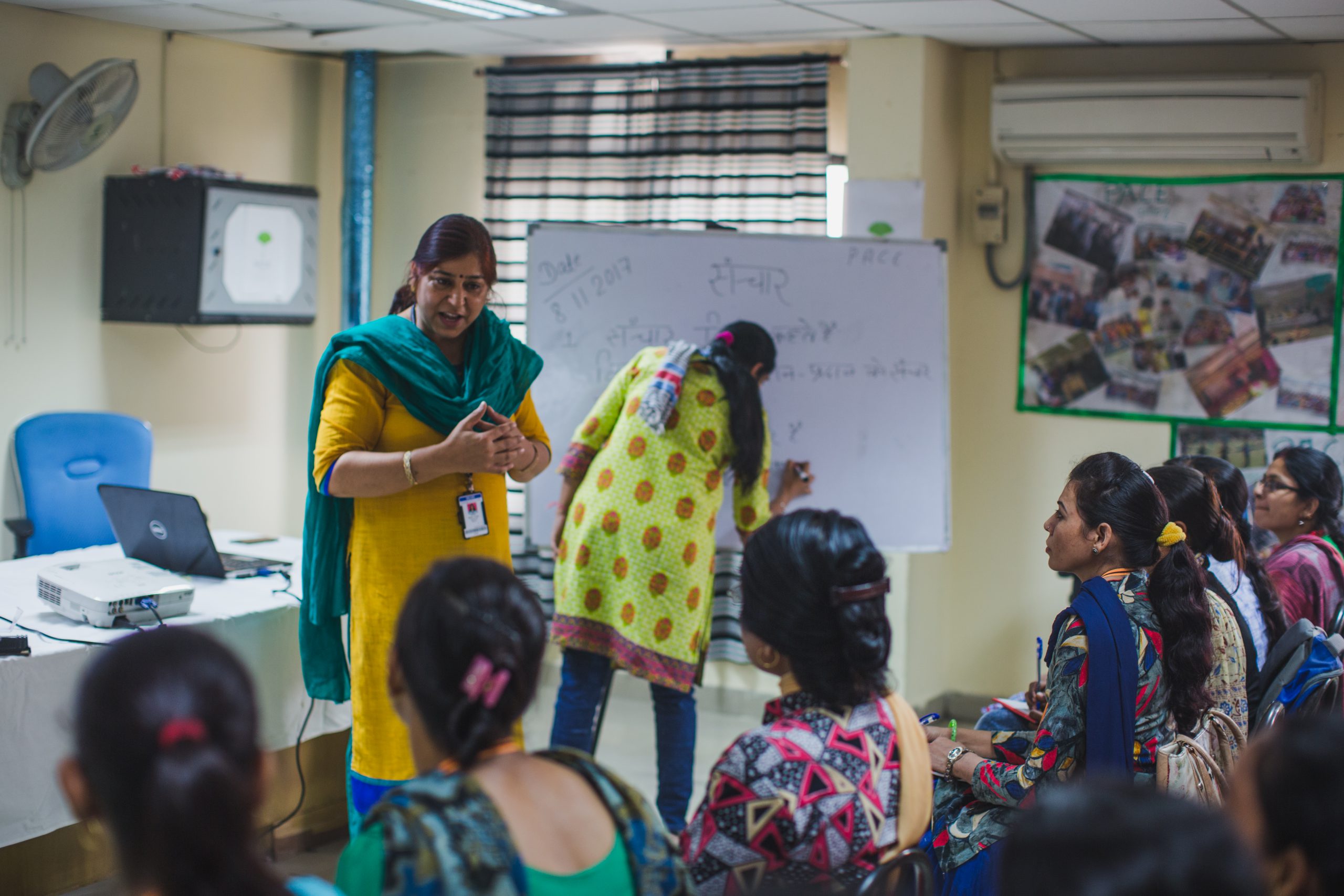
    Our factories run several technical and soft skill training programs to support our workers.

    At Shahi, worker wellbeing is of utmost importance. Worker wellbeing focuses not just on providing a safe and healthy environment but also on creating opportunities for their growth. Shahi was the first manufacturer to co-create and pilot Gap Inc.’s P.A.C.E. program. Inspired by the immense power of the program, Shahi co-developed STITCH with  Good Business Lab to enhance the core competencies and capacities of the supervisor to manage their key roles effectively. Our homegrown tool, Inache, is another example of our commitment to ensuring a healthy work environment by enabling workers’ voices. Inache is an anonymous two-way communication platform where workers can call or send an SMS about their complaints, grievances, suggestions, or questions. It goes to a central dashboard and then to the designated factory staff for response and resolution. It assists us in continuously monitoring and improving the grievance redressal system that facilitates transparency and a connection between the management and the workers. 

    These initiatives contributed to our achievement of the gold standard in the social fairness category. 

    Fair working conditions and respectful treatment of workers go hand in hand with any sustainable and circular venture. The Cradle to Cradle 4.0’s social fairness standards has emphasized ensuring a safe and conducive work environment. The broader focus areas include sound infrastructural arrangements, community engagements, and career growth. These parameters encourage responsible business practices and strong ethics across all stakeholders involved in the supply chain. Social fairness is analyzed under five distinct parameters: Management, Human Rights, Labor, Environment, and Anti-corruption at the facilities.


    Building sustained relationships 

    C&A’s support and eagerness to collaborate in creating this collection revealed how important the role of brands as strategic partners in this effort to transition into a circular economy is. The Global Sourcing and Sustainability team at C&A said,

    “Shahi continues to be a steadfast strategic partner for C&A and a driving force for innovation across the global fashion supply chain. When we began bringing Cradle to Cradle Certified® products to market, it was clear that Shahi would be a key partner in scaling Cradle to Cradle across categories. For a product and supply chain to become Cradle to Cradle Certified®, it takes an incredible amount of detail and commitment. However, it takes supply chain partners with a deep understanding of sustainability, innovation, and their importance to customers, brands, and suppliers. Shahi is a leading supplier in this regard, and we are deeply grateful for their continued partnership in driving circular innovation. We look forward to working together to drive to Cradle Certified® innovations and other ground-breaking sustainability initiatives forward.”

    Shahi possesses the flexibility to direct resources in testing and refining sustainable and circular products. This allows for a co-creative space for research-based collaboration between brands and suppliers that holds the potential to drive change in the apparel and textiles industry.


    Doing more good than less harm

    The Arth collection has provided us with lots of learnings. The most crucial is that developing circular products at scale is possible. The need of the hour, is to encourage more conversations and awareness around Cradle to Cradle Certified® products. The demand for such a product must be established from a strategic point of view to build a circular economy collaboratively. Brands and customers form an essential part of driving this demand.

    Shahi is looking forward to working with more and more brands on Cradle to Cradle Certified® products and getting closer to bettering our environment and production methods with each step. Its design principles enable a supplier like us to create products while nurturing the planet— doing more good than less harm. With our certified mill, we hope to collaborate with more and more sustainability-driven brands to create products that preserve their value. 

    Our journey towards a sustainable supply chain does not end here. We have been spearheading textile and garment innovation in India with projects like growing cotton with Superabsorbent Polymer (SAP) in partnership with HKRITA and recycling pre-consumer cotton waste with Usha Yarns, among others.

    For business inquiries on Cradle to Cradle Certified® products, please contact: od@shahi.co.in

  • Using textile waste to enhance cotton production: Results from a field trial with HKRITA

    Using textile waste to enhance cotton production: Results from a field trial with HKRITA

    Shahi and The Hong Kong Research Institute of Textiles and Apparel (HRKITA) are collaborating to advance their shared goals of moving towards a circular economy and ensuring the long-term sustainability of the apparel supply chain. HKRITA’s technologies successfully transform cellulose powder recovered from recycling cotton-polyester blends into a superabsorbent polymer (SAP). The application of this SAP in cotton production was tested in the field by Shahi. Initial results indicate that applying SAP on the cotton plants did improve water retention, especially under extreme water stress, and hence enhanced cotton yield and quality. A larger experiment in 2021 will be conducted to validate these findings.

    (more…)