Tag: Migrant

  • Creating Lasting Impact for Community Wellbeing

    Creating Lasting Impact for Community Wellbeing

    Driving Sustainability through Social Responsibility

    According to the report ‘Our Common Future’ by the World Commission on Environment and Development, responsible corporate activities can lead to more significant sustainable development. The importance of corporate social responsibility and its connection to our core values has grown at Shahi. Strategic planning and incorporation into daily operations form the foundation of our corporate social responsibility (CSR).

    Corporate Social Responsibility at Shahi

    Through our programs, Shahi ensures the creation of efficient strategies to alleviate societal, environmental, and economic issues. It caters to some of the most vulnerable communities (largely women from low-income backgrounds), children, farmers, and migrant workers. It supports local government authorities and Non-Governmental Organisations (NGOs) to build communities for the better. With over 22,867 beneficiaries benefitted, Shahi has progressed towards making its CSR approach more resourceful, ethical, and sustainable.

    The Potential for Lasting Impact 

    The Government of India’s Census Data states that India has a population of 1.38 billion people, 67% of whom live in rural areas, most of which lack infrastructure and essential services. In this light, CSR has the power to change, alleviate, and even eliminate many common challenges faced by communities in India. CSR works to address the needs and aspirations of communities by building commitment to the development and upliftment of communities.

    In the India Philanthropy Report 2022, Poverty Alleviation, Healthcare & WASH, Education & Skills, and Rural Development emerged as the highlighted theme areas that account for 70% of India’s overall CSR budget. Compliant and accountable CSR has ensured that rural development and other facets of our society have made considerable strides in the right direction.

    Our Engagement this Past Year

    In the past year, Shahi has undertaken a variety of projects in the areas of Environmental Protection, The Welfare of Migrants, Health, Education and School Infrastructure, Covid Support along with Rural Development.

    Environmental Protection 

    Environmental sustainability at Shahi is committed to the responsible use of natural resources and environmental protection.

    Shahi has conducted a tree plantation drive with  Give Me Trees Trust (GMTT) to increase green cover and improve local air quality. GMTT is India’s largest community-based voluntary tree planting and conservation movement in India. The environmental charity strongly believes in planting native species of trees (like Peepal, Neem, Pilkhan, and more) as they are the most beneficial trees suited for the environment and provide additional medicinal benefits.

    Shahi has partnered with GMTT to plant trees on barren land in Delhi and convert it into a dense forest. The plantation drive is based on the Miyawaki Method, involving planting two trees per square meter to make a biodiversity hotspot in the city.


    Shahi partnered with Saahas on the Sada Suchittva Arekere Program, within which Shahi established a sustainable Solid Waste Management (SWM) model in an identified area near Arekere Lake Bengaluru to reduce dumping waste into the lake. This initiative aligns with the Clean India Campaign’s goal to build a cleaner and healthier environment for local communities. 

    Shahi further partnered with Tanga Charitable Trust to launch the Biomass Sustainability Project. The program provided livelihood opportunities and extra income to local farmers in the Raichur region for farm waste collection. This effort prevents stubble burning and reduces carbon emissions in the region by extracting and converting crop residue into biomass.

    The Welfare of Migrant Workers

    At Shahi, we recognize the challenges faced by migrant workers when relocating to new urban environments. Shahi joined hands with Odisha Rural Development and Marketing Society (ORMAS) to launch the Migrant Support Center.

    With 900 registered migrants, this initiative intends to provide migrant workers with social, informational, functional, and psychological support and services to promote their integration into new urban surroundings.

    Health

    The Swasth Parivaar Project is a health intervention program for the vulnerable population of the Peenya Region in Bangalore, Karnataka. Under this project, Shahi jointly worked with the Family Planning Association of India (FPAI)  to set up a satellite clinic to provide preventive and curative services for sexual and reproductive health.

    The services include Family planning (Intrauterine devices, injectable and oral hormonal contraceptives, male and female condoms, emergency contraception), Maternal and child health services (Antenatal and postnatal care, treatment of minor illness and immunization),  Prevention and management of sexually transmitted and reproductive tract infections including HIV.

    Shahi also launched the Menstrual Health Project to improve knowledge of menstrual hygiene management and promote access and acceptance of menstrual cups as safe sanitary products. In collaboration with Kamakshi Trust and Shakti (Rare Enterprises), the project trained over 1,698 women on menstrual health management and distributed menstrual cups. Over 68% of these women accepted using the menstrual cups provided. Overall, the project created menstrual health awareness for 2,750 migrant women in Karnataka.
    Further, Shahi, along with Save the Children, India (Bal Raksha Bharath), launched the program ‘Improving Maternal, Child Health, and Nutrition Services’ (MCHN) in Bengaluru (urban and rural), and districts of Hassan, Tumkur, Maddur, and Kolar in Karnataka. The focus is on providing quality maternal, child health, and nutrition care in Anganwadi and primary health centers in the targeted regions.

    This capacity-building program allows accountability and engagement of local governments and communities to improve the use and quality of MCHN services. It addresses issues between pregnancy and a child’s second birthday, as this 1000-day period is a critical time to impact a child’s cognitive and physical development positively.

    Education & School Infrastructure Improvement 
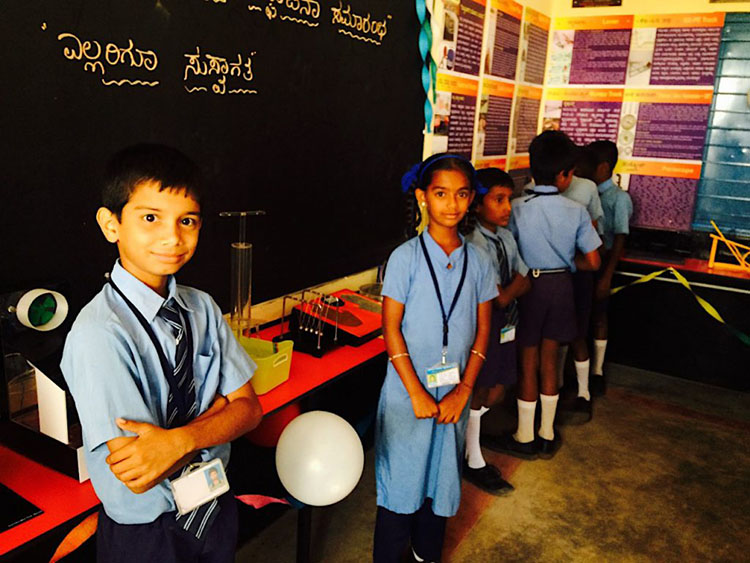
    Shahi launched the STEM (Science, technology, engineering, and mathematics) learning project in association with STEM Learning Pvt. Ltd and Kamakshi Trust. Under this initiative, 5 mini science centers have been established in schools for 8th-10th grade students, and 180 modules have been provided for teacher training in science, engineering, technology, and math. The project also supports children in preparing for state and national level exhibition competitive programs.

    With Janodaya Trust, a social service organization working on social and community development, we provided free coaching classes and counseling sessions for 10th-standard students from economically weaker sections, including dropouts and failed students. More than 462 students have enrolled in the coaching program. Further, the school infrastructure development fund was utilized to construct toilet and water filter facilities, along with the provision of school bags and smart tablets for students.

    [vcex_spacing size=”20px”]Covid Support

    At the peak of the pandemic, Shahi provided oxygen cylinders, beds, medicines, and first-aid boxes to primary health care centers and government hospitals in the regions of Kuppam, Mysore, and Hassan.

    Many migrant workers were able to comfortably stay in Shahi’s residence halls during the first lockdown. Shahi provided food, sanitizers, masks, and round-the-clock medical assistance from Janodaya. Shahi distributed covid relief kits to front-line workers, including nurses, the local police force, and residents, to help maintain social distance. A ‘Doctor on Call’ program was also set up to curb misinformation and provide counseling for symptoms.

    Rural Development 

    Shahi built infrastructural development in rural Karnataka by creating bus shelters in the rural areas of Maddur and Tumkur. Further WASH facilities, infrastructural development, and painting of government schools and Solar Street Lights were provided at Bydagi, Hassan, and Maddur in Shivamogga.

    The Next Step 

    As a forward-thinking organization, we are proud of the community and environment-driven initiatives we have led so far. As we progress, we shall strive for our CSR efforts to be pertinent locally and nationally and guided by the principles of sustainable development. We are keen to scale our initiatives through like-minded collaboration.


    Read Shahi’s CSR Policy-2022-23
    vulnerable communities (largely women from low-income backgrounds), children, farmers, and migrant workers. It supports local government authorities and Non-Governmental Organisations (NGOs) to build communities for the better. With over 22,867 beneficiaries benefitted, Shahi has progressed towards making its CSR approach more resourceful, ethical, and sustainable.

    The Potential for Lasting Impact 

    The Government of India’s Census Data states that India has a population of 1.38 billion people, 67% of whom live in rural areas, most of which lack infrastructure and essential services. In this light, CSR has the power to change, alleviate, and even eliminate many common challenges faced by communities in India. CSR works to address the needs and aspirations of communities by building commitment to the development and upliftment of communities.

    In the India Philanthropy Report 2022, Poverty Alleviation, Healthcare & WASH, Education & Skills, and Rural Development emerged as the highlighted theme areas that account for 70% of India’s overall CSR budget. Compliant and accountable CSR has ensured that rural development and other facets of our society have made considerable strides in the right direction.

    Our Engagement this Past Year

    In the past year, Shahi has undertaken a variety of projects in the areas of Environmental Protection, The Welfare of Migrants, Health, Education and School Infrastructure, Covid Support along with Rural Development.

    Environmental Protection 

    Environmental sustainability at Shahi is committed to the responsible use of natural resources and environmental protection.

    Shahi has conducted a tree plantation drive with  Give Me Trees Trust (GMTT) to increase green cover and improve local air quality. GMTT is India’s largest community-based voluntary tree planting and conservation movement in India. The environmental charity strongly believes in planting native species of trees (like Peepal, Neem, Pilkhan, and more) as they are the most beneficial trees suited for the environment and provide additional medicinal benefits.

    Shahi has partnered with GMTT to plant trees on barren land in Delhi and convert it into a dense forest. The plantation drive is based on the Miyawaki Method, involving planting two trees per square meter to make a biodiversity hotspot in the city.


    Shahi partnered with Saahas on the Sada Suchittva Arekere Program, within which Shahi established a sustainable Solid Waste Management (SWM) model in an identified area near Arekere Lake Bengaluru to reduce dumping waste into the lake. This initiative aligns with the Clean India Campaign’s goal to build a cleaner and healthier environment for local communities. 

    Shahi further partnered with Tanga Charitable Trust to launch the Biomass Sustainability Project. The program provided livelihood opportunities and extra income to local farmers in the Raichur region for farm waste collection. This effort prevents stubble burning and reduces carbon emissions in the region by extracting and converting crop residue into biomass.

    The Welfare of Migrant Workers

    At Shahi, we recognize the challenges faced by migrant workers when relocating to new urban environments. Shahi joined hands with Odisha Rural Development and Marketing Society (ORMAS) to launch the Migrant Support Center.

    With 900 registered migrants, this initiative intends to provide migrant workers with social, informational, functional, and psychological support and services to promote their integration into new urban surroundings.

    Health

    The Swasth Parivaar Project is a health intervention program for the vulnerable population of the Peenya Region in Bangalore, Karnataka. Under this project, Shahi jointly worked with the Family Planning Association of India (FPAI)  to set up a satellite clinic to provide preventive and curative services for sexual and reproductive health.

    The services include Family planning (Intrauterine devices, injectable and oral hormonal contraceptives, male and female condoms, emergency contraception), Maternal and child health services (Antenatal and postnatal care, treatment of minor illness and immunization),  Prevention and management of sexually transmitted and reproductive tract infections including HIV.

    Shahi also launched the Menstrual Health Project to improve knowledge of menstrual hygiene management and promote access and acceptance of menstrual cups as safe sanitary products. In collaboration with Kamakshi Trust and Shakti (Rare Enterprises), the project trained over 1,698 women on menstrual health management and distributed menstrual cups. Over 68% of these women accepted using the menstrual cups provided. Overall, the project created menstrual health awareness for 2,750 migrant women in Karnataka.

    Further, Shahi, along with Save the Children, India (Bal Raksha Bharath), launched the program ‘Improving Maternal, Child Health, and Nutrition Services’ (MCHN) in Bengaluru (urban and rural), and districts of Hassan, Tumkur, Maddur, and Kolar in Karnataka. The focus is on providing quality maternal, child health, and nutrition care in Anganwadi and primary health centers in the targeted regions.

    This capacity-building program allows accountability and engagement of local governments and communities to improve the use and quality of MCHN services. It addresses issues between pregnancy and a child’s second birthday, as this 1000-day period is a critical time to impact a child’s cognitive and physical development positively.

    Education & School Infrastructure Improvement 

    Shahi launched the STEM (Science, technology, engineering, and mathematics) learning project in association with STEM Learning Pvt. Ltd and Kamakshi Trust. Under this initiative, 5 mini science centers have been established in schools for 8th-10th grade students, and 180 modules have been provided for teacher training in science, engineering, technology, and math. The project also supports children in preparing for state and national level exhibition competitive programs.

    With Janodaya Trust, a social service organization working on social and community development, we provided free coaching classes and counseling sessions for 10th-standard students from economically weaker sections, including dropouts and failed students. More than 462 students have enrolled in the coaching program. Further, the school infrastructure development fund was utilized to construct toilet and water filter facilities, along with the provision of school bags and smart tablets for students.

    [vcex_spacing size=”20px”]Covid Support

    At the peak of the pandemic, Shahi provided oxygen cylinders, beds, medicines, and first-aid boxes to primary health care centers and government hospitals in the regions of Kuppam, Mysore, and Hassan.

    Many migrant workers were able to comfortably stay in Shahi’s residence halls during the first lockdown. Shahi provided food, sanitizers, masks, and round-the-clock medical assistance from Janodaya. Shahi distributed covid relief kits to front-line workers, including nurses, the local police force, and residents, to help maintain social distance. A ‘Doctor on Call’ program was also set up to curb misinformation and provide counseling for symptoms.

    Rural Development 

    Shahi built infrastructural development in rural Karnataka by creating bus shelters in the rural areas of Maddur and Tumkur. Further WASH facilities, infrastructural development, and painting of government schools and Solar Street Lights were provided at Bydagi, Hassan, and Maddur in Shivamogga.

    The Next Step 

    As a forward-thinking organization, we are proud of the community and environment-driven initiatives we have led so far. As we progress, we shall strive for our CSR efforts to be pertinent locally and nationally and guided by the principles of sustainable development. We are keen to scale our initiatives through like-minded collaboration.


    Read Shahi’s CSR Policy-2022-23

  • The Recovery Series | What does a migrant worker need?

    The Recovery Series | What does a migrant worker need?

    This is the second part of a 3 part series on Shahi’s road to recovery from the gruesome COVID-19 pandemic. In this series, we speak to our employees about their experiences of dealing with the pressures of the pandemic and the support they found at Shahi.

    Achha to hum kaise jaanenge ki bade sheher mein kaha rehna hai aur kya karna hai? How will I know where to live, how to do things in a big city?” asked Arpita, looking quizzingly at me. Arpita is a lanky young girl of eighteen from Barbil. She is one of the thousands of women who wish to migrate to cities to work in garment factories. She joined her mother as a domestic worker ever since the country went into lockdown. Now, she is keen to develop her interest in stitching at Shahi’s skill development center in Odisha, which provides free sewing skills training under the Ministry of Textiles and Rural Development. 

    The Migrant Support Center in Bengaluru has been up and running since January 2021

    Most garment factories in India are located in the cities. To work in one, Arpita would have to move and set up miles away from her family.  She is excited by the prospect of living and working in a metropolitan city, though riddled with questions. Where to live? What if she doesn’t understand the language? How to book a supply of gas? What to eat? Is there a bathroom with running water? What about electricity? How to pay her bills for the first month? What happens if there is a lockdown?

    I begin to tell her about the Migrant Support Centre in Bengaluru. Shahi runs the center in collaboration with Odisha Rural Development and Marketing Society (ORMAS). The center was designed by Good Business Lab (GBL) and H&M. The center supports the migrant community in Bengaluru, India, with access to services required to support their lives in an urban environment. It has been fully functioning since February 2021, which led to its invaluable contribution to the support response during the second wave in India. 

    Workers can easily register themselves at the center using their identity cards (or request support). The registration helps with post-placement tracking, which accelerates response to requests and communicating information about programs—the coordinators and staff schedule sessions for the workers for information on housing and access to utilities. Workers can also sign up for soft skills and advanced training in skills related to their work. They can attend information seminars on health, legal and financial literacy. The Support Center conducts programs like “Know your City,” highlighting popular tourist spots, utilities, and an introduction to the city’s culture. 

    So far, the center has registered 627 migrants across industries who receive post-placement support and have attended sessions on financial and legal literacy. The center has also supported them in setting up their bank accounts. 

    Beginnings: The need for a Migrant Support Center

    Migrant workers and their families across industries share Arpita’s concerns. It is challenging for them to look for accommodation in safe neighborhoods with access to utilities. 

    Migrants make up a significant portion of the workforce at Shahi. Many are trained at our skill development centers and receive placement offers from Shahi and other manufacturing companies under our Migrant Workers Livelihood Projects (MWLP). Once trained, they face the challenge of relocating to an entirely new space. Skilled candidates migrating from different states of India are provided accommodation in the residential facilities managed by Janodaya. At the training centers, we provide complete information on these facilities, their facilities, and the process of enrollment. Once the trained candidates are employed at Shahi, they can visit the residences accompanied by post-placement officers.

    Registering at the Migrant Support Center in Bengaluru

    Migrant workers need an array of long-term protections. Some of these are guaranteed by identity documents like the Aadhaar, ration cards, and voter IDs. Many workers are ignorant of or simply do not know about its existence, purpose, and need. These IDs provide them access to health and banking services and further legitimize their position in their workplace. A support center for migrants thus seemed a necessity. It was a need that arose out of our experience with running the MWLP. As more and more youth are trained under our skill development centers, we realized that migrant services needed to be developed further to support them.

    Shahi got together with ORMAS, GBL, and H&M to design a scalable and replicable Migration Support Center (MSC) framework. This effort brought together different perspectives— a brand, labor rights organizations, and state government initiatives into our research perspectives. 

    What Does a Migrant Need?

    Good Business Lab interviewed training and placement staff at the home base and Human Resources and Hostel staff at the destination to understand the challenges workers faced. At the home base, where workers undergo training before leaving for Bangalore, families often object to the move out of their hometowns and villages. Workers also tend to withhold information about their health, afraid to lose their job offer.

    Migrant workers receive financial literacy training

    The next phase of the research involved an extensive study of existing frameworks of support centers. The exercise identified the following gap in services for migrants: easy access to basic amenities, social, financial, legal, and governmental services, and services like identity-related documents, information on housing, schools, hospitals, government schemes, and programs. Further, we identified that improving financial inclusion among migrants, including banking access and usage of formal remittance channels, is crucial. 

    Making services available is not where the task ends for a Migrant Support Center. Changing economic and social conditions create a gap between the training and cognition of workers in their new environments. This takes a toll on their mental health and expectations from their life.


    How does it feel like to be a Migrant?

    Moving is never easy. The impact of the move often manifests itself in the form of psycho-physiological changes in the behavior of migrants.  They suffer from urban loneliness in response to the changes in their environment, isolating themselves and ignoring their health and mental well-being. They often feel stuck in their position where they must continue to sustain themselves and their families back home. Mount a pandemic over all this, and a whole whirlwind of problems crop up. People lost livelihoods, homes, and even their lives.

    Regular engagement programs help Migrants connect with each other

    India faced its migrant crisis amidst a raging COVID-19 pandemic in March 2020. Entire labor populations embarked on a departure from the cities back to their villages and towns. Support centers and emergency services crumbled under the pressure of sheer numbers— flagging the need for more resilient structures. While businesses moved to cut losses and costs in a stifled economy, workers and laborers found themselves stranded. 

    Limited employment opportunities and gradual re-opening of businesses led workers to move back to the cities. They now had to rebuild their lives— find a place to live, organize resources for survival— all with little to no cash flow. These are not novel in any way. 

    The MSC helps migrants in Bengaluru with adjusting to changes through community engagement programs, health and legal workshops, and more. They are encouraged to approach the staff in the residential facilities for support whenever they need it.

    Resilient Response to COVID-19

    Covid relief kits were provided distributed amongst migrants

    During the first lockdown, only 3% of migrant workers left Shahi. Most were able to stay back comfortably in our residence halls. Shahi provided groceries, sanitizers, masks, and 24/7 medical support from Janodaya. In facilities managed by Janodaya, we set up ten beds with concentrators for emergency use by residents.

    The MSC has supported workers in Bengaluru through the second wave. The facility turned forty beds in the hostel into isolation wards. Residents in all other facilities received support through ration kits and access to medical professionals. Workers were informed about COVID prevention protocols and care through WhatsApp groups. Our staff on the ground also ensured that all registered workers at the MSC received their vaccination doses. 

    All migrant workers at Shahi received their vaccines in our camps and centers set up in every factory. By now, 96.7% of our employees are vaccinated with the first dose against COVID-19, and 70.6%* with the second.

    What does this mean for hopefuls like Arpita?

    Our primary goal with the Migrant Support Center is to make them more accessible and valuable for workers in Bangalore. The services offered by the MSC were determined through four phases of research and implementation. The MSC supports in:

    • Enabling migrant workers to make more informed decisions 
    • Weakening taboos around mental health and encourage seeking help
    • Creating an environment for overcoming linguistic and logistical barriers
    • Developing new solutions to address problems faced by migrant workers
    • Creating a  services blueprint to use for scaling up MSCs nationally

    Shahi is also focusing its energies on setting up factories closer to rural areas to bring employment closer to workers. This alleviates the emotional and financial cost of moving to work while bringing employment opportunities closer to home. This boosts the local economy and helps accelerate development. 

    To answer Arpita’s questions: 

    She will know her way around the city with the help of the Migrant Support Center. The center will train her to understand the importance of taking care of her health and knowing her legal rights. She will have the support of the staff at the MSC and a 627 strong and growing community.


    *As of November 2021

  • Corporate Social Responsibility at Shahi Exports

    Corporate Social Responsibility at Shahi Exports

    A background on CSR in India

    In 2013, India became the first country in the world to legally mandate Corporate Social Responsibility (CSR) with the introduction of Section 135 of the Indian Companies Act, 2013. CSR was introduced to make businesses pay more attention to ways they can positively impact society and the environment. The law requires companies with a certain turnover and profitability to spend 2% of their average net profit for the past three years on CSR. The CSR budget can be invested in specified areas such as promoting education, eradicating hunger, promoting gender equality, and environmental sustainability. Due to its mandatory nature, the CSR regime in India has the potential to greatly support more capital infusion into the social and environmental sector, thus supporting the country in achieving national and global development goals. However some have criticized this mandate, claiming that CSR must be voluntary or else it is effectively a corporate tax. Nonetheless, eight years since it was first introduced, the CSR mandate remains in place and has been further fine tuned and optimized to ensure companies invest in positive impact.

    Focusing on COVID-19 relief in 2021

    One of the ways the CSR mandate has been updated is to encourage companies to support their communities through the COVID-19 pandemic. India is currently recovering from a devastating second wave of COVID-19, as the spread continues to have a damaging impact on the health and livelihoods of millions of people across the country. At Shahi, we are leveraging our CSR funds to support our communities by providing ration kits to migrant workers infected with COVID-19 through our Migration Support Center (MSC), donating medical equipment to local hospitals, and other community relief activities based on needs assessments.


    Shahi-blog1

    Shahi’s approach to CSR

    Shahi was established in 1974 by a visionary female entrepreneur Mrs. Sarla Ahuja who started her journey as a sewing machine operator in a local apparel factory in New Delhi. For over 45 years now, we have been serving the communities in which we operate with a special focus on the employment and empowerment of women from low-income backgrounds. Working within the Government guidelines on CSR, our initiatives are guided by the following core commitments:

    • To contribute to social, economic, and environmental development initiatives in the communities in which we operate and the society at large
    • To ensure all CSR initiatives undertaken by us have a long-term sustainable and positive impact on marginalized populations

    Our initiatives are based on needs assessment and consultation with communities and local governments. We implement our initiatives directly through our internal teams and also partner with expert organizations, specialized non-government organizations, and local implementation agencies.

    Our CSR policy has been recently revised as per the provisions of the January 2021 amendment in the Companies Act. This amendment lays greater emphasis on compliance with the law and deeper involvement of businesses in CSR initiatives. Our policy includes the scope and applicability of our CSR initiatives, governance structure, guiding principles of selection, implementation, and monitoring, and expenditure, along with a detailed Annual Action Plan for all the projects undertaken by the company.

    Read Shahi’s CSR Policy 2021-22

    Our CSR focus areas

    shahi-blog2

    Based on the need assessment, we have identified the following focus areas to implement our CSR initiatives:

    Education – Good school infrastructure improves the quality of education and the experiences of school learning. We support education in Government schools by focused interventions on infrastructure development, provision for drinking water and sanitation, and repair and renovation of school buildings. Also support undergraduate scholarship programs for students from low-income backgrounds.

    “We are thankful to Shahi Exports for providing desks, benches, and sports equipment to our school. Our students are happy with comfortable sitting arrangements, and they are really enjoying their Physical Education classes with new equipment. Many new learning opportunities will also come up with a beautifully created Science Lab under Shahi’s CSR initiatives for our students from Grade 3 to 10.” Mr. Shivappa, Head Master, Government Primary School, Hootagali, Mysore, Karnataka
    shahi-blog4

    Community infrastructure – We support community infrastructure development such as public toilets, and bus shelters, etc. As road safety is crucial to saving lives and preventing injuries, our initiatives also focus on tilling roads, construction of skywalks, provision of traffic safety equipment such as barricades, and construction of bus shelters, etc.

    Drinking Water – Water is a fundamental human need, yet many people lack access to safe drinking water leading to several water-related ailments. Understanding this need, we provide RO water filtration plants, water coolers, and storage tanks at public places, migrant worker hostels,  police stations, and government dispensaries.

    The welfare of migrant workers – Migrant workers in urban areas face several challenges. We have partnered with Odisha Rural Development and Marketing Society to implement a Migration Support Center project in Bengaluru, Karnataka. H&M and Good Business Lab have extended their support as design partners on this project which aims to support migrant workers with psychological, social, and informational services to help them settle in new urban environments.

    shahi-blog3

    Environmental protection – We strive to grow our business whilst reducing the environmental impacts of our operations. Under this focus area, we prioritize efforts such as tree plantation and spreading environmental awareness.

    Health – Women from low-income backgrounds often lack access to basic health information and services that affect their overall wellbeing. In partnership with not-for-profit organizations such as Good Business Lab, Family Planning Association of India, Samwada, and Basic Needs India, our community health interventions focus on providing women’s health information and services, including sexual and reproductive health, and psychological wellbeing services.

    Supporting Research and Development Projects – Through collaboration with academic institutions such as the National Institute of Fashion Technology and not-for-profit organizations such as Good Business Lab, we support research on technology development under Industry 4.0 and the wellbeing of low-income workers in labor-intensive industries.

    The way forward

    As a responsible and progressive organization, we will continue to strategically develop our CSR initiatives to benefit the community and the environment.  We are open to collaboration with like-minded organizations to scale up our initiatives and add new projects to scale impact.

    “ As a leading apparel exporter, our core principles of sustainable business will continue to drive us.  Along with exporting apparel, we also intend to export our learnings and ideas from our work in CSR.” Anant Ahuja, Head – Organizational Development, and CSR Committee Member, Shahi Exports
    Read Shahi’s CSR Policy 2021-22

    For more information and collaboration on CSR initiatives, you can reach out to us at od@shahi.co.in