Exchanges or returns due to issues in size or fit preference in online orders have been rising in the last few years. A survey by McKinsey noted that apparel e-commerce channels experienced a 25% return rate for apparel pre-covid (Mckinsey, 2021). These trends motivate businesses to innovate and alter traditional models to more holistically cater to consumers’ needs. Additionally, the growing awareness of diversity and inclusion is disrupting the “one-size-fits-all” approach of the fashion industry. Conventionally, apparel brands have a few standard sizes for a specific style produced in large numbers. This usually leaves out consumers who require clothing made true to their size and customized to their needs.
In 2019, Shahi invested in DXM, a software-as-a-service (SaaS) and manufacturing (MaaS) platform that enables on-demand manufacturing, optimized inventory management, lower lead time, and highly individualized garments at scale. The platform allows consumers to choose the design and trimmings of their clothes from anywhere in the world. Customization and on-demand manufacturing lead to better inventory management, lower returns, and established customer brand loyalty. This, in turn, means less waste and fewer resources used to make products.
“According to studies, the average number of garments produced per year has nearly doubled in the last two decades. Yet, the sell-through rate of full-price garments remains low, with a large portion of garments selling at discounted rates in retail stores. This is one of the biggest pain points and losses for brands and retailers – from an economic and sustainability point of view. The mismatch between what brands make and what consumers want can be resolved through custom, made-to-order production cycles. This was the genesis of DXM.” – Matthew Wallace, CEO, DXM.
The role of manufacturers in on-demand manufacturing
The fashion industry does not often see supply chain partners and brands coming together to work on long-term solutions. In the case of DXM, four of the world’s top manufacturers: Brandix, Busana Apparel Group, MAS Holdings, Shahi Exports, and a leading brand, Carhartt, came together in a pre-competitive, collaborative spirit to co-invest in the vision of disrupting business as usual. Trust and top management commitment played a central role in bringing this partnership together for all five co-founding members, who now compose DXM’s Board of Directors.
Although the problem of low sell-through rates is a major issue for retail, solving it requires the involvement of mass manufacturing in delivering consumer preferences. Mass-producing manufacturers have tailored their factories and production systems to large-volume and standardized assembly line production. In the DXM model, manufacturers have to switch to custom, made-to-order, on-demand production at scale. But what does that look like?
Shahi’s pilot with DXM and Carhartt
Between July and August 2022, Shahi partnered with DXM and Carhartt to pilot an on-demand production model to manufacture 295 pairs of workwear denim and non-denim pants on a rolling basis, delivered directly to the end consumer within 3 to 8 days of them placing their order. These pants were available to order for loyal Carhartt consumers.
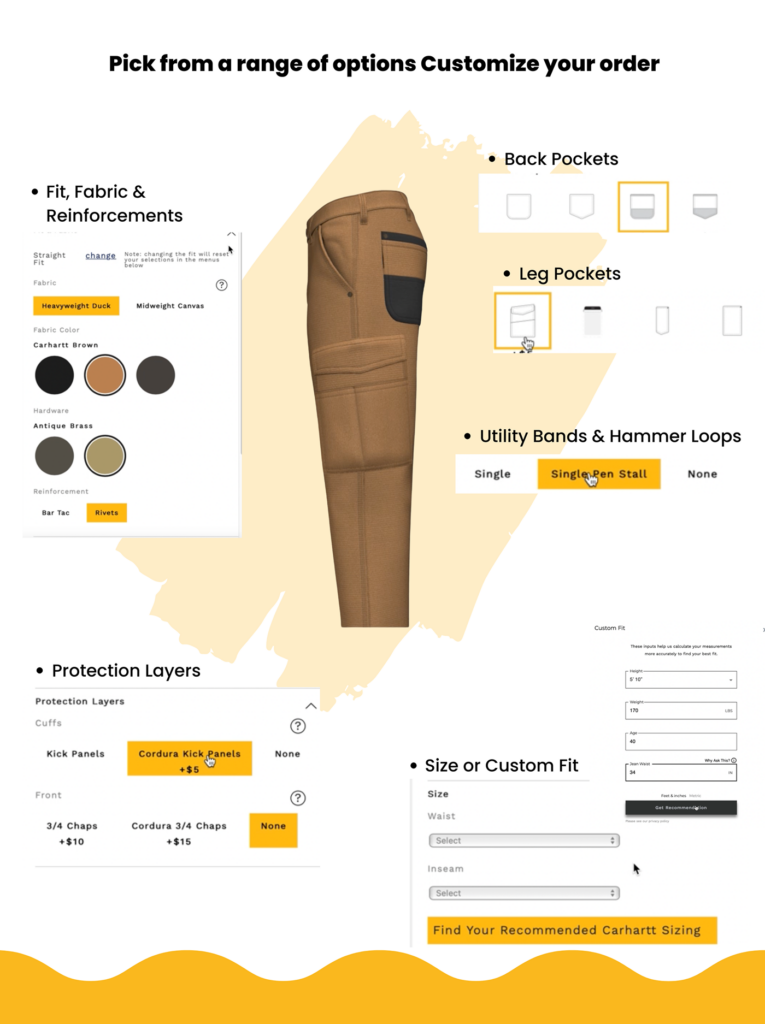
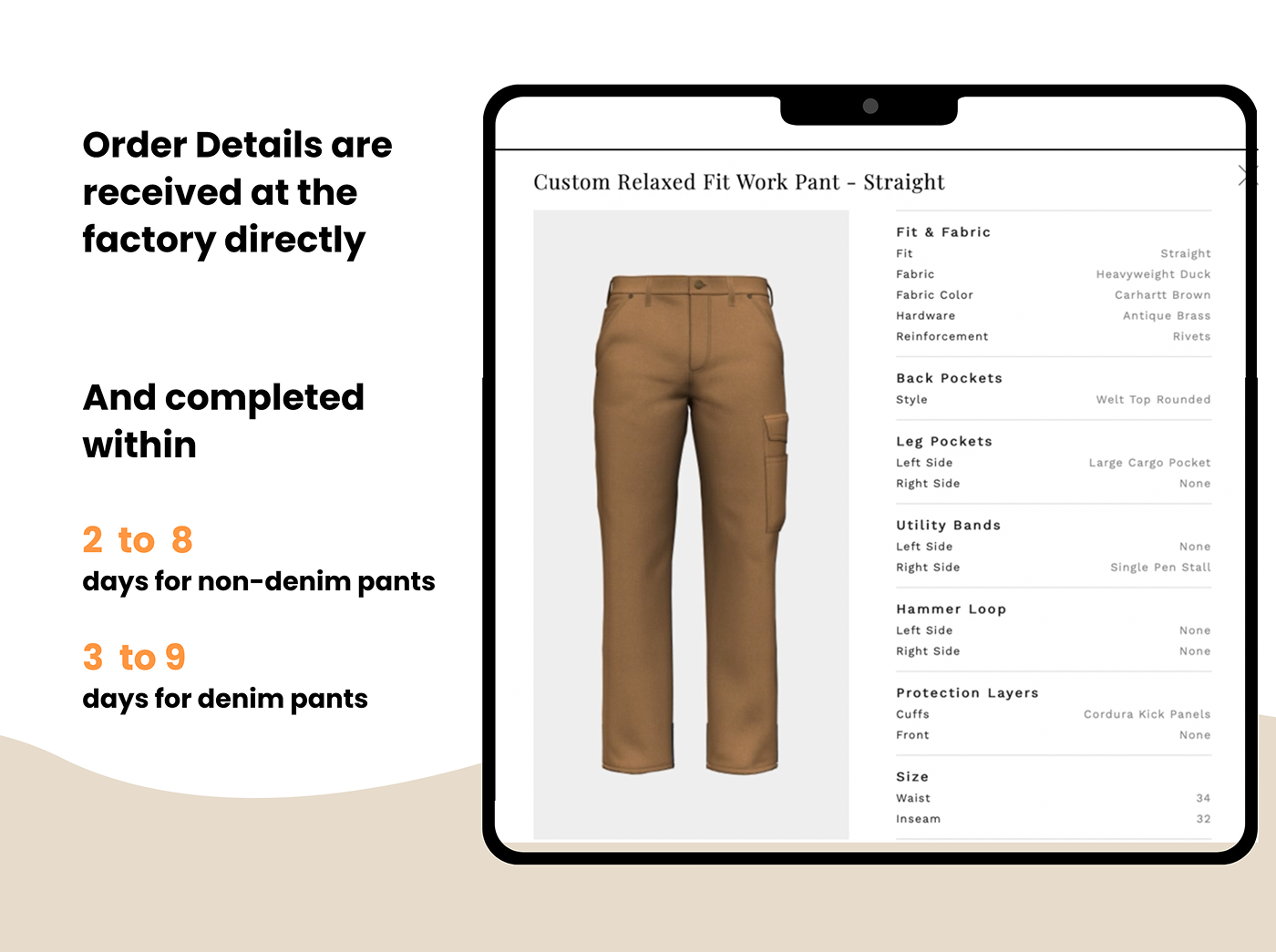
Carhartt integrated the DXM platform into its website, where consumers could design their pants with a myriad of customization options, including including the fit, type of back and leg pockets, kick panels, gusset, and inseam, among many other elements. The consumer could also see the product in 3D and answer a series of simple questions to determine their fit virtually. The order was processed with all the digital assets required to manufacture the product in under a minute. Our manufacturing facility received the complete design pack and information from all these orders in real-time. This is very different from the current scenario, wherein Shahi would receive tech packs for bulk orders created based on forecasted demand.
With the on-demand model, a single, specialized sampling tailor is assigned to make every order from start to finish. For a single tailor to stitch an entire garment with multiple customizations requires them to be highly skilled and experienced. Usually, factories are tuned towards producing millions of pieces of the same garment, with perfection and the highest efficiency possible, using an assembly line set-up where each tailor only sews one component of the garment and passes on the garment to the next.
Each garment is unique in the direct-to-consumer, on-demand model, with multiple customizations. This requires a rigorous quality assurance protocol ensured by our teams. A quality supervisor is designated to check the garment against a pre-made checklist from the pattern to the end garment. Each garment is also tried and photographed on a dummy of similar proportions and uploaded on the DXM platform. After the quality inspections, the pants are directly dispatched to the customer’s indicated address.
The result: a zero-percent rejection rate during the pilot, i.e., no returns from the end consumer.
The versatility and flexibility of the DXM model can disrupt the market. No limit is defined on any of the measurements on the customizations offered to the consumers, making the product truly inclusive. For instance, the waist sizes of the pants ranged from 28 to 55 inches on the orders we received.
With these advantages that the platform offers, we were able to reduce the lead time of an average of 6-8 months to
Minimum 2 to maximum 8 days for non-denim pants
Minimum 3 to maximum 9 days for denim pants
Usually, denim pants have a longer lead time than their non-denim counterparts due to the time required for the particular wash selected by the customer.
Collaboration for the future
Demand forecasting remains one of the biggest challenges for the fashion industry— one which has ripple effects throughout the supply chain affecting production planning in all tiers and creating products that may not sell at full price.
On-demand manufacturing and real-time forecasting are hence gaining more traction. Manufacturers, brands and retailers, and technology platforms like DXM must work closely together to drive this change. Brands’ long-term commitment toward their suppliers is critical for manufacturers to invest in changing their production systems. Small batches of highly customized products can be significantly more expensive to produce as they require more resources and highly skilled workers. Here, the willingness of brands such as Carhartt to support this type of inclusive one-of-a-kind product is essential.
As our DXM Project Lead at Shahi, Sathish Kumar Sathya, Vice President, Operations, summarizes:
“With the Impetus on digital in the current situation, we are working towards focusing on direct-to-consumer channels, and our approach is to build a strong strategic partnership with DXM to ensure higher visibility. We are further expanding our pilot with Carhartt, as this expansion strategy was always part of the long-term plan. We are open to manufacturing on demand with other brands and retailers to do more pilots in the coming months.”
The pilot has allowed Shahi to implement new tools to innovate our manufacturing model and develop our skills to become more agile and adaptive. The pilot’s success comes primarily from the dedicated and coherent work done by the operations, marketing, and sampling team to create these products — lowering the lead time while maintaining its quality.
We look forward to a future where clothing can be produced with more inclusivity and visibility on demand, leading to less wastage and more efficient use of resources.
The DXM-integrated Carhartt portal is now live. You can explore and order your own customized pair of beloved pants view more.
For product queries, please get in touch with od@shahi.co.in
Puneesh Lamba, Chief Technology Officer of Shahi, received the recognition for IoT Icon in the CIO Power List 2022. The CIO Power List, presented by CORE Media, recognizes India’s most influential Chief Information Officers (CIOs), IT Leaders, and Digital Leaders. They have demonstrated extraordinary vision and outstanding work in the last year in enterprise technology. They have leveraged technology to improve processes, customer touchpoints, and experiences.
An exclusive ceremony was held on 20th-21st May 2022 in Mumbai, honoring over 130 CIOs across two main categories: Business Icons and Technology Icons.
Business Icon recognitions are conferred upon select CIOs/IT Leaders from 23 categories and across 13 different industry verticals, while Technology Icons upon leaders across 20 different technology categories.
“Congratulations to all the CIO Power List 2022 winners. In the new digital economy, these CIOs and Digital Leaders are at the forefront, driving transformation that enables organizations in staying ahead with innovation for growth and success in the global marketplace. The CIO Power List recognitions are bestowed upon visionary leaders. It is our privilege to honor them as they rise above disruption and establish IT as the biggest driving influence on enterprise transformation and new business models”, said Anoop Mathur, Founder, and President, CORE Media.
Making the Power List
The CIO Power List 2022 awardees are finalized based on an algorithm considering a wide range of data collected on CIOs and Digital Leaders across multiple channels. This includes data collected from their online reputation, business publications, and features, combined with data on awards, honors, and recognitions won; achievements, a random sampling of social media engagements, and a national survey of peer CIO review. Additionally, there are inputs from the CIOs themselves on their key moments in the past year.
From the CTO
“This award is the testimony to the fact that Shahi has taken huge strides in digitizing its operations. Solving business problems by leveraging technology has become a practice in Shahi; hence we are a more productive, efficient, and progressive company. Our “Digital First” approach has helped immensely in delivering value to our customers and employees.” – Puneesh Lamba
Puneesh is responsible for building Shahi’s IT & Digital strategy and execution. He carries 28 years of experience as a Senior IT & Digital Leader across industries in India, the USA, and Europe. He has worked for multinational companies like General Electric/Genpact and TATA Consultancy Services and Indian Conglomerates like Escorts Ltd., Punj Lloyd, CK Birla Group, and Ballarpur Industries.
As one of India’s pioneers in embracing disruptive technologies like Artificial Intelligence, Robotic Process Automation, the Internet of Things, and Predictive Analytics, Puneesh is a proponent of digital means to enable business strategy growth. He has won many prestigious awards like CIO100, CIO200, CIO500, Power List, and CIO 1000. He is also a jury member at NASSCOM, Frost & Sullivan, and 9Dot9 media.
Efforts at Shahi have taken a shift in the last year, and going digital has become the mantra. The focus is primarily on three objectives: improvement in growth, productivity, and experience. While growth and productivity are the focus of every organization globally, experience drives Shahi Exports. It means providing an excellent experience to our customers, employees, and other stakeholders. However, we cannot build this experience without a conscious effort to do it thoughtfully and sustainably.
As part of the strategy to develop this all-around quality experience, we have been engaging novel digital solutions. Using emerging technologies can help an organization unlock new opportunities, including ways to reduce our impacts on the environment.
A few of my favorite initiatives that we have been able to do this year is effectively converting physical activities to virtual ones in a short span of time due to reduced customer and employee travel in the wake of the COVID-19 pandemic. These have helped us save time and money and have reduced our carbon footprint due to significantly reduced fossil fuel usage. These initiatives range from virtual tours of our factories by customers using augmented reality-based solutions to leveraging blockchain-based fiber to retail traceability to ensure ethical sourcing practices.
Where the world is at
Globally, leaders aim to enhance organizational performance through digital technologies. These have become the core of every organization’s strategy these days. Boards have realized that leveraging the right technology to solve the correct problems can give them an edge over the competition. Labor-intensive companies have a big opportunity to transform themselves into tech-driven companies.
The wave of leveraging emerging technology, before the pandemic, gave the world some outstanding new companies in media, shared resource usage, gaming, education, and technology itself. These companies disrupted the existing business models making some even larger companies go out of business. The pandemic changed the context of all such disruptions. People who were shy to use digital technologies or even online meetings had to do it mandatorily now. Many of them cannot imagine going back to old ways.
We divided our digital initiatives into ‘foundational,’ ‘desirable,’ and ‘disruptive’ categories. While foundational and desirable types have precedents in the industry that we can emulate, it is the disruptive initiatives that we take the lead in to solve problems in a novel and more efficient manner.
Utilizing the RRP Mantra
Automation and intelligent solutions optimize manufacturing processes.
Anything that moves from table to table moves at a snail’s pace compared to anything that moves from system to system. To make automated decisions in augmented or virtual reality provides an experience as good as seeing the real thing and collaborating around it. Internet of things technology is also used extensively to calculate and improve productivity at shop floors and move the technology right to the network’s edge.
RRP is our mantra in process automation. First, we automated Repetitive, Rule-based, and Predictable processes and aimed to convert others into RRP processes by eliminating exceptions and process deviations. A simple example is the process of approvals. The first step will be a request, followed by a review, further discussion if needed, and then final approval. Digitalizing the process cuts down extensively on resources and time used to follow through each step.
Another example is the transfer and delivery of material. Tracking the movement of a package through a document that is manually checked at the gate of a facility exposes it to human error and forgery. We can mitigate this by adding a simple QR code to the document, making it unique, reducing human error, and ensuring that data about the movement of the package is stored on a network. This has been a practical exercise that has given us fantastic results in achieving much better productivity overall.
Exploring Ideas
Being disruptive requires a lot of experimentation and working with traditional partners. We have now started working extensively with disruptive start-ups and academia, as well as mining the massive pile of ideas that our employees generate as part of our innovation program. Our recent engagement with NASSCOM for their Manufacturing Innovation Challenge has helped us reach out to young innovators. We are now working on solutions and hope for great results.
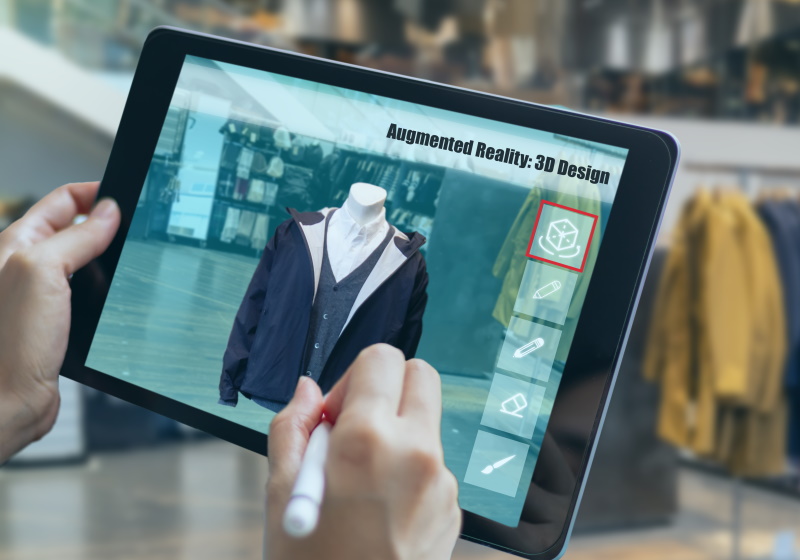
Augmented mixed virtual reality to design a clothes in 3D fashion design software program creating virtual, true-to life garment visualization with cutting-edge simulation technologies for the fashion
Some of the experiments revolve around:
RFID-based productivity improvement.
Automatic guided vehicles,
Computer vision-based productivity improvement,
Automated measurement solutions,
Converting 2D images into 3D models with real-time collaboration,
AI-based identification of fabric composition,
Fabric inspection recording automation,
Natural Language Generation based training videos translation in vernacular languages,
RFID-based productivity improvement.
There are many more, and we are not afraid to experiment and fail, but we have seen that our success rate has outgrown our failure rate very fast and has enabled us to become a more innovative company.
Shahi has further improved its turnaround time through our interventions as an agile business. It has even helped our customers increase the accuracy of forecasts. Faster deliveries enable them to forecast their demand closer to the season. Accuracy, therefore, is significantly improved and reduces slow-moving or dead inventory. More robust forecasts act as an essential enabler of sustainable supply chains.
Track & Trace
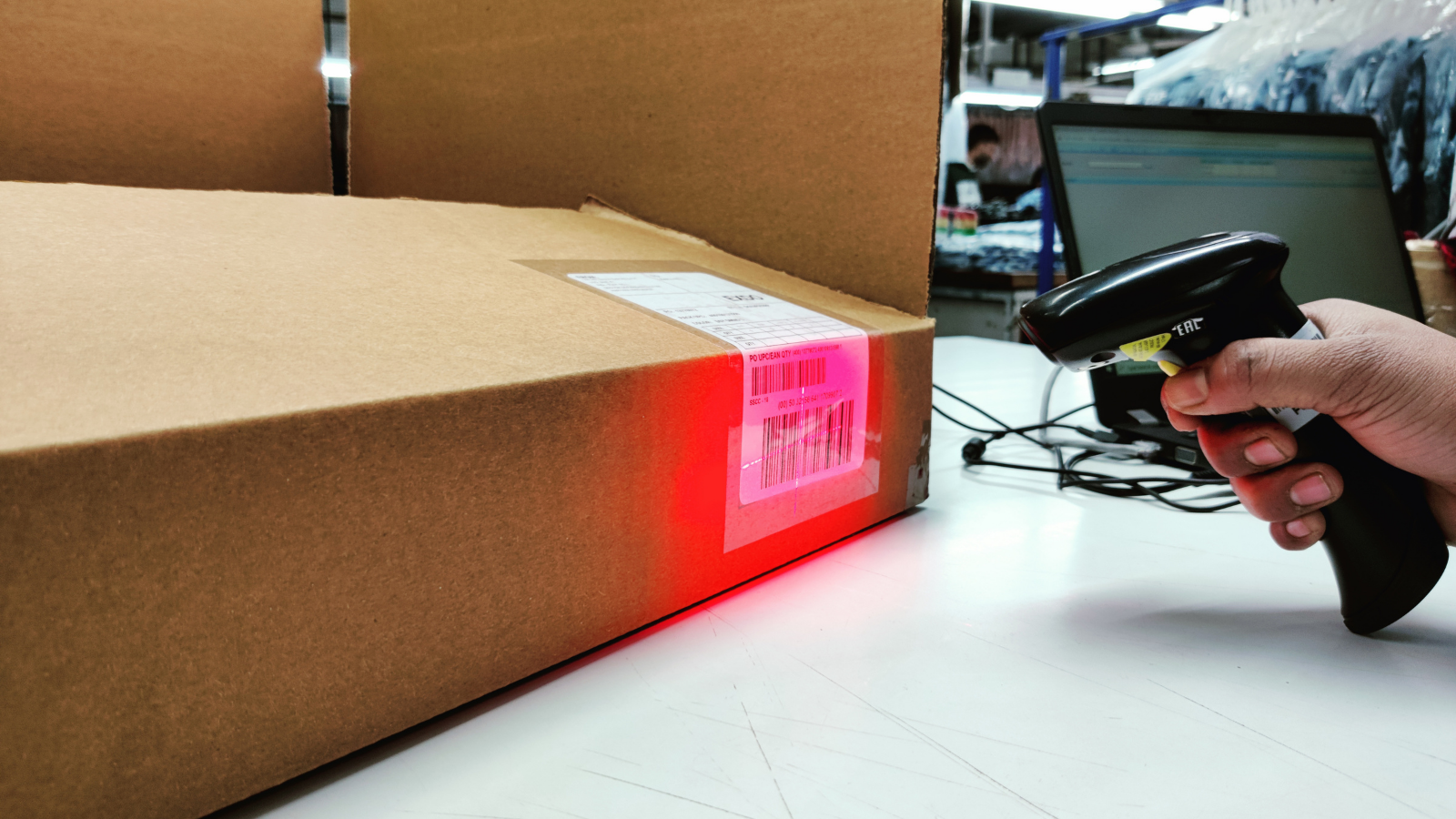
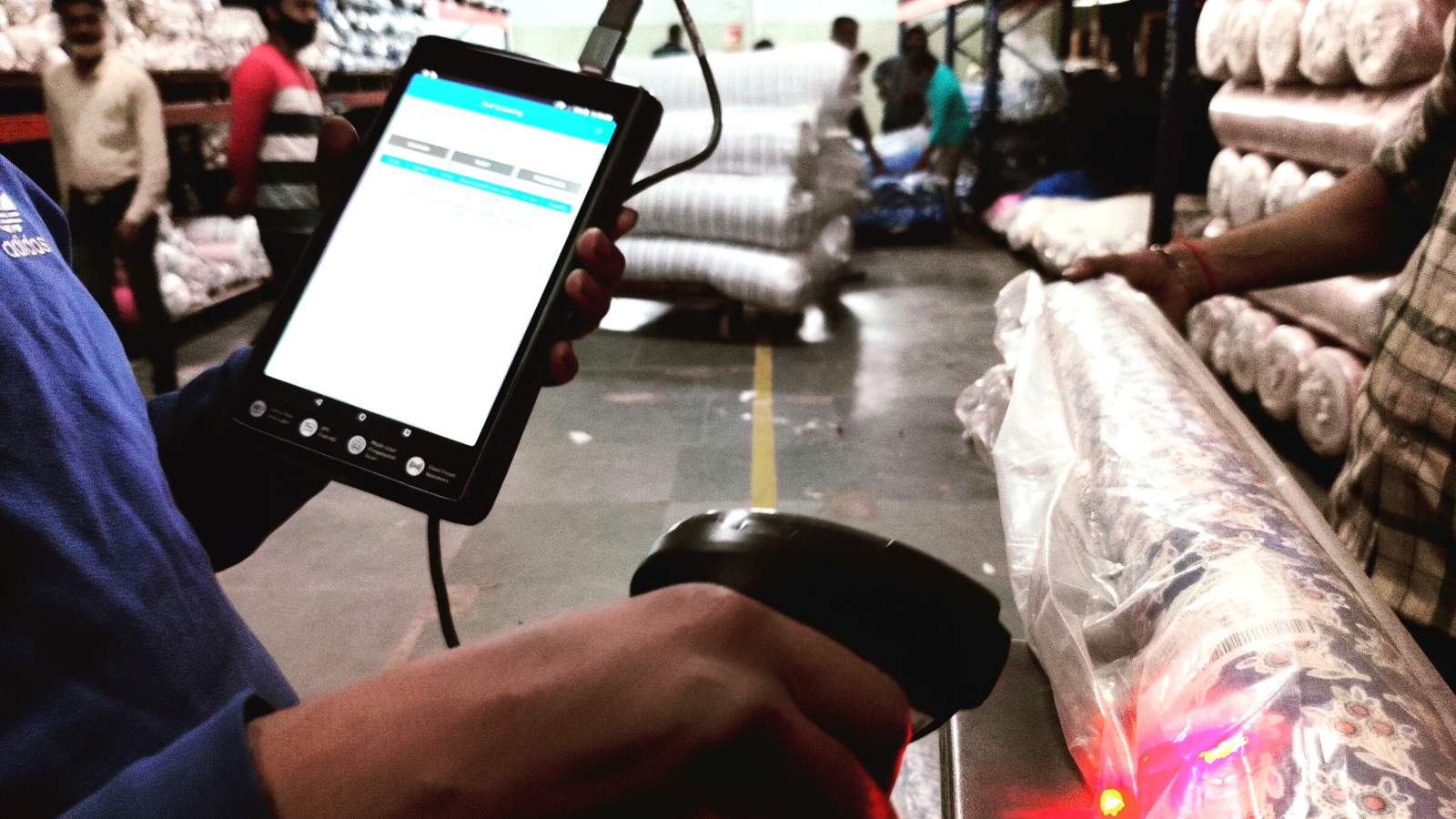
Each fabric roll is given a barcode which tracks its movement from cutting through garmenting and packaging.
An initiative that has helped us immensely is our acclaimed ‘Track & Trace’ mega project. Track & Trace is one of our projects which has helped us immensely in reducing paper usage. Each fabric roll is assigned a barcode, and this code is used to scan it for all purposes -entry, storage, cutting, and shipping. This is leading to improved transparency in the supply chain. Additionally, it resulted in greater agility, lower cost, and higher visibility of fabric/garment movement. It also reduced manual data entry at multiple points, which is another focus area we had in our mind. This initiative’s end-to-end nature ensures that our efficiency at each stage (warehouse, cutting, sewing, packing, and shipping) is measurable and provides us with rich data for taking steps to improve it further. Before this initiative, the manual receiving from the mills and fabrics utilized our resources- time and effort inefficiently.
Track & Trace has improved the transparency along Shahi’s supply chain. Each fabric roll is assigned a barcode, and this code is used to scan it for all purposes -entry, storage, cutting, and shipping. Currently, we are working on the last phase of Track & Trace that will complete the entire chain by improving transparency at the packaging and delivery stages of the shipment to our customers.
Securing our digital assets
With more and more devices, web applications, and mobile apps connecting to the network, it becomes imperative to ensure no hindrance in business continuity. We must neutralize external threat actors before they can steal crucial data or damage the network infrastructure. Shahi Exports took considerable strides in ensuring that our data center, network, and applications on the cloud are best in class and our information security solutions and practices are of the highest possible standard.
Data is the new oil, and leveraging its value will give precious actionable insights and potentially impact business models. The future at Shahi will employ data science and analytics in our sustainability strategy, making for some fascinating possibilities for the industry. The ideas we are currently working on show a promising future of scaling up across all our operations. It all starts with encouraging ideas and taking small steps to get to a big solution.
Puneesh Lamba is the Chief Technology Officer at Shahi Exports Pvt. Ltd. He is responsible for building Shahi’s IT & Digital strategy and its execution.
Puneesh carries an experience of 28 years as a Senior IT & Digital Leader across industries in India, the USA, and Europe. He has worked for companies General Electric/Genpact and TATA Consultancy Services as well as Indian Conglomerates like Escorts Ltd., Punj Lloyd, CK Birla Group, and Ballarpur Industries.
As one of India’s pioneers to embrace disruptive technologies like Artificial Intelligence, Robotic Process Automation, Internet of Things, and Predictive Analytics, Puneesh is a proponent of digital means to enable business strategy for growth. He has won many prestigious awards like CIO100, CIO200, CIO500, Power List, and CIO 1000. He is a jury member at NASSCOM, Frost & Sullivan, and, 9Dot9 media.