Tag: Covid-19

  • Creating Lasting Impact for Community Wellbeing

    Creating Lasting Impact for Community Wellbeing

    Driving Sustainability through Social Responsibility

    According to the report ‘Our Common Future’ by the World Commission on Environment and Development, responsible corporate activities can lead to more significant sustainable development. The importance of corporate social responsibility and its connection to our core values has grown at Shahi. Strategic planning and incorporation into daily operations form the foundation of our corporate social responsibility (CSR).

    Corporate Social Responsibility at Shahi

    Through our programs, Shahi ensures the creation of efficient strategies to alleviate societal, environmental, and economic issues. It caters to some of the most vulnerable communities (largely women from low-income backgrounds), children, farmers, and migrant workers. It supports local government authorities and Non-Governmental Organisations (NGOs) to build communities for the better. With over 22,867 beneficiaries benefitted, Shahi has progressed towards making its CSR approach more resourceful, ethical, and sustainable.

    The Potential for Lasting Impact 

    The Government of India’s Census Data states that India has a population of 1.38 billion people, 67% of whom live in rural areas, most of which lack infrastructure and essential services. In this light, CSR has the power to change, alleviate, and even eliminate many common challenges faced by communities in India. CSR works to address the needs and aspirations of communities by building commitment to the development and upliftment of communities.

    In the India Philanthropy Report 2022, Poverty Alleviation, Healthcare & WASH, Education & Skills, and Rural Development emerged as the highlighted theme areas that account for 70% of India’s overall CSR budget. Compliant and accountable CSR has ensured that rural development and other facets of our society have made considerable strides in the right direction.

    Our Engagement this Past Year

    In the past year, Shahi has undertaken a variety of projects in the areas of Environmental Protection, The Welfare of Migrants, Health, Education and School Infrastructure, Covid Support along with Rural Development.

    Environmental Protection 

    Environmental sustainability at Shahi is committed to the responsible use of natural resources and environmental protection.

    Shahi has conducted a tree plantation drive with  Give Me Trees Trust (GMTT) to increase green cover and improve local air quality. GMTT is India’s largest community-based voluntary tree planting and conservation movement in India. The environmental charity strongly believes in planting native species of trees (like Peepal, Neem, Pilkhan, and more) as they are the most beneficial trees suited for the environment and provide additional medicinal benefits.

    Shahi has partnered with GMTT to plant trees on barren land in Delhi and convert it into a dense forest. The plantation drive is based on the Miyawaki Method, involving planting two trees per square meter to make a biodiversity hotspot in the city.


    Shahi partnered with Saahas on the Sada Suchittva Arekere Program, within which Shahi established a sustainable Solid Waste Management (SWM) model in an identified area near Arekere Lake Bengaluru to reduce dumping waste into the lake. This initiative aligns with the Clean India Campaign’s goal to build a cleaner and healthier environment for local communities. 

    Shahi further partnered with Tanga Charitable Trust to launch the Biomass Sustainability Project. The program provided livelihood opportunities and extra income to local farmers in the Raichur region for farm waste collection. This effort prevents stubble burning and reduces carbon emissions in the region by extracting and converting crop residue into biomass.

    The Welfare of Migrant Workers

    At Shahi, we recognize the challenges faced by migrant workers when relocating to new urban environments. Shahi joined hands with Odisha Rural Development and Marketing Society (ORMAS) to launch the Migrant Support Center.

    With 900 registered migrants, this initiative intends to provide migrant workers with social, informational, functional, and psychological support and services to promote their integration into new urban surroundings.

    Health

    The Swasth Parivaar Project is a health intervention program for the vulnerable population of the Peenya Region in Bangalore, Karnataka. Under this project, Shahi jointly worked with the Family Planning Association of India (FPAI)  to set up a satellite clinic to provide preventive and curative services for sexual and reproductive health.

    The services include Family planning (Intrauterine devices, injectable and oral hormonal contraceptives, male and female condoms, emergency contraception), Maternal and child health services (Antenatal and postnatal care, treatment of minor illness and immunization),  Prevention and management of sexually transmitted and reproductive tract infections including HIV.

    Shahi also launched the Menstrual Health Project to improve knowledge of menstrual hygiene management and promote access and acceptance of menstrual cups as safe sanitary products. In collaboration with Kamakshi Trust and Shakti (Rare Enterprises), the project trained over 1,698 women on menstrual health management and distributed menstrual cups. Over 68% of these women accepted using the menstrual cups provided. Overall, the project created menstrual health awareness for 2,750 migrant women in Karnataka.
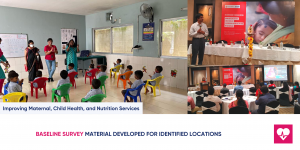
    Further, Shahi, along with Save the Children, India (Bal Raksha Bharath), launched the program ‘Improving Maternal, Child Health, and Nutrition Services’ (MCHN) in Bengaluru (urban and rural), and districts of Hassan, Tumkur, Maddur, and Kolar in Karnataka. The focus is on providing quality maternal, child health, and nutrition care in Anganwadi and primary health centers in the targeted regions.

    This capacity-building program allows accountability and engagement of local governments and communities to improve the use and quality of MCHN services. It addresses issues between pregnancy and a child’s second birthday, as this 1000-day period is a critical time to impact a child’s cognitive and physical development positively.

    Education & School Infrastructure Improvement 
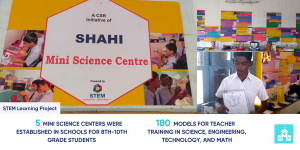
    Shahi launched the STEM (Science, technology, engineering, and mathematics) learning project in association with STEM Learning Pvt. Ltd and Kamakshi Trust. Under this initiative, 5 mini science centers have been established in schools for 8th-10th grade students, and 180 modules have been provided for teacher training in science, engineering, technology, and math. The project also supports children in preparing for state and national level exhibition competitive programs.

    With Janodaya Trust, a social service organization working on social and community development, we provided free coaching classes and counseling sessions for 10th-standard students from economically weaker sections, including dropouts and failed students. More than 462 students have enrolled in the coaching program. Further, the school infrastructure development fund was utilized to construct toilet and water filter facilities, along with the provision of school bags and smart tablets for students.

    [vcex_spacing size=”20px”]Covid Support

    At the peak of the pandemic, Shahi provided oxygen cylinders, beds, medicines, and first-aid boxes to primary health care centers and government hospitals in the regions of Kuppam, Mysore, and Hassan.

    Many migrant workers were able to comfortably stay in Shahi’s residence halls during the first lockdown. Shahi provided food, sanitizers, masks, and round-the-clock medical assistance from Janodaya. Shahi distributed covid relief kits to front-line workers, including nurses, the local police force, and residents, to help maintain social distance. A ‘Doctor on Call’ program was also set up to curb misinformation and provide counseling for symptoms.

    Rural Development 

    Shahi built infrastructural development in rural Karnataka by creating bus shelters in the rural areas of Maddur and Tumkur. Further WASH facilities, infrastructural development, and painting of government schools and Solar Street Lights were provided at Bydagi, Hassan, and Maddur in Shivamogga.

    The Next Step 

    As a forward-thinking organization, we are proud of the community and environment-driven initiatives we have led so far. As we progress, we shall strive for our CSR efforts to be pertinent locally and nationally and guided by the principles of sustainable development. We are keen to scale our initiatives through like-minded collaboration.

    Read Shahi’s CSR Policy-2022-23
    vulnerable communities (largely women from low-income backgrounds), children, farmers, and migrant workers. It supports local government authorities and Non-Governmental Organisations (NGOs) to build communities for the better. With over 22,867 beneficiaries benefitted, Shahi has progressed towards making its CSR approach more resourceful, ethical, and sustainable.

    The Potential for Lasting Impact 

    The Government of India’s Census Data states that India has a population of 1.38 billion people, 67% of whom live in rural areas, most of which lack infrastructure and essential services. In this light, CSR has the power to change, alleviate, and even eliminate many common challenges faced by communities in India. CSR works to address the needs and aspirations of communities by building commitment to the development and upliftment of communities.

    In the India Philanthropy Report 2022, Poverty Alleviation, Healthcare & WASH, Education & Skills, and Rural Development emerged as the highlighted theme areas that account for 70% of India’s overall CSR budget. Compliant and accountable CSR has ensured that rural development and other facets of our society have made considerable strides in the right direction.

    Our Engagement this Past Year

    In the past year, Shahi has undertaken a variety of projects in the areas of Environmental Protection, The Welfare of Migrants, Health, Education and School Infrastructure, Covid Support along with Rural Development.

    Environmental Protection 

    Environmental sustainability at Shahi is committed to the responsible use of natural resources and environmental protection.

    Shahi has conducted a tree plantation drive with  Give Me Trees Trust (GMTT) to increase green cover and improve local air quality. GMTT is India’s largest community-based voluntary tree planting and conservation movement in India. The environmental charity strongly believes in planting native species of trees (like Peepal, Neem, Pilkhan, and more) as they are the most beneficial trees suited for the environment and provide additional medicinal benefits.

    Shahi has partnered with GMTT to plant trees on barren land in Delhi and convert it into a dense forest. The plantation drive is based on the Miyawaki Method, involving planting two trees per square meter to make a biodiversity hotspot in the city.


    Shahi partnered with Saahas on the Sada Suchittva Arekere Program, within which Shahi established a sustainable Solid Waste Management (SWM) model in an identified area near Arekere Lake Bengaluru to reduce dumping waste into the lake. This initiative aligns with the Clean India Campaign’s goal to build a cleaner and healthier environment for local communities. 

    Shahi further partnered with Tanga Charitable Trust to launch the Biomass Sustainability Project. The program provided livelihood opportunities and extra income to local farmers in the Raichur region for farm waste collection. This effort prevents stubble burning and reduces carbon emissions in the region by extracting and converting crop residue into biomass.

    The Welfare of Migrant Workers

    At Shahi, we recognize the challenges faced by migrant workers when relocating to new urban environments. Shahi joined hands with Odisha Rural Development and Marketing Society (ORMAS) to launch the Migrant Support Center.

    With 900 registered migrants, this initiative intends to provide migrant workers with social, informational, functional, and psychological support and services to promote their integration into new urban surroundings.

    Health

    The Swasth Parivaar Project is a health intervention program for the vulnerable population of the Peenya Region in Bangalore, Karnataka. Under this project, Shahi jointly worked with the Family Planning Association of India (FPAI)  to set up a satellite clinic to provide preventive and curative services for sexual and reproductive health.

    The services include Family planning (Intrauterine devices, injectable and oral hormonal contraceptives, male and female condoms, emergency contraception), Maternal and child health services (Antenatal and postnatal care, treatment of minor illness and immunization),  Prevention and management of sexually transmitted and reproductive tract infections including HIV.

    Shahi also launched the Menstrual Health Project to improve knowledge of menstrual hygiene management and promote access and acceptance of menstrual cups as safe sanitary products. In collaboration with Kamakshi Trust and Shakti (Rare Enterprises), the project trained over 1,698 women on menstrual health management and distributed menstrual cups. Over 68% of these women accepted using the menstrual cups provided. Overall, the project created menstrual health awareness for 2,750 migrant women in Karnataka.

    Further, Shahi, along with Save the Children, India (Bal Raksha Bharath), launched the program ‘Improving Maternal, Child Health, and Nutrition Services’ (MCHN) in Bengaluru (urban and rural), and districts of Hassan, Tumkur, Maddur, and Kolar in Karnataka. The focus is on providing quality maternal, child health, and nutrition care in Anganwadi and primary health centers in the targeted regions.

    This capacity-building program allows accountability and engagement of local governments and communities to improve the use and quality of MCHN services. It addresses issues between pregnancy and a child’s second birthday, as this 1000-day period is a critical time to impact a child’s cognitive and physical development positively.

    Education & School Infrastructure Improvement 

    Shahi launched the STEM (Science, technology, engineering, and mathematics) learning project in association with STEM Learning Pvt. Ltd and Kamakshi Trust. Under this initiative, 5 mini science centers have been established in schools for 8th-10th grade students, and 180 modules have been provided for teacher training in science, engineering, technology, and math. The project also supports children in preparing for state and national level exhibition competitive programs.

    With Janodaya Trust, a social service organization working on social and community development, we provided free coaching classes and counseling sessions for 10th-standard students from economically weaker sections, including dropouts and failed students. More than 462 students have enrolled in the coaching program. Further, the school infrastructure development fund was utilized to construct toilet and water filter facilities, along with the provision of school bags and smart tablets for students.

    [vcex_spacing size=”20px”]Covid Support

    At the peak of the pandemic, Shahi provided oxygen cylinders, beds, medicines, and first-aid boxes to primary health care centers and government hospitals in the regions of Kuppam, Mysore, and Hassan.

    Many migrant workers were able to comfortably stay in Shahi’s residence halls during the first lockdown. Shahi provided food, sanitizers, masks, and round-the-clock medical assistance from Janodaya. Shahi distributed covid relief kits to front-line workers, including nurses, the local police force, and residents, to help maintain social distance. A ‘Doctor on Call’ program was also set up to curb misinformation and provide counseling for symptoms.

    Rural Development 

    Shahi built infrastructural development in rural Karnataka by creating bus shelters in the rural areas of Maddur and Tumkur. Further WASH facilities, infrastructural development, and painting of government schools and Solar Street Lights were provided at Bydagi, Hassan, and Maddur in Shivamogga.

    The Next Step 

    As a forward-thinking organization, we are proud of the community and environment-driven initiatives we have led so far. As we progress, we shall strive for our CSR efforts to be pertinent locally and nationally and guided by the principles of sustainable development. We are keen to scale our initiatives through like-minded collaboration.

    Read Shahi’s CSR Policy-2022-23

  • The Recovery Series | Pandemic and the Employment Jeopardy: The story a year later

    The Recovery Series | Pandemic and the Employment Jeopardy: The story a year later

    This blog post has been updated on February 11, 2022 to include information on VDA 2020-21 payments.

    This is the third of three-part series that records our journey on worker well-being through the COVID-19 pandemic.

    The apparel industry was one of the first to bear the brunt of the restrictions that the COVID-19 crisis brought upon world economies. Manufacturers reset priorities in 2020 across consumer markets as most geared to operate in survival mode. Changes in operations across the industry demanded efficient immediacy to match humanitarian needs and keep businesses afloat, with the fate of more than 45 million people directly and 60 million in allied services at risk.

    It is a challenge to determine the necessary support services and standardize them across the board. Almost 88-115 million people, who benefited from a decade worth of inclusive growth, are now slipping back into poverty after the first lockdown.  In May 2020, unemployment in India reached a record high of 23.8%. Garment manufacturers retained many workers to produce masks and PPE gear. Many workers, however, had to return to their hometowns as the uncertainty loomed larger.

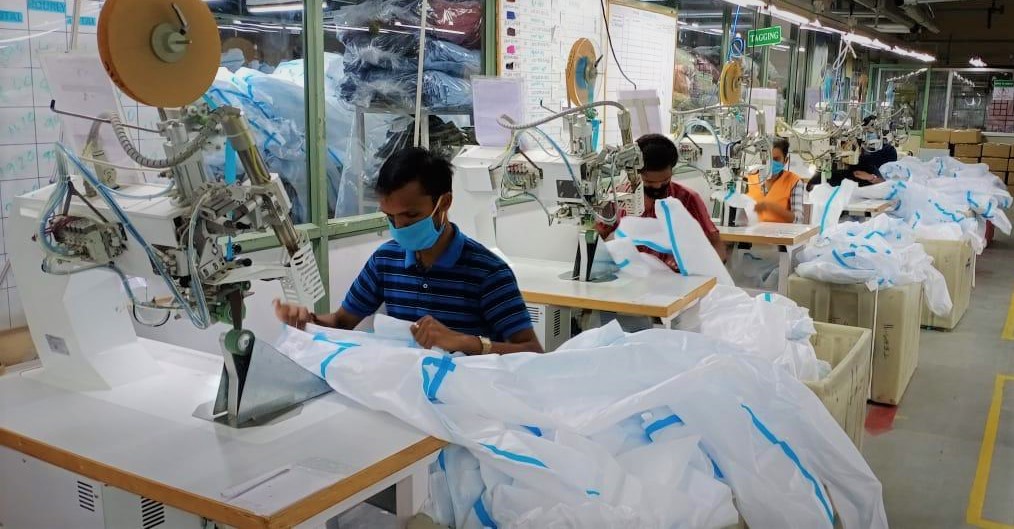
    Shahi repurposed its factories in Bangalore to cater to the global shortage of PPE kits. With an initial capacity of producing 12,000 PPE kits per day, Shahi could deliver 5,00,000 PPE suits by June 2020

    The Jeopardy

    Workers stand to lose the most with the slowed-down economy in 2020. Things only began to look up in the first quarter of 2021 when the second wave caught the industry unawares. Brands that had set orders with Indian manufacturers and exporters doubted that the industry could deliver on time. Bangladesh and China received most of these orders since their garment factories were still up and running.

    A survey conducted by the Clothing Manufacturers Association Of India (CMAI) reports that 77% of the respondents were contemplating a 25% reduction in staff. The impact for Shahi, however, has been considerably lower though not insignificant. During the first lockdown, only 3% of our migrant workforce left to return to their hometowns and villages.

    As retailers opened shops in the west, consumers returned to shopping from stores in early 2021, which promised a steady recovery path for the industry. Though April showed the lowest decline, 55% of manufacturers reported less than 25% of their sales had been recovered (CMAI). Moreover, the second wave hit the apparel industries again as they remained unlisted as essential services. This time, however, repeated requests allowed the factories to run at 50% capacity. 

    A Comprehensive Response to COVID-19

    Masks were made mandatory across factory floors and corporate offices

    As a labor-intensive business, our priority is the health and safety of our 100,000 strong workforce. Shahi quickly adapted to the Covid Appropriate Behaviour (CAB) across factory floors by implementing regulatory guidelines and best practices. Masks, thermal screening, and sanitizers are available at all strategic points. We re-organized canteens and offices to adhere to social distancing rules. Interim care facilities were set up for support within or close to our factories and offices for employees and their dependents. These centers host beds, oxygen cylinders, and other essential medical equipment and medicines. Our in-house doctors are available on call to guide employees, apart from engaging medical specialists.

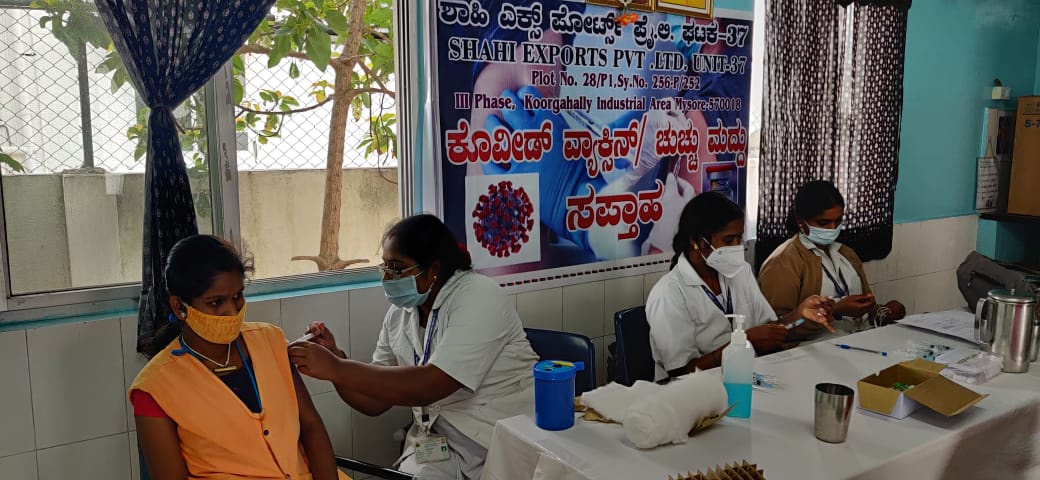
    Shahi organized vaccination camps and facilitated access to vaccines across all its production units and corporate offices. 96.7% of our employees have been vaccinated against COVID-19 with the first dose and 70.3% with the second dose.*

    Unfortunately, the death and devastation from the virus did not spare us. We lost 29 of our workers and staff to the pandemic. The company has extended support to deceased’s families to the tune of the deceased employee’s dues for up to 2 years. 


    Migrant Support at Shahi

    The Migrant Support Center in Bengaluru has been up and running since January 2021

    Migrant workers constitute an integral part of our workforce. Our migrant workers have the option of staying at designated residential services run alongside the Janodaya Trust. These hostels are a part of our Migrant Workers Livelihood Project which aims to provide safe and affordable living conditions to our workers who travel the lengths of the country to work in our factories. The pandemic put pressure on supply chains across industries; the resultant inflation threatened the workers’ sustenance.

    We supported our workers by insulating them from the exorbitant rental costs and safety risks. Our migrant workers could, therefore, remain closer to their workplaces. They were given periodic reminders for COVID-19 protocols and had access to medical services should any need arise. We arranged for food and ration kits to help them maintain social distancing. These hostels designated 40 beds as a covid shelter for migrants in need at Bengaluru. 

    Read more about our Migrant Support Center here.

    Wages and Job security

    While our workers had a stable living place, they faced more long-term questions. Lockdowns across states forced factories to pull shutters down— temporarily for some, and permanently for others Exports reduced by more than 10 percent across most of 2020. The industry, valued at $16 billion in 2019, is down to $12-14 billion. With states going into lockdowns starting in late April this year, garment production was not deemed an essential service. A CMAI report on a survey conducted to measure the impact of COVID-19 on manufacturers and exporters shows 77% of the respondents were contemplating a 25% reduction in staff. 

    The primary incentive for workers at Shahi to stay behind or return when the lockdown was relaxed was the ex-gratia payment of net wages for all workers who returned by May 18, 2020 (two weeks after we opened our factories again). 

    VDA 2020 

    To help industries tide over the impact of the first lockdown, the Government of Karnataka (GoK) decided to defer the implementation of Variable Dearness Allowance (VDA) for the year 2020-21. The Trade Unions in Karnataka challenged the government order(GO) through a public interest litigation, and none of the apparel manufacturers, including Shahi, are part of this litigation.  

    The Honorable High Court of Karnataka announced a stay of the order pending further deliberation. The final decision on payment of 2020 VDA is pending. We share the concern that given the time that has already passed, the remaining time that the Court proceedings may take delays the payment of the dues indefinitely. We hope that the final decision will be made by the Court at the earliest, however rather than wait further for this judgment, we have paid the Karnataka 2020 VDA in the form of arrears for the months of April 2021 – January 2022. For our full statement on this read here.

    In February 2021, the Government of Karnataka (GoK) announced the annual VDA increase applicable from 1st April 2021. Shahi has been paying this VDA amounting to INR 428.40 per month per worker from April 2021 onwards.  

    Shahi’s code of conduct clearly states that all employees shall be paid wages, overtime payments, and benefits in compliance with applicable laws. Operating more than 50 factories and employing over 100,000 workers, we intend to always remain a fully legal and ethical employer while continuously raising the standard for workers’ well-being in the apparel industry.  

    Where are we headed?

    The experience from previous waves helped Shahi live up to its business commitments and worker-wellbeing. We continue to employ 100,000+ people across Shahi through the challenges by embracing sustainable measures. We communicated actively with our clients to apprise them of the situation as it developed. The industry looks forward to a full recovery as we enter 2022.

    A steady flow of orders and continued collaboration amongst stakeholders draw out a path to sustained recovery.

    Extending support to our workers has only been possible with the help of our partners, brands, and public and private health services. Their ultimate well-being lies in the continued collaboration of all stakeholders. However, it will take more than just capital to pump the industry back on its feet. Companies are gearing to strengthen support structures for their migrant employees and workers by creating robust CSR initiatives. Finding the right mix of incentives and directives is crucial for ensuring sustainable development.


    Read Part I and Part II of the series to know more about Shahi’s journey on worker well-being through the COVID-19 pandemic.


  • The Recovery Series | What does a migrant worker need?

    The Recovery Series | What does a migrant worker need?

    This is the second part of a 3 part series on Shahi’s road to recovery from the gruesome COVID-19 pandemic. In this series, we speak to our employees about their experiences of dealing with the pressures of the pandemic and the support they found at Shahi.

    Achha to hum kaise jaanenge ki bade sheher mein kaha rehna hai aur kya karna hai? How will I know where to live, how to do things in a big city?” asked Arpita, looking quizzingly at me. Arpita is a lanky young girl of eighteen from Barbil. She is one of the thousands of women who wish to migrate to cities to work in garment factories. She joined her mother as a domestic worker ever since the country went into lockdown. Now, she is keen to develop her interest in stitching at Shahi’s skill development center in Odisha, which provides free sewing skills training under the Ministry of Textiles and Rural Development. 

    The Migrant Support Center in Bengaluru has been up and running since January 2021

    Most garment factories in India are located in the cities. To work in one, Arpita would have to move and set up miles away from her family.  She is excited by the prospect of living and working in a metropolitan city, though riddled with questions. Where to live? What if she doesn’t understand the language? How to book a supply of gas? What to eat? Is there a bathroom with running water? What about electricity? How to pay her bills for the first month? What happens if there is a lockdown?

    I begin to tell her about the Migrant Support Centre in Bengaluru. Shahi runs the center in collaboration with Odisha Rural Development and Marketing Society (ORMAS). The center was designed by Good Business Lab (GBL) and H&M. The center supports the migrant community in Bengaluru, India, with access to services required to support their lives in an urban environment. It has been fully functioning since February 2021, which led to its invaluable contribution to the support response during the second wave in India. 

    Workers can easily register themselves at the center using their identity cards (or request support). The registration helps with post-placement tracking, which accelerates response to requests and communicating information about programs—the coordinators and staff schedule sessions for the workers for information on housing and access to utilities. Workers can also sign up for soft skills and advanced training in skills related to their work. They can attend information seminars on health, legal and financial literacy. The Support Center conducts programs like “Know your City,” highlighting popular tourist spots, utilities, and an introduction to the city’s culture. 

    So far, the center has registered 627 migrants across industries who receive post-placement support and have attended sessions on financial and legal literacy. The center has also supported them in setting up their bank accounts. 

    Beginnings: The need for a Migrant Support Center

    Migrant workers and their families across industries share Arpita’s concerns. It is challenging for them to look for accommodation in safe neighborhoods with access to utilities. 

    Migrants make up a significant portion of the workforce at Shahi. Many are trained at our skill development centers and receive placement offers from Shahi and other manufacturing companies under our Migrant Workers Livelihood Projects (MWLP). Once trained, they face the challenge of relocating to an entirely new space. Skilled candidates migrating from different states of India are provided accommodation in the residential facilities managed by Janodaya. At the training centers, we provide complete information on these facilities, their facilities, and the process of enrollment. Once the trained candidates are employed at Shahi, they can visit the residences accompanied by post-placement officers.

    Registering at the Migrant Support Center in Bengaluru

    Migrant workers need an array of long-term protections. Some of these are guaranteed by identity documents like the Aadhaar, ration cards, and voter IDs. Many workers are ignorant of or simply do not know about its existence, purpose, and need. These IDs provide them access to health and banking services and further legitimize their position in their workplace. A support center for migrants thus seemed a necessity. It was a need that arose out of our experience with running the MWLP. As more and more youth are trained under our skill development centers, we realized that migrant services needed to be developed further to support them.

    Shahi got together with ORMAS, GBL, and H&M to design a scalable and replicable Migration Support Center (MSC) framework. This effort brought together different perspectives— a brand, labor rights organizations, and state government initiatives into our research perspectives. 

    What Does a Migrant Need?

    Good Business Lab interviewed training and placement staff at the home base and Human Resources and Hostel staff at the destination to understand the challenges workers faced. At the home base, where workers undergo training before leaving for Bangalore, families often object to the move out of their hometowns and villages. Workers also tend to withhold information about their health, afraid to lose their job offer.

    Migrant workers receive financial literacy training

    The next phase of the research involved an extensive study of existing frameworks of support centers. The exercise identified the following gap in services for migrants: easy access to basic amenities, social, financial, legal, and governmental services, and services like identity-related documents, information on housing, schools, hospitals, government schemes, and programs. Further, we identified that improving financial inclusion among migrants, including banking access and usage of formal remittance channels, is crucial. 

    Making services available is not where the task ends for a Migrant Support Center. Changing economic and social conditions create a gap between the training and cognition of workers in their new environments. This takes a toll on their mental health and expectations from their life.


    How does it feel like to be a Migrant?

    Moving is never easy. The impact of the move often manifests itself in the form of psycho-physiological changes in the behavior of migrants.  They suffer from urban loneliness in response to the changes in their environment, isolating themselves and ignoring their health and mental well-being. They often feel stuck in their position where they must continue to sustain themselves and their families back home. Mount a pandemic over all this, and a whole whirlwind of problems crop up. People lost livelihoods, homes, and even their lives.

    Regular engagement programs help Migrants connect with each other

    India faced its migrant crisis amidst a raging COVID-19 pandemic in March 2020. Entire labor populations embarked on a departure from the cities back to their villages and towns. Support centers and emergency services crumbled under the pressure of sheer numbers— flagging the need for more resilient structures. While businesses moved to cut losses and costs in a stifled economy, workers and laborers found themselves stranded. 

    Limited employment opportunities and gradual re-opening of businesses led workers to move back to the cities. They now had to rebuild their lives— find a place to live, organize resources for survival— all with little to no cash flow. These are not novel in any way. 

    The MSC helps migrants in Bengaluru with adjusting to changes through community engagement programs, health and legal workshops, and more. They are encouraged to approach the staff in the residential facilities for support whenever they need it.

    Resilient Response to COVID-19

    Covid relief kits were provided distributed amongst migrants

    During the first lockdown, only 3% of migrant workers left Shahi. Most were able to stay back comfortably in our residence halls. Shahi provided groceries, sanitizers, masks, and 24/7 medical support from Janodaya. In facilities managed by Janodaya, we set up ten beds with concentrators for emergency use by residents.

    The MSC has supported workers in Bengaluru through the second wave. The facility turned forty beds in the hostel into isolation wards. Residents in all other facilities received support through ration kits and access to medical professionals. Workers were informed about COVID prevention protocols and care through WhatsApp groups. Our staff on the ground also ensured that all registered workers at the MSC received their vaccination doses. 

    All migrant workers at Shahi received their vaccines in our camps and centers set up in every factory. By now, 96.7% of our employees are vaccinated with the first dose against COVID-19, and 70.6%* with the second.

    What does this mean for hopefuls like Arpita?

    Our primary goal with the Migrant Support Center is to make them more accessible and valuable for workers in Bangalore. The services offered by the MSC were determined through four phases of research and implementation. The MSC supports in:

    • Enabling migrant workers to make more informed decisions 
    • Weakening taboos around mental health and encourage seeking help
    • Creating an environment for overcoming linguistic and logistical barriers
    • Developing new solutions to address problems faced by migrant workers
    • Creating a  services blueprint to use for scaling up MSCs nationally

    Shahi is also focusing its energies on setting up factories closer to rural areas to bring employment closer to workers. This alleviates the emotional and financial cost of moving to work while bringing employment opportunities closer to home. This boosts the local economy and helps accelerate development. 

    To answer Arpita’s questions: 

    She will know her way around the city with the help of the Migrant Support Center. The center will train her to understand the importance of taking care of her health and knowing her legal rights. She will have the support of the staff at the MSC and a 627 strong and growing community.


    *As of November 2021

  • The Recovery Series | Vaccinating a Workforce of 100,000 against Covid-19

    The Recovery Series | Vaccinating a Workforce of 100,000 against Covid-19

    This is the first part of a 3 part series on Shahi’s road to recovery from the gruesome COVID-19 pandemic. In this series, we speak to our employees about their experiences of dealing with the pressures of the pandemic and the support they found at Shahi.

    India and the Second Wave

    In the summer months of 2021, India faced its deadliest wave of the COVID-19 pandemic. The numbers reached a global record of more than 400,000 reported cases in a single day at the peak. As states entered lockdowns, Shahi geared to collaborate with local health services, NGOs, and private and public hospitals close to all its units to arrange vaccination camps and drives for its employees. 

    96.7% of the 100,000+ employees at Shahi have successfully been vaccinated with the first dose against COVID-19. More than 70.6% have now been vaccinated with the second dose after the mandatory 84-day wait period. 

    As of October 21, 2021, India has delivered 1 billion vaccination doses. It is the second country in the world after China to cross the billion mark. This journey was made extremely challenging by the sheer expanse of its population. The challenges to the vaccination campaign were both logistical and social. Vaccine shortages, misinformation, and even a general fear of getting infected at health centers and camps caused the initial days of the vaccination turn-out to be lower than expected

    Shahi took a proactive approach to deal with these challenges. In May 2021, the first camps were set up in or close to our units, other drives were conducted in collaboration with local health services. Amidst shortages, the challenge was to maintain a quick turnaround with the arrival of vaccines at the health centers and camps at our units. The human resources team at Shahi employed a continuous notification system over intercoms and made announcements in-person on the shop floors. Our supervisors conveyed the particulars down their lines and counseled workers to allay fears. 

    “There were announcements and notices for the camp, but ultimately it was the word of mouth amongst workers that spread the news”, said Urvashi Rai, Assistant Manager, at one of our factories in Noida, Uttar Pradesh

    Combating Misinformation and Providing Counseling Support

    A varied number of misinformed beliefs have been rampant in wake of the rising infection rates and deaths due to the novel coronavirus. Communities share widespread skepticism on the efficacy of vaccines and their side effects in the long run— especially for people with comorbidities and pregnant women.

    Yogesh, a 30-year-old production checker at our factory in Noida, notes, “I was scared from the after-effects, mainly fever, because of my pregnancy. My mother-in-law strictly told me to not get vaccinated, but I still went ahead with it because I knew its importance. I was only scared of the fever.”

    While camps were set up in our units to make it accessible and hassle-free to get vaccinated, our HR and medical staff engaged with employees to address questions and talk through any medical complications due to comorbidities. It was an important exercise to undertake to convince workers to avail vaccines.

    “Specifically for the pregnant workers, we arranged counseling sessions to build their confidence in vaccination. I conducted these counseling sessions.”, said Urvashi.

    “Yes, I was scared of the vaccination at first, but since it was important to get it taken for my health and also because there were announcements in the company about the requirement of getting vaccinated, I took it”, said Sunitha, from the Industrial Engineering department at our unit in Bengaluru.

    Vaccination Days

    Workers registering for the vaccine in our factory in Faridabad.

    Prior to the vaccination day, employees were counseled on following safety protocols during the vaccination process such as distancing and wearing masks. On the day of vaccinations, employees were given reminders to carry necessary documents. They were led to sequestered areas in the factory where the camps had been set up following our covid protocols.

    “We had to take a token and wait in line for our turn. After getting the vaccine, we were even made to sit for 10-15 minutes to see any immediate side effects,” said Madhu, a sewing operator, at Faridabad. “On the day of vaccination, if a worker was not feeling well, they were made to sit in the back and rest.”

    Our goal was to ensure that workers did not feel burdened at the prospect of developing symptoms in response to the vaccine. Supervisors kept a close eye on any changes in the health of the workers in their lines, and they were able to take leave from work in case of any side effects. We also provided medication for side effects such as fever.

    Dr. Leena Thakkar, our Chief Medical Officer said,

    “It is a mammoth task to overcome the inertia of reluctance amongst a workforce that is so diverse and harbors migrants. We had to build their trust in the vaccine asserting the benefits of the vaccine over its temporary and treatable side effects. Its efficacy is in the fact that it prevents hospitalization and severe escalation in the event of a COVID-19 infection. Our vaccination drive is the result of effective collaboration between various departments working towards a common goal – vaccination for all.”

    Workers Testify to Last-mile Access

    With such a large population to vaccinate, time is of the essence to disrupt the spread of disease. Having access to vaccination centers and camps close at hand is essential. 

    “It is good that we would have had to look for centers, wait in the heat, summers were at their peak that time, and even take a day off from work. All that got easy with the vaccination drive at Shahi”

    -Amarpal, Finishing department at one of our factories in Faridabad, Haryana.

    Worker receiving a vaccine shot at our camp in Bengaluru

    Constant counseling and support were also extended to migrant workers from various states working in our factories in Bengaluru through our Migration Support Center. We ensured that they received both doses of the vaccine which enabled them to continue to work safely and support themselves and their families during the crisis.


    “Most of the employees are completely dependent on the daily wages, this vaccination drive made us save money and time”, said Sunitha, “Otherwise, we would have to go to the local public centers and wait in line for hours together and lose a day of work. I am grateful to Shahi for organizing this vaccination drive and helping employees.”


    As the world recovers from the loss of lives, disrupted supply chains, and slowed economies in the wake of the pandemic, Shahi has been committed to building resilient response systems. Vaccinating our employees has been the most essential part of our strategy to jumpstart the business and ensure the well-being of our employees.


  • Shahi endorses ILO’s COVID-19 global Call to Action in the garment industry

    Shahi endorses ILO’s COVID-19 global Call to Action in the garment industry

    We recognize that to fulfill our commitment to protect workers’ wellbeing, all stakeholders in the industry need to work together. This is why we have endorsed ILO’s Call to Action on “COVID-19: Action in the Global Garment Industry” which aims to generate actions from across the global garment industry to protect workers’ income, health and employment, and support manufacturers to survive during the COVID-19 crisis. The global action also calls for working together to establish sustainable systems of social protection for a more just and resilient garment industry. (more…)
  • COVID-19 outbreak: Repurposing our factories to produce PPE for frontline healthcare professionals

    COVID-19 outbreak: Repurposing our factories to produce PPE for frontline healthcare professionals

    To cater to the rising demand of Personal Protective Equipment (PPE) amid the COVID-19 outbreak, we have produced over 500,000 PPE suits for frontline healthcare professionals, while ensuring social distancing and other preventive measures during the production. We are grateful to our employees who have contributed to the production of these suits. (more…)