Tag: Collaboration

  • From Doodling Rockets to Discovering the Magic of Science: Reimagining STEM Learning in Schools

    From Doodling Rockets to Discovering the Magic of Science: Reimagining STEM Learning in Schools

    Remember that feeling of staring out the window during a class, your mind a million miles away, sketching fantastical machines or spaceships in the margins of your notebook? Those doodles, fueled by childhood curiosity, held the potential for a future astronaut, engineer, or inventor. But sometimes, the traditional classroom setting might not fully capture that spark. It could be the marks or your mind on a wild goose chase for that formula!

    In India’s bustling schools, where millions of young minds hold the potential to revolutionize the future, fostering a love for STEM (Science, Technology, Engineering, and Mathematics) presents unique opportunities. 

    The Heightened Demand for STEM Skills

    STEM skills, in particular, are experiencing a surge in demand across various sectors. Industries across the board, from manufacturing and logistics to finance and marketing, rely heavily on a strong foundation in STEM disciplines. From complex data analysis in finance to intricate calculations in engineering, a strong foundation in STEM concepts is becoming increasingly crucial for success in the modern workplace. 

    Is India Meeting the Demand?

    School education forms the foundation of India’s workforce. 86% of India’s labor force has education up to Class 12 or below. Around 36.3% of boys in the 14-18-year-old age group enroll in STEM streams, with a lower enrollment rate of 28.1%  among girls. Most of the young people in this age group enroll in the Arts/Humanities stream, comprising 55.7%. While the exact demand for STEM professionals varies by industry, these statistics suggest a potential shortage. India has a vast young population, but it needs to equip them with the necessary skills to thrive in a technology-driven world.

    Why Foundational Years Matter

    The early years are a time of immense intellectual growth. Children are naturally curious explorers, eager to understand the world around them. By providing engaging and interactive experiences, we can equip them with critical thinking, problem-solving, and collaboration skills – foundational skills that benefit them not just in science and math classrooms but in every aspect of their lives.
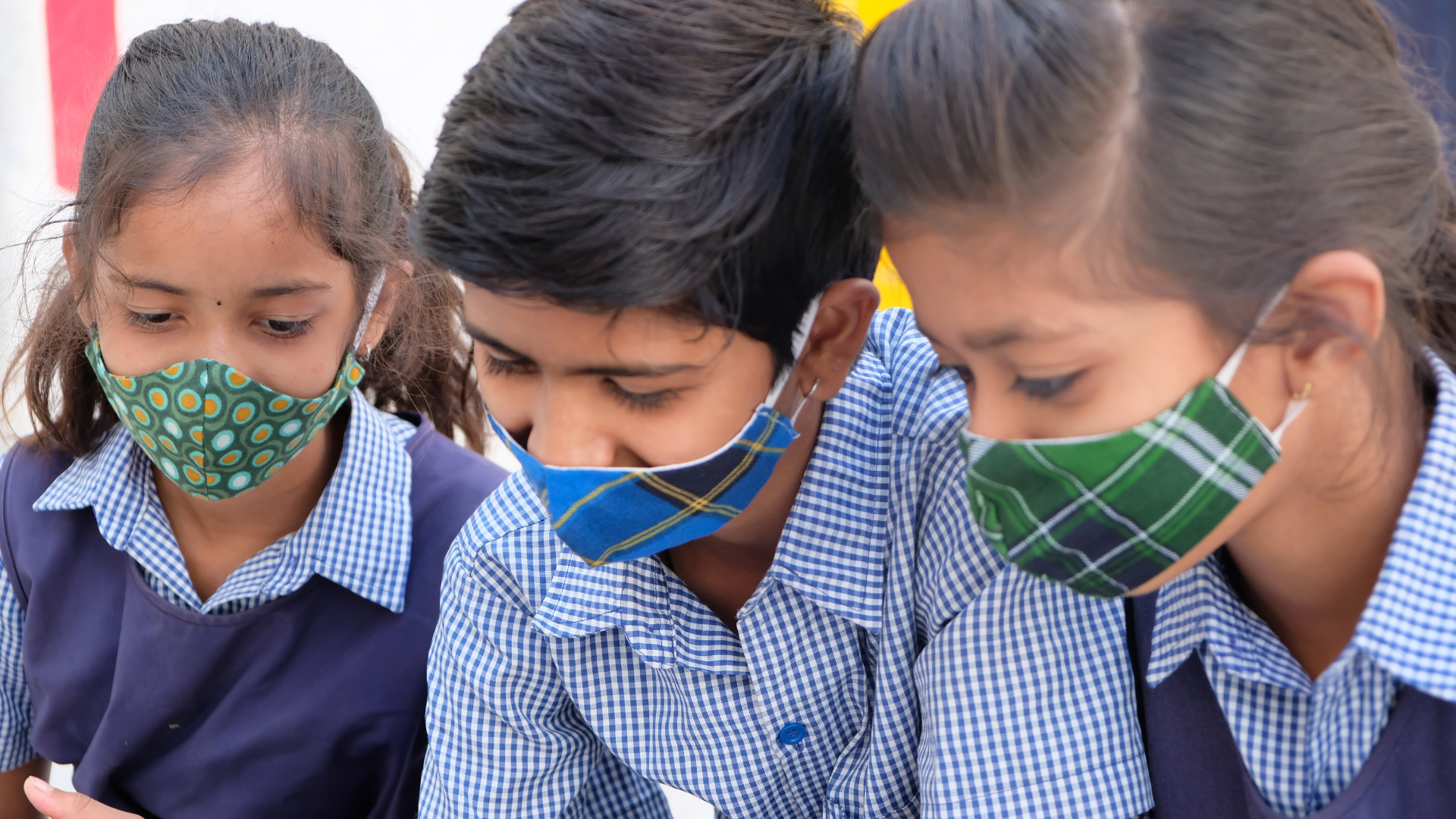
    However, the road to a robust STEM education system in India is not without its hurdles.  A staggering statistic reveals that one in four schools in rural India lacks basic facilities. Many of these schools miss essential resources, such as laboratories, which are crucial for effective science education. Furthermore, most initiatives in rural areas tend to focus on economic development and agriculture, often sidelining science education.  The absence of basic amenities and a focus on other priorities hamper students’ ability to learn effectively and limit their exposure to practical, hands-on learning experiences.

    Akshara: Inspiring Young Minds

    Akshara: The school development project under Shahi’s Shikshanam Initiative seeks to partner with STEM Learning, a social enterprise to facilitate a unique way of teaching and learning STEM. 

    At Shahi Exports, Our commitment extends beyond mere business; it’s a shared vision to empower the next generation. We understand the critical role STEM education plays in fostering innovation and building a skilled workforce. The Akshara program is a fantastic initiative that equips young minds with the scientific knowledge and critical thinking skills necessary to thrive in the modern economy.”

    – Alagappan R, COO, Knits Processing Division

    This innovative program encourages the building of mini science labs in government schools equipped with materials to explore over 80 modules in foundational STEM concepts. Imagine a classroom transformed – a vibrant hub where children can build circuits, conduct experiments, and explore the wonders of science firsthand!
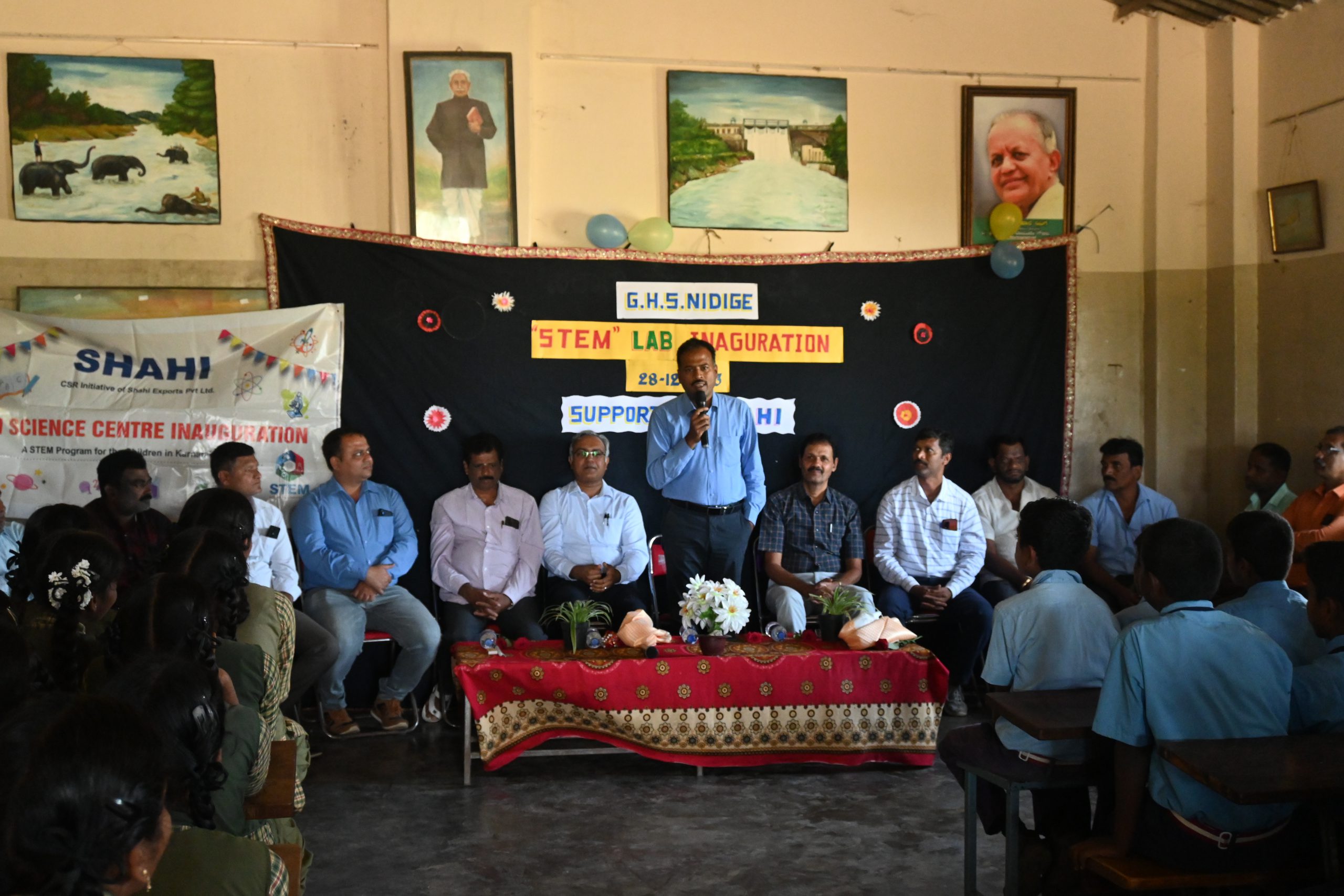
    Since 2021, Akshara has provided access to STEM Learning 24 Mini Science Centers to 5300 students across Government schools in rural Karnataka. We aim to reach 6000 students by 2025.
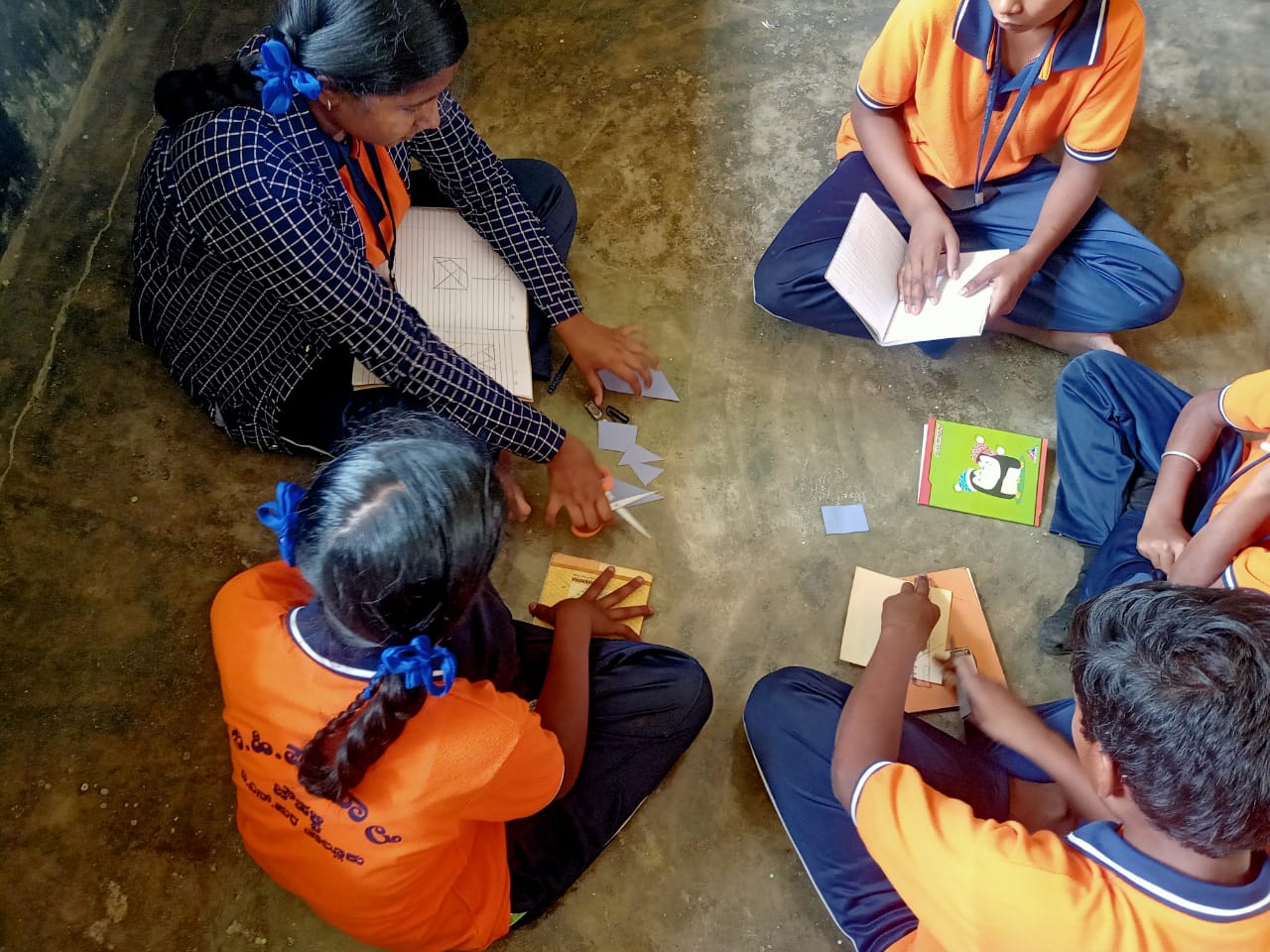
    Do-It-Yourself (DIY) projects bring an exciting dimension to STEM learning. It brings concepts to life where students can hold tools in hand and transform simple materials into working models. For example, Tangrams— a Chinese puzzle made from geometric shapes. Students cut colorful sheets into five triangles, a square, and a parallelogram, then combine these pieces to form various shapes. Tangrams are a great way to develop problem-solving skills, spatial reasoning, and creativity. They can also help with hand-eye coordination and visual perception. As students build, test, and iterate, they develop a deep, intuitive understanding of science and math, turning abstract ideas into tangible realities. 

    Empowering Educators

    The Akshara program understands that impactful learning requires more than just resources. That’s why the program goes a step further by providing dedicated support to teachers. Educators receive comprehensive training on how to make the most of the Mini Science Centre models, ensuring they can effectively guide students through engaging activities and experiments. Teachers believe students grasp science and math concepts more easily due to the models and optimized teaching time. 

    “Explaining concepts like motion and friction is difficult without demonstration. But the Science Center has transformed my classroom! Many biology models, like the Human ear and Human eye, help students understand these structures better. Seeing the excitement in my student’s eyes as they build and experiment with the Mini Science Centre models is truly rewarding.”

    Tamanna Roshan, Teacher, Government Higher Primary School, Kanchanahalli.

    86% of students reported that complex and difficult topics were explained more easily with the assistance of models, and 91% of students feel the teaching-learning process is more engaging and interactive with the Mini Science Center. *

    The Real Impact

    This commitment to both resources and teacher training has yielded impressive results. Studies have shown that students participating in similar programs demonstrate improved academic performance in science and math, increased analytical thinking skills, and a higher level of engagement in the classroom. The impact of the Akshara program itself is equally compelling. 87% of students found it easier to express their understanding, and 13% felt more confident applying concepts to real-life scenarios*. DIY activities enabled the students to apply their knowledge and turn these into skills they can explore further.

    “The MSC lab makes me happy just by hearing its name. Before the Akshara program, science class felt boring. Now, it’s my favorite subject! I love building things and figuring out how they work. The Mini Science Centre models are so much fun, and help me understand the concepts better. The Day and Night model looked cool and gave me a clear idea of how day and night occur, which I only knew from theory in 5th grade. I love all the models in the school and enjoy spending time in the lab.”

    Jayanth J S, Class VII student at Government Higher Primary School, Arekere

    A Brighter Future

    The impact of such programs can be profound. Consider a young girl, once curious about the world around her, who now lights up with excitement as she builds a tiny solar-powered car. This newfound passion for exploration can pave the way for future careers in science and technology or simply equip her with the critical thinking skills necessary to tackle any challenge life throws her way.

    We are excited to explore how to make STEM learning even more engaging and empower the next generation of Indian innovators to take their doodles from the margins of their notebooks to the forefront of the future.

    *Endline Survey Conducted by STEM Learning amongst students from 5th-7th Grade in 2023-24.

  • IOM-UN Migration and Shahi Exports Join Hands to Facilitate Safe Migration through Migrant Support Centre

    IOM-UN Migration and Shahi Exports Join Hands to Facilitate Safe Migration through Migrant Support Centre

    New Delhi, 15 December 2022: Economic Survey reported that between 2001-2011, the Inter-state labor migration in India averaged between 5 to 6 million people a year which constitutes 17%-29% of the labor force. Migration and related activities undertaken by migrant workers are estimated to contribute 10 percent of India’s GDP. These activities have positive externalities in terms of benefits to their families, native communities, and destination states/communities. Some of their contributions can be seen in the labor-intensive garment and textile sector. Composed of many small, medium, and large-sized enterprises, this sector has grown exponentially, from domestic production to engagement in export-oriented global supply chains, which has fuelled employment opportunities for varied skill sets across the country.

    Nevertheless, internal migration in India is rife with challenges. Much of these can be addressed at the origination itself— that is, the transition period when migrants move from their hometowns all the way until they settle in a new place.

    The International Organization for Migration (IOM), on 30th September 2022, signed an MoU with Shahi Exports to support and assist migrant workers through the institutional framework of a Migrant Support Centre (MSC). Shahi Exports, India’s largest apparel manufacturer, has been running the MSC for migrants working in various industries across Bengaluru since 2021. Currently, it serves nearly 4,000 migrants. Under this partnership, IOM will provide technical and advisory support to strengthen and operationalize the Shahi-run MSC in Bengaluru. IOM will assist Good Business Lab (GBL) –  a not-for-profit labor innovation organization, to understand the issues faced by interstate and intrastate migrant workers in an urban setting and empower migrant workers and improve all aspects of their welfare–  working conditions, access to legal entitlements, social security, health, education, and vocational skills. GBL came on board as the project’s design partner, conducting visits to existing MSCs to understand the provisions of specific services and if there exist any disconnects between migrant experiences and support offered by centers. 

    IOM’s Head of Office, Sanjay Awasthi, observed that such a collaboration would leverage the strengths of multiple stakeholders across the supply chain to achieve the envisioned benefits not only for the migrant workers and their employers but towards the social and economic development of migrants’ source and destination states, and ultimately India as a whole. To mitigate these risks and to intensify the socio-economic benefits of internal migration, it is imperative that supply chain partners play a role in ensuring the welfare of migrant workers. 

    Migrant workers are also particularly vulnerable to disasters and crises, as evidenced by the impact of the COVID-19 pandemic. 

    Shahi Export’s MSC evolved out of COVID-19 relief efforts conducted by Shahi Exports, such as facilitating vaccination drives, free phone consultancy with ophthalmologists, information services on preventative measures, availability of transport, and providing food rations to migrant workers. 

    Screenshot 2022-12-17 at 10.31.06 AM
    Anant Ahuja, Head of Organizational Development at Shahi Exports

    “The MSC provided shelter, utility support, medical aid, financial, legal literacy, and toll-free redressal numbers to resolve issues migrants face in the garment industry and other sectors. We gained valuable feedback from the beneficiaries of the center to help us, and the learnings from our first effort make us confident to scale MSC up to reach 10,000 migrants by 2025. Our multi-stakeholder partnership with IOM will leverage their global perspective and combine it with the knowledge of on-ground partners, including state government wings like Odisha Rural Development And Marketing Society (ORMAS), to achieve a model that can give migrants the support they need in a new city or town.”

    Amit Chowdhury, National Officer, IOM India

    IOM has provided technical support for the establishment and functioning of several such centers for migrants throughout the world.“These centers (also known as Migrant Resource Centres) serve as a source of information and support to migrants at either their destination or source locations and further promote greater social inclusion and interaction. The partnership between IOM and Shahi would continue to work with other institutionalized stakeholders (governmental and non-governmental) directly or indirectly engaged in the facilitation of migration-related issues to ensure safe and secure mobility of migrant workers.” 

  • Applications open for Shahi Industry Chair 4.0 at NIFT Delhi

    Applications open for Shahi Industry Chair 4.0 at NIFT Delhi

    Applications are open for the Shahi Industry Chair 4.0 at the National Institute of Fashion Technology Delhi. This program supports internship or dissertation projects for qualifying candidates.

    The Shahi Industry 4.0 Chair for apparel manufacturing was established at NIFT to build a robust relationship between the industry and academia.  It aims to facilitate research in emerging technologies that disrupt the apparel manufacturing sector. The potential area of study must fall under Industry 4.0. Each of these projects will result in a detailed document including the final design and technical specifications and a model or prototype or software. 

    What is Industry 4.0?

    Global production and supply networks are undergoing fundamental shifts through increased automation of traditional manufacturing and industrial practices, using modern innovative technology, large-scale machine-to-machine communication (M2M), and the internet of things (IoT). This integration increases automation, improves communication and self-monitoring, and uses intelligent machines that can analyze and diagnose issues without human intervention.

    The phrase ‘Fourth Industrial Revolution’ was first introduced by a team of scientists developing a high-tech strategy for the German government. Klaus Schwab, executive chairman of the World Economic Forum (WEF), introduced the phrase to a broader audience in a 2015 article published by Foreign Affairs*

    Who is eligible?

    Students in the final or penultimate year of B.E./B.Tech/M.E./M.Tech from any recognized institute.

    Candidates should have a good grasp of industrial vision systems, electronics, microcontrollers, electronic actuators, encoders, power transmission systems, motors, and basic pneumatics. 

    The scholarship will be for a period of 4-6 months, starting January 2022. Selected candidates will receive the scholarship as a monthly stipend of ₹15,000-20,000.

    Deadline

    The interim deadline for all applications is 5th January 2022, and applications close by 10th January 2022.

    What do you need to apply?

    1. 10+2 Board Examination Marksheets
    2. CPI/CGPA until the most recent semester
    3. Academic and professional credentials (share the URL of a maximum of two platforms like ResearchGate, Google Scholar, Linkedin, or a resume.)
    4. Tell us about your experience or courses you have taken that are relevant to Industry 4.0 technology.
    5. You will be asked to ideate over a challenge statement. Give us an overview of how you would solve it.
    6. Tell us about any courses or topics you have studied that help address the challenge.

    To apply, visit www.nift.ac.in/scholarshipsfellowships.

    [vcex_divider color=”#dddddd” width=”100%” height=”1px” margin_top=”20″ margin_bottom=”20″]

     *Schwab, Klaus (12 December 2015). “The Fourth Industrial Revolution”. Retrieved 15 January 2019.
  • Shahi featured in Documentary on GANT by BBC

    Shahi featured in Documentary on GANT by BBC

    The global average water footprint for 1kg of cotton is 10,000 liters. We believe that it is our responsibility to commit to a method of production that recycles water to reduce our water footprint and develop sustainable processes.

    We have employed solutions like rainwater harvesting and invested water treatment technologies to curb our net use. We now have the ability to treat 95% of the water in our facilities. As more and more of our brand partners set ambitious sustainability targets, Shahi Pvt Ltd  is keen to collaborate with them to create environmentally viable products.

    An example of such a collaboration between Shahi and GANT was captured in this BBC mini-documentary highlighting the effectiveness of sustainable solutions from fiber to the finished product every step of the way.

    Read more on our sustainable energy view more.

  • Will 2019 be the year suppliers are represented on the global stage?

    Will 2019 be the year suppliers are represented on the global stage?

    Creating sustainable solutions for the apparel industry needs the entire supply chain to work together. So why are suppliers always so absent from the global conference stage? Read this blog post to understand our opinion.

    At one of Europe’s biggest sustainable fashion conferences last year, some of the most important and inspiring voices of fashion were sharing ideas and commitments on the industry’s biggest sustainability issues. Brands, academics, designers, and young people were all represented. It was diverse and thoughtful but, as speaker, after speaker spoke about supply chains and the challenges of bringing suppliers on the sustainability journey, one critical voice was barely heard: that of suppliers themselves.

    Cut to another major annual conference in New York last autumn. Again the main stage was diverse and exciting. Forums delved deeper into topics like supply chain transparency and sustainable supplier financing. But no supplier voice was present. A prominent sustainability head of a US fashion brand asked the audience to raise a hand if they had problems keeping their suppliers in line on sustainability targets – there was no thought that some of them might actually be suppliers.

    Sustainability, ethical practices, and transparency will only advance at scale if we are all speaking and acting as one aligned industry. So I was left wondering why suppliers are being cut out of the international conference narrative – not only on the stage but even as attendees.

    Perhaps it’s an assumption that suppliers need to be led by buyers to achieve better sustainability and social performance. To a large extent, that has been true. But this view fails to recognize some incredible work that is being undertaken by the companies that are actually closest to the big issues of the fashion supply chain.

    Look at Twinery, MAS Holdings’ collaborative innovation campus in Colombo developing new technologies to tackle 15 sustainability issues by 2025. Manufacturers like Pratibha Syntex and Cotton Blossom worked behind the scenes to bring to life the world’s first Cradle-to-Cradle (C2C) certified GOLD T-shirts, in partnership with C&A. And consider some our own initiatives at Shahi, from incubating an academic research lab that’s building an unequivocal business case for investing in worker wellbeing, to committing to 100% renewable electricity in the coming years, and training 58,0000 women by 2024 in P.A.C.E.- a Gap Inc. proprietary life skills program being implemented at Shahi since 2007.

    The wealth of garment manufacturing knowledge that exists in the global East and South is immense – and it is matched by the ambition and commitment of some of its top manufacturers to tackle the industry’s most pressing issues. However, just as brands will never reach their targets without the cooperation of suppliers, those suppliers will never reach their impact goals without the support and recognition of the brands they serve.

    So in 2019, I hope that we all start to see a new kind of diversity on the stage at global sustainability conferences: that of suppliers from emerging markets who are working to transform the industry from the bottom up. Then perhaps we can open a genuine and exciting dialogue that will lead to innovative, co-created solutions and commitments.


    *Editorial Note: This post was originally published on March 6, 2020, and was updated on September 30, 2020.