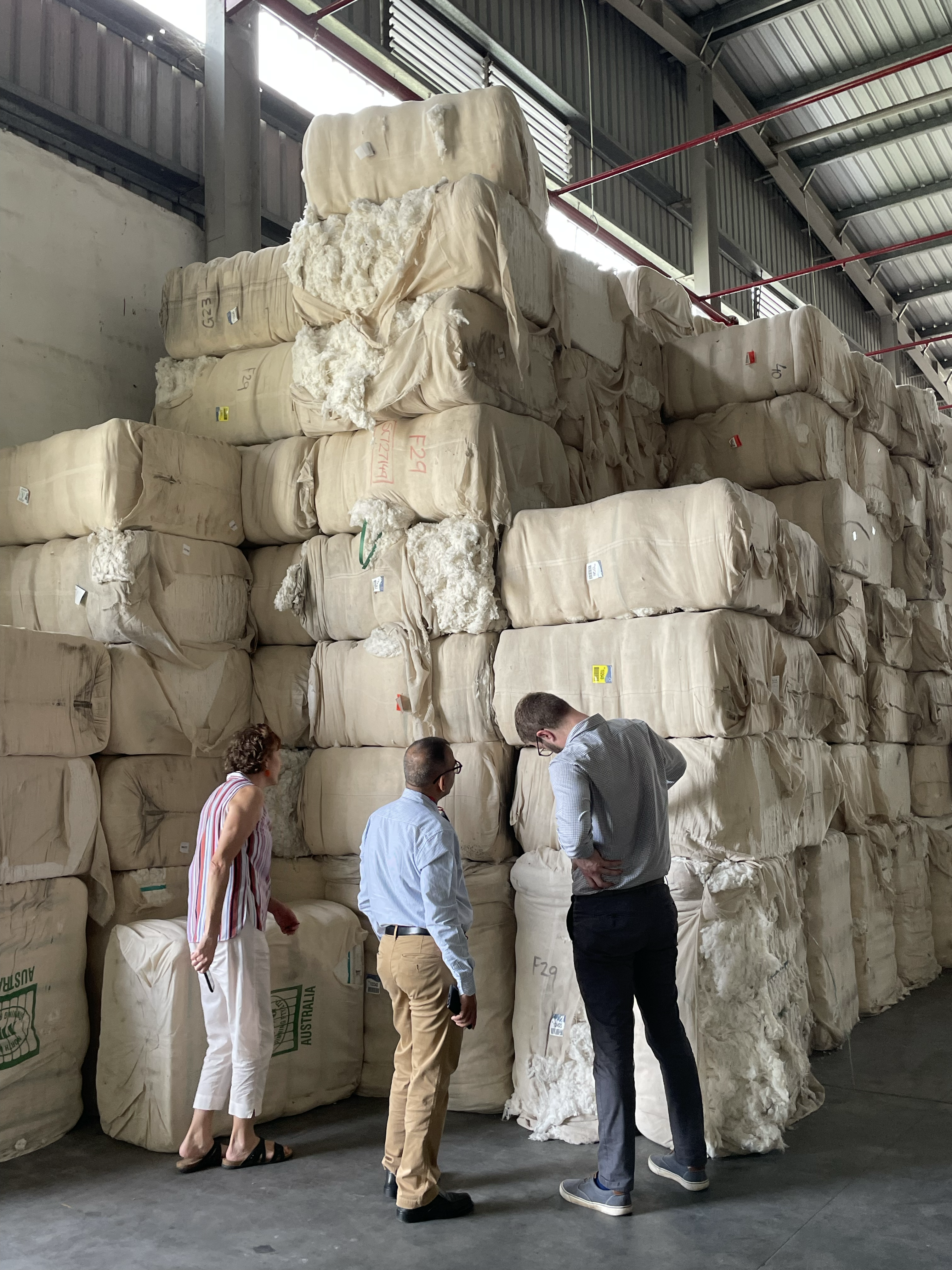
Responsible sourcing has been the cornerstone of our operations at Shahi. Our Knits Processing Division (KPD) has been a pioneer in this field, achieving several firsts. In 2023, we became the first Indian mill to undergo the Yarn Ethically & Sustainably Sourced (YESS) Assessment, managed by Responsible Sourcing Network (RSN). This year, the Knits Processing Division is the first Indian mill to meet the foundational level requirements of the YESS Program, which includes the posting of its first publicly available Due Diligence Report. The Knits Processing Division has set a new standard for sustainable practices.
We’ve made substantial progress in the past year, especially refining our supply chain risk assessment systems. The learnings from our pilot informed our approach to emerging legislation around the world, from the Uyghur Forced Labor Prevention Act (UFLPA) to the Corporate Sustainability Due Diligence Directive (CSDDD) and other new regulations from the European Union.
Role of Manufacturers in Due Diligence
Sourcing raw materials like cotton presents unique challenges due to the complex global supply chain used by the Fashion Industry. Understanding the underlying processes is essential for supply chain members to ensure transparency, improve policies, and implement effective solutions. With guidance from the YESS team, the Knits Processing Division has made significant strides in achieving these goals.
Our progress in mitigating risks
In the one year since you last heard from us, we have:
Refreshed our KYC (Know Your Supplier) requirements, which have been a strong support for getting first-hand information about our vendors.
Built our Responsible Sourcing Policy to align with OECD guidelines and responsible ethics in procuring our raw materials (or cotton inputs).
Implemented a thorough supplier vetting approach, ensuring that our suppliers uphold the same values and moral standards that we follow.
Strengthened our two-way communication tools with our supply chain members to foster better communication and understanding.
Formalized and trained all our sourcing and due diligence teams to align as closely as possible with global standards.
Redefined our responsible sourcing methodology by introducing cross-functional teams from sustainability, compliance, procurement, and production.
These actions have mitigated our exposure to several risks and enabled us to have a stronger partnership with our suppliers.
Improving our Due Diligence
Michael Baldino-Kelly, Director of Program Development who leads the YESS initiative, stated,
“I really want to commend the team at Shahi for all the hard work and effort they’ve put in to meet the YESS requirements to reach the Foundational Level of conformance. It shows Shahi’s foresight in getting into a new initiative as it grows, as well as demonstrated leadership in the due diligence space to be one of the first two mills globally to achieve this status.”
As we enter the next year of this journey, we aim to expand these initiatives. We’re dedicated to exceeding expectations. We follow not only UFLPA requirements but also the broader European Union regulations on sustainability, ethical sourcing, and due diligence.
In the years ahead, we’ll continue to improve our grievance redressal mechanisms, make our reporting more transparent, track cotton from field to finished product, and work more closely with our suppliers. Our goal is to ensure ethical sourcing practices throughout our entire process and address any potential risks.
They say it takes a village to raise a child– an entire community must provide for and interact positively with children for those children to experience and grow in a safe and healthy environment. But what must they grow into? A healthy standard of living? Access to fair livelihood? Survival with dignity? Opportunity for prosperity? What does that child need after it is done “being raised?”
At a wider scale, these questions turn into larger humanitarian conversations where there is a standard or a means that society aspires to achieve— Human Rights, a common understanding of the basics of human existence. But let’s roll back a little from an existential crisis to a real one that manifests itself in countries, economies, businesses, and the very same communities— forced labor.
Understanding Forced Labor
Forced Labor has deep historical, geopolitical, and socio-economic roots from ancient civilizations using enslaved people to medieval serfdom. Colonial powers exploited indigenous populations and harsh working conditions during the Industrial Revolution. The 20th century witnessed forced labor camps in totalitarian regimes. Forced labor, also known as involuntary labor or slavery, is a form of exploitation in which individuals are compelled to work against their will, often under threat of violence or other forms of coercion– a gross violation of human rights and considered a form of modern-day slavery.
The United Nations Forced Labour Protocol (UNFLP) is a pivotal instrument that underscores the urgency of combatting forced labor practices within various industries, most notably the textile sector. The UNFLP, introduced as an amendment to the broader International Labour Organization’s (ILO) Declaration on Fundamental Principles and Rights at Work, has propelled the issue of ending forced labor in the textile supply chain to the forefront.
The Current Discourse
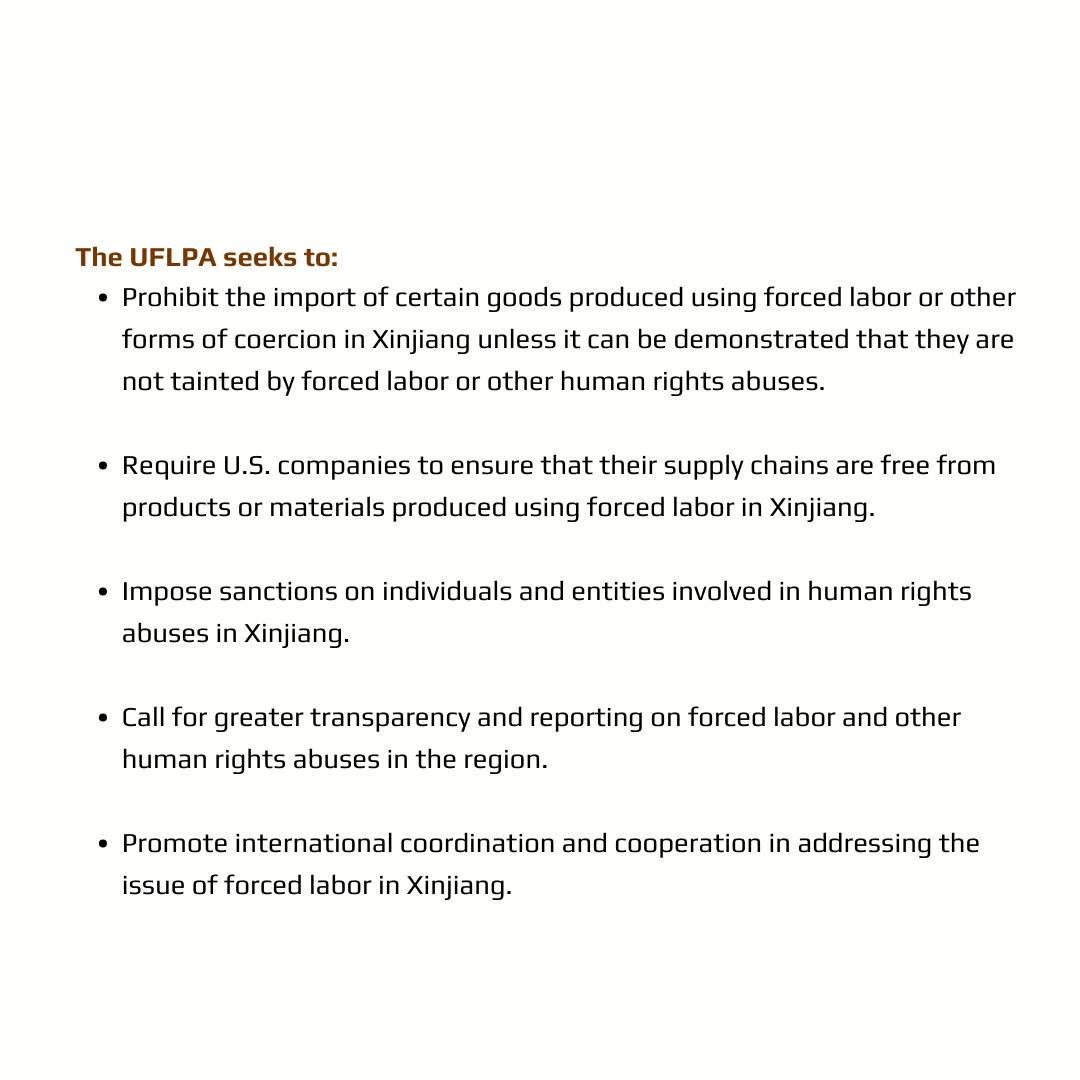
The eradication of forced labor within the textile supply chain has emerged as a fervent and pressing global concern, capturing widespread attention due to a confluence of factors. At the heart of this discourse lies the “Uyghur Forced Labor Prevention Act” (UFLPA), which came into force in the US in June 2022.
The UFLPA is a piece of legislation introduced in the United States Congress aimed at addressing and preventing forced labor and human rights abuses in the Xinjiang Uyghur Autonomous Region (XUAR) of China. The Uyghur people have faced widespread allegations of human rights violations, including forced labor, mass detentions in so-called “reeducation camps,” and other forms of repression in Xinjiang.
For Shahi, this resonated with our Responsible for People framework, which takes inspiration from our founder’s motivations for creating fulfilling and sustainable employment for women. As a vertically integrated manufacturer, we touch a large chunk of the upstream stakeholders. This makes us hyper-aware of the supply chain’s circumstances and the impending impacts that global policies, discourses, and paradigm shifts have on them.
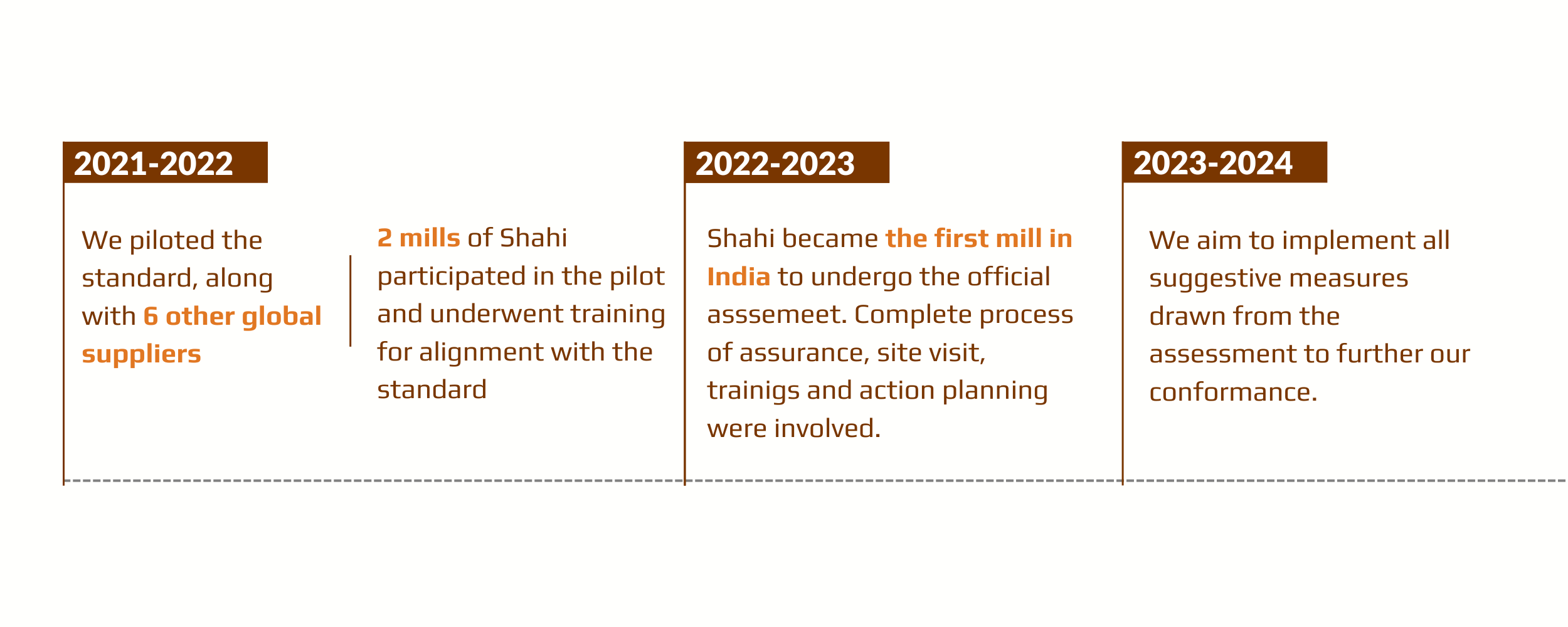
In 2021, we started exploring Yarn Ethically & Sustainably Sourced (YESS), an initiative spearheaded by the Responsible Sourcing Network (RSN). RSN is a non-governmental organization that champions the human rights of vulnerable communities in mining and harvesting raw materials found in products we use daily. The next year, we piloted the YESS Standards, along with 6 other global suppliers, and are now the first mill in India to take the lead in implementing robust due diligence measures.
“Due diligence will help us align with upcoming legislation and also build capacities on critical topics like forced labor.”
— Anant Ahuja, Head, ESG
The Challenge: an Indian Supplier’s Perspective
India has a comprehensive legal framework to combat forced labor and protect workers’ rights. India’s Constitution prohibits forced labor under Article 23, the Bonded Labour System (Abolition) Act, 1976; Child Labour (Prohibition and Regulation) Act, 1986; Minimum Wages Act, 1948; Immoral Traffic (Prevention) Act, 1956, Inter-State Migrant Workmen (Regulation of Employment and Conditions of Service) Act, 1979, The Factories Act, 1948, and other labor laws.
The apparel and textile supply chain is a sprawling web across multiple countries. The numerous stakeholders create a diverse landscape of territorial and customs laws– making it challenging to monitor and regulate labor practices effectively. Being the 5th largest sector in employment, the global nature of this industry intensifies the urgency to address forced labor.
Aligning our Knits textile division with the YESS Standards, our aim is to drive slavery out of cotton production by eliminating the trading of cotton at risk of being produced through forced labor and increasing the use of ethical cotton. The YESS program assesses management systems and inventory controls of mills to identify, assess, and mitigate the risks of forced labor based on the Organisation for Economic Co-operation and Development (OECD) due diligence framework.
“Dedicating efforts to strengthen sustainable governance systems has kept Shahi in the forerunning. With YESS, we will strengthen our due diligence and continue to provide ethically sourced and produced garments to our customers.”
— Ramalingam T, CEO, Knits Division
As a leading manufacturer, our awareness and understanding make our support of international efforts in investigating, monitoring, and mitigating forced labor crucial. Shahi serves on the Advisory Committee of YESS, which brings together different industry players, such as brands, suppliers, and NGOs, to strategize the development of YESS into a commercial and practical standard.
Leveraging Due Diligence
At Shahi, our existing processes allow us to vet, review, and select our suppliers through due diligence. The responsibility is spread across our Sourcing, Warehousing, Accounting, Auditing, and compliance teams. From vendor due diligence to ensuring product quality, we have clear transparency and record-keeping
Verifying the source: We mandatorily seek proof of upstream supply chain— yarn and cotton purchase from our suppliers to check and verify the origin of the yarn and cotton.
Adherence to Policies: We require our suppliers to adhere to our Vendor Code of Conduct, Prohibition of child labor policy, Prohibition of Bonded and Forced labor, Modern Slavery and Human Trafficking Policy, and our Cotton Sourcing policy to ensure that cotton is sourced in compliance with the YESS Standards.
Vertical integration: This has served as a tool to keep track of our yarn inputs right from spinning.
Aligning with YESS
Empowered by the YESS frameworks, we strive to only purchase cotton materials from sources verified as not involving or contributing to forced labor in cotton production. The standards have helped us achieve added qualifications in our due diligence process.
“YESS is a more conversational assessment wherein the facility can explain its unique systems and processes around due diligence. The sourcing teams are able to solve queries and doubts, which is not possible in one-sided audits.”
— Amanullah SP, AGM, Spinning Production
Governance
Support and build capacities of cotton-supplying counterparties to improve performance and conform to responsible cotton-sourcing policy.
Exercise due diligence in consistency with US UFLPA
Organize formally responsible sourcing teams within our existing sourcing teams
Assessment and action
Annual assessments through YESS auditors to verify conformance status and continually identify opportunities to improve our responsible cotton due diligence management system.
Preparing reports on progress and sharing with the YESS
Where risks of forced labor in cotton production are identified, develop a risk management plan that engages internal and external actors in the supply chain who can collectively mitigate the risks of adverse impacts.
“I am impressed with Shahi’s team for not only taking a deep dive into the nuances of forced labor but then strengthening their processes and implementing a due diligence approach to identify, assess, and mitigate this abuse. I appreciate they care about contributing to solutions that have an impact.”
— Patricia Jurewicz, CEO of RSN/YESS
What we look forward to
We look forward to strengthening our relationship with our suppliers and supporting them with our learnings from sustaining a 115,000-strong workforce and exposure to evolving standards and our position in the industry.
With YESS, we have made an attempt to align the company with the upcoming legislation— a proactive measure that gives us the confidence to serve international clients. As we write this piece, more regulations will be adopted worldwide. In the upcoming years (Years 2 and 3), through YESS, Shahi will be able to implement the vision behind these regulations and contribute to mitigating the risk of forced labor.
To name a piece of versatile, durable, and timeless clothing, very few would hesitate to pick the go-to pair of blue denim. Tracking the evolution of denim in the fashion industry, it is often surprising to people to know that the initial design for denim was made for miners and seafarers. The durability of denim made it an instant favorite for all heavy lifting work in the 1800s.
Over time, denim has crossed oceans and continents to lodge itself firmly in fashion history. What evolved from a completely practical utilitarian trend turned into a rebellious cultural shift in the 1960s and eventually a lifestyle choice. (read: The history of Denim Jeans).
But as it transforms from workwear to casual, how did manufacturers re-create that same worn-down look?
Wearing The Pair Down
Denim washing and finishing is a highly resource-intensive process. Conventional methods of mass production also use a large amount of water, chemicals, and energy to produce a pair of jeans. To find out more, we took a trip to Unit 23, Shahi Exports’ Denim Unit in Bengaluru.
Pulling off Denim
Shahi set up the Denim Division in 2010, with Unit 23 in Bengaluru. Currently, Shahi has two denim garmenting units (Units 1 & 23) and a laundry with a production capacity of 12 million pieces per year. Since then, this newest addition has led the growth towards sustainable operations internally and with the customers.
“Judiciously utilizing the four essential resources— chemicals, energy, water, and our people define sustainability for us. Sustainable operations are not limited solely to environmental factors, but the well-being of our workers is equally important,” Mr. Nandheesh Gowda, General Manager, Laundry.
Shahi has adopted the Laundry 5.Zero strategy that has been predicted to revolutionize the denim industry.
We bring together cutting-edge technology from all over the world to make a truly global product, not just fashionable but sustainable.
Scrubbing the Chemical Out
Rethinking the production from the design stage, keeping in mind circularity, is key to ensuring the sustainability of the product. The design team at Shahi starts working from the initial stage– design to minimize the environmental impact of the production. We opt for lighter shades of denim which require a light wash. They demand significantly shorter washing cycles, thus reducing the environmental impact.
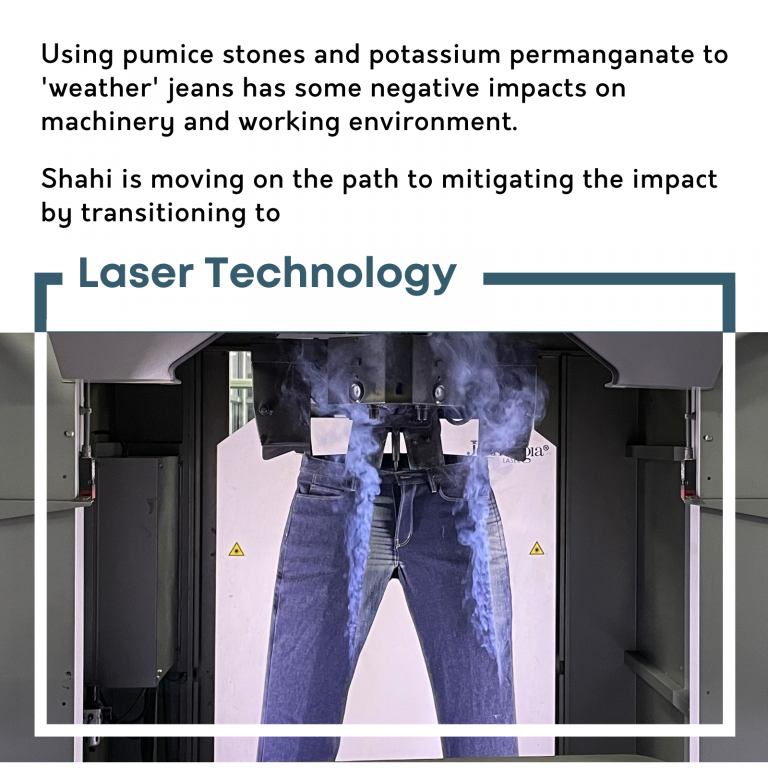
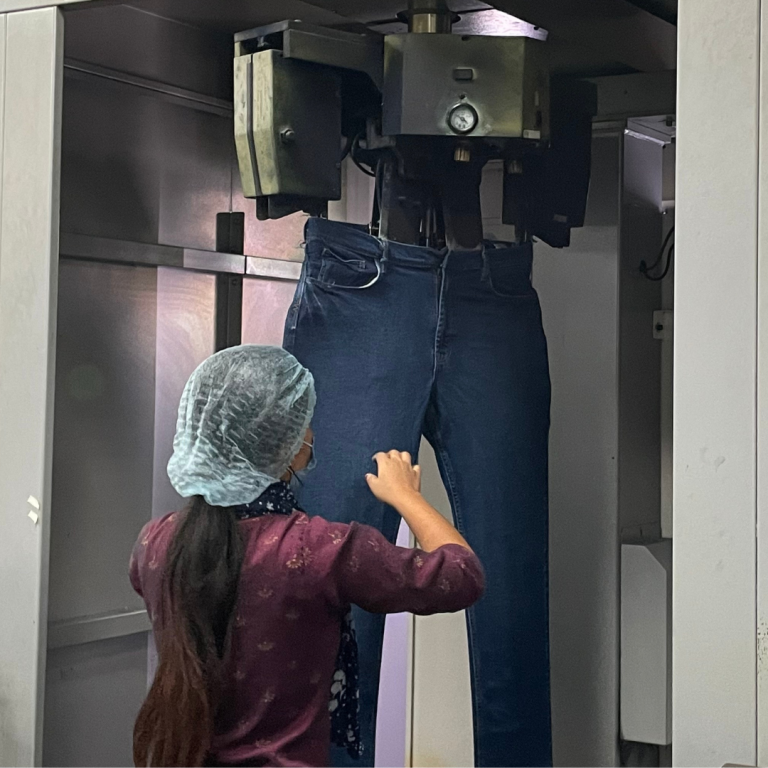
A pair of jeans can be ‘weathered or distressed’ using wet and dry finishing processes. Traditional methods of distressing the fabric require workers to scrub them by hand. As the scrubbing sheds layers of blue dust, it is harmful to workers’ health. The finishing process may also require washing with chemicals. Aligning with Laundry 5.Zero, Shahi uses laser technologies to reduce the use of grinders and scrubbers.
The intensity of the distressed look depends on three major factors: wavelength, power density, and pulse width of the laser beam. A computer inputs the desired design and guides the laser over the fabric to create a fading or distressed look. It concentrates heat to decompose the dye according to the desired wash style.
This novel technique provides an alternative to traditional methods such as acid washing, sandblasting, and using potassium permanganate and therefore helps us create a safe and comfortable working environment for our workers. Additionally, laser technology increases our flexibility, speed, and precision to meet significant production needs.
Shahi has developed a single window to facilitate the purchase of chemicals. It helps us to screen the required information about a chemical before purchasing it. The single window is compliant with international standards such as the Zero Discharge of Hazardous Chemicals Manufacturing Restricted Substances List. It makes sure that we do not use any restricted chemicals harmful to the environment in our production and eases the procedure to procure the chemicals. Streamlining the process also helps Shahi align with the needs of our customers. The larger goal is to protect our production workers, local communities, and the environment from the impact of banned or hazardous chemicals and, ultimately, the consumer.
Shahi constantly collaborates with the best chemical suppliers to better their processes in the Denims Division.
Sustaining the Classic Blue
The classic blue in denim is created through water-intensive washing processes. A significant way to develop a more sustainable operation for producing denim is to focus on its water consumption. Shahi explored technology providers from around the world to bring down our material liquid ratio (MLR) from 1:6 to 1:1.
The principle
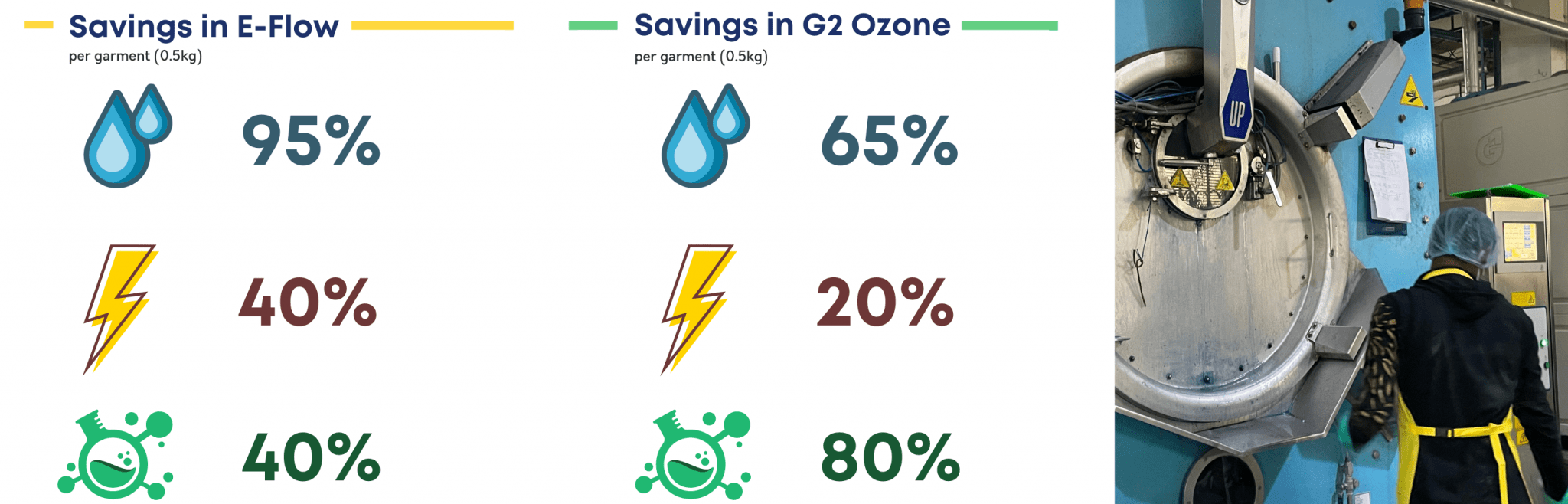
e-Flow technology was ideal for reducing water consumption. The technology turns the chemicals into nanobubbles before being subjected to the washing machine. Nanobubbles of air act as a carrier to transmit chemicals into a garment with a minimal quantity of water and zero discharge. This has led to an average of 95% water savings for every denim washed.
Another technology is the G2 Ozone washing machine, which generates ozone from the air to catalyze the indigo fiber dyeing and produces the authentic worn-down look in the desired shade. The water consumed is reduced by 65% and the energy by 20%. The ozone is re-converted into oxygen and released into the air, leaving no harmful by-products.
While reducing water consumption in denim production is essential, it is equally important to reduce dependence on fresh water as much as possible. By installing state-of-the-art effluent treatment plants, Shahi recycles and reuses 100% of its water usage. Our denim laundry achieved the Zero Liquid Discharge (ZLD) standard in 2019. We constantly monitor the water conserved in laundry through our Environmental Impact Measurement (EIM) tools.
Going the Extra Mile on Energy
85% of the electrical energy consumed in Unit 23 is renewable. Additionally, the unit utilizes zero coal for its operations. Shahi set up asolar power plant of 84 megawatts and 9 megawatts of wind power. We aim to suffice 100% of our electricity needs with renewable sources by 2026. Substituting conventional sources for low carbon and sustainable alternatives for thermal energy is a top priority for Shahi.
We have several initiatives running across the units, for example— converting most of our high-speed diesel-fired boilers into agro-waste or PNG-fired boilers to generate steam.
Our newer units are built to incorporate green building principles to minimize energy consumption and leverage natural lighting on the shop floor. All the new units harness sunlight to illuminate our shop floors, and the architecture facilitates natural ventilation that reduces heat dissipation from electric lighting fixtures. The reduced temperatures on the shop floor impact our workforce and their environment directly.
Synergizing People and Resources
People and their well-being are integral to sustainability at Shahi, and worker well-being focuses on providing a safe and healthy environment and creating opportunities for growth.
In a study with the Good Business Lab, we observed that Replacing fluorescent lights with LEDs reduces energy consumption by roughly 85%, reducing the average indoor temperature by 2.4°C. Incidentally, a transition to LED lights also increases the workers’ productivity on the shop floor. 83% of all the lights at Unit 23 comprise LED lighting. We launched a campaign to replace conventional T8 task lamps with LED lighting for individual workers’.
What does it really take to pull it off?
With conscious consumerism on the rise, and the industry grappling with limited resources, the beloved go-to pair of denim will have to transform itself into its most low-impact versions that require minimal resources — and also maximize its life cycle. This means that manufacturers and brands have a pivotal role in revolutionizing the industry right from the designing stage.
Shahi invested significantly in state-of-the-art machine equipment to upgrade the factory and laundry facilities. To name a few of our many initiatives in the Denims Division—
Laser machines from Jeanologia,
Chemical auto dosing,
Using Ozone, e-Flow, and other water-efficient technologies,
Developing a single-window chemical purchase window to prevent the entry of restricted chemicals, and
Collaborating with the best chemical suppliers.
Making it even better
But, Shahi is not stopping here. Our teams constantly look for ways to produce denim wear, maintaining Laundry 5.Zero principles; or synonymously ‘The Jeans of the Future.’ The key is to find the perfect set of equipment and technologies that complement each other in energy, water, and chemical consumption.
We are working on additional strategies like:
Unit 23 showcases sustainable operations at every step of the way and progressively eliminates processes that degrade the environment in bringing a piece of denim alive. We look forward to what the future of the denim industry beholds.