Author: Gauri Sharma

  • The Missing Link in Scaling Sustainable Fashion Innovation

    The Missing Link in Scaling Sustainable Fashion Innovation

    Why Innovation Scaling in Fashion Has an Integration Problem

    For the past decade, the fashion industry has pursued innovation in materials, chemicals, and decarbonization with urgency, but one critical factor remains overlooked: supply chain integration.

    Brands, funders, startups, manufacturers, and ecosystem partners often operate in silos, despite sharing similar goals. Startups often prioritize partnerships with brands over manufacturers. Brands struggle to make off-take commitments to their manufacturers. Manufacturers are stuck in pilot frenzy, disproportionately bearing financial risk relative to their margins. Funders and VCs sit at a distance from all of this – wondering where to make the most bang for their buck.

    True scale is only possible when all four players—startups, brands, funders, and suppliers—work together.

    Brands: The Power of the Pull

    In fashion, demand signals start upstream. That’s why we begin with brands to convert promising pilots into larger production runs. Here, it’s important to understand the difference between product innovation (like a new material) and production innovation (like a new process). While a new process might offer immediate efficiency gains for a supplier, a new material requires a brand’s commitment to be adopted. But we’re lagging behind as an industry: A report by Fashion for Good states that while 51% of brands have committed to using preferred sustainable materials by 2030, the current global production of next-gen materials is less than 1%​

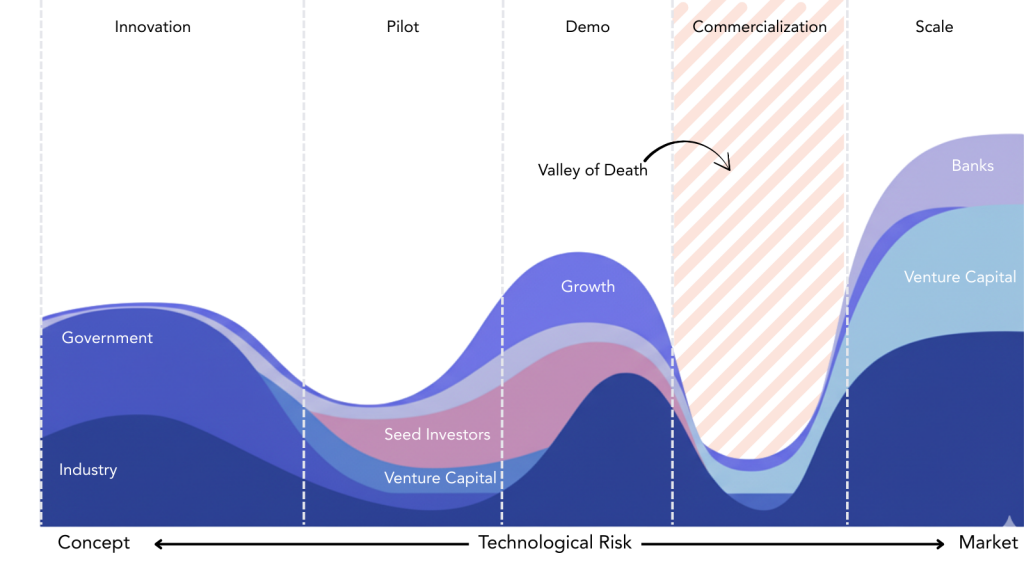
    Valley of death

    Brands often struggle to “pull” these innovations through long-term offtake agreements due to premium costs or minor quality differences before a startup achieves economies of scale. Brand commitments are crucial in derisking the investment for suppliers and helping innovators survive the “valley of death” — a stage between demo and scaling where innovations sink without the required support. Brand consortia can also play a vital role. For example, Fashion for Good has recently launched two Fiber Clubs to generate streamlined demand and provide much-needed orders to mills that have relentlessly tested these materials. This helps prevent pilot fatigue for manufacturers, where different brands conduct similar trials in silos.

    Startups: From Brand-First to Supplier-First
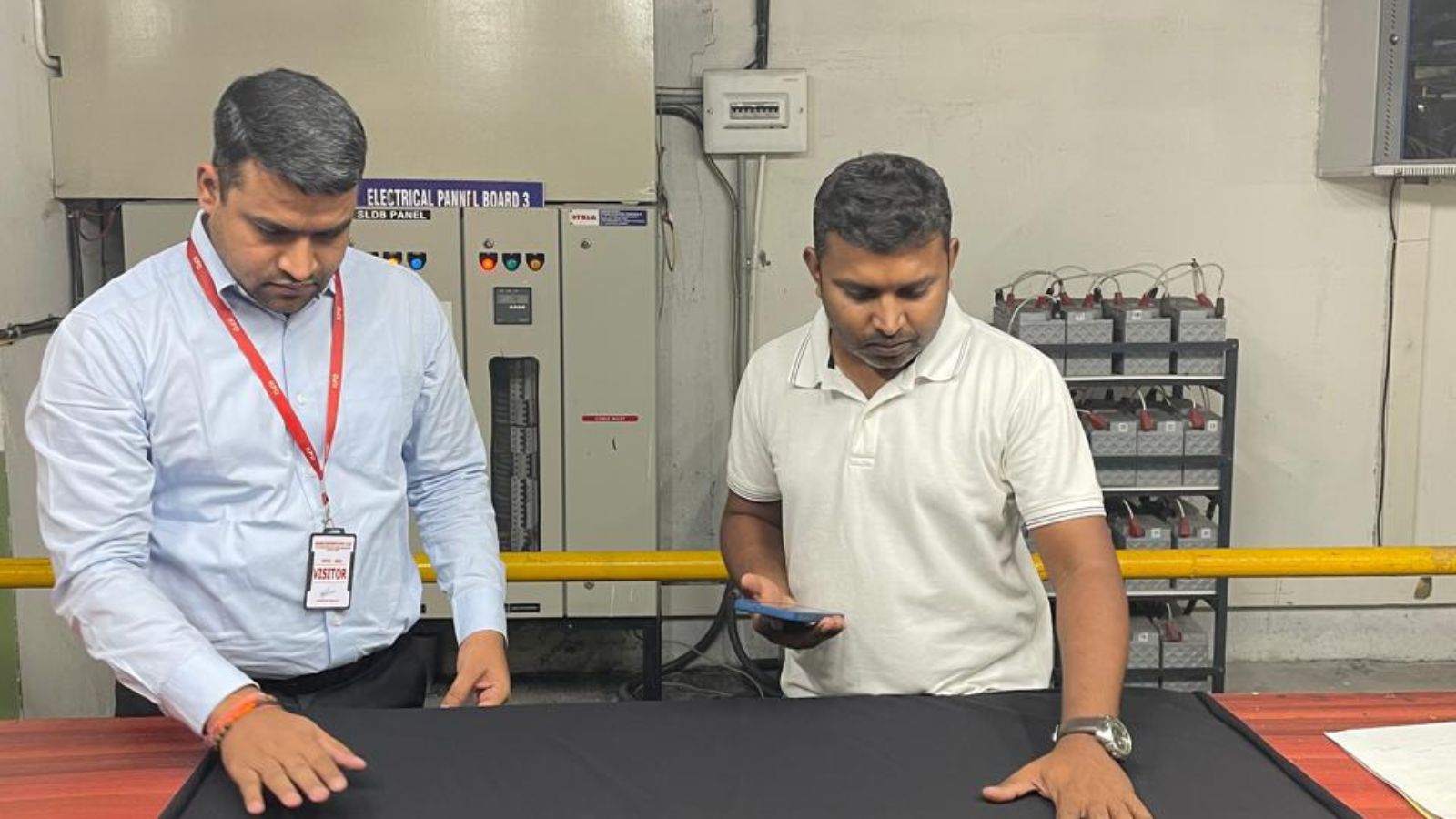
    Bio-based prepare-for-dye innovation trial

    For Production Innovation, startups must innovate for the manufacturer, not just the brand. Off-take commitments create predictable demand—but demand only converts if plants can actually run the process. That hand-off is where startups must shift from “brand-first” to “supplier-first.”

    A successful pilot doesn’t guarantee a viable integration in a factory setting. In our experience, the startups that successfully scale are the ones that prioritize direct partnerships with suppliers. They get on the ground, in the mills and factories, to run pilots, tweak recipes, and build trust. They’ve focused on making their value proposition to manufacturers operating on razor-thin margins clear: reducing costs or improving efficiencies. For example, we’re currently working with a bio-based prepare-for-dye startup that has honed its technology for its mill partners, showing tangible resource savings in steam, water, and time. It took us 18 months to go from pilot to bulk trials, and we are now working with them to forge a long-term partnership.

    Funders and VCs: Accelerating Commercial Feasibility

    Even supplier-first startups hit a wall if there are financial constraints. This is where aligned capital can be most effective.

    Financial institutions, VCs, and philanthropic funds are vital to scaling. By linking directly with suppliers, they can accelerate commercial feasibility and make better-informed investment decisions. Funders want their portfolio companies to have industry linkages for testing and validation, and suppliers hold the technical expertise.

    This collaboration moves a technology from theoretical to practical assessment. For example, we’ve worked with a research institution on a grant-funded study on electrification and decarbonization. We were also able to run a grant-funded pilot for an electrical water recycling technology. This helped us move quickly from a theoretical to a practical assessment of the technology for commercialization. 

    Suppliers: The Technical Heart of Innovation

    Financing and studies can de-risk the idea, but suppliers de-risk the integration.

    Suppliers are often seen as passive implementers, but they are the technical heart of innovation. They possess the operational know-how to make a startup’s solution industry-ready. By recognizing their power in innovation integration, suppliers can be proactive partners. They are the most savvy and technically sound stakeholders in the supply chain, and they have the knowledge to mentor and guide startups on the viability and scalability of new solutions.

    Across these roles, the pattern is clear: demand signal (brands), an impactful idea that can scale (startups + suppliers), and acceleration capital (funders) locked in a single plan—not a sequence of uncoordinated actions.

    At Shahi, we have developed a four-part process:

    This systematic approach allows us to find solutions that directly address our needs, reimagine ideas that aren’t a win-win, and mentor startups to navigate the complexities of a real production environment.

    Define: We frame the problem statement based on the requirements of a mill or business unit. For example, our mills are currently looking for technologies beyond biomass to phase out coal.

    Scout: We leverage our network of accelerators and partners to identify startups that solve our problems. For example, we collaborated with a corporate innovation accelerator to host a “Pivot with Purpose” deal flow session, where nine energy startups presented their technologies to our teams.
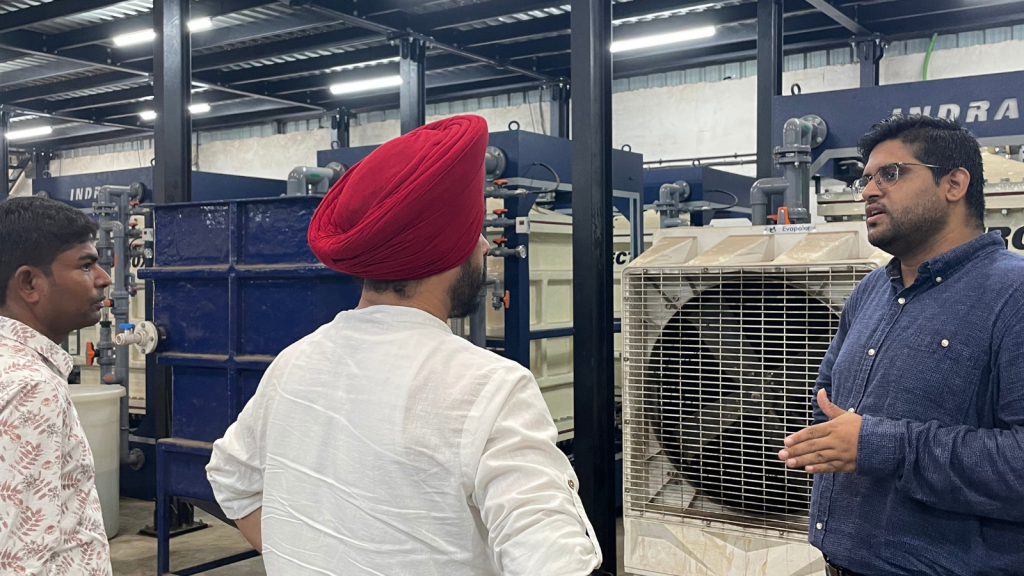
    Direct technical due diligence by engineering experts

    Pilot: We design a pilot plan in a controlled environment with a technical lead. For example, for an electrical water treatment technology, the pilot machine and the startup technician stayed at our facility for 10 days, being closely monitored by our Engineering Head. Together, they determined the efficacy of the solution, tweaking the system as they went along.

    Scale: Once a technology clears the pilot and commercial feasibility, it can move into scaling. We recognize that just because something works in a pilot, it may still fail in bulk. If it’s a product innovation, brand pull is needed. For example, we’re currently working with a couple of brand partners to produce bulk orders of a textile-to-textile recycled material.

    So what does a new innovation system look like?

    If we want to achieve true decarbonization and circularity by 2030, we must move beyond pilots that don’t scale. One-off experiments waste time, while integrated partnerships change systems. That means: brands committing to off-take instead of just targets; startups optimizing for factory floors, not press releases; funders underwriting the uncertain middle, where risks are highest but impact is proven; and suppliers leaning in to this process to make innovations industry-ready.

    At Shahi, we’ve built our Define–Scout–Pilot–Scale model to make this kind of integration practical and repeatable. We frame the problem with our mills, bring in the right innovators, and only scale when economics and reliability are clear.

    If you’re a brand, startup, or funder ready to co-design the future of sustainable fashion,


    * S. Barr, T. Baker, S. Markham, A. Kingon, “Bridging the valley of death: lessons learned from 14 years of commercialization of technology education”, Academy of Management Learning and Education, vol. 8, no. 3, pp. 370-388, 2009.
  • The Decarb Diet: Insights into the Complexities of Supply Chain Decarbonization

    The Decarb Diet: Insights into the Complexities of Supply Chain Decarbonization

    Albert Einstein famously said, ‘We cannot solve our problems with the same thinking we used when we created them.’ This insight couldn’t be more relevant in global efforts to decarbonize. For the fashion industry— responsible for up to 10% of global carbon emissions; a major problem to solve is halving its emissions in the next five years. With up to 80% of those emissions coming from supply chains, manufacturers like Shahi bear the heaviest responsibility. Accelerating progress on these fronts will require new ways of thinking and working.

    How do manufacturing companies lead this transition while navigating financial risks and technological challenges? 

    This article explores the steps we are taking toward renewable energy and how collaboration between brands and stakeholders is key to unlocking sustainable solutions.

    Breaking down energy consumption in manufacturing

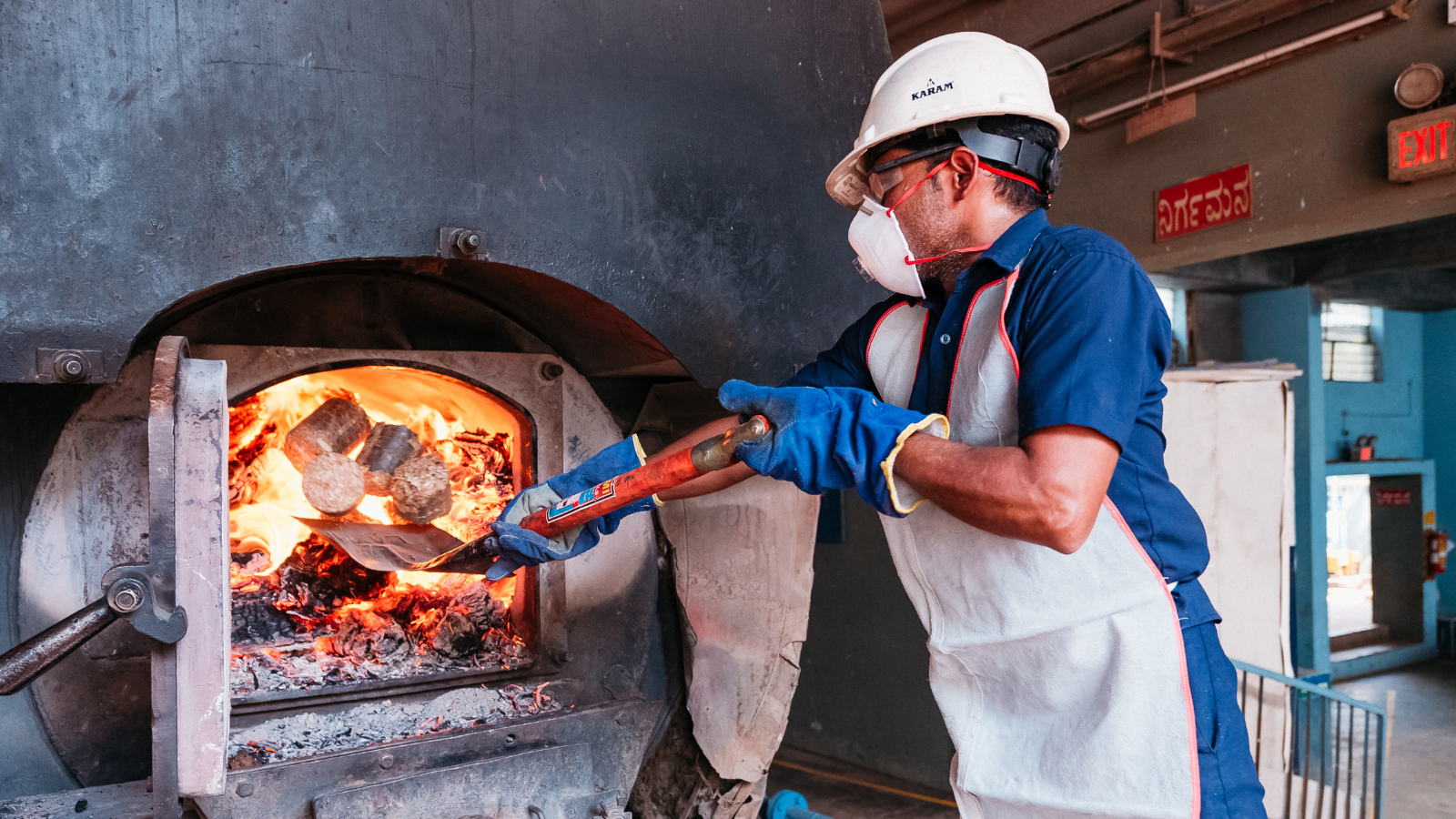
    Our operations rely on two types of energy: electrical and thermal. Electrical energy powers daily activities, while thermal energy, mainly from boilers, generates steam and hot water for processes like dyeing and finishing fabrics. 

    At Shahi, 81% of our energy comes from thermal energy due to our large textile operations, with the rest coming from electricity. While renewable electricity has been the industry’s primary focus, phasing out fossil-fuel-based thermal energy in textile production is where the biggest impact of decarbonization lies.

    Toward 100% renewable electricity at Shahi

    Over the past decade, we’ve invested heavily in renewable electricity, reaching 65% renewable energy for our operations. Supported by favorable government policies, in 2018, we strategically invested in two solar plants with a combined 84 MW capacity and 8.75 MW of wind power in Karnataka. These plants generate 130 million kWh annually, cutting over 610,000 metric tons of CO2 emissions since 2018. This year, we’re expanding with a 40 MW solar project in Karnataka and smaller ones in Uttar Pradesh and Tamil Nadu, bringing our renewable capacity to 151 MW. 

    Driven by our commitment to sustainability, we are working toward 100% renewable electricity by 2027.

    Phasing out coal in our operations

    By 2022, we successfully transitioned all our garment factories from coal to biomass. The greater challenge lies in our textile mills, which require hundreds of tons of coal daily to operate. The UN The Fashion Industry Charter for Climate Action mandates that brands should not onboard any new factories and mills that use coal. This significantly accelerates the timeline for phasing out coal set by the Paris Agreement, which permits non-OECD countries until 2040. However, the Charter also states that brands should establish engagement and incentive programs to support their suppliers’ transition from coal. Thus making collaboration and a willingness to share risks essential.

    We are addressing this by rapidly increasing biomass use, a carbon-neutral alternative. One of our mills has been 100% coal-free since December 2023, and two will be 50% coal-free by January 2025.

    Challenges of decarbonizing thermal energy

    Replacing coal with biomass as a fuel source requires substantial upfront investments from suppliers. For each of our 50 factories and 3 textile mills, we’ve invested substantially in biomass-enabled systems, including Atmospheric Fluidized Combustion (AFBC) boilers, Thermopac systems with electrostatic precipitators to capture fine particles, expanded biomass storage facilities, and automated ash handling plants to reduce health risks.

    Sourcing and handling biomass also present challenges. Building a reliable supplier network is crucial to mitigate seasonal fuel fluctuations and ensure a steady supply chain. In India, like most of the world, biomass is still an informal industry compared to coal, which is well-established. To address the challenge of the biomass supply chains, we’re collaborating with biomass aggregators and experts to assess local agricultural waste availability. Our goal is to vertically integrate our biomass supply.

    This, however, would be a temporary solution that will need replacing with more sustainable options, requiring additional investments in the future. We are excited by upcoming technologies such as green hydrogen, electric boilers, and heat pumps.

    A study in India shows that electric boilers and heat pumps are capital-intensive and are likely to increase the cost of operations, driven by the price of electricity, which is higher than the current fuel prices per unit of energy. While the return on investment for these technologies is yet to be determined, and given that textiles is a low-margin industry, manufacturers need government and brand incentives to help switch to newer, cleaner technologies. Further, to drive emissions down further, it’s important that the national grid procures increasing amounts of clean electricity and shifts away from fossil fuels overall.

    Collaboration as a catalyst for change

    While the major impact of climate change lies in the supply chain, the entire value chain, including brands and other important stakeholders, must share responsibility for climate action. Collaboration with brands and stakeholders is key to reducing the risks of transitioning away from fossil fuels and creating innovative solutions that can be scaled and adopted.

    First, it is crucial to accelerate R&D to find alternatives to biomass. Decarbonization isn’t just a fashion industry issue; it’s a global challenge that requires cross-industry collaboration. For example, we can learn from the tech industry, which is adopting renewables as its energy demand increases significantly with the rise of AI. 

    Second, sharing the financial burden requires not only brand support but also financial institutions. Manufacturers can benefit from funding for higher-risk, long-term investments, such as infrastructure changes needed for climate adaptation that go beyond debt. 

    Finally, reimagining suppliers as value-adding co-creators rather than just implementers ensures sustainability strategies align more closely with real-world operations. 

    By aligning goals, pooling resources, and fostering transparent partnerships, we can develop scalable, unified solutions to decarbonize the industry.

  • Supervisory soft skills can transform factory culture and performance: GBL Study

    Supervisory soft skills can transform factory culture and performance: GBL Study

    Apparel factories typically operate through assembly-line production. Large teams of up to 70 workers stitch and assemble all the components of a garment under the leadership of a line supervisor. In a fast-paced environment where success is measured by the ability to meet production targets, supervisors are often selected solely based on their technical skills.

    While it is common practice for managers in corporate or white-collar jobs to receive management training, factory supervisors are rarely trained on the soft skills they need to harness the potential of large teams.

    Recognizing this gap, in 2016, Shahi partnered with Good Business Lab (GBL) to design an extensive soft-skills program called STITCH (Supervisors Transformation into Change Holders) which encompasses sessions on topics ranging from problem-solving and coaching to gender sensitivity and improving workplace culture.

    GBL’s research shows that STITCH enhances supervisors’ stock of soft skills, reduces turnover, and increases the workers’ productivity in their lines, thus raising incomes and the probability of receiving incentive bonuses. Shahi has already trained over 1400 supervisors in STITCH and enrolled more than 50 percent of supervisors in STITCH since 2017. 

    Designing an effective leadership training program

    The training content was developed based on an extensive survey of 2,000 supervisors at Shahi on their managerial practices and styles, workplace behaviors, and personality characteristics. The data from these surveys was matched with historical data on productivity to determine the training needs of supervisors required to improve supervisors’ effectiveness and behavioral temperament at work. The surveys found that tenure, cognitive skills, internal locus of control, autonomy, and attention are significant influencers. 

    The STITCH training was designed to enhance core competencies and capacities of the supervisor to effectively manage their key roles through four modules (see Figure 1)

    Module #1: Me as a person

    This module helps supervisors understand and reflect on themselves as individuals, and recognize their strengths and values. The aim is to understand and strengthen their cognition of the ‘self’ before looking at themselves as supervisors. 

    Module #2: Me as a supervisor

    The second module helps supervisors understand their roles by locating essential skills such as planning and organizing, problem-solving, conflict resolution, and prevention of harassment.

    Module #3: Me as a team member

    The third module helps supervisors broaden their perspective of what it means to manage a team by being a team member and effectively motivating the team and building engagement. 

    Module #4: Me as a leader

    This fourth module helps the supervisors to develop their role as a leader. The module covers aspects like coaching a team effectively, being open to feedback, and changing the work culture by encouraging dialogue, openness, respect, and growth.

    The sessions have been designed keeping in mind the need to support the transformation of supervisors at both a personal and a professional level. Shahi trainers deliver the training through weekly one-hour group sessions to a batch of around 20 supervisors over a period of 25 weeks (6-7 months).

    Reflecting on her training experience, Pavithra, a supervisor in Unit 28 said,The ‘Me as a Person’ module helped me understand myself. I make an effort not to judge others and think about how my behavior affects others. The program has made me not just a better supervisor but also a person. I find my level of patience considerably increased, and I hope my interaction with people leaves them with a smile.”

    Soft skills boost performance on the factory floor

    GBL’s impact evaluation validates Pavithra’s and many other supervisors’ experiences. The study concluded that the supervisors who received the training had more skills in the dimensions trained, as they performed significantly better in post-training tests in all four modules. Further, productivity on lines managed by STITCH-trained supervisors increased by 7.3%, and trained supervisors were 15% less likely to quit relative to those who did not receive the training. Trained supervisors experienced 6% higher salary growth and they and the workers in their lines had a higher probability of receiving incentive bonuses compared to untrained supervisors. 

    Although the study did not find any significant direct impact of the training on workers’ wellbeing and supervisors’ satisfaction, stories of transformation shared by trainees indicate a positive change in their behavior and skills sets. Byresh KM, a housekeeping supervisor in Unit 11 shares his experience attending STITCH:

    I was a demotivated employee that would neglect my responsibilities and constantly feel stressed. This would manifest in the form of anger and shouting, resulting in high levels of attrition in my team. After attending STITCH in 2021, my attitude towards life and work has completely shifted. I learned skills like patience and problem solving, which I now use to motivate my team, listen to their issues, and coach them on how to do better. My self-worth has increased – I feel like my work matters to the company and I want to contribute further by getting promoted from supervisor to housekeeping in-charge.

    Mallesh V G, a supervisor in the manual brushing department in Unit 23, experienced a shift in mindset after attending the gender sensitivity module, “Before the training, I did not believe that women could be team leaders and felt that they can’t cope with additional responsibilities. STITCH taught me that gender is not important, but rather the person’s interest and skills are what matters. I now actively support women workers in my team to grow professionally.”

    Future goals

    Chitra Ramdas, General Manager, Organizational Development shares Shahi’s commitment,

    In our experience designing and implementing this simple training has had a transformative impact on workplace relations and the work environment, leading to wider benefits for our organization. Our goal is to train 100% supervisors by 2024. 

    Shahi and GBL have developed a smartphone application-based screening application to identify the best candidates to hire or promote for managerial roles by scoring them on their personality, cognitive ability, and managerial quality, potentially eliminating workplace bias. This application will also identify gaps in the soft skills of these candidates which can be filled by delivering relevant STITCH training modules to them virtually.

    We’re also extending our learning from STITCH to develop soft skills training for middle and senior factory and corporate management. An eight-month leadership development course has been designed with 17 modules to groom upcoming leaders at Shahi. This training will be extended to all leadership at Shahi’s factories and offices.

    At Shahi, we have known the value of training on soft skills such as time and stress management, problem-solving, and execution excellence by training over 60,000 women in Gap Inc. Personal Advancement and Career Enhancement (P.A.C.E.) since 2007. Our goal is to train 90,000+ women in GAP Inc. P.A.C.E. by 2024. 

    In a fast-paced industry where speed of production and delivery is paramount, manufacturers often look to technical and operational solutions to drive efficiency. Soft skills training is usually not a top-of-mind solution for manufacturers. However, studies like this one by GBL prove that soft skills training is a simple yet highly effective tool to boost factory culture and performance, creating a win-win situation for both employees and the company.

  • Shahi featured on Season 3 of the Manufactured Podcast

    Shahi featured on Season 3 of the Manufactured Podcast

    Manufactured is a podcast started in 2020 with the intention of providing an insider perspective on sustainability in the fashion supply chain. Hosted by Kim van der Weerd and Jessie Li, two industry professionals who have worked directly in and with factories, this podcast spotlights those working in the supply chain, from factory owners and textile manufacturers to designers and sustainability officers. Through this approach, Manufactured is able to amplify key perspectives from the ground on complex issues such as buyer-supplier relationships, worker-management relations, subcontracting, and more. The long-form format of podcasting further enables this project to achieve its mission.

    We believe in the greater need for transparency and open dialogue, so when Kim and Jessie reached out to Shahi to participate in an episode we were grateful for this opportunity. Transparency is often seen as consumer demand, however even as a supplier, there are benefits to being transparent including gaining valuable feedback that can help us learn and improve as well as having the opportunity to present our perspective on important events.

    Two members of Shahi’s Organizational Development team, Anant Ahuja and Gauri Sharma joined Kim and Jessie for the latest double-episode of Manufactured which is now in its third season.

    Part 1 (Episode 27) covers the following topics:

    • The journey of Shahi over the last 45 years
    • Why suppliers need to take a leadership role in the sustainability agenda
    • Barriers to genuine partnership and collaboration between buyers and suppliers: Power dynamics, lack of trust, and perceived lack of incentives for suppliers to invest in sustainability
    • Why Shahi set up Good Business Lab and the need for an evidence-based approach to worker wellbeing programs

    Part 2 (Episode 28) covers the following topics:

    • The advantages of becoming a vertically integrated supplier
    • Sourcing cotton in India and the challenges faced by cotton farmers
    • Our new research project with the Hong Kong Research Institute of Textiles and Apparel (HKRITA), through which we are reclaiming textile waste to grow cotton more efficiently as a way to support cotton farmers

    Sign up for the Manufactured Podcast newsletter view more.

    Read Kim’s blog JUST FASHION view more.

  • By women, for women: How we co-created a menstrual hygiene management program with our female workforce

    By women, for women: How we co-created a menstrual hygiene management program with our female workforce

    Menstrual hygiene management is core to women’s health, self-confidence and ability to work. With Project “Pravah”, Shahi is providing menstrual health and hygiene training and awareness and easy access to low-cost, high-quality sanitary products to its women employees. This blog post is written from the experience of the OD field team that designed the project.
    To know more about the impact of the intervention


    Click here

    Why menstrual hygiene management (MHM)?

    Even though MHM is core to women’s health, self-confidence and ability to work, it is a taboo topic that is not talked about openly in India. In a country where the female labor force participation is abysmally low, Shahi’s factories like other garment factories, are rare spaces where you see more women than men. Every factory is legally mandated to have a dispensary stocked with sanitary pads. However in a single factory with over 3000 women, on average only 200 pads are being used every month. The numbers don’t add up.

    This led us to wonder:
    How are 70,000 women in our factories affected by and managing menstrual health?

    To understand this gap better, in 2018, we designed and conducted Focus Group Discussions (FGDs) with around 180 women across five factories in Shahi North, to talk about various aspects of menstruation — myths and taboos, health and hygiene, products and practices, and its impact on work. It was not without its challenges. Socio-cultural barriers around menstruation over the years in India, have led to a culture of uncomfortable silence on discussing periods, especially at the workplace. To facilitate discussion, we tried to create a  “safe space” for women to talk about menstruation by sharing our personal anecdotes and experiences. We conducted similar discussions with other factory stakeholders including supervisors, HR and medical staff.

    To supplement our findings, in 2019, Good Business Lab (GBL), a labor innovation start-up incubated at Shahi, also conducted a quantitative baseline survey with 260 randomly selected women in two of these factories on topics including their perception of menstruation, sanitary products, barriers to using pads, and mental health during menstruation.

    FGDs being conducted in Shahi North

    What did we learn from our research?

    Most women did not know about menstruation at menarche (first period). They thought that they had hurt themselves or contracted a serious disease. This is in line with a study conducted by UNICEF in 2013 in Jharkhand with 1200 girls, which found that 70% of girls felt completely unprepared for their first menstruation and 51% felt scared at menarche.

    They talked about several myths and taboos related to menstruation that continue to persist. For instance, in some places women are not allowed to enter the temple or kitchen, and are kept away from other family members because they are considered “impure”. These unscientific attitudes and misconceptions that women are “contaminated” lead to poor awareness of their reproductive system, adversely affecting their health and social lives. For example, in the UNICEF study, when shown a body map of the female reproductive system and asked to identify the source of menstrual bleeding, only around a quarter of the girls and their mothers could correctly identify the source as the uterus.

    Back at  Shahi, we found that most women are aware of and say they use sanitary napkins. However, at the same time, there is rampant usage of scrap or waste fabric from the factory during menstruation. In GBL’s baseline survey, 60% of women said they use cloth instead of pads at work or other times, such as in cases of emergency or when they forget to bring a pad. Other reasons identified in the FGDs, for the use of cloth include, lack of awareness about the availability of pads, ease of access to waste cloth in the production line, opportunity cost of going to the dispensary (loss of productive time), and embarrassment in telling their supervisor (usually male). This is deeply concerning because studies have revealed non-use of hygienic methods during menstruation to be a contributing factor for reproductive health morbidity among women besides genital and reproductive tract infections. The baseline survey also found cost to be a prohibitive factor – 40% of women who don’t use pads find them to be too expensive, and 65% of them said they would buy them if they were cheaper.

    The insights from the FGDs, baseline survey, and secondary studies on menstrual hygiene indicated two clear problems to solve:

    1. There is a stigma around menstruation leading to misconceptions, misinformation and lack of knowledge about the physiological process
    2. Women use unhygienic methods during menstruation which is bad for their health

    Collective insights from the FGDs and the surveys were used to design a holistic MHM intervention in two Shahi factories (A5 and A7) as a pilot.

    How did we design the intervention?

    We realized quickly that just providing sanitary products at the workplace will not be not enough. To tackle this issue at its roots, we needed to design interventions that:

    • Systematically destigmatize and normalize the chatter around menstruation
    • Go above and beyond simply providing sanitary products in the factory dispensary

    Only then can we expect things to change. Thus, our project objective is to create a comfortable and supportive work environment for women by providing menstrual health and hygiene training and awareness to all stakeholders, and easy access to low-cost, high-quality sanitary products to all women.

    Two factories (A5 and A7) with 800 women were selected to pilot the project. Taking support from our long-time partners, Breakthrough (a women’s rights non-profit), we designed a campaign on MHM called “Pravah” meaning “Flow” in English with a strong tagline translating to “No stigma. No shame. Soar with this new aim.”  To improve access, affordability and awareness, we developed a multi-pronged approach:

    • A three-hour awareness session for women with:
      • Informational and sensitization training around menstrual health and hygiene
      • Screening of “Padman” – a national-award winning Bollywood movie, based on the true story of a social entrepreneur who creates a low-cost pad-making machine
      • Video message from popular Bollywood actress Sonam Kapoor encouraging women to break the silence on menstruation
    • Biometric-enabled vending machines in women’s toilets have been installed, stocked with highly subsidized sanitary napkins. This helps women overcome barriers identified in the research – high cost, loss of productive time by visiting the dispensary, and embarrassment in informing the supervisor. More than that, the vending machine gives a woman independence in availing sanitary pads in a comfortable environment without any interference of a third person.

    MHM Training and Awareness at A5 Noida Factory

    We recognize that just talking to women and changing their mindsets is not enough – we need to talk about MHM with all stakeholders in the factory. So we conducted training sessions with the medical staff, HR team, factory management and male supervisors in the two factories.

    Where are we now?

    The training and awareness sessions have been completed, and the biometric-enabled vending machines are running in the factories since October 1, 2019.

    Within one month of launching the service, 353 women have availed the facility in one factory with around 550 women. That’s a utilization rate of 65%. Results from our knowledge tests – before (pre) and after (post) training show a drastic change in how women perceive menstruation. Before the training, 81% of women said that menstrual blood is dirty or impure; after the training, this number came down to 12%. While this shows that there is still room for improvement, we can see that women’s mindsets are changing.

    Earlier we had problems in accessing sanitary napkins and their safe disposal. I am happy that Shahi has given us this facility in the toilets through sanitary napkin vending machines. The napkins are affordable and accessible to all the women employees of the factory. A safe disposal mechanism has also increased the hygiene level in the toilets

    Archana Singh, Checker, working in Shahi for the past 8 years.

    That is not all, GBL will be studying the impact of this intervention on workplace outcomes such as attendance and productivity. True to GBL’s ethos, this is an effort towards creating a business case for investing in workers’ health. They will conduct an endline survey in January 2020 to once again map changes in women’s perception of menstruation, menstrual products, organizational commitment, and mental health. The results from their study, and our experience with the implementation of the pilot, will inform a Shahi-wide MHM strategy.

    We must also acknowledge an inherent problem with disposable pads –  they are most often non-biodegradable and pad producers don’t fully disclose the materials that have gone into making the pad. Thus, we are conducting a  feasibility study in our factories in South India to explore alternatives such as menstrual cups and reusable cloth pads. We are also looking for biodegradable disposable pads that are not only safe but also don’t compromise on cost and quality.

    Our co-creation process has just begun, and in that spirit, we invite more stakeholders to get involved in this dialogue so that we can, together, create a scalable, effective and sustainable MHM solution for women in factories around the world.

    For more information about the project or collaborations, please email us at od@shahi.co.in